Dernière mise à jour: Décembre 23, 2025.
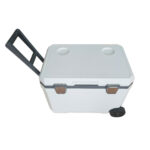
UN boîte d'isolation EPP résistante aux chocs vous aide à résoudre deux problèmes coûteux en un seul envoi: dérive de température et réclamations pour dommages. Cela fonctionne parce que le PPE peut absorber les impacts et récupérer, tandis que sa structure à cellules fermées ralentit le transfert de chaleur. L'EPP est également produit dans une large gamme de densités (souvent cité autour 15–200g/L, moulé jusqu'à 18–260g/L), afin que vous puissiez adapter la force et l'amorti à votre voie.
Ce guide vous aidera:
-
Choisissez un boîte d'isolation EPP résistante aux chocs risque de voie, fragilité du produit, et l'intensité de la manipulation.
Isolation EPP résistante aux chocs…
-
Créez un emballage reproductible qui réduit la casse, ecchymoses, et dérive de température en utilisant le Règle de non-hochet et vérifications du couvercle.
Isolation EPP résistante aux chocs…
-
Utiliser des outils de décision simples (scores de risque + listes de contrôle) votre équipe peut suivre en un seul quart de travail.
Isolation EPP résistante aux chocs…
-
Validez les performances avec les concepts de tests de choc et thermiques de type ISTA, au lieu de deviner.
Isolation EPP résistante aux chocs…
-
Mettre en place le nettoyage, inspection, et les bases de la boucle de retour pour que la réutilisation puisse réellement rapporter.
Isolation EPP résistante aux chocs…
Pourquoi les expéditions échouent-elles même lorsque votre plan de température semble « correct »?
La plupart des défaillances de la chaîne du froid sont échecs combinés, pas de pannes « de température uniquement ». Le mouvement des produits crée des impacts. Les impacts écrasent les coins. Les coins écrasés créent de petits espaces. Les espaces accélèrent le gain de chaleur et augmentent les plaintes.
Apprenez à votre équipe un modèle simple: deux ennemis.
-
Chaleur: ralentissez-le.
-
Mouvement: arrête ça.
UN boîte d'isolation EPP résistante aux chocs est important car il aborde les deux ennemis comme un seul système, pas deux problèmes distincts.
Isolation EPP résistante aux chocs…
Qu'est-ce qu'une boîte isolante EPP résistante aux chocs, en anglais simple?
UN boîte d'isolation EPP résistante aux chocs est un contenant isotherme réutilisable fabriqué à partir de polypropylène expansé moulé (PPE). Pensez-y comme à un un casque et un pull: le « casque » absorbe les chocs, et le « pull » ralentit le changement de température.
Qu'est-ce qui le rend pratique dans 2025 n'est pas seulement le matériel. C'est la simplicité opérationnelle: vous pouvez standardiser les emballages, réduire l'improvisation des remplissages, et réduisez les échecs répétés grâce à des vérifications rapides.
Isolation EPP résistante aux chocs…
Les faits matériels qui comptent réellement
Vous n'avez pas besoin d'un cours de chimie. Vous avez besoin de faits prêts à prendre des décisions:
-
Réglage de la densité: Le PPE est cité dans une large plage de densité (à propos 15–200g/L, moulé jusqu'à 18–260g/L). Cela vous permet d'adapter la rigidité et la durabilité à votre voie.
Isolation EPP résistante aux chocs…
-
Réglage de l'isolation: la conductivité thermique typique de l'EPP est souvent répertoriée autour de λ 0,035–0,041 W/m·K dans des contextes d'isolation. Cela fait gagner du temps lors des transferts.
Isolation EPP résistante aux chocs…
-
Réglage du système: coins, chevauchement du couvercle, et les inserts décident si la boîte reste scellée et « sans hochet » lors d'une manipulation réelle.
Isolation EPP résistante aux chocs…
Comment choisir un caisson isolant EPP résistant aux chocs pour votre allée?
Commencez par ce que votre produit « déteste » le plus: impact, vibration, dérive de température, ou des fuites. Ensuite, faites correspondre le risque de voie à la force de la boîte, conception d'insertion, et stratégie de refroidissement.
Un score rapide de risque produit (60 secondes)
Notez chaque facteur 0–2:
-
Fragile (se casse facilement)
-
Sensible aux vibrations (la qualité diminue lorsqu'on la secoue)
-
Sensible à la température (une petite dérive compte)
-
Valeur élevée par expédition (les retours sont chers)
-
Manipulation imprévisible (centres de colis, de nombreux transferts)
8–10: vous avez besoin d'un système de boîtier d'isolation EPP robuste et résistant aux chocs.
5–7: Le PPE aide, mais le bon dimensionnement et les inserts sont tout aussi importants.
0–4: utiliser le PPE de manière sélective par voie, pas partout.
Densité + géométrie: l'erreur d'achat que font la plupart des équipes
De nombreux acheteurs recherchent d’abord « plus d’isolation ». Mais si vos coins s'écrasent ou si votre couvercle s'ouvre, tu échoues toujours.
Utilisez cette règle: Corrigez la géométrie des coins et insérez l'ajustement avant d'ajouter plus de liquide de refroidissement.
Isolation EPP résistante aux chocs…
| Caractéristique de conception | Ce que ça améliore | Ce que ça empêche | Ce que cela signifie pour vous |
|---|---|---|---|
| Coins renforcés | Répartition des impacts | Coin écrasé, fissure | Moins de sinistres pour casse
Isolation EPP résistante aux chocs… |
| Murs nervurés | Résistance à la compression | Flambage des murs | Empilage plus sûr
Isolation EPP résistante aux chocs… |
| Chevauchement du couvercle | Joint + serrure structurelle | Couvercle à ouverture pop | Moins de déversements/excursions
Isolation EPP résistante aux chocs… |
| Inserts personnalisés | Immobilisation | Collisions de charges utiles | Moins de dégâts internes
Isolation EPP résistante aux chocs… |
| Base antidérapante | Stabilité | Glisser dans des fourgons | Moins de renversements
Isolation EPP résistante aux chocs… |
SOP d'emballage du boîtier d'isolation EPP résistant aux chocs qui réduit la casse
UN boîte d'isolation EPP résistante aux chocs échoue toujours si la charge utile bouge. La protection contre les chocs est plus forte lorsque le mouvement est minimisé.
La règle du non-hochet (2 secondes)
-
Fermez la boîte.
-
Secouez-le doucement pendant deux secondes.
-
Si vous sentez un mouvement ou entendez un cliquetis, réparer le pack-out.
Cette « petite habitude » est l’un des moyens les plus rapides de réduire les dégâts sans acheter de nouveaux emballages..
Isolation EPP résistante aux chocs…
Le verrouillage de mouvement à 3 couches (facile à entraîner)
-
Contention primaire: plateau, diviseur, ou support moulé
-
Contention secondaire: blocs latéraux qui arrêtent de glisser
-
Contrôle du vide: coussinets fins ajustés (éviter les produits de remplissage en vrac)
| Couche de verrouillage de mouvement | Outil | Ce que ça empêche | Ce que cela signifie pour vous |
|---|---|---|---|
| Contention primaire | Insert moulé | Impacts directs | Moins de pauses |
| Contention secondaire | Blocs latéraux | Glissement | Moins de fuites |
| Contrôle du vide | Coussinets ajustés | Rebond | Moins de retouches |
La boucle d'entraînement de 5 minutes qui colle
-
Afficher la disposition correcte des insertions
-
Faites le Règle de non-hochet
-
Faire le contrôle de planéité du couvercle
-
Afficher l'emplacement du liquide de refroidissement (Si utilisé)
-
Répétez une fois avec un véritable envoi
Cela transforme votre boîte d'isolation EPP résistante aux chocs en un processus, pas un achat.
Isolation EPP résistante aux chocs…
Comment un boîtier isolant EPP résistant aux chocs contribue-t-il à la stabilité de la température?
Les pannes de température commencent souvent par échecs de dommages. Quand une boîte est écrasée, de petits espaces dans le couvercle se forment. Ces espaces se comportent comme des fenêtres ouvertes.
État d’esprit « Le joint est votre thermostat »
Si l'ajustement de votre couvercle n'est pas cohérent, votre température sera incohérente. Apprenez cette ligne:
"Un couvercle desserré, c'est comme laisser la porte d'un réfrigérateur ouverte."
Isolation EPP résistante aux chocs…
Discipline simple du couvercle pour une boîte isolante en EPP résistante aux chocs:
-
Appuyez sur les coins après la fermeture
-
Confirmez que le couvercle est à plat
-
Évitez de forcer la fermeture (cela peut déformer les inserts)
Ces contrôles sont rapides, mais ils empêchent de nombreuses excursions « mystères ».
Isolation EPP résistante aux chocs…
Avez-vous besoin de liquide de refroidissement dans une boîte isolante en EPP résistante aux chocs?
Parfois oui, parfois non. Utiliser une règle basée sur les voies:
-
Court, voies contrôlées: Le PPE seul peut suffire
-
Temps chaud ou séjour prolongé: ajouter des tampons de liquide de refroidissement
-
Transferts sur plusieurs jours ou incertains: tampons plus forts + surveillance
Cette approche évite l'erreur coûteuse de traiter chaque expédition comme le pire des cas..
Isolation EPP résistante aux chocs…
Règles de placement du liquide de refroidissement qui réduisent les dommages et le gaspillage
-
Placer du liquide de refroidissement autour, pas directement sur des objets fragiles
-
Gardez le liquide de refroidissement hors de tout contact direct avec le produit lorsque la transpiration présente un risque
-
Utiliser une fine barrière pour limiter la migration de l'humidité
| Stratégie de refroidissement | Mieux pour | Risque principal | Ce que cela signifie pour vous |
|---|---|---|---|
| Pas de liquide de refroidissement | Voies courtes | Pics de chaleur | Flux de travail le plus simple
Isolation EPP résistante aux chocs… |
| Tampon doux | Journées chaudes | Condensation | Meilleure stabilité
Isolation EPP résistante aux chocs… |
| Tampon lourd | Voies incertaines | Coût + étiquettes humides | Utiliser de manière sélective
Isolation EPP résistante aux chocs… |
Outil de décision interactif: Quelle configuration de boîtier d'isolation EPP résistant aux chocs convient à votre voie?
Choisissez une option à chaque étape:
Étape 1: Type d'itinéraire
-
Local le jour même
-
Régional le lendemain
-
Colis / plusieurs jours
Étape 2: Intensité de manipulation
-
Faible (courrier direct)
-
Moyen (manutention mixte)
-
Haut (réseau de colis)
Étape 3: Sensibilité du produit
-
Faible (durable)
-
Moyen (sujet aux contusions ou sensible aux phoques)
-
Haut (fragile, valeur élevée, sensible à la température)
Matchs recommandés
-
Locale + faible manipulation + sensibilité moyenne: PPE + inserts de base + Règle de non-hochet
-
Le lendemain + maniabilité moyenne + haute sensibilité: PPE + inserts fixes + tampon doux + discipline du couvercle
-
Plusieurs jours + haute maniabilité + haute sensibilité: PPE + inserts renforcés + tampon + surveillance
Isolation EPP résistante aux chocs…
Comment valider un boîtier isolant EPP résistant aux chocs dans 2025
Les tests arrêtent de deviner. Cela évite également le suremballage. Quand vous validez et réussissez, vous pouvez standardiser.
La mentalité du « test combiné » (choc + thermique)
Exécuter une séquence simple:
-
Test de vibration avec emballage normal
-
Séquence de dépôt (bord/coin/plat)
-
Profil thermique adapté à votre voie
-
Inspection post-test: ajustement du couvercle, insérer un décalage, et courbe de température
La procédure ISTA 3A est conçue pour les expéditions de livraison de colis et convient aux colis 150 kg (70 kg) ou moins, qui s'adapte à de nombreux colis sous chaîne du froid.
Isolation EPP résistante aux chocs…
Pour le réalisme thermique dans les réseaux de colis, ISTA décrit également STD-7E concepts en tant que profils thermiques pertinents pour la parcelle.
Isolation EPP résistante aux chocs…
| Élément de test | Ce que ça prouve | À quoi ressemble un « échec » | Ce que tu répares |
|---|---|---|---|
| Vibration | Stabilité de l'insertion | Mouvement, éraflure | Berceau plus serré
Isolation EPP résistante aux chocs… |
| Gouttes | Force des coins + fermeture | Coins fissurés, couvercle pop | Coins, loquet, chevauchement du couvercle
Isolation EPP résistante aux chocs… |
| Profil thermique | Tenir le temps | Courbe hors limite | Lacunes, carte du liquide de refroidissement
Isolation EPP résistante aux chocs… |
| Inspection | Intégrité du système | Couture du couvercle déformée | Mettre à jour la POS + règle de retraite
Isolation EPP résistante aux chocs… |
Validation sur le terrain (preuve bon marché que vous pouvez collecter)
-
Placez un enregistreur ou un indicateur de choc au même endroit à chaque analyse
-
Photographiez l'état d'emballage et d'arrivée
-
Suivre les échecs en itinéraire, pas "aléatoire"
Isolation EPP résistante aux chocs…
Nettoyage et réutilisation: rentabiliser une boîte d'isolation EPP résistante aux chocs
La réutilisation n'est pas automatique. C'est un système: suivi, nettoyage, inspection, et incitations au retour.
Une SOP de nettoyage simple (rapide et réaliste)
-
Essuyez les débris à sec
-
Lavage à chaud avec un détergent doux
-
Rincer abondamment
-
Désinfectez selon votre politique interne
-
Sécher complètement à l’air libre avant d’empiler
Habitude critique: ne jamais stocker humide et fermé. L'humidité devient odeur et moisissure.
Isolation EPP résistante aux chocs…
Le contrôle de décision en boucle de retour (7–14 jours de réalité)
Demander:
-
Pouvez-vous récupérer des boîtes de manière fiable dans 7–14 jours?
-
Avez-vous des itinéraires stables (Clients B2B ou récurrents)?
-
Les clients peuvent-ils revenir sans problème?
Si vous répondez « oui » à deux, prioriser la réutilisation. Sinon, se concentrer d'abord sur le bon dimensionnement et la réduction des échecs.
Isolation EPP résistante aux chocs…
Interactif: Vérification rapide du retour sur investissement de la boucle de retour
Donnez-vous 1 indiquer pour chaque « oui »:
-
Répéter les voies + clients réguliers
-
Scannez les boîtes vers l'extérieur et vers l'arrière
-
La zone de nettoyage peut sécher complètement les boîtes
-
Une incitation au retour existe (dépôt, ramasser, point de chute)
-
Vous avez une règle de retrait pour les cartons endommagés
0–2: pilote seulement
3–4: exécuter une boucle de réutilisation à une voie
5: mettre à l'échelle un programme de boîtes isolantes en PPE réutilisables et résistantes aux chocs
2025–Développements et tendances 2026 que vous devez planifier
Dans 2025, la plus grande tendance est emballage du système, pas « emballage en boîte ». Cela signifie des emballages par voie, Inserts spécifiques au SKU, surveillance, et SOP qui réduisent la variabilité.
Isolation EPP résistante aux chocs…
Une deuxième tendance est preuve plus circularité: les acheteurs veulent des preuves que l'emballage protège le produit, et de nombreux marchés poussent les objectifs de réduction des déchets et de recyclabilité vers 2030.
Isolation EPP résistante aux chocs…
Dernier progrès en un coup d'œil
-
Recettes d'emballage basées sur des pistes: emballages standards par itinéraire et intensité de manutention.
-
Optimisation par insertion en premier: réduire les mouvements avant d'ajouter du poids et du coût au liquide de refroidissement.
-
Culture de validation: boucles réussite/échec de style ISTA plus rapides pour des performances reproductibles.
Questions courantes (FAQ)
Q1: Qu'est-ce qui rend une boîte isolante EPP résistante aux chocs véritablement « résistante aux chocs » ??
C'est un système: coins + fermeture du couvercle + inserts. Si la charge utile peut se déplacer, ça peut casser.
Isolation EPP résistante aux chocs…
Q2: Comment choisir la densité du boîtier isolant EPP résistant aux chocs?
Utilisez le risque de voie et la charge de gerbage pour choisir la densité, puis ajustez l'amorti avec des inserts. L'EPP est souvent cité entre 15 et 200 g/L (moulé 18–260 g/L).
Isolation EPP résistante aux chocs…
Q3: Une boîte isolante en EPP résistante aux chocs peut-elle supporter une température d'expédition de 2 à 8 °C ??
Oui, si vous l'associez à un kit de liquide de refroidissement cohérent et à une carte de placement fixe. Visez la stabilité, pas « froid maximum ».
Isolation EPP résistante aux chocs…
Q4: Un boîtier isolant EPP résistant aux chocs a-t-il toujours besoin de liquide de refroidissement?
Non. Court, les voies contrôlées peuvent fonctionner sans liquide de refroidissement. Ajoutez des tampons lorsque la chaleur et le maintien ou les transferts incertains augmentent le risque.
Isolation EPP résistante aux chocs…
Q5: Quels tests dois-je effectuer pour valider un boîtier isolant EPP résistant aux chocs?
Utiliser les vibrations + gouttes + un profil thermique adapté à la voie. ISTA 3A est couramment utilisé pour les envois de colis ≤ 150 lb.
Isolation EPP résistante aux chocs…
Q6: Quelle est la plus grosse erreur d'emballage?
Laisser des entrefers et permettre le mouvement. Utilisez la règle anti-cliquetis et les inserts entièrement installés.
Isolation EPP résistante aux chocs…
Q7: Comment savoir si la réutilisation fonctionnera?
Si vous pouvez récupérer les cartons dans un délai de 7 à 14 jours et maintenir un nettoyage/inspection cohérent, la réutilisation est beaucoup plus susceptible d'être rentable.
Isolation EPP résistante aux chocs…
Résumé et recommandations
UN boîte d'isolation EPP résistante aux chocs fonctionne mieux lorsque vous le traitez comme un système reproductible: murs accidentés, inserts ajustés qui arrêtent le mouvement, et deux vérifications rapides (Règle de non-hochet + planéité du couvercle). La normalisation par voie est la 2025 jouer: utiliser des recettes plus fortes pour les voies de transfert multiples difficiles, et des configurations plus simples pour des itinéraires contrôlés le jour même.
Plan d'action (fais ça ensuite)
-
Diviser les expéditions en local, le lendemain, et voies de plusieurs jours.
-
Choisissez 2 à 3 tailles de boîtes et un système d'insertion par famille de produits.
-
Former deux chèques: Règle de non-hochet + planéité du couvercle.
-
Ajoutez du liquide de refroidissement uniquement lorsque des déclencheurs de risques sont présents (chaleur + demeurer, ou chauffer + transfert incertain).
-
Suivi hebdomadaire: réclamations pour dommages, réexpédie, et temps moyen d'emballage.
À propos du tempk
Et tempk, nous aidons les équipes à construire des systèmes d'emballage sous chaîne du froid fiables et faciles à reproduire à grande échelle. Pour un programme de caissons isolants en PPE résistant aux chocs, nous nous concentrons sur des conceptions robustes, insérer des stratégies qui empêchent le mouvement, et des routines de rangement par voie qui réduisent les dommages et la dérive de température.
Isolation EPP résistante aux chocs…
Prochaine étape: Dites-nous votre type de charge utile (fragile, sujet aux ecchymoses, liquide, sensible à la température) et ta voie (locale, le lendemain, plusieurs jours). Nous cartographierons une configuration de boîte d'isolation EPP résistante aux chocs qui correspond aux conditions d'expédition réelles..