Petit sac isotherme: How Do You Choose One?
UN small insulated bag is only “good” if it buys you safe, predictable time outside cold storage. Food-safety guidance often uses the 2-règle des heures pour les denrées périssantes, et 1 heure quand c'est au dessus 90°F (32°C).
Mis à jour Décembre 18, 2025, this guide helps you choose, paquet, and validate a small insulated bag so your items arrive tasting right and handled more safely.
Ce guide vous aidera:
-
Choisissez un petit sac à lunch isotherme that fits real containers (no bulging zippers)
small insulated bag
-
Comparez un leakproof small insulated bag without falling for marketing words
small insulated bag
-
Emballer un small insulated bag to stay cold longer using the “Cold Sandwich” method
small insulated bag
-
Pick cold sources (gel vs phase-change vs ice) sans congeler les objets sensibles
small insulated bag
-
Valider un small insulated bag for delivery with a simple 3-run temperature test
small insulated bag
How does a small insulated bag keep food cold or warm?
A small insulated bag works when it blocks heat flow, limits air exchange, and reduces “empty air” inside the bag. If the zipper leaks, warm air sneaks in and your cooling disappears fast. If the bag is half empty, air moves around like a fan and speeds warming. Votre objectif est simple: serré, scellé, and well-packed—that’s where real hold time comes from.
small insulated bag
En termes simples, insulation is like a winter jacket. But air gaps are like leaving the jacket unzipped. When you treat your small insulated bag like a sealed container, it performs better on the same route. When you treat it like a tote you keep opening, it loses quickly.
small insulated bag
Ce qui compte le plus: zipper seal or insulation in a small insulated bag?
Zippers and seams are the weak points in almost every small insulated bag. Even thick insulation fails if the closure leaks air. A smooth zipper also stops “half-closed” mistakes during busy days.
small insulated bag
| Performance factor | Que vérifier | 10-second test | Ce que cela signifie pour vous |
|---|---|---|---|
| Zipper seal | Closes flat, pas de lacunes | Close and press: feel air movement | Better real-world hold time |
| Wall insulation | Even thickness at corners | Pinch corners vs flat panels | Fewer hot spots at edges |
| Doublure | Smooth and wipeable | Wipe with damp tissue | Moins d'odeur, nettoyage plus rapide |
| Forme | Holds structure | Set it down empty | Fewer air pockets and spills |
Practical tips you can use right now
-
Don’t overstuff: overstuffing creates zipper gaps and shortens bag life.
small insulated bag
-
Check corners first: corners are common leak points for heat and liquid.
small insulated bag
-
One-hand zip rule: if it snags, you will leave it partly open during real use.
small insulated bag
Cas réel: A parent switched to a smoother zipper track and stopped accidental “half-closed” commutes.
small insulated bag
What size small insulated bag fits your real containers?
The right small insulated bag is the smallest one that fits your items with minimal empty space. Empty space is not “extra room.” It is warm air you carry for free, and it speeds temperature change.
small insulated bag
If you go too small, you crush items or block the zipper. If you go too large, you carry heat inside the bag.
small insulated bag
Most “small” options commonly land in practical ranges like ~5–15 L, which usually covers one to two meals or compact errands.
small insulated bag
The secret is matching forme to your containers, not chasing liters. A tall bag fits bottles. A wide bag fits flat meal boxes.
small insulated bag
The 60-second “Fit + Seal” test for a small insulated bag
This decision tool prevents the most common mistake: buying a bag that presque closes.
| Étape | Que faites vous | Pass condition | Ce que cela signifie pour vous |
|---|---|---|---|
| 1 | Listez votre haut 3 cas d'utilisation | You know your “daily load” | Less wrong-size risk |
| 2 | Layout items on a table | Items match real packing | Moins de surprises |
| 3 | Add your cold source | Pack-out is realistic | Better hold time planning |
| 4 | Close the bag | Closes flat, no bulge | Fewer zipper gaps |
If it closes flat and tight, you picked a high-efficiency small insulated bag taille.
small insulated bag
Practical tips for sizing (sans trop réfléchir)
-
Bring your real container: it’s the fastest way to avoid a wrong-size bag.
small insulated bag
-
Avoid too many pockets: extra seams can become heat paths and reduce insulation.
small insulated bag
-
Pick shape first: tall for bottles, wide for flat boxes, structured for delivery.
small insulated bag
Cas réel: A courier reduced complaints by switching to an upright structured small insulated bag that prevented tipping and kept the zipper fully closed.
small insulated bag
Which materials make a leakproof small insulated bag easier to clean?
A leakproof small insulated bag is a 3-layer system: durable outside, insulating middle, wipe-clean inside. If any layer fails, performance drops or cleaning becomes a daily headache.
small insulated bag
Dans 2025, the most reliable builds focus on stable insulation, doublures lavables, et des coques durables.
small insulated bag
Pensez-y comme ça: the outer shell is armor, the middle layer is a temperature shield, and the liner is your cleanup layer. When the liner wipes in one pass, you keep using the bag daily. When it traps stains, you stop trusting it.
small insulated bag
Quick lining checklist for a leakproof small insulated bag
| Material area | Strong choice | Risky choice | Ce que cela signifie pour vous |
|---|---|---|---|
| Doublure intérieure | Lisse, scellé, essuyable | Fabric liner with seams | Nettoyage plus rapide, moins d'odeur |
| Base | Renforcé, ferme | Soft-only bottom | Fewer spills and tipping |
| Piqûre | Protected seams | Exposed needle holes | Less leaking over time |
small insulated bag
Practical tips that prevent leaks and smells
-
Seafood or meat: pick a liner that wipes clean in one pass.
small insulated bag
-
Soups and sauces: prioritize a stable base and a zipper that closes without snagging.
small insulated bag
-
Odor control: choose simple interiors with fewer folds that trap moisture.
small insulated bag
Cas réel: A meal-prep user switched to a reinforced-base, leak-resistant style and stopped seeing “mystery dampness.”
small insulated bag
How do you pack a small insulated bag for maximum hold time?
Packing is the hidden performance multiplier for a small insulated bag. Even premium insulation struggles if the bag is half empty or repeatedly opened. Your goal is a tight, layered stack that reduces air and protects the cold source from melting too fast.
small insulated bag
Use a repeatable pack-out recipe. Don’t improvise every morning. When you pack the same way, your results become predictable. That predictability is what reduces waste, remboursement, and “why is this warm?” arguments.
The “Cold Sandwich” method for a small insulated bag
| Packing step | Que faites vous | Pourquoi ça marche | Ce que cela signifie pour vous |
|---|---|---|---|
| Préfabriqué | Cool bag + contents 10–15 min | Less “startup warming” | Longer hold with same ice |
| Pack serré | Réduire les entrefers | Air speeds warming | Better real-world results |
| Pack supérieur | Add a pack above items | Heat often enters from top | More stable temperature |
small insulated bag
Cold source choices (gel vs phase-change vs ice)
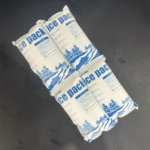
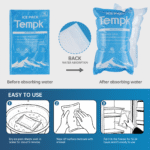
A thin, well-placed cold source can beat a large one placed poorly. Gel packs are routine and predictable. Phase-change packs hold closer to a target temperature, which helps when “too cold” is a problem. Ice cools strongly but needs a leakproof liner.
small insulated bag
Mini “Hold-Time” estimator (simple, pratique)
Use this rule-of-thumb to set expectations. Commencer par 60 minutes for a packed, scellé small insulated bag with one frozen gel pack. Ajouter +30 minutes if you pre-chill and fill gaps. Soustraire -30 minutes if you open the bag more than twice. Soustraire -30 minutes if the bag sits in a hot car.
small insulated bag
Hot food tip: prevent soggy quality without losing heat
Hot food success is staying hot while managing steam. Some food safety guidance recommends holding hot food around 140°F (60°C) ou au-dessus if it won’t be served soon.
small insulated bag
Keep food sealed to prevent spills, then create a tiny vent path so steam doesn’t destroy texture. An absorbent pad also helps control condensation and smell.
small insulated bag
Cas réel: A restaurant improved ratings after adding a simple “vent rule” and absorbent pads inside each small insulated bag.
small insulated bag
How do you validate a small insulated bag for delivery or medicine?
Validation means you stop guessing and start predicting performance. You do not need a lab. You need consistent steps, basic measurement, and three real scenarios. That’s how you decide whether a small insulated bag can handle your route and weather.
small insulated bag
If you scale delivery, validation protects your brand. If you carry sensitive items, validation protects trust. De toute façon, you want a simple plan your team will actually do.
A simple 3-run validation plan for a small insulated bag
Run the same pack-out each time.
| Test | Durée | Quoi enregistrer | Ce que cela signifie pour vous |
|---|---|---|---|
| Indoor baseline | 60 min | Commencer / milieu / end temp | Shows best-case hold |
| Warm stress | 30–60 min | Peak temp | Shows worst-case risk |
| Real route | 60–120 minutes | Temps + temp | Shows true performance |
small insulated bag
Practical tips that make validation useful
-
Test your worst day: summer afternoon is your truth test.
small insulated bag
-
Changer une variable: don’t change bag and packs at the same time.
small insulated bag
-
Save results: your notes become a simple SOP for staff and repeat use.
small insulated bag
Cas réel: A small grocer improved consistency after testing three pack-outs and standardizing one summer setup.
small insulated bag
Medicine and vaccines: use a small insulated bag carefully
For medicine, follow product instructions and use qualified temperature control. Pour les vaccins, guidance commonly emphasizes qualified containers, dispositifs de surveillance de la température, and limited transport windows.
small insulated bag
Treat a small insulated bag as a temporary transport tool, pas un réfrigérateur.
small insulated bag
How do you keep a small insulated bag clean and odor-free?
Cleaning is performance maintenance for a small insulated bag. Odor and moisture usually come from tiny leaks and trapped condensation. If you handle it quickly, the bag stays fresh and lasts longer. A simple routine beats harsh chemicals.
small insulated bag
Always dry fully with the bag open. Trapped moisture creates odor faster than food does. That one habit protects both hygiene and lifespan.
small insulated bag
The 3-minute reset routine (daily hygiene)
-
Wipe immediately après utilisation, even if it looks clean.
-
Dry fully with the zipper open.
-
Nettoyage en profondeur hebdomadaire: lingette savonneuse douce, rinse wipe, complètement sec.
small insulated bag
| Problème | Solution rapide | Prévention | Ce que cela signifie pour vous |
|---|---|---|---|
| Food smell | Essuyer + air dry | Clean same day | Bag stays pleasant daily |
| Stains | Mild soap wipe | Utiliser des contenants scellés | Less discoloration |
| Humidité | Dry open + towel corners | Store open | Prevents musty odor |
small insulated bag
Outil interactif: Small Insulated Bag Fit Score (0–20)
Notez chaque élément 0–2 (0 = non, 2 = oui). Ajoutez votre total.
small insulated bag
-
Your container fits with room to zip easily
-
Bag stands upright when filled
-
Liner wipes clean in under 30 secondes
-
Zipper closes smoothly with one hand
-
Base is stable and not floppy
-
Insulation feels even at corners
-
Practical place for ice packs
-
Handles leaks without soaking outer fabric
-
Carry comfort matches your commute
-
Dries quickly after cleaning
Guide de notation:
-
16–20: strong match for daily use
-
10–15: bien, but test packing and cleaning before scaling
-
0–9: keep looking (it will frustrate you)
small insulated bag
2025 latest small insulated bag developments and trends
Dans 2025, small insulated bag design is becoming more workflow-friendly. People want bags that clean fast, hold shape, and pack without effort. Reuse and repeatability matter more than decorative pockets.
small insulated bag
Dernier aperçu des progrès
-
Better shape retention: more bags stand upright and pack faster.
small insulated bag
-
Nettoyage plus facile: liners trend toward faster wipe and quicker drying.
small insulated bag
-
Validation-first buying: teams test before scaling delivery routes.
small insulated bag
-
More monitoring for sensitive items: small loggers are becoming normal in higher-risk use.
small insulated bag
Perspicacité du marché: the best small insulated bag is the one you can use correctly every day, under pressure.
small insulated bag
Questions fréquemment posées
Q1: How long does a small insulated bag keep food safe?
It depends on heat, espace aérien, et des paquets. Many teams follow the 2-hour rule, et 1 heure au-dessus de 90°F (32°C).
small insulated bag
Q2: What size is considered a small insulated bag?
Many practical “small” setups sit around 5–15 L, sized for meals or compact groceries.
small insulated bag
Q3: What makes a leakproof small insulated bag truly leakproof?
A wipeable liner, protected seams, and a firm base reduce soaking, odeur, and slow leaks.
small insulated bag
Q4: Why does my small insulated bag make hot food soggy?
Steam is trapped. Keep containers sealed, add a tiny vent path, and use an absorbent pad.
small insulated bag
Q5: What’s the easiest way to test a small insulated bag at home?
Run three tests—indoor baseline, warm stress, and real route—then record start/mid/end temperatures.
small insulated bag
Q6: Can I use a small insulated bag for medicine?
It can help for short transport, but follow product instructions and avoid treating it like a refrigerator.
small insulated bag
Résumé et recommandations
UN small insulated bag performs best when it fits your containers snugly, se ferme hermétiquement, and packs with minimal air space. Zipper quality and wipe-clean liners often matter more than extra pockets. Utiliser le Cold Sandwich méthode, pick the right cold source, and minimize openings to protect hold time. Validate with a simple 3-run test if you plan to deliver or scale.
Prochaine étape (CTA)
Prendre un cas d'utilisation (work lunch, épiceries, livraison, ou médicament). Faites le Ajuster + Seal test, then run the 3-run validation plan on your hottest realistic day. Save the best configuration as your “summer pack-out,” and your future self will thank you.
small insulated bag
À propos du tempk
Et tempk, we build practical temperature-control packaging systems for daily use and last-mile workflows. Nous nous concentrons sur des emballages reproductibles, Matériaux durables, and easy-clean interiors because those details decide outcomes after hundreds of cycles. We also help teams validate real routes with simple tests, so decisions are based on results, Pas de supposition. If you want to standardize a small insulated bag program, we’ll help you match container sizes, temps de parcours, and cleaning SOPs to a setup your team can run consistently.
Appel à l'action: Share your container sizes, temps de parcours, and “worst-day” weather scenario. We’ll outline a simple bag spec and a pack-out SOP you can pilot quickly.