Petit sac à lunch isolé: Meilleur choix dans 2025?
Dernière mise à jour: Décembre 19, 2025
UN petit sac à lunch isotherme est un « tampon de température » quotidien qui protège le goût, texture, et la sécurité alimentaire. Il ne crée ni froid ni chaleur. Il ralentit le changement de température afin que votre déjeuner reste plus proche de la façon dont vous l'avez emballé.. De nombreuses listes de contrôle de détention simples utilisent ≤4°C / 40°F pour le froid et ≥60°C / 140°F pour chaud comme des cibles faciles. Vos résultats dépendent de l'ajustement, emballage, et à quelle fréquence tu ouvres la fermeture éclair.
Cet article répondra:
-
Comment choisir le bon taille petit sac à lunch isotherme pour de vrais conteneurs
-
Ce que signifie réellement « petit » (et comment éviter le gaspillage d'espace aérien)
-
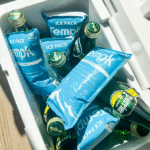
Comment un petit sac à lunch isotherme avec sac de glace garde le froid plus longtemps
-
Qu'est-ce qui fait un petit sac à lunch isolé étanche vraiment résistant aux fuites
-
Comment exécuter des tests rapides comme le test de serviette en papier avant de vous engager
-
Comment nettoyer et sécher votre sac pour qu'il reste sans odeur 2025
-
Un outil de décision et une liste de contrôle d'auto-audit que vous pouvez utiliser dans 2 minutes
Ce qui est considéré comme « petit » pour un petit sac à lunch isotherme?
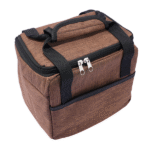
Un petit sac à lunch isotherme est le plus petit sac qui s'adapte à votre repas typique sans écraser les couvercles ni forcer la fermeture éclair.. « Petit » n'est pas un chiffre d'un seul litre. C'est une règle appropriée. Quand le sac s'ajuste bien, tu as moins d'air à l'intérieur. Moins d’air signifie des températures plus stables et moins de fuites des conteneurs à bec.
La plupart des « petites » configurations contiennent un conteneur principal, une collation, et une boisson en option.
petit sac à lunch isotherme
C'est l'endroit idéal pour les navetteurs et les repas scolaires. Si vous emportez régulièrement deux boîtes repas et une boisson à l'intérieur, vous aurez peut-être besoin d'un petit plus ou d'un support compact.
Un test d'ajustement de 60 secondes que vous pouvez faire avant d'acheter
Mettez votre déjeuner habituel sur une table et répondez à trois questions:
-
Est-ce que vous emballez un conteneur ou deux la plupart des jours?
-
Votre conteneur est-il large et plat (bento) ou grand et rond (bol)?
-
Est-ce que vous emportez un verre à l'intérieur du sac ou séparément?
Si vous êtes principalement « un conteneur + collation,« vous êtes dans un véritable territoire de petits sacs à lunch isolés.
petit sac à lunch isotherme
Si vous êtes « deux conteneurs + boire," tu es probablement en train d'évaluer.
| Votre style de repas quotidien | Meilleure forme de sac | Ce qu'il faut éviter | Signification pratique pour vous |
|---|---|---|---|
| Bento + collation | large, base plate | sac grand et étroit | moins de compartiments écrasés |
| Saladier + collation | profil plus grand | sac peu profond | moins de couvercles éclatés |
| Soupe + collation | droit + base stable | base qui s'effondre | moins de catastrophes liées aux déversements |
| Rectangle de préparation des repas | empreinte moyenne | coins serrés | paquet plus rapide, moins de désordre |
Pourquoi un petit sac à lunch isotherme est-il plus important que vous ne le pensez?
Un petit sac à lunch isotherme est essentiellement un « micro-réfrigérateur » portable.,» surtout quand on ajoute un sac de glace. C'est important parce que la température change plus rapidement que ce à quoi la plupart des gens s'attendent dans une voiture chaude., fenêtre ensoleillée, ou sac à dos.
petit sac à lunch isotherme
Si le déjeuner se réchauffe trop vite, les textures changent et les saveurs s'estompent. S'il fuit ou sent, tu arrêtes de l'utiliser.
Trois réalités pratiques façonnent les résultats:
-
Les aliments se réchauffent plus rapidement lorsqu’il y a plus d’espace d’air.
petit sac à lunch isotherme
-
La ligne de la fermeture éclair est souvent le point d'isolation le plus faible.
petit sac à lunch isotherme
-
La stratégie en matière de banquise compte autant que le sac lui-même.
petit sac à lunch isotherme
L’avantage du petit sac
Les petits sacs peuvent surpasser les grands sacs car ils sont plus serrés. Un emballage serré réduit l’échange d’air. L'échange d'air est ce que vous payez à chaque fois que vous ouvrez la fermeture éclair.
Pensez-y comme à une tasse de voyage. Une tasse remplie à ras bord reste chaude plus longtemps qu'un thermos à moitié vide.
Comment un petit sac à lunch isotherme garde-t-il les aliments au froid ou au chaud?
Un petit sac à lunch isolé ralentit le transfert de chaleur. Il réduit la rapidité avec laquelle la chaleur extérieure pénètre (pour les déjeuners froids) ou la chaleur intérieure s'échappe (pour les déjeuners chauds). Cela fonctionne mieux lorsque le sac est presque plein, la fermeture éclair se ferme proprement, et tu limite les ouvertures.
Vos résultats dépendent de cinq leviers:
-
Température de départ (les aliments froids commencent à froid)
-
Ajustement du sac (moins d'air vide)
-
Qualité de fermeture (fermeture éclair + conception de rabat)
-
Placement du sac de glace (où se trouve la masse froide)
-
Fréquence ouverte (un ouvert bat cinq)
H3: La vérification de l'écart à deux doigts (prédicteur de performances rapide)
Après l'emballage, essaye ça: si tu peux glisser deux doigts profondément dans une grande poche d'air vide, baisses de performances. L'air se réchauffe rapidement. Un pack serré est un pack stable.
| Facteur d'emballage | Que chercher | Meilleur résultat | Ce que cela signifie pour vous |
|---|---|---|---|
| Lacunes | beaucoup d'espace vide | ajustement serré | tenue au froid plus longue |
| Fermeture à glissière | manques aux coins | joint lisse | moins de fuite de chaleur |
| Plénitude du sac | à moitié vide | presque plein | températures plus stables |
À quelles performances d'isolation faut-il s'attendre dans 2025?
Un petit sac à lunch isotherme devrait sembler « ennuyeux et cohérent » lorsqu’il est utilisé de la même manière quotidiennement. Tu ne devrais pas avoir à deviner. Tu devrais pouvoir faire tes valises, fermer, et fais-lui confiance. Mais ne t'attends pas à des miracles. Si tu le laisses dans une voiture chaude pendant des heures, n'importe quel sac souple aura du mal.
Au lieu de courir après les réclamations, se concentrer sur des résultats reproductibles:
-
Le déjeuner a toujours un goût frais au moment du repas
-
Pas de coins mouillés, pas d'odeurs mystérieuses
-
Vous pouvez l'essuyer en moins d'une minute
-
Les conteneurs s'ajustent sans serrer
H3: Un simple test de temps de maintien que vous pouvez effectuer à la maison
Vous n'avez pas besoin de matériel de laboratoire. Il faut de la cohérence.
-
Refroidissez un récipient d'eau pendant la nuit.
-
Congelez un sac de glace plat pendant la nuit.
-
Préparez votre sac avec la même disposition que vous utiliserez quotidiennement.
-
Vérifiez la sensation de température ou utilisez un petit thermomètre à 2 heures et 4 heures.
-
Répétez une fois par temps chaud et une fois par temps doux..
| Ce que tu changes | Pourquoi ça compte | Ce que tu apprends | Que faire ensuite |
|---|---|---|---|
| Plénitude du sac | réduit l'échange d'air | amélioration de la stabilité | ajouter une pochette de remplissage/serviettes |
| Placement du sac de glace | change le modèle de refroidissement | coins plus chauds ou même frais | déplacer le pack sur le côté/en haut |
| Fréquence ouverte | rejette de l'air froid | perte du monde réel | planifier l'habitude « ouvrir une fois » |
| Forme du conteneur | affecte l'ajustement + pourboire | jouer au risque | choisissez un sac de base stable |
Quels matériaux sont les plus importants dans un petit sac à lunch isotherme?
Les matériaux décident du bonheur au quotidien: nettoyage, contrôle des odeurs, et résistance aux fuites. L’épaisseur de l’isolation est importante, mais la qualité de la doublure décide si vous continuerez à utiliser le sac après 30 usages.
Focus sur trois zones:
-
Tissu extérieur: résistance aux éraflures + légère résistance à l'eau
-
Couche d'isolation: épaisseur constante (surtout les coins)
-
Doublure intérieure: lisse, essuyable, faible odeur, coutures minimes
H3: Le paquebot est le facteur décisif
Si la doublure est difficile à essuyer, le sac devient une « unité de stockage d’odeurs ». Une doublure essuyable maintient le sac en vie. C'est la caractéristique qui protège la valeur à long terme.
| Composant | Meilleur choix | Attention | Signification pratique pour vous |
|---|---|---|---|
| Tissu extérieur | durable, facile à essuyer | coins effilochés | durée de vie plus longue dans les sacs à dos |
| Isolation | même épaisseur | coins fins | moins de points chauds |
| Doublure | lisse + essuyable | taches de doublure en tissu | nettoyage quotidien plus rapide |
| Coutures | coins renforcés | trous de couture | moins de chemins de fuite |
| Base | insert stable | fond de disquette | moins de soupes avec pourboire |
Comment choisir un petit sac à lunch isotherme étanche?
« Étanchéité » dans la vraie vie signifie résistant aux éclaboussures suffisamment longtemps pour être nettoyé. La plupart des déjeuners échouent à cause de petites fuites: gouttes de pansement, les couvercles de la soupe se desserrent, ou piscines de condensation. Votre sac ne peut pas réparer un mauvais contenant, mais cela peut empêcher les petits déversements de pénétrer dans la mousse.
Rechercher:
-
coutures scellées ou coutures internes minimales
-
base qui ne se plie pas sous le poids
-
conception de fermeture éclair qui ne laisse pas d'espace dans les coins ouverts
-
une doublure qui se nettoie sans absorber les odeurs
H3: Le test des serviettes en papier (rapide et réel)
Avant de faire confiance à un nouveau sac, fais ce test:
-
Mettez une serviette en papier sèche à l'intérieur
-
Ajouter une bouteille d'eau fermée
-
Secouez doucement et restez debout pendant 10 minutes
-
Placez ensuite le sac sur le côté pendant 10 minutes
Si la serviette reste sèche, le paquebot fait son travail. S'il absorbe l'humidité, vous serez probablement confronté aux odeurs et aux taches plus tard.
petit sac à lunch isotherme
| Risque de fuite | Cause typique | Que choisir | Votre avantage |
|---|---|---|---|
| Infiltration de coin | coins cousus | base/doublure renforcée | moins d'accumulation d'odeurs |
| Goutte à glissière | espace aux extrémités de la fermeture éclair | rabat/protection de la fermeture éclair | des déplacements plus propres |
| Déversement complet | panne de conteneur | de meilleurs conteneurs | moins de jours avec des sacs en ruine |
Comment emballer un petit sac à lunch isotherme avec un sac de glace pour les aliments plus froids
L'emballage est votre mise à niveau gratuite des performances. Le même petit sac à lunch isolé peut fonctionner sensiblement mieux avec la bonne disposition et moins d’espaces d’air.
Utilisez cette méthode d'emballage à froid:
-
commencer le froid (refroidir d'abord la nourriture)
-
utilisez un sac de glace stable (plat si possible)
-
placez de la glace au-dessus ou à côté, pas seulement en dessous
-
réduisez les espaces d’air avec une pochette à collation ou un paquet de serviettes
-
garder la fermeture éclair fermée (ouvert une fois, pas cinq fois)
petit sac à lunch isotherme
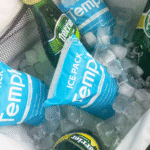
H3: Meilleur placement du sac de glace dans un petit sac à lunch isolé (la règle de la surface de la glace)
Par temps chaud, placer un sac de glace près du sommet peut protéger contre l'air chaud entrant lorsque vous ouvrez le sac.
petit sac à lunch isotherme
Utilisez un emballage plat pour éviter d'écraser les aliments mous.
| Placement du sac de glace | Meilleur cas d'utilisation | Risque | Votre meilleur coup |
|---|---|---|---|
| Haut | trajet chaud | appuie sur les aliments mous | utiliser un paquet plat + couvercle rigide |
| Côté | refroidissement équilibré | inégal si le sac est large | placer à côté du conteneur principal |
| Bas | base stable | le dessus chauffe plus vite | ajoutez un top pack fin si nécessaire |
Conseils et suggestions pratiques
-
Enveloppez les blocs de glace avec un chiffon fin pour réduire les gouttes de condensation.
-
Gardez les articles mouillés scellés afin que l'humidité ne devienne pas une odeur plus tard.
-
Emballez les articles les plus sensibles à la température le plus près de la paroi froide.
Cas pratique: Un banlieusard a réparé le « yaourt chaud » en passant à un sac de glace à dessus plat et à un emballage plus serré.
Un petit sac à lunch isotherme peut-il également contenir des repas chauds?
Oui, mais traitez-le comme un court « abri thermique »,« pas un long chauffage. Les repas chauds perdent rapidement de la chaleur lorsqu'il y a de l'espace vide et des ouvertures répétées. La vapeur crée également de l'humidité qui peut rendre le pain détrempé et les doublures collantes..
Utilisez cette méthode d'emballage chaud:
-
préchauffer le récipient (eau chaude, puis vide)
-
emballer les aliments chauds dans un récipient scellé
-
remplir l'espace pour réduire l'air
-
ferme vite et ne continue pas à ouvrir
H3: Liste de contrôle pour préparer un repas chaud (prêt à copier)
| Type de repas chaud | Meilleur conteneur | Conseil d'emballage | Signification pratique pour vous |
|---|---|---|---|
| Soupe | pot thermos scellé | droit + base stable | moins de fuites |
| Riz + curry | boîte à couvercle hermétique | garder le niveau | moins de désordre |
| Aliments frits | récipient ventilé | ne pas trop emballer | moins de détrempe |
| Pâtes | boîte scellée | espace libre modéré | meilleure texture |
Petit sac à lunch isotherme pour le travail ou l'école: quels changements?
Votre « meilleur » petit sac à lunch isotherme dépend de la façon dont il est traité. Les sacs de travail ont besoin d'un confort mince, matériaux silencieux, et un accès rapide. Les cartables ont besoin de durabilité, contrôle des déversements, et une simplicité adaptée aux enfants.
Les enfants ouvrent les sacs plus souvent et oublient de fermer les fermetures éclair. Cela signifie que la durabilité et la facilité de nettoyage comptent plus que les fonctionnalités sophistiquées..
petit sac à lunch isotherme
H3: Priorités en matière de fonctionnalités axées sur l'école
| Besoin scolaire | Meilleure fonctionnalité | Pourquoi ça aide | Signification pratique pour vous |
|---|---|---|---|
| Ouverture facile | grande tirette de fermeture éclair | moins de frustration | moins de fermetures éclair cassées |
| Contrôle des déversements | doublure résistante aux fuites | nettoyage rapide | moins d'odeurs et de taches |
| Zone d'étiquette de nom | zone d'étiquetage dédiée | évite la perte | moins de remplacements |
| Coins durables | coutures renforcées | survit aux chutes | durée de vie plus longue |
petit sac à lunch isotherme
Priorités des fonctionnalités axées sur le travail (convivial)
-
base verticale stable (empêche les déversements sur le bureau)
-
large ouverture (pour que tu puisses tout voir rapidement)
-
fermeture éclair solide et traction douce
-
poche extérieure pour ustensiles et lingettes
-
doublure essuyable (nettoyage rapide entre les réunions)
Conseils et suggestions pratiques
-
Si vous faites la navette en transport en commun: évitez les sacs souples qui se balancent et basculent.
-
Si tu manges à ton bureau: choisissez un sac qui s'ouvre grand, pas profondément étroit.
-
Si vous transportez des sauces quotidiennement: la résistance aux fuites bat les poches supplémentaires.
Outil de décision interactif: choisir le bon petit sac à lunch isotherme
Utilisez cet outil pour choisir en fonction de votre journée, je ne commercialise pas de photos.
Étape 1: Votre heure pour manger
-
UN) 0–2 heures
-
B) 2–6 heures
-
C) 6+ heures
Étape 2: Liquides
-
UN) Rarement
-
B) Parfois
-
C) Presque quotidiennement
Étape 3: Nourriture chaude
-
UN) Rarement
-
B) Souvent
Étape 4: Style de déplacement
-
UN) Voiture
-
B) Transport en commun/marche
-
C) Mixte + beaucoup de mouvement
Votre match (recommandation simple)
-
Principalement des réponses A: petit sac à lunch isolé léger + doublure simple et essuyable
-
N'importe quel C (liquides ou longtemps): donner la priorité à une doublure étanche + base stable + place pour un sac de glace plat
-
Plats chauds souvent: large ouverture + fermeture éclair solide + stratégie de séparation facultative
-
Mouvement mixte: forme structurée qui reste verticale et résiste au basculement
Liste de contrôle d'auto-audit: est-ce que votre configuration de déjeuner fonctionne réellement?
Donnez-vous 1 point pour chaque « Oui ».
-
Mon déjeuner a toujours un goût frais au moment du repas
-
Mon sac ne sent plus après une semaine d'utilisation
-
Je peux essuyer l'intérieur en dessous 60 secondes
-
Je ne vois pas de coins humides ni de taches
-
Mes contenants rentrent sans serrer
-
Je peux le porter confortablement tous les jours
-
Je ne compte pas sur des sacs en plastique supplémentaires pour éviter les fuites
-
Ma stratégie de banquise est cohérente et simple
Signification du score
-
7–8: Système solide. Mise à niveau uniquement pour des raisons de commodité ou de style.
-
5–6: Fermer. Corrigez d’abord la méthode d’emballage ou les habitudes de nettoyage.
-
0–4: Votre sac travaille contre vous. Remplacer ou redimensionner.
Comment nettoyer un petit sac à lunch isotherme pour qu'il reste sans odeur
L'odeur est généralement emprisonnée dans l'humidité et les résidus, pas de « malchance ». La solution la plus rapide est un essuyage quotidien et un séchage complet. La plupart des sacs échouent lorsqu’ils sont fermés par fermeture éclair alors qu’ils sont humides.
Routine quotidienne (2–3 minutes)
-
Miettes et emballages vides
-
Essuyer la doublure avec de l'eau savonneuse douce
-
Essuyez à nouveau avec de l'eau propre
-
Laisser décompressé pour sécher complètement à l'air libre
Nettoyage en profondeur hebdomadaire (10 minutes)
-
concentrez-vous sur les coins et la piste de la fermeture éclair
-
inspecter la doublure pour déceler des fissures et des soulèvements de coutures
-
assurez-vous qu'il sèche complètement avant de le ranger
2025 tendances pour les petits sacs à lunch isothermes
Dans 2025, les plus grands changements sont pratiques, pas tape-à-l'œil:
-
Des petits formats plus structurés qui tiennent debout
-
plus d'inserts amovibles (séparateurs et panneaux de base)
-
plus de doublures faciles à nettoyer conçues pour un nettoyage fréquent
-
des modèles plus compacts qui s'adaptent aux sacs à dos de travail modernes
-
plus de « pensée systémique »: sac + récipient + sac de glace en une seule configuration
Réalité du marché: le petit sac à lunch isotherme gagnant est celui que vous utilisez quotidiennement sans friction.
Suggestions de liens internes (pas de liens externes)
-
Meilleur placement du sac de glace dans un petit sac à lunch isolé
-
SOP pour préparer le déjeuner de travail: séparation du froid et du chaud
-
Guide d'ajustement du sac à lunch: bento vs bol vs boîtes de préparation de repas
Questions fréquemment posées
Q1: Combien de temps un petit sac à lunch isotherme garde-t-il les aliments au frais?
Cela dépend de la température de départ, plénitude du sac, utilisation de la banquise, et exposition à la chaleur. Un sac serré avec un sac de glace plat dure plus longtemps qu'un sac à moitié vide.
Q2: Quelle est la caractéristique la plus importante d'un petit sac à lunch isotherme?
La doublure. Un essuyable, la doublure à faible odeur permet au sac d'être utilisable pendant des mois au lieu de plusieurs semaines.
Q3: Un petit sac à lunch isotherme étanche est-il vraiment étanche?
La plupart sont résistants aux éclaboussures, pas de magie. Utilisez des contenants scellés et effectuez le test des serviettes en papier pour confirmer les performances réelles.
Q4: Les blocs de glace doivent-ils être placés en haut ou en bas?
Le dessus ou le côté fonctionne souvent mieux dans les environnements chauds car l'air chaud entre par le haut lorsque vous ouvrez la fermeture éclair.. Utiliser un emballage plat pour éviter l'écrasement.
Q5: Un petit sac à lunch isotherme peut-il garder les aliments au chaud jusqu'au déjeuner?
Cela aide pour les prises courtes. Pour de longues tenues au chaud, utilisez un récipient de type thermos et traitez le sac comme un tampon supplémentaire.
Q6: Quand dois-je remplacer mon petit sac à lunch isotherme?
Remplacer lorsque le revêtement se fissure, les coutures suintent, ou les odeurs persistent même après un nettoyage et un séchage complets.
Résumé et recommandations
UN petit sac à lunch isotherme fonctionne mieux lorsqu'il correspond à la forme de votre conteneur, se range bien avec un minimum d'espaces d'air, et possède une doublure essuyable qui reste propre. Utilisez une disposition cohérente du sac de glace, ouvrir le sac moins souvent, et séchez-le complètement après le nettoyage. Si vous transportez souvent des liquides, privilégier la résistance aux fuites et une base stable. Si vous transportez des repas chauds, se concentrer sur les conteneurs scellés et la fermeture rapide.
Plan d'action (CTA)
-
Mesurez votre contenant le plus utilisé (bento, bol, ou boîte de préparation de repas).
-
Choisissez le plus petit sac à lunch isotherme qui s'adapte sans serrer.
-
Choisissez un sac de glace plat et utilisez le même emplacement quotidiennement pendant une semaine.
-
Exécutez le test de serviette en papier une fois pour confirmer la résistance aux déversements.
-
Après 7 jours, répétez l'auto-audit et ajustez la taille ou la mise en page.
À propos du tempk
Et tempk, nous appliquons la réflexion sur la chaîne du froid aux flux de travail quotidiens de transport et de livraison professionnelle. Nous nous concentrons sur des routines reproductibles : un emballage serré, moins de transitions de température, contrôle des fuites, et un nettoyage rapide : pour que vos aliments restent plus frais et que votre routine quotidienne reste simple. Si vous partagez les dimensions de votre conteneur, temps de trajet, et si vous transportez des liquides, nous pouvons vous recommander une configuration de petit sac à lunch isolé et une disposition d'emballage adaptée à votre vraie journée.