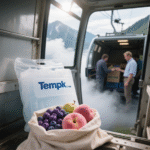
Crémerie à température contrôlée Best Packaging Canada?
Meilleur emballage de crémerie à température contrôlée Canada n’est pas une « boîte magique ». Il s'agit d'un système reproductible qui maintient les produits laitiers réfrigérés à proximité ≤4°C et desserts glacés à proximité ≤-18 ° C, tout en stoppant les fuites, écraser, et perte d'étiquette. Si vous expédiez au Canada, tes plus grands ennemis sont temps, Swings de température, et humidité. Ce guide vous propose une méthode d'emballage basée sur les voies que vous pouvez vous entraîner rapidement et évoluer en toute sécurité..
Dernière mise à jour: Décembre 22, 2025
Ce guide vous aidera:
-
Choisir crèmerie à température contrôlée meilleur emballage par risque de voie (temps, transferts, saison, exposition du dernier kilomètre)
-
Fixer des objectifs enseignables pour Température de la chaîne du froid des produits laitiers au Canada 4°C et expédition de desserts glacés Canada -18°C
-
Construire un 6-emballage des couches qui réduit la « boîte humide,« captation des odeurs, et conflits d'arrivée à chaud
-
Utiliser un 90-deuxième outil de décision et un 6-auto-audit minute standardiser l'emballage quotidien
-
Protéger exigences bilingues en matière d'étiquetage des produits laitiers Canada avec des habitudes d'étiquette prêtes à l'humidité
-
Valider et surveiller crèmerie à température contrôlée meilleur emballage sans se noyer dans la paperasse
Crémerie à température contrôlée Best Packaging Canada: Qu'est-ce que ça veut vraiment dire?
Le meilleur emballage de crémerie à température contrôlée au Canada signifie que vous protégez un démarrage à froid grâce à un véritable transit. L’emballage ne « fait » pas froid. Il ralentit le changement, comme un thermos protège la chaleur. Votre processus compte tout autant que vos matériaux.
Considérez-le comme trois promesses que vous faites au destinataire:
-
Promesse de température: frais reste frais; gelé reste gelé
-
Promesse propre: les fuites et l'eau de fonte ne contaminent pas la boîte
-
Promesse d'identité: étiquettes, codes de lot, et les repères de stockage restent lisibles
Le « thermos + imperméable + modèle "casque"
-
Thermos: l'isolation réduit le flux de chaleur
-
Imperméable: doublures + les absorbants gèrent l’humidité et les fuites
-
Casque: structure + l'immobilisation empêche l'écrasement et le déplacement
| Objectif d'emballage | Quelles sont les causes de l'échec | Qu'est-ce qui le répare | Ce que cela signifie pour vous |
|---|---|---|---|
| Température stable | Lacunes + longue attente | Bonne taille + isolation plus forte | Moins de réclamations « arrivé chaud » |
| Sec, boîte propre | Condensation + fuites | Doublure de barrière + zones absorbantes | Moins d'odeur, moins de rejets |
| Étiquettes survivantes | Cartons humides | Étiquettes prêtes à l'humidité + placement protégé | Décisions d’assurance qualité plus rapides |
Conseils et suggestions pratiques
-
Créez une règle de « pas de mise en scène à chaud »: s'il reste dehors, il est revérifié avant d'être expédié.
-
Traitez les fuites comme un signal de rejet: les fuites deviennent rapidement une odeur + perte d'étiquette + litiges.
-
Rendre l'emballage reproductible: le meilleur système est celui que votre équipe peut exécuter chaque jour.
Exemple pratique: Une petite marque de glaces a éliminé les plaintes après avoir imposé une minuterie d'étape stricte et ajouté une barrière intérieure scellée dans chaque expéditeur..
Crémerie à température contrôlée Best Packaging Canada: Pour quels objectifs de température devriez-vous concevoir?
Le plan de votre crèmerie à température contrôlée doit séparer les flux de travail réfrigérés et congelés.. Mélanger les règles crée des erreurs. Utilisez des objectifs dont votre équipe peut se souvenir et sur lesquels agir rapidement.
Une carte de fonctionnement simple:
-
Produits laitiers réfrigérés (lait, crème, yaourt, beaucoup de fromages): conception pour ≤4°C
-
Desserts congelés (glace, glace, produits laitiers surgelés): conception pour ≤-18 ° C (ou les spécifications de votre produit)
Des cibles basées sur les produits que vous pouvez réellement exploiter
| Produit de crémerie | Cible pratique | Le plus grand risque | Ce que cela signifie pour vous |
|---|---|---|---|
| Lait, crème, yaourt | ≤4°C | Dérive chaude + perte de qualité | Plus de durée de conservation, moins de retours |
| Fromages à pâte molle | ≤4°C | Transpiration + captation des odeurs | Le contrôle de l’humidité est plus important |
| Beurre | Frais/réfrigéré | Ramassage des odeurs + éraflure | Utilisez des barrières à faible odeur + ajustement serré |
| Glace / glace | ≤-18 ° C | Décongeler/regeler les dommages à la texture | Forte isolation + SOP strictes du dernier kilomètre |
Conseils et suggestions pratiques
-
Utilisez « le temps + température » en pensant: les minutes comptent au quai et à la porte.
-
En hiver, protéger les produits laitiers réfrigérés du gel: « trop froid » peut être un échec de qualité.
-
Gardez les règles courtes: une cible + une ligne d'action bat dix règles déroutantes.
Exemple pratique: Une crèmerie a amélioré la consistance en créant deux emballages: un pour le frais (≤4°C) et un pour les surgelés (≤-18 ° C), chacun avec une seule photo SOP.
Crémerie à température contrôlée Best Packaging Canada: Le plan d'emballage à 6 couches
L'approche la plus fiable du meilleur emballage de crèmerie à température contrôlée au Canada est en couches. Chaque couche résout un mode de défaillance différent. Quand vous sautez une couche, vous payez généralement plus tard en remboursement.
Le 6 couches (copier et entraîner)
-
Conteneur principal: Baignoire/carton/pochette scellés
-
Barrière scellée secondaire: sac ou doublure intérieure pour les fuites et les odeurs
-
Couche absorbante: placé dans les zones de fuite (bas + coins)
-
Couche de liquide de refroidissement: packs de gel, PCM, ou glace sèche (le cas échéant)
-
Couche d'isolation: EPS/EPP/PU/VIP selon risque de voie
-
Expéditeur extérieur + fermeture: ondulation forte + preuve d'inviolabilité
H3: Erreurs de calque courantes (et la solution simple)
| Couche | Erreur courante | Réparer | Ce que cela signifie pour vous |
|---|---|---|---|
| Barrière secondaire | "Ça ne fuit jamais" en pensant | Utilisez-le pour tous les liquides | Moins de cartons humides |
| Absorbant | Sauter sur des voies réfrigérées | Mettez des tampons dans les coins + base | Réception plus propre |
| Placement du liquide de refroidissement | Produit touchant le liquide de refroidissement | Ajouter des espaceurs/tampons | Moins de dégâts dus au gel |
| Ajustement de l'isolation | Expéditeur surdimensionné | Bonne taille + inserts | Plus de stabilité, moins de coût |
Conseils et suggestions pratiques
-
Commencez par la bonne taille: l'air supplémentaire se réchauffe plus vite que vous ne le pensez.
-
Utiliser des entretoises: garder les surfaces très froides hors des contenants de produits laitiers réfrigérés.
-
Sceller rapidement: le temps d'ouverture du couvercle tue silencieusement la température.
Exemple pratique: Un programme d'abonnement pour les produits laitiers a réduit les incidents de « fuite dans la boîte » en ajoutant une barrière secondaire et un insert de base rigide, sans ajouter de liquide de refroidissement supplémentaire..
Crémerie à température contrôlée Best Packaging Canada: Comment choisir l'isolation par voie risque?
Le meilleur emballage de crèmerie à température contrôlée au Canada fonctionne mieux lorsque l'isolation correspond à votre pire arrêt, ce n'est pas votre arrêt moyen. Un pas de porte chaud ou un long transfert peut interrompre l'envoi.
Système de niveaux que vous pouvez standardiser (simple et évolutif)
-
Étage 1 (faible risque): itinéraires courts, transfert contrôlé
-
Étage 2 (risque moyen): régional, multi-arrêts, risque de séjour modéré
-
Étage 3 (risque élevé): longues voies, interprovincial, séjour inconnu, extrêmes saisonniers
| Étage | Meilleur cas d'utilisation | Niveau d'isolation | Ce que cela signifie pour vous |
|---|---|---|---|
| Étage 1 | même ville, direct | isolation de base | faible coût, haute discipline |
| Étage 2 | régional + transferts | isolation supérieure | moins de balançoires, moins de litiges |
| Étage 3 | long + incertain | isolation la plus élevée (souvent premium) | protège les revenus les plus risqués |
Conseils et suggestions pratiques
-
Protéger l'interface du couvercle: les fuites de chaleur se produisent souvent au niveau des fermetures.
-
Construisez deux packs saisonniers: l'été et l'hiver sont un bon début.
-
Évitez le « un paquet unique pour tout le Canada »: Les voies du Canada varient trop.
Exemple pratique: Une crémerie a amélioré la stabilité congelée en améliorant l'étanchéité du couvercle et en réduisant l'espace libre, sans changer le poids du liquide de refroidissement.
Crémerie à température contrôlée Best Packaging Canada: Comment choisir le bon liquide de refroidissement (gel, PCM, glace carbonique)?
Le choix du liquide de refroidissement détermine si le meilleur emballage de crèmerie à température contrôlée au Canada est « acceptable » ou « reproductible ». Votre objectif est la stabilité, pas de drame.
Conseils rapides sur le liquide de refroidissement
-
Packs de gel: simple, fort refroidissement précoce, choix quotidien commun
-
Packs PCM: bande de température plus stable (idéal lorsque vous avez besoin d'un contrôle réfrigéré stable)
-
Glace sèche: puissant pour les voies gelées, mais nécessite une ventilation et une manipulation entraînée
H3: Comparaison du liquide de refroidissement (table de décision quotidienne)
| Liquide de refroidissement | Mieux pour | Force | Risque | Ce que cela signifie pour vous |
|---|---|---|---|---|
| Packs de gel | réfrigéré court à moyen | simple | condensation | recette standard la plus simple |
| Packs PCM | stabilité au froid | moins de balançoires | coût plus élevé | des résultats plus reproductibles |
| Glace | courtes prises réfrigérées | bon marché | eau de fonte | a besoin de discipline de confinement |
| Glace sèche | longues voies gelées | fort pouvoir de congélation | sécurité + règles du transporteur | idéal pour les longs itinéraires gelés |
Conseils et suggestions pratiques
-
Contenir tout ce qui fond: l'eau de fonte détruit les cartons et les étiquettes.
-
Évitez le refroidissement excessif en hiver: les produits laitiers réfrigérés peuvent subir des dommages dus au gel.
-
Standardiser le nombre de paquets: la cohérence bat l'improvisation.
Exemple pratique: Une marque de desserts glacés a amélioré sa fiabilité en fixant le poids de la glace carbonique par taille de boîte et en resserrant les délais de livraison lors des journées chaudes..
Crémerie à température contrôlée Best Packaging Canada: Humidité, fuites, et « cartons mouillés »
L'humidité est le mode de défaillance caché dans les meilleurs emballages de crèmerie à température contrôlée Canada. Même quand la température est bonne, une boîte humide déclenche des rejets, odeur, et perte d'étiquette.
H3: Pile de contrôle de l'humidité (simple et efficace)
-
Confinement secondaire: produit scellé + barrière intérieure scellée
-
Doublure de barrière: empêche l'humidité d'affaiblir le carton ondulé
-
Zones absorbantes: bas + coins, où les fuites s'accumulent
-
Règle de séchage: ne jamais conserver les emballages retournés fermés lorsqu'ils sont mouillés
| Problème d'humidité | Quelles sont les causes | Correction de l'emballage | Ce que cela signifie pour vous |
|---|---|---|---|
| Base humide | fuir + eau de fonte | fond absorbant + barrière | moins de refus |
| Ramassage des odeurs | fuite de produits laitiers | barrière intérieure scellée | expérience client plus propre |
| Étiquettes tachées | condensation | papier d'étiquettes résistant à l'humidité | la traçabilité reste intacte |
Conseils et suggestions pratiques
-
Pour les liquides, double-contenir à chaque fois.
-
Mettez l'absorbant là où la gravité gagne: base et coins.
-
Ajouter une note de réception « garder scellé brièvement »: cela peut réduire les chocs de condensation.
Exemple pratique: Une crémerie a réduit les cartons détrempés en ajoutant une doublure intérieure scellée et un tampon absorbant – aucun liquide de refroidissement supplémentaire ajouté.
Crémerie à température contrôlée Best Packaging Canada: Étiquettes, règles bilingues, et traçabilité
Le meilleur emballage de crèmerie à température contrôlée Le Canada doit protéger la traçabilité, pas seulement la température. Si les étiquettes échouent, vos décisions d'assurance qualité ralentissent rapidement. De nombreux produits de crèmerie vendus au Canada nécessitent également Anglais et français pour les informations requises sur le consommateur, avec des exceptions définies.
H3: Liste de contrôle de durabilité des étiquettes (construit pour les environnements humides)
| Élément d'étiquette | Pourquoi ça compte | Là où ça échoue | Ce qu'il faut faire | Ce que cela signifie pour vous |
|---|---|---|---|---|
| Indice de stockage | contrôle de la manutention | petit texte ignoré | grand « GARDER AU RÉFRIGÉRATEUR/CONGELÉ » | moins de prises de mauvaise température |
| Marque de date | confiance du client | frottis de condensation | placement protégé | moins de litiges |
| Parcelle / identifiant de trace | portée du rappel | l'étiquette tombe | dupliquer l'étiquette du lot à l'intérieur | des enquêtes plus rapides |
| Texte bilingue | État de préparation du Canada | contraintes d'espace | planification d'aménagement propre | conformité plus fluide |
Conseils et suggestions pratiques
-
Traitez les étiquettes comme des étiquettes de qualité humide: la condensation se produit quelque part dans la plupart des voies.
-
Utiliser deux étiquettes: une étiquette de vente au détail, une étiquette logistique (plus simple et plus clair).
-
Rendre le code de lot « trouvable en une seconde ».
Exemple pratique: Une crémerie a réduit les plaintes pour « date manquante » en déplaçant le panneau de péremption vers une zone d'étiquette protégée et en utilisant un matériau résistant à l'humidité..
Crémerie à température contrôlée Best Packaging Canada: Validation et suivi auxquels les acheteurs font confiance 2025
Dans 2025, le meilleur emballage de crèmerie à température contrôlée au Canada est jugé en fonction des résultats, pas des intentions. Vous n'avez pas besoin de lourdes formalités administratives. Tu as besoin de lumière, habitudes de preuve cohérentes.
Un plan de validation d'une semaine (rapide, pratique)
-
Test de tenue thermique: simuler le temps d'itinéraire (inclure les retards prévus)
-
Essai de manipulation: empiler + vibration + contrôles de coin
-
Simulation du dernier kilomètre: ajouter une fenêtre « heure du porche » le cas échéant
| Test | Que faites vous | Ce que vous mesurez | Signal de passage | Ce que cela signifie pour vous |
|---|---|---|---|---|
| Tenue thermique | simulation d'itinéraire | temps dans la bande cible | pas de longue dérive | qualité prévisible |
| Manutention | simulation d'abus | fuites + écraser | Aucune fuite | moins de réclamations pour dommages |
| Dernier kilomètre | exposition au seuil de la porte | température dans le pire des cas | résultat acceptable | moins de litiges |
H3: Un suivi adapté aux budgets réels
-
Faible volume: échantillonner uniquement les voies à haut risque
-
Volume moyen: échantillonnage hebdomadaire des couloirs
-
Volume élevé: surveillance continue sur les voies supérieures
Règle de placement du capteur: placer les capteurs près d'un mur extérieur, tamponné du liquide de refroidissement, et ne pas toucher la source froide. Cela montre votre véritable point de risque.
Conseils et suggestions pratiques
-
Test avec un comportement d'ouverture réel: les itinéraires à arrêts multiples se comportent différemment.
-
Changer une variable à la fois: sinon l'apprentissage est bruyant.
-
Capturez la « preuve minimale » de manière cohérente: ID de recette du pack + temps de rangement + code de lot.
Exemple pratique: Une crèmerie coupée est réexpédiée après avoir validé une voie à haut risque et découvert que le temps passé sous le porche (et non l'isolation) était le véritable échec..
Un outil de décision en 90 secondes: Quel niveau d'emballage devez-vous utiliser?
Utilisez-le pour normaliser crèmerie à température contrôlée meilleur emballage par risque, Pas de supposition. Répondre Oui / Non:
-
L'envoi sera-t-il hors réfrigération contrôlée pendant plus que 2 heures?
-
Y a-t-il plusieurs arrêts ou transferts?
-
La voie est-elle exposée à chaleur estivale (mise en scène intérieure ou livraison extérieure)?
-
La voie est-elle exposée à risque de gel hivernal (manipulation non chauffée)?
-
Le produit est-il haute sensibilité (crème, fromage à pâte molle, surgelé haut de gamme)?
-
Avez-vous besoin preuve de température pour l'assurance qualité ou les clients?
Notation:
-
0–2 Oui: Étage 1 est généralement suffisant
-
3–4 Oui: Étage 2 recommandé
-
5–6 Oui: Étage 3 + pilote de surveillance recommandé
Un auto-audit de 6 minutes: Votre programme est-il vraiment prêt pour la chaîne du froid?
Donnez-vous 1 indiquer pour chaque « Oui ».
Contrôle du froid (0–6)
-
Le produit est pré-réfrigéré ou entièrement congelé avant l'emballage
-
Vous avez des recettes de pack basées sur des voies (été contre hiver)
-
Les chargeurs sont dimensionnés pour réduire les trous d’air
-
Le placement du liquide de refroidissement est cohérent
-
Le temps de séjour au quai est minimisé
-
Vous pouvez montrer des preuves de température de base si nécessaire
Fuir + contrôle d'hygiène (0–5)
-
Les liquides sont à double confinement
-
Une doublure de barrière est utilisée
-
Des tampons absorbants sont placés dans les zones de fuite
-
Les retours sont nettoyés et séchés avant stockage
-
Le personnel sait quoi faire avec un carton mouillé
Répétabilité opérationnelle (0–4)
-
Les emballeurs ont atteint une fenêtre de temps d'emballage cohérente
-
Les fermetures sont faciles et cohérentes
-
Les étiquettes et les identifiants de lot sont toujours au même endroit
-
Vous disposez d'un playbook d'exception simple
Signification du score
-
13–15: programme solide
-
9–12: risque moyen; des pics saisonniers sont probables
-
0–8: risque élevé; corriger le flux de travail avant la mise à l'échelle
2025 tendances en matière d'expédition de crèmeries canadiennes
Ce qui change dans le monde réel:
-
Plus de recettes basées sur les pistes: les équipes standardisent par risque d'itinéraire, Pas de supposition
-
Plus de manuels de jeu saisonniers: les emballages d'été et d'hiver deviennent la référence
-
Plus de discipline en matière d'humidité: les doublures et les absorbants passent de « agréables » à « nécessaires »
-
Plus d'habitudes de preuve: une surveillance légère sur les voies à problèmes vaut mieux que tout enregistrer
-
Un packaging plus modulaire: les inserts et les séparateurs réduisent les dommages sans ajouter de liquide de refroidissement
Questions fréquemment posées
Q1: Qu'est-ce que le meilleur emballage de crèmerie à température contrôlée au Canada en une phrase?
Il s'agit d'un système reproductible qui protège les produits de crèmerie réfrigérés et surgelés., évite les fuites et les dommages, et préserve la traçabilité tout au long des saisons canadiennes.
Q2: Quelle cible réfrigérée dois-je former le personnel à utiliser?
Entraînez-vous à une règle simple: les produits de crèmerie réfrigérés doivent être emballés et manipulés pour rester à ou en dessous de 4°C jusqu'à la livraison chaque fois que la réfrigération est requise.
Q3: Pour quelle cible gelée dois-je concevoir?
Un objectif opérationnel pratique est à -18°C ou moins pour desserts glacés, sauf si les spécifications de votre produit exigent quelque chose de plus strict.
Q4: Ai-je besoin d'enregistreurs de température dans chaque expédition?
Pas habituellement. Échantillon voies à haut risque, semaines de forte chaleur, et les semaines de pointe de gel en premier, puis développez-le uniquement si cela change les résultats.
Q5: Comment arrêter rapidement les cartons mouillés?
Utilisez une barrière intérieure scellée, ajouter des tampons absorbants dans la base et les coins, et empêche l'eau de fonte d'entrer en contact avec la zone du produit.
Q6: Pourquoi l'hiver est-il encore risqué pour les produits laitiers réfrigérés?
L'hiver peut causer congélation accidentelle et plus tard choc de condensation pendant les transitions intérieures, ce qui nuit à la qualité et aux labels.
Résumé et recommandations
Le meilleur crèmerie à température contrôlée meilleur emballage l'approche est basée sur les voies et reproductible. Programmes réfrigérés et surgelés séparés, concevoir autour ≤4°C et ≤-18 ° C, expéditeurs de bonne taille, et contrôlez l'humidité avec des barrières et des zones absorbantes. Utiliser un système de niveaux, validez vos packouts par saison, et surveiller les voies qui suscitent réellement des plaintes. Quand votre processus est cohérent, la qualité devient prévisible.
Plan d'action (CTA)
-
Classer les produits: réfrigéré ou congelé.
-
Marquez vos meilleures voies avec l'outil de 90 secondes (Étage 1/2/3).
-
Construire deux recettes de pack de saison (été + hiver) pour chaque niveau que vous utilisez.
-
Courir un 10-pilote d'expédition au niveau 3 voies avec surveillance.
-
Former les emballeurs à l'aide d'une SOP photo d'une page et d'un minuteur de mise en scène.
À propos du tempk
Et tempk, nous aidons les marques de crèmerie à se transformer crèmerie à température contrôlée meilleur emballage dans un système que votre équipe peut exécuter quotidiennement. Nous nous concentrons sur les recettes de packs basées sur des voies, couches de contrôle de l'humidité qui réduisent les cartons humides, et des routines de validation simples qui créent des décisions claires en matière d'assurance qualité. Notre objectif est pratique: moins de plaintes, moins de réexpéditions, et des flux de travail d'emballage qui restent cohérents au fil des saisons canadiennes.
Prochaine étape (CTA): Partagez votre type de produit (produits laitiers réfrigérés vs dessert glacé), temps de transit moyen, et modèle de livraison (B2B ou DTC). Nous vous recommanderons un tableau de packs basé sur les niveaux que vous pourrez piloter immédiatement.