Dessert glacé à température contrôlée Entreprise bon marché?
If you’re building a temperature-controlled frozen dessert cheap business, your biggest challenge is staying cold sans letting logistics costs eat your margin. Dans 2025, cold chain expenses can reach 20–35% des frais de fonctionnement, and frozen desserts often need -18°C à -25°C (0°F à -13°F) stabilité pour protéger la texture. Ce guide vous aide à réduire les réclamations liées à la fonte, réduire les déchets, et maintenez une qualité constante, en utilisant les décisions basées sur les voies que vous pouvez appliquer cette semaine.
Cet article vous aidera à répondre:
-
Comment gelato shipping temperature control protects texture (et critiques)
-
Lequel low-cost insulated packaging for frozen dessert shipping is “enough” for your lanes
-
Comment choisir un frozen dessert last-mile delivery model that keeps refunds low
-
How to price with a simple frozen dessert shipping cost calculator
-
What to track in a temperature monitoring checklist for frozen desserts (sans dépenses excessives)
Pourquoi le contrôle de la température fait-il ou défait une entreprise bon marché de desserts glacés à température contrôlée?
Réponse directe: UN temperature-controlled frozen dessert cheap business survives on repeatable texture. Even small warm–cool swings can turn “creamy” into “icy,” increasing complaints and refunds. Most frozen desserts perform best when you hold a stable frozen range (souvent -18°C / 0°F ou moins), especially during handoffs and last-mile delivery.
Frozen desserts are like a snow sculpture in a backpack. It might look fine at first, but a short warm-up weakens the structure. Customers notice grainy texture and ice crystals avant they see a full melt, and your brand pays the price in low ratings and chargebacks.
What temperature range is practical for transport?
| Frozen Dessert Type | Ideal Range | Risk if Too Warm | Ce que cela signifie pour vous |
|---|---|---|---|
| Glace | -20°C à -25°C | Ice crystals form | Higher complaint and refund rates |
| Glace | -18°C to -22°C | Texture collapses | “Premium” perception drops fast |
| Sorbet | -18° C à -20 ° C | Water separates | Shorter shelf life on arrival |
Conseils pratiques que vous pouvez appliquer dès maintenant
-
Local delivery: Use tight windows + insulated totes instead of powered freezers.
-
Regional overnight: Use hybrid protection (isolation + matched coolant).
-
Voies plus longues: Only upgrade to stronger systems when order value and reliability justify it.
Vrai exemple: One regional gelato brand reduced spoilage by 28% after tightening last-mile temperature range monitoring and packout discipline.
How do you keep a temperature-controlled frozen dessert cheap business cheap without losing quality?
Réponse directe: UN temperature-controlled frozen dessert cheap business stays profitable by balancing temps + isolation + liquide de refroidissement, not by buying the cheapest materials. “Cheap” means optimized and repeatable—not fragile.
When you standardize one packout and one operating rule set, you stop paying for heroics. You also reduce the hidden cost nobody budgets for: re-makes, remboursement, and support tickets.
The “Cold Chain Triangle” decision tool (interactif)
Score each lever from 1 (faible) à 5 (fort). Ajoutez votre total.
-
Time Control: cutoffs, dispatch speed, delivery window reliability
-
Insulation Control: ajustement de la boîte, qualité du joint, void-fill discipline
-
Coolant Control: taper, quantité, placement accuracy
Total 12–15: You can run lean packaging.
Total 8–11: Keep packaging moderate and narrow your delivery zone.
Total ≤7: Fix operations first, or refunds will erase your margin.
Cost mistakes that quietly destroy margins
-
Over-insulating short routes “just in case”
-
Using too many box sizes (training errors = melt claims)
-
Measuring temperature only after customers complain
Operational insight: One dessert retailer cut packaging cost by 22% by removing unnecessary secondary insulation layers and standardizing box sizing.
Which packaging is best for a temperature-controlled frozen dessert cheap business in 2025?
Réponse directe: The best packaging for a temperature-controlled frozen dessert cheap business est de bonne taille, répétable, and tested. Consistency is cheaper than “premium everything.”
A simple packaging stack (that most teams can execute fast):
-
Primary pack: sealed tub/wrap (résistant aux fuites)
-
Couche barrière: liner bag (protects insulation from moisture)
-
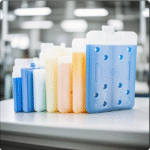
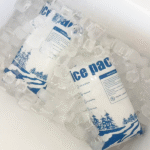
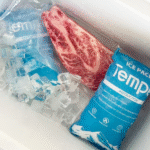
Liquide de refroidissement: packs de gel, PCM, ou glace sèche (basé sur une voie)
-
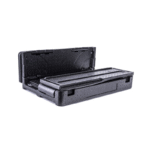
Isolation: EPS/EPP-style shipper, doublure isolée, or reusable tote
-
Carton extérieur: protège, étiquettes, stacks cleanly
Insulation options (what to buy first)
| Type d'isolation | Niveau de coût | Thermal Hold | Weak Spot | Meilleure utilisation |
|---|---|---|---|---|
| Doublure isolée (foil/bubble) | Faible | Moyen | Gaps kill performance | Voies courtes, emballage serré |
| Expéditeur de mousse (EPS/EPP-style) | Moyen | Haut | Bulky storage | Standard overnight lanes |
| Reusable insulated tote | Moyen | Haut | Logistique inversée | Local routes, subscriptions |
| Panneaux VIP | Haut | Très élevé | Higher cost/handling | Premium lanes only |
“Cheap” wins that matter more than thicker foam
-
Use the smallest box that fits. Air is the enemy.
-
Pre-chill product and packaging. Warm cardboard steals cold fast.
-
Standardize 1–2 packouts. Fewer variants = fewer mistakes.
Vrai exemple: A small gelato brand reduced melt complaints by tightening box sizing and using one consistent gel-pack layout—without buying a “better box.”
Packs de gel vs PCM vs glace carbonique: what is cheapest for you?
Réponse directe: The “cheapest” coolant depends on temps de couloir + saison + how controlled your handoff is. Gel packs are operationally simple, PCM helps texture stability, and dry ice delivers strong hold time but needs stricter handling and labeling discipline.
La glace carbonique est -78.5°C (-109.3°F)—powerful, but it can add friction (règles du transporteur, entraînement, customer handling). PCM is like “smart ice” that melts at a chosen temperature band, helping reduce texture swings.
| Liquide de refroidissement | Meilleur cas d'utilisation | Cost Control Lever | Ce que cela signifie pour vous |
|---|---|---|---|
| Packs de gel | Locale / itinéraires courts | Standardize pack count | Lowest hassle, SOP répétable |
| PCM | Texture-sensitive items (glace) | Match PCM temp to product | Meilleure texture, less over-freezing |
| Glace sèche | Voies plus longues / saisons chaudes | Tight cutoffs + étiquetage | Strong performance, plus d'étapes de processus |
Your 60-second coolant chooser (interactif)
Répondre Oui / Non:
-
Is the lane reliably ≤2 days?
-
Will it sit outside on arrival?
-
Is the order value high enough to absorb upgrades?
If “No” to #1: treat it as premium (upgrade packout) or decline it.
If “Yes” to #2: add a porch buffer layer or require attended delivery/pickup.
If “No” to #3: keep your promise narrower (shorter zones, earlier cutoff).
What delivery model fits a temperature-controlled frozen dessert cheap business?
Réponse directe: UN temperature-controlled frozen dessert cheap business wins by choosing the delivery model that matches your control level. If you can’t control handoffs, shorten the route. If you want distance, budget for stronger packaging et stricter cutoffs.
| Modèle | Mieux pour | Niveau de risque | Ce que cela signifie pour vous |
|---|---|---|---|
| Courrier le jour même | City launches | Moyen | Lighter packout, tighter windows |
| Your route fleet | Abonnements | Faible | Highest control, lowest refund rate |
| Regional overnight | Croissance | Moyen à élevé | Needs realistic delay protection |
| B2B drops | Répéter les voies | Faible à moyen | Margin improves with repeatability |
Cutoff times: the hidden profit switch
-
Set a cutoff that includes packout + mise en scène + pickup buffer.
-
Avoid risky end-of-week shipments that can trigger weekend holds.
-
In hot months, shrink zones or upgrade only the hottest lanes.
Practical last-mile upgrades (bon marché, efficace)
-
Offer 2-hour windows instead of “all day.”
-
Send delivery-day reminders so customers are ready.
-
Définir un safe drop policy to prevent doorstep heat exposure.
Vrai exemple: A mochi seller cut refunds after adding delivery-day SMS reminders and restricting “no-contact drop” during high-heat days.
Pricing and unit economics: a frozen dessert shipping cost calculator
Réponse directe: You keep a temperature-controlled frozen dessert cheap business profitable by making costs predictable, then pricing around the worst realistic day, pas le meilleur. Underpricing is the fastest way to “grow” into losses.
Quick cost model (copie ceci)
True Cost per Order =
(Produit + Travail)
-
Conditionnement
-
Livraison
-
(Refund Rate × Average Refund Cost)
-
Overhead Allocation
Target Price = True Cost per Order ÷ (1 − Target Margin)
Underpricing self-check (interactif)
Répondez « Oui » ou « Non »:
-
Do you know packaging cost per order to the dollar?
-
Do you include a refund buffer in pricing?
-
Do you adjust packout rules by season or lane?
-
Can you explain your cutoff logic in one sentence?
-
Do you track outcomes for your worst lane?
4–5 Oui: priced like a real business.
2–3 Oui: exposed—fix tiering and tracking.
0–1 Oui: likely selling volume at a loss.
Tiered packouts keep “cheap” truly cheap
-
Niveau A (locale): lighter insulation + packs de gel
-
Niveau B (régional): isolation plus forte + more coolant/PCM
-
Niveau C (voies chaudes): upgrade only when needed (not for everyone)
Vrai exemple: One startup improved margin by separating local courier pricing from regional overnight pricing. Customers accepted it because the promise was clearer.
Monitoring that protects a temperature-controlled frozen dessert cheap business
Réponse directe: UN temperature-controlled frozen dessert cheap business doesn’t need enterprise monitoring everywhere. You need proof on the lanes that lose money. Start simple and scale monitoring only where failures happen.
Temperature monitoring checklist for frozen desserts
Track these three points:
-
Product temp at packout (meet your internal standard)
-
Time out of freezer (keep it short and repeatable)
-
Condition d'arrivée (firmness + melt pooling + package integrity)
A monitoring ladder (choose your level)
-
Niveau 0: freezer thermometer + daily log
-
Niveau 1: one low-cost logger per week on your worst lane
-
Niveau 2: one logger per batch per carrier lane
-
Niveau 3: surveillance en temps réel + alertes d'exception
For most small brands, Niveau 1 delivers the best ROI.
A simple 30-day scaling plan
-
Semaine 1 (Standardiser): 1 AMADOUER, 2 box sizes max, 1 coolant layout per size
-
Semaine 2 (Mesure): lane outcomes, ambient band, refund reasons
-
Semaine 3 (Optimiser): upgrade only the worst lane, tighten cutoffs
-
Semaine 4 (Développer): add one new zone, repeat measurement
Résultat réel: One distributor cut energy costs by 19% after shifting from full refrigeration to a hybrid approach matched to delivery distance.
Dry ice rules (Et 1845) and safety basics
Réponse directe: Dry ice can protect long lanes, but it demands discipline. Many shipments require «Glace sèche, ET 1845' marquage, poids net, and mode/carrier-specific labeling steps. You must also avoid sealing packages airtight because CO₂ gas needs to vent.
Practical dry ice checklist (print and post)
-
Use a shipper design that vents gas (don’t seal airtight).
-
Marque Glace sèche / Et 1845 et poids net (kg) au besoin.
-
Apply the required label(s) for your carrier/mode when needed.
-
Former le personnel à une manipulation sécuritaire: gants, ventilation, règles de stockage.
Vrai exemple: A startup reduced carrier refusals by standardizing one dry-ice workflow and training every packer to follow it exactly.
How do you reduce refunds and chargebacks in a cheap model?
Réponse directe: Refunds drop when your promise is realistic, your packout is repeatable, and your customer guidance is clear. You don’t need “perfect delivery.” You need fewer surprises.
Refund-reduction playbook
-
Publish simple delivery instructions (ombre, doorbell, options de ramassage).
-
Add “hot-week rules” (pause risky lanes or upgrade temporarily).
-
Use a consistent claim flow: horodatage + photo + response standard.
-
Facultatif: take a quick packout photo for high-risk lanes.
Customer experience that saves orders (without sounding defensive)
-
“Frozen desserts may arrive frozen or semi-firm depending on weather.”
-
“If semi-firm, geler 30–60 minutes before serving.”
-
“If warm or leaking, contact us with a photo within X hours.»
Vrai exemple: A brand cut support tickets by inserting a simple card: “If semi-firm, geler 45 minutes.” Customers felt guided, not dismissed.
2025 trends shaping the temperature-controlled frozen dessert cheap business
Réponse directe: Dans 2025, the winners are using emballage spécifique à la piste, lighter right-sized systems, et selective monitoring. Customers expect reliability and transparency, while brands face cost pressure and rising sustainability scrutiny.
Latest progress to watch
-
Remplissages par voie: Moins de déchets, Moins de remboursements, de meilleures marges
-
Emballage réutilisable (local lanes): better unit economics where returns are easy
-
Smarter “just enough” data: simpler logs, corrections plus rapides des causes profondes
-
Seasonal rules become normal: customers accept “summer packout” when explained
Market insight you can use now
Your cheapest growth lever is prévisibilité: fewer box sizes, clear promises, and measured upgrades only where the data proves weakness.
Questions fréquemment posées
Q1: What freezer baseline should I use for a temperature-controlled frozen dessert cheap business?
Most operators treat 0°F (-18°C) ou plus froid as a practical baseline. What matters most is consistency. Use a thermometer, log daily, and avoid frequent door-open cycles during packing.
Q2: Can gel packs work for a temperature-controlled frozen dessert cheap business?
Oui pour court, voies contrôlées—especially same-day or next-day. Keep the box tight, pre-chill everything, and use clear delivery windows. For hotter or longer lanes, tier up insulation or consider PCM.
Q3: When should I use dry ice for frozen desserts?
Use dry ice when you need temps de maintien plus long or you ship through hot conditions. It performs well but adds handling, étiquetage, and ventilation requirements. Only use it when the lane economics justify it.
Q4: How do I ship ice cream cheaply in summer without wrecking quality?
Sell a reliable window (souvent ≤2 days), ship early in the week, et ajoutez un seasonal booster only on hot lanes. Don’t upgrade every order—upgrade the risky lanes.
Q5: Do I need sensors in every shipment?
Pas toujours. Start with a freezer log and a weekly sample logger on your worst lane. Add more monitoring only where it reduces refunds or resolves recurring disputes.
Q6: What’s the fastest way to reduce melt refunds without spending more?
Tighten cutoffs, reduce empty space in the box, and set clear arrival expectations (“frozen or semi-firm”). Communication and repeatability often beat thicker insulation.
Résumé et recommandations pratiques
UN temperature-controlled frozen dessert cheap business becomes profitable when you control temps, heat protection, et preuve. Keep boxes tight, tier your packouts by lane and season, and measure only where you lose money. Surtout, sell a promise customers understand and you can consistently deliver—because consistency is cheaper than refunds.
Votre prochaine étape (CTA): Pick one “core lane,” one standard packout, and one monitoring level. Courir un 7-épreuve du jour, log outcomes, and upgrade only the single worst lane first.
À propos du tempk
Et tempk, we build practical cold chain packaging and workflows for real budgets. We help you match isolation, liquide de refroidissement, and packout rules to your delivery lanes, so your frozen desserts arrive consistently—without overpaying for protection you don’t need.
Appel à l'action: Partagez votre type de produit, delivery zones, and promise window, and we’ll help you design a lane-based packout plan you can scale.