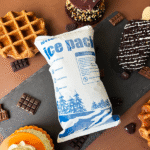
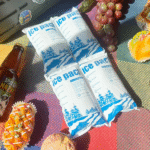
Livraison écologique de desserts glacés à température contrôlée?
Vous pouvez absolument courir livraison écologique de desserts glacés à température contrôlée-même par temps chaud-si vous le traitez comme un système, pas une boîte. Votre objectif est simple: garder les desserts glacés stables (souvent ≤ -18°C / 0°F) tout en réduisant les déchets, poids, et réexpéditions. Si vous vous concentrez sur stabilité de la température + transferts rapides + emballage aux bonnes dimensions, tu as moins de fondus, Moins de remboursements, et une empreinte plus verte sans « emballage de panique ».
Cet article vous aidera:
-
Choisir un objectif de température de livraison des desserts glacés qui protège la texture (pas seulement la sécurité alimentaire)
-
Construire emballage écologique pour l'expédition de glaces avec moins de gaspillage et moins d'échecs
-
Décider glace carbonique vs packs de gel vs PCM utiliser des règles basées sur les voies (Pas de supposition)
-
Corrigez les risques du dernier kilomètre comme temps de séjour sur le porche et pointes chaudes multi-arrêts
-
Prouvez vos performances grâce à la surveillance (y compris Conforme à la norme EN 12830 attentes de l’enregistreur, le cas échéant)
Que signifie en pratique la livraison écologique de desserts glacés à température contrôlée ??
Livraison écologique de desserts glacés à température contrôlée signifie que votre produit reste dans une « voie de température » gelée, de l'emballage au pas de porte., tandis que vos emballages et vos opérations minimisent les déchets. Il ne fait pas « aussi froid que possible ». C'est écurie, froid prévisible qui prévient les dommages causés par le dégel et la recongélation et protège la texture, forme, et la confiance du client.
C'est comme si on transportait une boule de neige sur un parking ensoleillé.. On ne gagne pas en démarrant plus froid. Vous gagnez par réduisant complètement l'exposition à la chaleur.
Le modèle 3 barrières qui permet la livraison écologique de desserts glacés à température contrôlée
Dans livraison écologique de desserts glacés à température contrôlée, trois barrières doivent fonctionner ensemble:
-
Barrière thermique: l'isolation ralentit l'entrée de chaleur
-
Source froide: packs de gel, PCM, glace carbonique, ou un hybride
-
Barrière de processus: emballage rapide, court séjour, routage intelligent, transferts entraînés
| Barrière | Ce que vous contrôlez | Ce qui casse habituellement | Ce que cela signifie pour vous |
|---|---|---|---|
| Thermique | Isolation, ajuster, fermeture | Lacunes, coins écrasés | Plus de stabilité avec moins de liquide de refroidissement |
| Source froide | Taper, placement, conditionnement | Mauvais montant, mauvaise préparation | Moins de couvercles souples et de fuites |
| Processus | Temps de mise en scène, routage, remettre | L'heure du porche, pointes multi-arrêts | Moins de remboursements et de réexpéditions |
Conseils pratiques que vous pouvez utiliser aujourd'hui
-
Rédigez une spécification de voie d'une page: temps de transit, température ambiante maximale, temps de séjourner, disposition de l'emballage.
-
Définir une minuterie de mise en scène: si les commandes attendent trop longtemps, votre emballage ne peut pas le « sauvegarder ».
-
Entraînez-vous aux premiers signes de fonte: espaces du couvercle, cartons spongieux, étiquettes collantes, modèles de gel en surface.
Vraie cas: Un expéditeur de glaces a réduit les plaintes en réduisant la taille de la boîte, mise en scène de serrage, et standardiser une mise en page PCM - en utilisant moins matériel qu'avant.
Quelles cibles de température protègent la texture lors de la livraison écologique de desserts glacés à température contrôlée?
Dans livraison écologique de desserts glacés à température contrôlée, le plus grand ennemi n’est pas « chaud ». C'est Swings de température. Un bref pic de chaleur peut adoucir les bords, puis recongelez en cristaux que les clients ressentent immédiatement.
Une base de référence pratique pour de nombreux programmes gelés est ≤ -18°C / 0°F. Vous pouvez définir des cibles internes plus froides pour une texture premium, mais ne sautez pas les tests.
Une carte de température simple pour les desserts glacés (copie ceci)
| Type de produit | Bande cible pratique | Que regarder | Ce que cela signifie pour vous |
|---|---|---|---|
| Glace haut de gamme | Viser près de ≤ -18°C | Pics de pointe lors des arrêts | La sensation en bouche douce reste douce |
| Glace | Une bande gelée stable compte le plus | Un long porche habite | Moins d’effondrements et de fuites |
| Sorbet | Nécessite une protection plus forte | Réchauffement rapide des surfaces | Moins de grains recongelés |
| Yaourt glacé | Déteste les balançoires | Séparation sur les bords | Meilleure apparence et texture |
Que mesurer (la plupart des équipes mesurent la mauvaise chose)
Pour livraison écologique de desserts glacés à température contrôlée, piste:
-
Température maximale (les pointes entraînent des dommages à la texture)
-
Temps au-dessus de votre limite (les minutes comptent plus que les moyennes)
-
Où le pic s'est produit (quai, de mise en scène, seuil de porte)
Conseils et suggestions pratiques
-
Utilisez deux nombres: une cible (but) et un maximum autorisé à la livraison (limite).
-
Valider séparément l'été et l'intersaison: La « météo moyenne » cache les échecs.
-
Conception pour la réalité du porche: le rendez-vous client fait partie de votre chaîne du froid.
Vraie cas: Une marque a atteint les objectifs de température moyenne mais a quand même reçu des critiques « granuleuses ». Leur enregistreur a montré des pics lors des itinéraires à arrêts multiples, pas pendant le transport.
Comment concevoir des emballages pour la livraison écologique de desserts glacés à température contrôlée?
Emballage pour livraison écologique de desserts glacés à température contrôlée commence par ta pire journée, ce n'est pas ton meilleur jour. Avant de choisir des matériaux, verrouiller cinq faits: temps total, température ambiante maximale, temps de séjourner, masse du produit, et délai de déballage client.
Si vous ne pouvez pas les définir, vous allez suremballer et échouerez toujours en cas de pics de chaleur.
Vos options de pile d'emballage (écologique sans performances fragiles)
| Approche d'emballage | Avantages écologiques | Attention | Mieux pour |
|---|---|---|---|
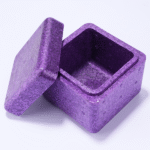
| Boîte isotherme réutilisable pour desserts glacés | Moins de déchets par livraison réussie | Besoin de retours et de récupération | Itinéraires locaux/abonnements |
| Isolation de taille adaptée, prête à être recyclée | Élimination plus facile par le client | Doit retester le temps de maintien | Voies nationales avec des SLA stables |
| Hybride: extérieur réutilisable + intérieur minimal | Fort équilibre | Plus de discipline SOP | Voies mixtes et clientèle mixte |
| « Tout suremballer » | Moins de fusions à court terme | Déchets élevés + coût | Uniquement les voies extrêmes (et temporaire) |
Pourquoi le bon dimensionnement gagne (bien plus que des « matériaux verts »)
Dans livraison écologique de desserts glacés à température contrôlée, les boîtes surdimensionnées créent trois problèmes:
-
Vous expédiez plus d'air (impact du fret plus élevé).
-
Vous avez besoin de plus de liquide de refroidissement (coût plus élevé et gaspillage).
-
Les espaces d'air deviennent des poches chaudes (risque de fusion plus élevé).
Règle: Minimiser l'espace vide, protéger la forme du produit, et scellez le couvercle comme un joint.
Conseils et suggestions pratiques
-
Placer le liquide de refroidissement avec intention: le dessus et les côtés comptent souvent plus que les coins.
-
Fermeture conçue comme un sceau: les interstices du couvercle sont des pannes silencieuses.
-
Imprimer les instructions d'élimination: « Que faire de cette boîte » réduit la confusion et les plaintes.
Vraie cas: Un expéditeur a réduit le poids de l'emballage mais a constaté davantage de matières fondues. Le correctif n’était pas « ajouter plus de matériel ». C'était mieux adapté, fermeture plus serrée, et un temps de mise en scène plus court.
Glace carbonique vs packs de gel vs PCM pour la livraison écologique de desserts glacés à température contrôlée?
Le meilleur liquide de refroidissement pour livraison écologique de desserts glacés à température contrôlée est celui qui rencontre votre voie avec le moins de matériel et le moins d'échecs. Cela signifie que la « meilleure » réponse change selon l'itinéraire, saison, et niveau de service.
La glace carbonique est puissante pour les voies longues ou chaudes, mais cela ajoute des étapes de conformité et de traitement. Les packs de gel sont plus simples et peuvent être réutilisables, mais peut avoir des difficultés en cas d'exposition prolongée à la chaleur. Le PCM peut stabiliser une bande de température choisie, mais nécessite un conditionnement et un placement cohérents.
Table de décision: glace carbonique vs packs de gel vs PCM
| Liquide de refroidissement | Meilleur à | Angle éco | Prise opérationnelle |
|---|---|---|---|
| Glace sèche | Transit long + ambiance chaude | Puissance de maintien efficace par heure | Emballage ventilé + Marquage UN1845 + entraînement |
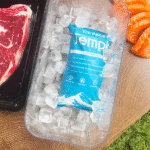
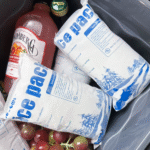
| Packs de gel | Voies courtes à moyennes | Potentiel réutilisable | Envois plus lourds; nécessite un pré-refroidissement correct |
| PCM | Bande de température stable | Réutilisable, contrôle réglé | Le processus de conditionnement doit être reproductible |
Bases de la glace carbonique (reste simple, fais-le correctement)
Si vous utilisez de la neige carbonique dans livraison écologique de desserts glacés à température contrôlée, planifier pour:
-
Emballage ventilé: Le gaz CO₂ doit s'échapper (les emballages scellés peuvent gonfler ou se rompre).
-
Marquage correct: comprend généralement UN1845 et poids net en kilogrammes.
-
Formation du personnel: éviter tout contact avec la peau et manipuler avec des SOP claires.
Calculateur de risque de fusion (2 minutes)
Pour votre livraison écologique de desserts glacés à température contrôlée, choisissez une option par ligne:
-
Temps de transit: <12h / 12- 24 heures / 24h +
-
Exposition ambiante: cool / chaud / chaud
-
Arrêts: 0–2 / 3–8 / 9+
-
Remettre: en personne / porche / casier
-
Retours: Oui / Non
Lecture rapide:
-
Si tu frappes 24h +, chaud, ou porche + 9+ s'arrête, vous avez généralement besoin d'une isolation plus solide et pouvez avoir besoin de neige carbonique ou d'un hybride.
-
Si tu es <24h avec retours, le gel/PCM devient souvent l’option la plus verte après validation.
Conseils et suggestions pratiques
-
Ne mélangez pas les liquides de refroidissement au hasard: les zones inégales créent des bords mous et des fuites du couvercle.
-
Conditionner le PCM comme un ingrédient: une mauvaise préparation équivaut à une mauvaise performance.
-
Testez deux configurations par voie: « léger » et « robuste,» puis choisissez par données.
Vraie cas: Un expéditeur a associé de la neige carbonique à une enveloppe intérieure scellée. Les cartons sont gonflés et défaillants. Le passage à une conception ventilée l'a résolu.
Comment le routage et les transferts améliorent-ils la livraison écologique de desserts glacés à température contrôlée?
Le routage est une isolation invisible dans livraison écologique de desserts glacés à température contrôlée. Un expéditeur parfait peut toujours échouer s’il est assis sur un quai ou un porche au soleil.
Les trois transferts qui brisent les desserts glacés:
-
Emballage → ramassage (séjour au quai)
-
Mise en scène du pilote (chaud avec le temps)
-
Séjour au seuil de la porte (retard du client)
Un SLA simple que vous pouvez appliquer en interne (et avec des partenaires)
Pour livraison écologique de desserts glacés à température contrôlée, définir:
-
Temps de quai maximum avant le ramassage (exemple: 20–30 minutes)
-
Temps de préparation maximum sans contrôle du froid
-
Messagerie sur la fenêtre de livraison (court, clair, axé sur l'action)
Liste de contrôle de l'itinéraire (oui/non)
-
Est-ce que tu commandes de pré-tri pour que les conducteurs ne cherchent pas avec les portes ouvertes?
-
Est-ce que tu livrer d'abord surgelé sur des itinéraires mixtes?
-
Est-ce que tu nombre d'arrêts de plafond ou ajoutez un tampon pour les voies à arrêts multiples?
-
Les clients bénéficient-ils d'un 10-alerte d'arrivée minute?
Si vous avez répondu « non » à deux ou plusieurs, corriger les opérations avant d'ajouter des emballages.
| Risque du dernier kilomètre | Qu'est-ce qui ne va pas | Réparer | Ce que cela signifie pour vous |
|---|---|---|---|
| Arrêts multiples | pics de chaleur répétés | pré-tri + bouchon d'arrêt | moins de fondant |
| L'heure du porche | réchauffement sans surveillance | fenêtres + alertes | Moins de remboursements |
| Retards de circulation | livraison tardive | tampon + règles de voie | des résultats plus stables |
Conseils et suggestions pratiques
-
Ajouter un script de transfert: "Rapportez-le immédiatement à l'intérieur."
-
Proposer des créneaux de livraison pour les surgelés: moins de pannes de porche battent les « échanges de revêtements écologiques ».
-
Traitez les codes postaux à haut risque comme une voie distincte: valider séparément.
Vraie cas: Une marque a réduit les réclamations liées à la fonte en livrant les commandes congelées plus tôt et en limitant les arrêts, sans changer d'emballage..
Quel suivi et quels justificatifs conserver pour la livraison écologique de desserts glacés à température contrôlée?
Si tu ne peux pas le prouver, tu ne peux pas l'améliorer. Livraison écologique de desserts glacés à température contrôlée a besoin d'une preuve simple, cohérent, et rapide à récupérer.
Vous n'avez pas besoin d'un laboratoire. Vous avez besoin d'enregistrements reproductibles:
-
Heure de préparation et heure de ramassage
-
ID de voie et ID de configuration d’emballage
-
Indicateur de température ou enregistreur de données (basé sur le risque)
La liste de contrôle du « proof pack » que vous pouvez standardiser
| Élément de preuve | Ce qu'il comprend | Pourquoi ça compte | Ce que cela signifie pour vous |
|---|---|---|---|
| Trace de température de l'itinéraire | données horodatées | règle les différends | Moins de remboursements |
| Rapport d'excursion | cause + action corrective | évite les répétitions | des SOP plus fortes |
| Spécifications d'emballage | photo + mise en page + matériels | standardise les résultats | moins d'erreurs |
| Journal du minuteur de préparation | preuve du temps de séjour | cibles #1 risque caché | moins de pointes |
| Documentation de l'enregistreur | DANS 12830 références le cas échéant | préparation à l'audit | responsabilité du partenaire |
Conseils et suggestions pratiques
-
Utiliser deux capteurs pendant les pilotes: un près du noyau du produit, un près de la zone du couvercle.
-
Revoir exceptions seulement: ne regarde pas chaque graphique, pointes de drapeau et causes.
-
Donnez au support client un court script: "Livré selon les spécifications" + que faire sinon.
Vraie cas: Une équipe a détecté des pics répétés lors d'un transfert de cross-dock. La correction de ce point a réduit les plaintes sur plusieurs voies.
Comment les coûts et le gaspillage se décomposent-ils réellement dans la livraison écologique de desserts glacés à température contrôlée ??
Contrôle des coûts dans livraison écologique de desserts glacés à température contrôlée vient de la réduction des échecs, poids, et le volume des cartons, et non pas uniquement en réduisant les prix des matériaux.
Les plus grands pilotes:
-
Poids volumétrique (la taille de la boîte coûte souvent plus cher que les matériaux)
-
Poids du liquide de refroidissement (plus de poids = plus de frais de port)
-
Temps de travail (les emballages complexes ralentissent le débit)
-
Taux d'échec (remboursement + reship est le vrai tueur de budget)
Le tableau de bord mensuel (utilise-le tous les mois)
Suivez trois numéros pour votre livraison écologique de desserts glacés à température contrôlée programme:
-
Coût par livraison réussie (inclure les remboursements et les réexpéditions)
-
Grammes d'emballage par commande (et par commande réussie)
-
Taux d'échec par voie (et par saison)
| Métrique | À quoi ressemble le « bien » | Que réparer si c'est mauvais |
|---|---|---|
| Coût par livraison réussie | stable ou en baisse | échecs + volume de la boîte |
| Emballage par commande | tendance à la baisse en toute sécurité | bonne taille + mise en page |
| Taux d'échec par voie | prévisible et faible | temps de séjourner + routage |
Conseils et suggestions pratiques
-
Réduisez d’abord les échecs, puis réduisez les matériaux. C’est ainsi que « éco » reste réel.
-
N’optimisez pas l’emballage en hiver et supposez qu’il fonctionne en été.
-
Utilisez les codes de voie sur les étiquettes pour savoir ce qui a fonctionné et où.
Vraie cas: La baisse la plus importante de l’empreinte d’une marque est due à la diminution du nombre de réexpéditions, pas des « doublures plus vertes ».
2025 dernières tendances façonnant la livraison écologique de desserts glacés à température contrôlée
Dans 2025, la direction est claire: performance et durabilité, pas de durabilité plutôt que de performance. Pression du cycle de vie des emballages, attentes en matière de preuve, et les efforts d'efficacité énergétique poussent tous le marché vers des mesures, systèmes validés.
Dernier aperçu des progrès (que faire maintenant)
-
Les règles sur le cycle de vie des emballages se durcissent: conception pour la recyclabilité, dimensionnement correct, et réutiliser les boucles.
-
Les attentes en matière de preuves augmentent: les enregistrements de température et les pratiques de conservation deviennent la référence dans de nombreuses chaînes d'approvisionnement.
-
L’optimisation énergétique s’accélère: certains opérateurs testent les points de consigne des congélateurs et surveillent les mises à niveau pour réduire la consommation d'énergie (mais il faut valider la qualité du dessert).
-
La planification de la glace sèche nécessite de la résilience: créer des conceptions de voies de secours qui peuvent fonctionner sur gel/PCM lorsque l'approvisionnement ou les coûts changent.
Prochains mouvements pratiques (drame faible, impact élevé)
-
Refaites le test chaque fois que vous changez de doublure, boîte, ou liquide de refroidissement.
-
Piloter une voie réutilisable au niveau local avant de l’étendre à l’échelle nationale.
-
Faites du « succès de la première livraison » votre principal KPI. Cela améliore ensemble l’éco et la marge.
Questions fréquemment posées
Q1: La livraison écologique de desserts glacés à température contrôlée peut-elle fonctionner sans glace carbonique?
Oui. Beaucoup <24-les couloirs horaires réussissent avec du gel ou du PCM plus une forte isolation et des transferts rapides. Valider par saison.
Q2: Quelle est la principale raison pour laquelle les desserts glacés arrivent endommagés même lorsqu’ils sont « froids » ??
Variations de température. La fusion partielle et la recongélation créent des cristaux, séparation, et les clients remarquent rapidement les bords doux.
Q3: Quelle température dois-je cibler pour la livraison écologique de desserts glacés à température contrôlée?
Une ligne de base commune se situe autour ≤ -18°C / 0°F, puis des cibles internes plus serrées pour une texture premium si nécessaire.
Q4: Une boîte isotherme réutilisable pour desserts glacés est-elle toujours plus écologique?
Seulement si vous le récupérez et le réutilisez suffisamment. Votre taux de retour et vos cycles de réutilisation déterminent l'impact réel.
Q5: À quoi sert « UN1845 » dans la livraison écologique de desserts glacés à température contrôlée?
UN1845 est couramment utilisé pour identifier les expéditions de glace carbonique. La glace sèche doit également être ventilée et un marquage correct du poids net est nécessaire..
Q6: Ai-je vraiment besoin d’enregistreurs de données pour la livraison écologique de desserts glacés à température contrôlée ??
Si vous expédiez un produit de grande valeur, gérer les litiges, ou opérer dans des chaînes réglementées, les bûches s'amortissent rapidement.
Q7: Quel est le moyen le plus rapide de réduire les déchets sans risquer de fondre?
Réduisez les réexpéditions et rétrécissez le volume des boîtes grâce au bon dimensionnement. Ces deux mouvements battent la plupart des échanges de matériaux.
Q8: Que dois-je faire lorsqu'un client signale une fonte?
Demander des photos, confirmer le délai de livraison, revoir le tracé de la voie, et appliquez votre manuel d'excursion de manière cohérente.
Résumé et recommandations
Livraison écologique de desserts glacés à température contrôlée fonctionne lorsque vous construisez un système complet: isolation aux bonnes dimensions, la bonne source de froid, et des opérations disciplinées qui réduisent l’exposition à la chaleur. Se concentrer sur stabilité, pas de froid extrême. Réduisez d’abord les échecs, puis réduisez les matériaux. Prouvez vos performances avec des enregistrements simples afin que vous puissiez améliorer les voies plus rapidement et résoudre les réclamations des clients en toute confiance.
Plan d'action (simple, répétable)
-
Choisissez vos 2 à 3 meilleures voies et documentez le pire des cas + ambiant + demeurer.
-
Test deux pack-outs par voie (léger vs robuste) et enregistrer les températures maximales.
-
Enfermez le gagnant dans une SOP d'une page avec des photos et un minuteur de mise en scène.
-
Ajoutez des alertes client et des fenêtres de livraison pour réduire le temps d'arrêt sur le porche.
-
Revalidez de façon saisonnière et conservez un plan de refroidissement de secours pour les jours à haut risque.
Suggestions de liens internes (pas de liens externes)
-
Manuel du programme de retour des boîtes isothermes réutilisables
-
SOP de livraison congelée du dernier kilomètre pour l'emballage et le transfert
-
Bases de la surveillance de la température pour la chaîne du froid du commerce électronique
À propos du tempk
Et tempk, nous nous concentrons sur un emballage pratique pour la chaîne du froid et sur une conception de livraison qui permet aux desserts glacés d'arriver conformément aux spécifications sans gaspillage inutile.. Nous accompagnons les équipes dans la sélection des emballages par voie, conception de SOP d'emballage, et la validation des performances - afin que votre livraison écologique de desserts glacés à température contrôlée peut être reproductible, vérifiable, et conscient des coûts à chaque saison.
Prochaine étape (CTA): Partagez les détails de votre voie (temps de transit, température ambiante des jours les plus chauds, arrêter de compter, type de dessert, taille de la commande). Nous présenterons deux packs pilotes que vous pouvez tester immédiatement.