Choosing a thermal plastic bin provider for meat shipping means balancing product protection, conformité, vitesse de manipulation, and total cost in one decision. The best option is rarely the lightest, cheapest, or most heavily advertised unit. It is the design that fits meat shipping conditions, survives the real route, and comes with evidence your team can actually approve. That is the standard serious buyers should use in 2026.
This optimized guide will help you decide:
- What the right specification looks like for meat shipping.
- How to balance material, hygiène, température, and load without overbuying.
- Which documents and tests separate trustworthy suppliers from risky ones.
- How cost, durabilité, and return logistics change the final decision.
- Quoi 2026 market and regulatory signals should shape your next RFQ.
What makes the right specification for meat shipping?
The right specification begins with a brutally clear use definition. You need to know whether the bin directly contacts product, supports sealed packs, or works as part of a temperature-control system. You also need the actual payload, poids chargé, hauteur de pile, méthode de nettoyage, and the hardest touchpoint in meat shipping. Without those answers, every supplier comparison will stay fuzzy.
Meat flows are harsh on packaging because cold rooms, wet product, heavy loads, and strict sanitation routines expose weak materials very quickly. Dans cette catégorie, the bin is part of the temperature-control system, so shell design, ajustement du couvercle, placement du liquide de refroidissement, and route qualification all matter together. A strong specification converts those route facts into practical approval points: dimensions, material family, limites de manipulation, labeling zones, and the exact documents required for the intended use.
A five-point selection tool
Fast decision framework
| <fort>Selection point</fort> | <fort>Que définir</fort> | <fort>Pourquoi ça compte</fort> | <fort>Good buying habit</fort> |
| Use boundary | Contact direct, outer handling, or thermal system role | This drives compliance and design depth | Write the use case before you ask for documents |
| Route stress | Exposition au froid, retards, vibration, lavage, and stack dwell | This drives material and geometry choices | Test the hardest realistic route |
| Ajustement du flux de travail | Modèle de palette, lift method, zone d'étiquette, and return logic | This drives labor efficiency and receiving speed | Map one full cycle from load to clean return |
| Dossier de preuves | Données de test, dessins, déclarations, et conseils de nettoyage | This drives approval speed and future control | Keep one clean approval file |
| Modèle commercial | Stock speed, tooling control, support after launch | This drives project risk and lead time | Choose the path that matches complexity |
Practical tips for writing a stronger RFQ
- Describe the route and the failure point you want to eliminate, not just the part dimensions.
- Include loaded weight, hauteur de pile, and cleaning method in the first request.
- State whether the container must nest, pli, secouer, isoler, or hold seals after repeated reuse.
- Ask for the evidence pack at the same time you ask for pricing.
Exemple de cas: The most effective RFQs are short but specific. They tell suppliers what the package must survive, not just what it should look like.
How should you balance material, hygiène, température, and load?
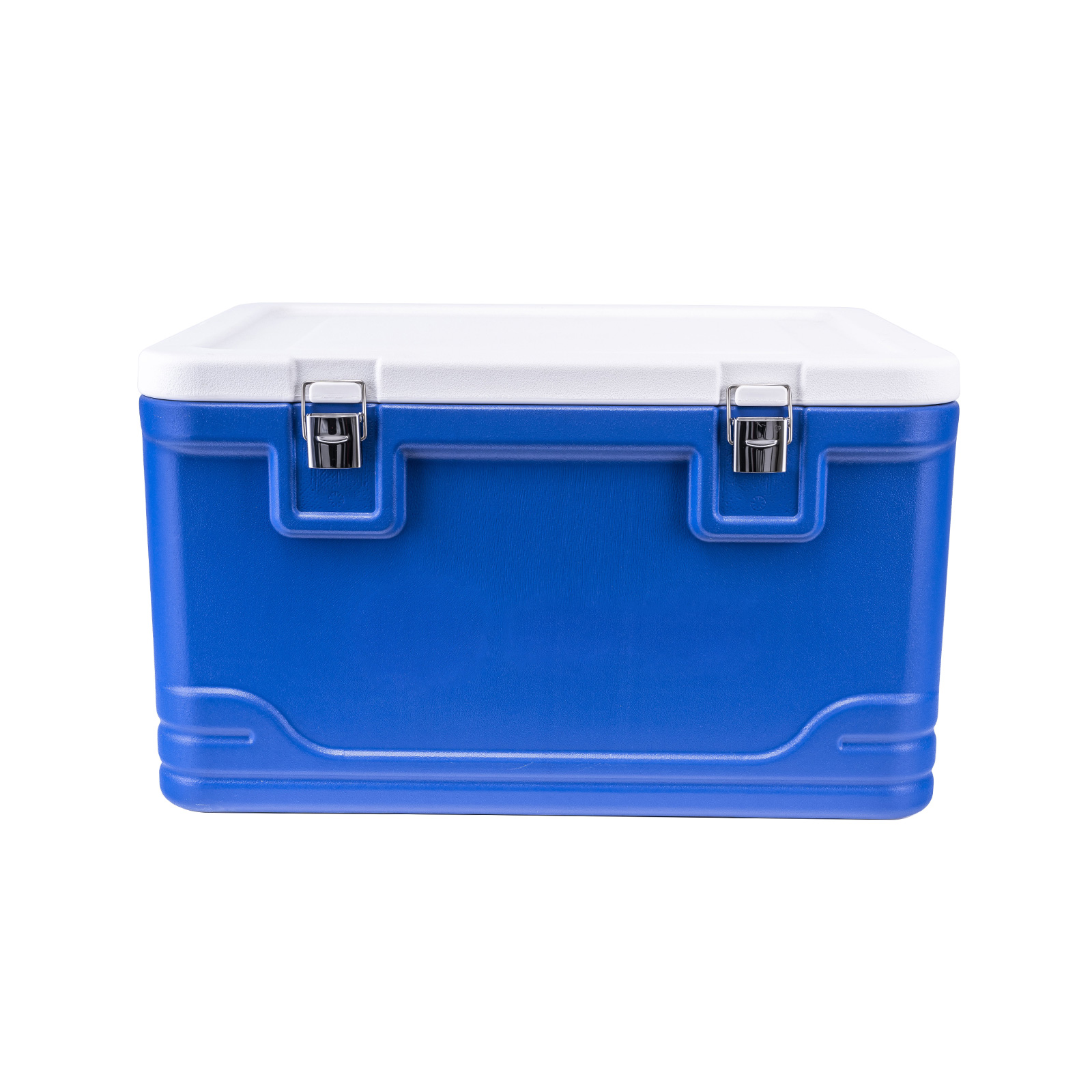
You should balance these factors as one system, not as separate checkboxes. These systems usually combine a durable outer shell with insulating walls, structures en mousse, or removable thermal inserts. Ask whether the temperature-holding claim comes from a full pack-out test with coolant and payload, not from wall material alone. Temperature control fails quietly. A crate can look strong and still let the payload drift outside range because of poor lid fit, bad coolant placement, or too much void space. A strong material is useless if the shape traps soil, the lid shifts in transit, or the stack relaxes after long dwell.
For meat shipping, hygiene and temperature logic often decide the final choice as much as mechanical strength does. Food-contact and sanitation rules come first when product touches the container directly. That is why buyers should compare structure, nettoyabilité, and thermal or airflow behavior in the same conversation. If one factor is ignored, the packaging will usually fail in service before it fails on paper.
What usually matters most by design priority?
Balanced engineering review
| <fort>Priorité</fort> | <fort>Que réviser</fort> | <fort>Erreur typique</fort> | <fort>Meilleure approche</fort> |
| Material fit | Resin behavior at the real temperature and cleaning chemistry | Choosing by brochure language only | Ask for route-relevant data and revision control |
| Hygiene fit | drainable geometry, smooth corners, liner compatibility, and visible segregation between raw, semi-processed, and finished goods | Ignoring corners, articulations, or drying behavior | Review how the unit is actually cleaned and reused |
| Temperature or airflow | Isolation, modèle de ventilation, ajustement du couvercle, and payload layout | Treating the shell as the whole system | Validate the full pack-out or airflow logic |
| Load fit | Static, mobile, and stacked conditions | Using one generic load number | Match the rating to the real lane and dwell time |
Practical technical tips
- Review the lowest temperature, the wettest environment, and the longest dwell in one meeting.
- Check how the design drains and dries if cleaning is part of the reuse loop.
- Confirm whether stack ratings apply in motion, en stockage, ou les deux.
- For thermal systems, validate the full configuration with payload and logger, not just the shell.
Exemple de cas: Teams often discover that the best package is not the strongest or most insulated one, but the one that stays usable after repeated handling, nettoyage, et recevoir.
Which compliance documents and tests separate good suppliers from risky ones?
A trustworthy supplier makes the approval process easier, pas plus dur. You should be able to see the intended use, current revision, material family, and relevant performance data without chasing vague claims. For meat shipping, that usually means combining commercial information with quality information from the start. When those files are separated or inconsistent, approval slows down and field risk rises.
The exact compliance pack depends on the route and contents, but current WHO, FDA, UE, and IATA guidance all reward the same discipline: define the boundary, documenter le processus, and keep evidence tied to the exact product revision. That is how you avoid the common trap of having the right document for the wrong SKU or the right SKU without the route data needed to approve it. Good suppliers understand that audits and daily operations both depend on the same clarity.
Documents and tests that matter
Approval checklist
| <fort>Exigence</fort> | <fort>Que demander</fort> | <fort>Pourquoi ça compte pour toi</fort> |
| Food-contact framework | FDA food-contact rules and/or EU 1935/2004 plus GMP 2023/2006 le cas échéant | Applies when the unit directly contacts food or food-contact surfaces |
| Meat sanitation | FSIS sanitation expectations plus food-contact rules where relevant | Crevice control, drainage, and segregation are important |
| Tests de performance | Charger, baisse, laver, or thermal results tied to real use | Shows whether claims are meaningful |
| Drawing and revision control | Dimensions, marques, and change history | Protects future consistency and requalification |
| Conseils de nettoyage et de réutilisation | Méthode, chemistry limits, drying notes | Keeps service life and hygiene under control |
Practical approval tips
- Review documents against intended use before approving price.
- Keep one technical and commercial approval file instead of separate informal records.
- Treat any meaningful resin, mur, insérer, or thermal change as a review trigger.
- Pilot the approved revision, not a look-alike sample from a different build.
Exemple de cas: Supplier risk often appears first as document confusion. Clear drawings, clear declarations, and clear test scope are early signs of a partner you can actually scale with.
Comment coûte, durabilité, and return logistics change the final decision?
The best business case combines lower failure cost with better reuse discipline. A reusable thermal system becomes more sustainable when it protects payload quality repeatedly and avoids one-way foam, re-icing waste, or emergency reshipments. That means you should look beyond the purchase price toward empty-return ratio, heure de réception, product-loss reduction, effort de nettoyage, et durée de vie. A stronger package is worth more when it removes an expensive recurring problem, not when it simply sounds premium.
Sustainability decisions are becoming more practical for the same reason. FAO’s work on food cold chains continues to connect packaging, flux d'air, gestion de la température, et réduction des déchets, while buyers in regulated sectors are focusing on repeatable reusable systems that reduce one-way material and emergency re-shipments. The useful question is not ‘Is reusable greener in theory?’ but ‘Does this specific loop reduce waste and protect product in practice?’
A practical cost and sustainability map
Total-value view
| <fort>Facteur de décision</fort> | <fort>Ce qui améliore</fort> | <fort>Que regarder</fort> | <fort>Comment cela vous aide</fort> |
| Return efficiency | Less storage cube and lower empty transport | Weak reverse-logistics discipline | Makes reuse more realistic and more economical |
| Protection des produits | Moins de pertes, réclamations, or excursions | Over-specifying features you do not need | Protects margin and service level |
| Vitesse de manipulation | Cleaner receiving and less repacking | Ignoring operator workflow | Improves labor efficiency without adding headcount |
| Durée de vie | More turns before replacement | Poor cleaning or repair process | Strengthens both ROI and sustainability |
Practical business tips
- Measure current losses before trying to prove future ROI.
- Include empty returns and cleaning effort in the model from day one.
- Use the toughest lane and the most expensive failure mode in the pilot.
- Do not claim sustainability success until the return loop and cleaning loop both work.
Exemple de cas: Many packaging upgrades pay back first through fewer emergency fixes – less reboxing, less relabeling, fewer broken stacks, fewer rushed replacement shipments – before the accounting model even catches up.
Quoi 2026 trends should influence your next RFQ?
2026 buyers are raising the bar on proof, traçabilité, et ajustement du flux de travail. Independent market reports published for 2026 estimate the overall cold-chain packaging market at more than USD 46 milliard, the pharmaceutical cold-chain packaging market at more than USD 10 milliard, and the reusable cold-chain packaging segment at more than USD 5 milliard. In food systems, the growth story is tied to shelf-life protection, cleaner reusable assets, and the push to reduce waste from handling and transport. En même temps, standards and guidance keep nudging the market toward clearer control, une meilleure documentation, and route-relevant evidence. That means your next RFQ should ask for more than dimensions and price. It should ask how the system performs, how changes are controlled, and how reuse will be managed.
The strongest RFQs also reflect where the market is going next: more digital traceability, more reusable assets with clearer service-life logic, more route-specific validation, and more sustainability scrutiny linked to real operations. Buyers who adapt now usually reduce both operational friction and supplier confusion later. Dans ce sens, a better RFQ is not paperwork; it is an operating advantage.
Le plus clair 2026 tendances
- More buyers want packaging linked to a real lane map and a measurable failure point.
- Traceability features and clearer revision control are moving into standard requirements.
- Reusable packaging is being compared on empty-return efficiency and cleanability, not only on strength.
- Pilot data from real routes is becoming more persuasive than broad category claims.
- Qualité, opérations, and procurement are being pulled earlier into one approval process.
Questions fréquemment posées
What is the first step in choosing a thermal plastic bin?
Define the intended use and the hardest operating condition. Once you know what the package touches, carries, and must survive, the rest of the specification becomes much clearer.
How do you avoid overbuying?
Do not specify features because they sound advanced. Specify the failure you need to prevent. That keeps the project focused on practical value instead of expensive complexity.
What should you pilot?
Pilot the full system: charger, itinéraire, manutention, recevoir, nettoyage, et retour. That gives you a better decision than isolated bench tests or short showroom demos.
When is a supplier truly qualified?
A supplier is truly qualified when the product, documents, contrôle des révisions, and support model all match your intended use. One strong sample without the right evidence is not enough.
How do sustainability and ROI connect?
They connect through real operations. If the system reduces waste, protège le produit, returns efficiently, and survives many turns, it usually improves both environmental and financial performance.
Résumé et recommandations
The best thermal plastic bin provider for meat shipping is the one that aligns route reality, technical performance, compliance clarity, and total business value. Define the use boundary first, validate the material and design against the real lane, and insist on an evidence pack that your team can approve without guesswork. That is how a reusable asset becomes dependable instead of merely promising.
Your next move should be practical and cross-functional. Build a short RFQ with route facts, pilot one approved revision, and measure the exact failure mode you want to remove. That process will usually deliver a better answer than any broad comparison of catalog claims.
À propos du tempk
Et tempk, we work on reusable cold-chain packaging as a real operating system, not as a one-line item in a catalog. Nous nous concentrons sur l'adéquation de l'itinéraire, comportement du matériau, insulation and insert options, nettoyabilité, and the evidence buyers need to make sound decisions across food, Soins de santé, laboratoire, et applications industrielles. That helps teams move faster without cutting corners.
Si vous planifiez un nouveau projet, start with the toughest lane and the clearest performance goal. De là, compare samples, documents, and support models as one decision. That is the fastest route to a packaging choice that still looks right after launch.