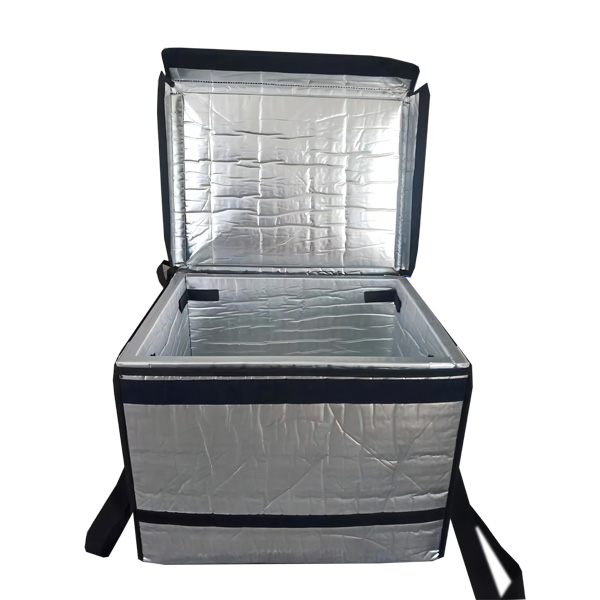
collapsible EPP insulation box is worth buying when it improves three outcomes at the same time: protection du produit, operating speed, and reusable value over time. Polypropylène expansé, usually called EPP, is a closed-cell bead foam valued for low weight, résistance aux impacts multiples, isolation thermique, and resistance to water and many routine chemicals. Packaging grades commonly span about 20 à 60 g/L, and your useful working range for this topic is usually 30-45 g/L with fold mechanism or modular wall design. The smartest 2026 buyers are no longer separating material choice from route data, discipline des fournisseurs, et coût du cycle de vie.
Ce guide optimisé combine la logique de l'acheteur, validation technique, market context, and sustainability planning into one decision framework. it is designed to help you choose the right collapsible EPP insulation box with fewer assumptions, stronger evidence, and a better chance of long-term operating success.
The optimized way to assess this category is to connect the audience need, the route reality, and the sourcing model in one view. Pour ce mot-clé, that means balancing collapse mechanism, empty return cube, hinge durability, and seal integrity while keeping the program practical enough for everyday use.
Ce à quoi ce guide vous aidera à répondre
• how to define the right performance target for collapsible EPP insulation box.
• quel matériel, conception, and supplier choices truly improve results.
• how to combine route data, compliance paperwork, and total cost thinking.
• quoi 2026 buyers expect around reuse, Recyclabalité, and audit readiness.
• how to turn a good quote into a dependable operating program.
What operating profile should define your Collapsible EPP Insulation Box?
The first step is to describe the job the box must do in plain operating language. Quelle est la longueur de l'itinéraire, how many handoffs occur, how heavy is the payload, how often is the lid opened, and how reliable is the return flow. Those answers matter more than any single marketing phrase because they decide whether you need a light route box, a stronger stacked format, or a more specialized configuration.
Once the operating profile is clear, define the success metrics. Pour la plupart des acheteurs, those metrics are temperature stability, low damage, manipulation facile, repeatable cleaning, and acceptable per-trip cost. If you cannot name the metrics before sampling, it becomes almost impossible to compare quotes in a disciplined way.
How does foldable EPP cooler box become easier to approve internally?
Internal approval becomes easier when the packaging project is framed as a business process, not only a material change. Give procurement the quote logic, give operations the handling workflow, give quality the documentation, and give sustainability the reuse and end-of-life plan. When all four groups see their piece early, the decision tends to move faster and with fewer last-minute objections.
Operating Profile Decision Tool
| <fort>Zone</fort> | <fort>Que réviser</fort> | <fort>Main signal</fort> | <fort>Pourquoi ça compte pour toi</fort> |
| <fort>Route length and ambient exposure</fort> | Court, moyen, or long lane | Drives insulation depth and refrigerant plan | Prevents overbuying or underbuilding |
| <fort>Intensité de manipulation</fort> | Few or many handoffs | Changes density and corner strength needs | Protects real field durability |
| <fort>Return discipline</fort> | Fort, faible, or uncertain | Shapes reuse economics | Turns hardware cost into a workable business case |
Conseils pratiques pour vous
• Write your approval criteria before you request the final quote, so the vendor knows what success looks like.
• Separate nice-to-have cosmetic requests from performance-critical requirements.
• Use one lead use case as the design anchor, even if you expect future expansion.
Exemple pratique: Teams often save weeks by agreeing early on route time, type de charge utile, and return ownership, because those three items settle most of the design debate.
Quel matériau, densité, and design choices deliver the best result?
EPP is attractive because it lets one molded part do several jobs at once. It can cushion impact, resist repeated knocks, provide useful thermal insulation, and stay light enough for daily handling. Toujours, no foam grade is universally best; the right answer depends on route stress, masse de charge utile, comportement de la pile, and the importance of carry comfort.
Use density as a tuning tool rather than a prestige badge. Lower-density builds can make sense when speed and ergonomics are the priority. Balanced grades often fit mainstream delivery or storage programs. Higher-density or reinforced structures earn their place when heavier loads, rough transport, or high stack forces are part of the real environment.
How do space-saving insulated shipping box design details influence actual performance?
Geometry matters almost as much as raw material choice. Lid engagement, conception de coin, handle position, internal partitions, and cavity fit can all change how the box feels and performs in the field. A smart design reduces dead air, keeps the lid aligned after repeated use, and allows the pack-out to stay consistent even when the team is busy. Those small details often create bigger gains than simply adding thickness everywhere.
Design Choice Comparison
| <fort>Zone</fort> | <fort>Que réviser</fort> | <fort>Main signal</fort> | <fort>Pourquoi ça compte pour toi</fort> |
| <fort>Ultra-light design</fort> | Lower weight and fast carry | High-handling, lighter-payload routes | Improves speed and ergonomics |
| <fort>Balanced design</fort> | Poids, isolation, and durability in line | Mainstream delivery and storage | Usually the safest standard platform |
| <fort>Heavy-duty design</fort> | Higher stiffness and structure | Rough lanes, charge de pile, heavier payloads | Reduces wear where abuse is predictable |
Conseils pratiques pour vous
• Prototype around the real payload footprint, not around an abstract volume target.
• Check lid fit after repeated use, because early samples can hide long-term misalignment issues.
• Use the lightest design that still meets the real route and stack requirement.
Exemple pratique: A better lid and tighter cavity often improve the real result more than a simple increase in wall thickness, because they affect both thermal control and daily usability.
How do compliance, essai, and total cost fit together?
The strongest purchase decisions connect three evidence streams: documentation, validation d'itinéraire, and economics. For food-contact programs, compliance depends on the resin grade, additifs, utilisation prévue, and supporting declarations, not on the foam name alone. Management-system certifications such as ISO 9001 ou ISO 14001 can strengthen confidence in the supplier, but they should sit alongside product-specific declarations, contrôle des lots, and test records.
Testing should be practical and layered. Use thermal validation to confirm the pack-out, structural checks to confirm handling durability, and a simple lifecycle model to convert the box into per-trip value. That model should include cleaning, return freight, expected loss, and replacement rate instead of treating the first unit price as the whole story.
Why does reusable collapsible cold chain box need both route data and a cost model?
Route data tells you whether the solution works. The cost model tells you whether the solution scales. When both are positive, approval becomes much stronger because you can show not only that the packaging protects the product, but also that it can do so repeatedly at a sensible operating cost. This is especially important when you are replacing a cheap one-trip option with a reusable asset that needs recovery discipline.
Illustrative Lifecycle Cost Logic
| <fort>Zone</fort> | <fort>Que réviser</fort> | <fort>Main signal</fort> | <fort>Pourquoi ça compte pour toi</fort> |
| <fort>First price</fort> | The initial unit quotation | Useful but incomplete | Never enough on its own |
| <fort>Per-trip cost</fort> | Unit cost divided across successful uses | Shows reuse value | Better for comparing against disposable packaging |
| <fort>Coût du système</fort> | Nettoyage, retour, perte, remplacement | Shows real operating burden | Reveals whether the program scales cleanly |
Conseils pratiques pour vous
• Keep the lifecycle model simple enough that nontechnical stakeholders can follow it.
• Pilot long enough to produce believable trip-life and loss assumptions.
• Store the test summary with the approved quote so future sourcing remains aligned.
Exemple pratique: Buyers gain internal support faster when they show one page of route data and one page of per-trip cost logic instead of relying on a long generic presentation.
Que devriez-vous 2026 sourcing checklist include for Collapsible EPP Insulation Box?
Le 2026 checklist should cover more than product dimensions and quote price. It should include application fit, compliance pack, méthode de validation, modèle de retour, réactivité des fournisseurs, and the sustainability story you can actually support. In a market that is moving toward more reuse and cleaner documentation, vague answers are becoming a bigger risk than slightly higher quoted prices.
Make the checklist operational. Who owns the box after delivery, how is it recovered, what damage level triggers replacement, what documents need refreshing after a spec change, and how will you know the real route still matches the approved design six months later. Those questions create a packaging program that can survive growth rather than collapse after the pilot.
How does EPP foldable transport container stay reliable after rollout?
Reliability after rollout depends on discipline. Standard footprints, étiquettes claires, conservation des échantillons, periodic route checks, and one escalation contact per supplier all help keep drift under control. When the program is reviewed at set intervals, small issues such as lid wear, cleaning damage, or changing payload mix can be corrected before they become expensive. That is the difference between a successful pilot and a long-term packaging platform.
2026 Readiness Checklist
| <fort>Zone</fort> | <fort>Que réviser</fort> | <fort>Main signal</fort> | <fort>Pourquoi ça compte pour toi</fort> |
| <fort>Ajustement de l'application</fort> | voie, charge utile, and handling match | Confirms the design solves the right job | Prevents misaligned purchases |
| <fort>Documentation and testing</fort> | Declarations, attestations, validation d'itinéraire | Supports approval and audit readiness | Builds confidence across teams |
| <fort>Réutiliser la gouvernance</fort> | Nettoyage, récupération, replacement rules | Protects economics and sustainability claims | Turns the box into a managed asset |
Conseils pratiques pour vous
• Review the sourcing checklist with operations, qualité, and procurement together before the final purchase order.
• Keep one approved sample on hand for future comparison when reorders arrive.
• Schedule a post-launch review so the packaging standard stays connected to the real operation.
Exemple pratique: Mature packaging programs usually look ordinary from the outside, but they work because the checklist, the documents, and the return process are all kept current.
2026 Developments and Market Direction
Le 2026 development path for collapsible EPP insulation box is clear. Buyers want packaging that is lighter to handle, plus facile à valider, and easier to justify in both cost and sustainability terms. En Europe, the Packaging and Packaging Waste Regulation is pushing packaging toward recyclability by 2030 and setting stronger expectations for reusable transport formats. En même temps, route growth and tighter service expectations are pushing teams to standardize reusable insulated formats instead of improvising order by order.
Ce qui change en ce moment
• route-specific validation is becoming the normal buying standard.
• documentation clarity is rising in importance alongside physical performance.
• reusable transport packaging is being judged on recovery discipline and total value, not only on first cost.
Pour toi, the opportunity is to choose a solution that already aligns material logic, discipline des fournisseurs, et réalité opérationnelle. That gives you a better chance of protecting products, Réduire les déchets, and avoiding a second packaging project six months later.
Questions fréquemment posées
What is the best way to start evaluating collapsible EPP insulation box?
Start by defining the real lane, charge utile, et gérer le stress. Then request a sample that matches those conditions and test it with clear success metrics.
Should I focus more on first price or lifecycle value?
Valeur du cycle de vie. First price matters, but per-trip cost, taux de perte, effort de nettoyage, and replacement frequency tell you whether the choice is really competitive.
How important is documentation in 2026 approvisionnement?
It is very important. Buyers increasingly expect clear declarations, certification scope, and route-validation evidence before they approve reusable transport packaging.
What makes an EPP program scalable?
Standard footprints, emballage reproductible, supplier consistency, and a simple but reliable return and inspection process make the program scalable.
When should I choose a stronger or denser design?
Choose it when heavier payloads, empilage fréquent, or rough handling create visible stress. Do not add density just because it sounds safer on paper.
Résumé et recommandations
The best collapsible EPP insulation box is the one that fits your route, charge utile, équipe, and documentation needs at the same time. Focus on carry weight, ajustement de la cavité, lid quality, comportement de la pile, and supplier reliability before you worry about cosmetic extras. That approach gives you better protection, steadier temperature control, and a stronger chance of earning value from reuse.
Votre prochaine étape est simple: définir l'itinéraire, sample the format, run a pilot with temperature and handling checks, and compare the result against your current package. If the sample performs well in daily use, then scale with clear acceptance criteria and a return plan.
À propos du tempk
Et tempk, we work on cold chain packaging with a focus on insulation performance, durabilité à usage répété, and practical application support. We design EPP solutions for food, médical, and industrial programs, and we pay close attention to fit, conditions d'itinéraire, and documentation rather than relying on broad marketing claims.
The next move is to compare your payload, temps de parcours, and handling pattern with a sample plan so you can choose the right box with less trial and error.