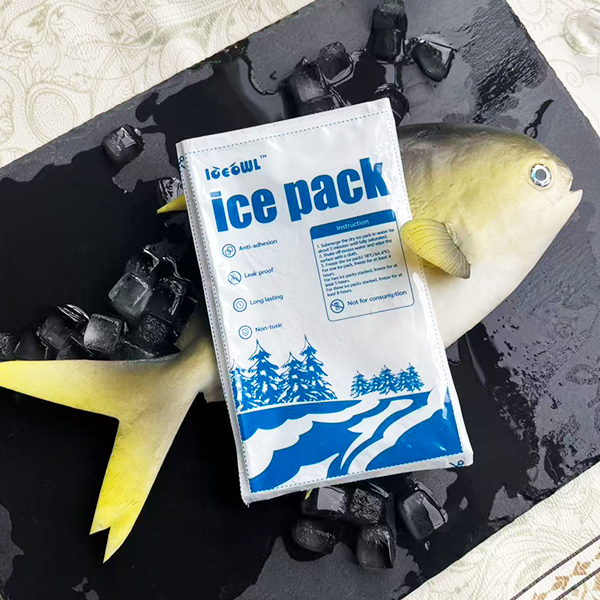
Pack de glace carbonique en gros pour la logistique de l'insuline: De l’étiquette du produit à la mise à l’échelle contrôlée
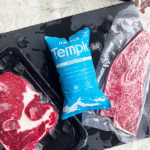
Acheter en gros paquet de glace sec pour la logistique de l'insuline, il faut commencer par une vérification terminologique et se terminer par un système d'exploitation approuvé. Dans ce contexte, le produit est une feuille activée par l'eau qui est hydratée et congelée. Ce n'est pas du dioxyde de carbone solide. La feuille congelée peut assurer le refroidissement à l'intérieur d'un emballage isolé, mais cela peut aussi créer un point froid à côté de l'insuline sensible au gel.
L’objectif d’achat est donc précis: fournir un composant de liquide de refroidissement cohérent, intégrez-le dans un emballage conçu autour de l’étiquette exacte de l’insuline, prouver la configuration complète dans des conditions justifiées, et préserver cet état lors de la distribution de routine.
Première décision: Confirmez ce qui doit être protégé
L'insuline n'est pas une simple spécification logistique. De nombreux produits non ouverts sont étiquetés pour une conservation réfrigérée entre 2 °C et 8 °C et comportent un avertissement de ne pas congeler., mais les instructions actuelles pour le contrôle exact de la formulation et de la présentation. Stockage en cours d'utilisation, excursions agréées, et la manipulation peut différer.
Créer un briefing sur les exigences du produit avant de contacter les fournisseurs. Il faudrait identifier:
- Nom du produit et présentation
- Conditions de stockage et de transport étiquetées
- Guidage interne agréé pour les excursions, si disponible
- Unité d'expédition et plage de charge utile
- Stockage d'origine et de destination
- Itinéraire, transferts, et des retards crédibles
- Exposition saisonnière
- Surveillance et enregistrements requis
- Procédure de réception et de quarantaine
Ce mémoire sépare trois responsabilités. Le fabricant du médicament ou le propriétaire du produit définit les exigences du produit. L'ingénierie de l'emballage développe le système. La qualité approuve les procédures de preuve et de disposition. Le fournisseur de liquide de refroidissement fournit un composant contrôlé et des informations pertinentes; il n'autorise pas l'utilisation d'insuline après une excursion.
Une réponse directe pour les acheteurs
Une feuille d'hydratation congelée peut être envisagée pour un pack d'insuline, mais il ne faut pas le mettre en contact direct par hypothèse. Un séparateur, état contrôlé du liquide de refroidissement, et les arrangements qualifiés sont généralement essentiels à l'évaluation des charges utiles sensibles au gel.. Plus de refroidissement n’est pas automatiquement plus sûr.
Deuxième décision: Séparez le composant du système
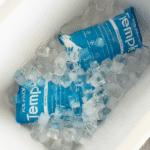
Une feuille d'hydratation commence comme un sac cellulaire sec. Après avoir absorbé de l'eau propre et gelé, il devient un dissipateur thermique flexible. Ce format peut simplifier le stockage entrant et permettre le placement autour d'une charge utile. La préparation sur site fait également partie du processus contrôlé..
La fiche ne peut à elle seule établir une gamme réfrigérée. Le comportement du système dépend de l'isolation, fermeture, quantité de liquide de refroidissement, état préparé, séparation, charge utile, vide espace, conditions initiales, défi ambiant, et le temps. Une allégation de temps d'attente qui n'identifie pas ces variables ne peut pas être appliquée de manière responsable à l'insuline..
La langue utilisée dans les documents d'achat doit refléter cette limite:
- Composant du liquide de refroidissement: la feuille d'hydratation préparée
- Expéditeur isolé: la boîte, doublure, ou un récipient qui résiste au transfert de chaleur
- Système passif à température contrôlée: la combinaison définie d'expéditeur, liquide de refroidissement, charge utile, et méthode d'emballage
- Configuration qualifiée: un système spécifique soutenu par des tests documentés pour des conditions définies
- Enregistreur de température: un appareil qui enregistre les preuves mais ne protège pas la charge utile
Le dioxyde de carbone solide n'appartient pas à cette équivalence. Il a un comportement physique différent, contrôles des transports, et cas d'utilisation à très basse température. Ne le remplacez jamais par une feuille à base d’eau, ou remplacez-le par une feuille, basé sur les mots partagés "glace carbonique."
Troisième décision: Contrôlez la frontière froide
La chaleur entre dans un expéditeur passif à travers les murs, coutures, couvercles, et ouvertures. Le liquide de refroidissement gelé absorbe cette chaleur lorsqu'il se réchauffe et fond. En même temps, le liquide de refroidissement extrait la chaleur des objets à proximité. C’est cette deuxième voie qui crée le risque de gel de l’insuline.
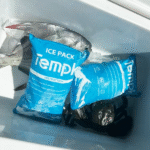
La conduction directe peut surrefroidir le carton à côté d'une feuille gelée même si l'air central reste dans la plage prévue. Les feuilles qui se chevauchent peuvent créer une autre région froide concentrée. Une petite charge utile peut être plus vulnérable qu’une charge complète car sa masse thermique est inférieure à celle du liquide de refroidissement..
Les contrôles de conception peuvent inclure:
- Une entretoise ou une barrière thermique définie
- Une méthode contrôlée de conditionnement du liquide de refroidissement
- Poches de draps fixes ou orientation
- Emballages séparés pour les charges utiles minimales et maximales
- Règles de remplissage des vides
- Limites du temps d'emballage et de l'exposition au liquide de refroidissement avant la fermeture
- Variantes saisonnières étayées par des preuves
Chaque contrôle doit apparaître à la fois dans la configuration de test et dans l'instruction d'entrepôt. Remplacer un séparateur par n'importe quelle tôle ondulée disponible peut modifier le transfert de chaleur. Ajout d'un "pack de sécurité" par temps chaud peut créer du gel. Le retrait d'un pack d'une commande partielle peut créer un réchauffement tardif. Les systèmes contrôlés évitent une telle improvisation.
Pourquoi le placement des capteurs fait partie de la conception
Un seul capteur central répond à une question précise sur cet emplacement. Il se peut qu'il ne détecte pas la surface du carton contre le liquide de refroidissement ou une région chaude près du couvercle.. La qualification doit placer les capteurs là où le raisonnement thermique prédit les risques de froid et de chaleur.. Le placement de surveillance de routine peut ensuite suivre les preuves et le plan de risque.
Un chemin à cinq portes, de l'enquête à la mise en vente en gros
Les achats en gros fonctionnent mieux lorsque l’approbation commerciale suit des barrières techniques plutôt que de les devancer..
| Grille | Preuve à produire | Condition d'arrêt |
|---|---|---|
| 1. Définition du produit et de l'itinéraire | Besoins actuels en insuline, cas de charge utile, carte d'itinéraire, critères d'acceptation | Le produit exact ou la condition requise n'est pas clair |
| 2. Criblage des composants | Identité du produit, spécification, méthode d'activation, ajustement préparé, observations d'intégrité | La feuille est confondue avec du CO2 solide ou ne peut pas être préparée de manière cohérente |
| 3. Développement de packs | Isolation définie, séparateurs, emplacements du liquide de refroidissement, charge utile, fermeture, justification du capteur | Le risque de contact direct ou de charge minimale reste non résolu |
| 4. Qualification et essai opérationnel | Protocole approuvé, résultats thermiques, instructions d'emballage, observations d'utilisateurs formés | Les preuves ne représentent pas les conditions prévues ou le personnel ne peut pas les reproduire |
| 5. Sortie de production | Spécification approuvée, chèques entrants, contrôle des lots, notification de changement, chemin de contingence | Le matériel de production diffère sensiblement de l’échantillon évalué |
Les barrières empêchent qu'un devis unitaire attractif ne devienne un engagement système incontrôlé. Ils créent également un langage commun pour les achats, ingénierie, qualité, opérations, et le fournisseur.
Rédigez la demande du fournisseur autour des performances à l'état préparé
Les dimensions sèches sont importantes pour le stockage et la manipulation, mais les packouts d'insuline utilisent le produit après hydratation et congélation. La demande de devis doit s'adresser aux deux États.
Informations sur les composants
Demandez les dimensions et les tolérances, motif cellulaire, descriptif du chantier, emballage sec, instructions de stockage, méthode d'hydratation, conseils de congélation, identification du lot, critères d'inspection, et pratique de notification de changement. Si la personnalisation est discutée, identifier les attributs qui changeront et comment le nouveau matériel sera évalué.
Informations sur l'état préparé
Demandez comment l'hydratation est contrôlée, quelle variante de préparation les utilisateurs doivent surveiller, comment la feuille doit être disposée dans un congélateur, et quelle manipulation peut l'endommager. Examiner la coupe hydratée, épaisseur, flexibilité, contrainte de couture, et état après décongélation.
Preuve du système
Si le fournisseur fournit des données thermiques, déterminer s'il couvre l'ensemble de l'expéditeur proposé. Le rapport devra rendre l'isolation, charge utile, disposition du liquide de refroidissement, préparation, profil ambiant, durée, positions des capteurs, et des critères de réussite compréhensibles. Un graphique générique sans ces détails ne constitue pas une base de publication.
Contrôles commerciaux et qualité
Clarifier l’emballage des commandes, échantillonnage, traçabilité des lots, acceptation de marchandises non conformes, communication sur les actions correctives, et mise à l'échelle. Traitez la quantité minimale de commande et le délai de livraison comme des variables commerciales citées plutôt que comme des propriétés permanentes du produit.. Demandez ce qui se passe si une matière première, processus de scellement, géométrie des cellules, ou changements de lieu de production.
Rendre l'hydratation et la congélation reproductibles
Le site d'exploitation ajoute de l'eau et évacue de la chaleur, l'état final du liquide de refroidissement dépend donc en partie de l'exécution locale. Construire des contrôles de préparation avant la première expédition commerciale.
Une instruction réalisable couvre:
1. Statut de libération du lot de feuilles sèches
2. Nettoyer la zone de préparation et la source d’eau
3. Taille du lot et disposition de l'hydratation
4. Drainage ou manipulation après activation
Outils de décision utiles
Vérifiez les détails avant de choisir l'emballage
Ces outils rapides peuvent vous aider à comparer le risque d'itinéraire, besoins de dimensionnement, choix de liquide de refroidissement, et les détails de l'emballage avant de demander un devis.
Doublure de boîte & Dimensionnement des couvertures de palettes
Vérifiez la logique de dimensionnement du revêtement de boîte et du couvercle de palette pour les projets d'emballage isotherme.
Dimensionnement estiméLiquide de refroidissement & Référence PCM
Comparez les options de liquide de refroidissement et de PCM lorsqu'un itinéraire nécessite une prise en charge supplémentaire de la température.
Comparez les optionsRéférence du matériau isolant
Comparez les choix de matériaux d'isolation pour différents besoins d'emballage de la chaîne du froid.
Comparez les matériaux5. Modèle de chargement et identification du congélateur
6. Vérification que la préparation est terminée
7. Méthode de conditionnement si nécessaire
8. Délai maximum de manutention avant emballage
9. Séparation des feuilles endommagées ou douteuses
10. Stockage et rotation des stocks préparés
La formation doit expliquer pourquoi ces étapes sont importantes. Un emballeur qui comprend que des feuilles gelées superposées peuvent créer un point froid est moins susceptible de "améliorer" une configuration pendant un quart de travail chargé. Les aides visuelles peuvent montrer la bonne orientation, emplacement du séparateur, et variantes de charge utile, mais l'instruction écrite contrôlée reste la référence.
La capacité du congélateur doit être évaluée en cas de demande de pointe, pas de volume moyen. Les feuilles ont besoin d'un agencement qualifié et d'un temps suffisant pour atteindre l'état requis. Entretien, cycles de dégivrage, et les coupures de courant font partie de la planification d'urgence. Si le site ne peut pas préparer le liquide de refroidissement de manière cohérente, un composant ou un modèle d'approvisionnement différent peut être plus approprié.
Qualifier la voie sans prétendre qu'elle est prévisible
Les informations sur l'itinéraire sont essentielles, mais un profil d'itinéraire n'est pas une garantie. Il décrit les conditions observées ou attendues qui aident à construire un défi justifié.
Cartographier les étapes: salle d'emballage, quai de collecte, premier véhicule, centre de tri, transport en ligne, transfert, dépôt de destination, véhicule de livraison, et zone de réception. Inclure les connexions manquées, livraison tardive, fermeture le week-end, et froid extérieur selon le cas. Identifiez qui en a la garde et si un stockage à température contrôlée est réellement disponible à chaque remise.
La qualification doit définir les critères d'acceptation à l'avance et représenter avec précision l'emballage prévu.. Il faut tenir compte des défis à la fois chauds et froids, extrêmes de charge utile pertinents, et variation de fonctionnement. L'instrumentation doit être adaptée et placée pour examiner les points chauds et froids prévus..
Le rapport final doit être lié à une instruction d'emballage approuvée. Si l'équipe de test a utilisé des ajustements manuels minutieux qui n'apparaissent pas dans les instructions, les expéditions de routine ne reproduiront pas le résultat.
Le suivi des expéditions vérifie ensuite les trajets réels selon un plan basé sur les risques.. Définir la configuration de l'appareil, placement, association de données, récupération, examen des alarmes, escalade, et responsabilités en matière d'élimination des produits. Les données de température sont une preuve; seul un processus autorisé décide de ce qu'une excursion signifie pour l'insuline.
Échelle de contrôle, Changement, et exceptions
Passer du volume pilote au volume de gros modifie le processus même si la feuille reste la même. Plus de quarts de travail, des lots d'hydratation plus importants, congélateurs plus pleins, plusieurs variantes de charge utile, et des sites supplémentaires peuvent introduire des variations.
Avant la mise à l'échelle:
- Confirmer que chaque site dispose d'une capacité de préparation et de congélation appropriée
- Comparez les résultats à l'état préparé entre les équipements et les équipes
- Vérifier les lots de production par rapport à l'échantillon approuvé
- Former les emballeurs et le personnel de réception
- Établir des registres de lots et d'expéditions
- Définir une revue périodique des défauts, excursions, et écarts d'emballage
- Approuver les composants ou les packouts de sauvegarde si nécessaire
Le contrôle des changements doit couvrir la feuille, isolation, séparateur, carton extérieur, enregistreur, disposition de la charge utile, instructions, et itinéraire. Tous les changements ne nécessitent pas la même réponse, mais tout changement important mérite une évaluation. Une nouvelle feuille avec la même empreinte peut absorber l'eau différemment. Un nouveau transporteur peut modifier les conditions de séjour et de transfert. Un nouveau modèle de commande en pharmacie pourrait augmenter les expéditions à charge minimale.
Les exceptions nécessitent un flux de travail simple. Si une feuille fuit, la mauvaise variante de charge utile est emballée, une collection est manquée, ou un enregistreur d'alarmes, le personnel devrait savoir s'il doit arrêter, quarantaine, intensifier, ou remballer. La vitesse vient d'une autorité prédéfinie, pas en contournant l'examen.
Le coût et la durabilité suivent le contrôle
Les feuilles d'hydratation peuvent réduire le poids de l'eau entrante et le volume de stockage à sec. Ces efficacités potentielles doivent être mises en balance avec le travail d’hydratation, eau, énergie du congélateur, pertes de préparation, séparateurs, matériel endommagé, et contrôles opérationnels.
Comparez les alternatives au niveau du système d’expédition:
- Matériel et emballage extérieur
- Travail de préparation et d’emballage
- Utilisation du matériel et du congélateur
- Surveillance et traitement des données
- Fardeau attendu de la logistique inverse
- Déchets dus à des dommages ou à une préparation incorrecte
- Coût de qualification et changements maîtrisés
- Conséquence d'un retard ou d'une excursion
La réutilisation peut avoir du sens sur un site fermé, boucle prévisible, mais seulement avec inspection, hygiène, traçabilité, réhydratation, stockage, et les règles de retraite. Un réseau de colis ouvert peut ne pas renvoyer suffisamment de feuilles pour justifier ce modèle. Ne revendiquez pas un bénéfice environnemental uniquement du mot "réutilisable." Mesurer le flux de matière et conserver les mêmes critères d’acceptation thermique.
Questions fréquemment posées
Quelle est la première question à poser à un grossiste en blocs de glace carbonique?
Demandez au fournisseur de confirmer si le produit est une feuille d'hydratation activée par l'eau ou un véritable dioxyde de carbone solide.. Indiquez ensuite les besoins exacts en insuline et le conditionnement prévu.. L'identité du produit doit être réglée avant le prix, quantité, ou les réclamations thermiques peuvent être comparées.
Pourquoi le contact direct est-il risqué pour l'insuline?
De nombreuses étiquettes d’insuline mettent en garde contre le gel. Une feuille congelée à base d'eau peut extraire rapidement la chaleur d'un carton adjacent., créant une condition de froid local qu'un enregistreur d'air central peut ne pas montrer. Utilisez le séparateur, conditionnement, placement, et disposition de la charge utile établie par le packout approuvé.
Une boîte qualifiée peut-elle couvrir chaque taille de commande?
Seulement si les preuves soutiennent la gamme définie de configurations. La charge utile minimale peut être sévère en cas de gel, tandis qu'une charge plus importante peut remettre en question la protection du côté chaud. N'improvisez pas avec le nombre de liquide de refroidissement ou le remplissage des vides. Qualifier les cas de charges utiles et nommer clairement chaque configuration approuvée.
Quels changements de fournisseur sont les plus importants?
Modifications de la géométrie des cellules, dimensions, structure absorbante, film, scellés, instructions de préparation, ou le processus de production peut affecter l'hydratation, ajuster, intégrité, et comportement thermique. Les changements d’emballage et de logistique peuvent également avoir leur importance. Exiger une notification et évaluer chaque changement à travers le processus qualité du client.
Un enregistreur de température rend-il acceptable un emballage non qualifié?
Non. Un enregistreur enregistre les conditions à son emplacement; il n'empêche pas le transfert de chaleur ni le gel. Utiliser la qualification pour établir l'emballage et la surveillance pour fournir des preuves d'expédition. Connectez les alarmes et les excursions à un processus défini d’examen et de disposition..
Conclusion: Approuver le processus, Pas seulement le pack
Un sac de glace carbonique hydratant peut être un composant de refroidissement pratique pour certaines voies d'insuline, mais son nom commercial n'établit pas l'adéquation. Confirmez qu'il ne s'agit pas de CO2 solide, suivez l'étiquette exacte de l'insuline, éviter tout contact gelé incontrôlé, et qualifier l'ensemble de la configuration d'expédition.
Le succès du commerce de gros vient de la reproductibilité. Contrôler l'hydratation, gel, emballage, surveillance, lots de production, et change avec le même soin utilisé pour sélectionner la feuille. C'est ainsi qu'un échantillon devient un système d'exploitation fiable.
À propos du tempk
Tempk fournit des feuilles de liquide de refroidissement hydratantes et isolées emballage chaîne du froid options pour les acheteurs professionnels. Pour la logistique de l'insuline, nous pouvons revoir le format du pack physique, méthode de préparation, isolation proposée, disposition de la charge utile, conditions d'itinéraire, et la manutention en gros doit prendre en charge une évaluation ciblée des échantillons. Nous évitons de traiter un composant comme une solution universelle. Configuration finale, qualification thermique, surveillance, et la sortie du produit doit suivre les exigences et le système qualité approuvés par le client..
CTA: Envoyez à Tempk l'état de votre produit, cas de charge utile, dessin d'emballage, profil d'itinéraire, et les contraintes de préparation pour planifier un examen d'échantillons en gros techniquement utile.