Pembelian Cool Box Massal: A Release Plan for Procurement Teams
\NSukses kotak keren bulk purchase produces packaging that can be packed correctly, supplied consistently, and used within a clearly defined shipping requirement. Start by agreeing the payload and route, reject designs that fail essential fit or handling checks, compare complete rather than partial quotations, and run a practical pilot before releasing production. For returnable systems, include the collection and preparation loop in the decision. The goal is not the lowest price for an empty box or the longest unqualified cooling claim. It is an approved configuration with evidence, instruksi pengoperasian, and ownership that survive the move from sample to routine supply.
\NWrite the acceptance decision before requesting the quote
\NA purchasing brief becomes more useful when it describes what will allow the team to say yes. Instead of asking for a good kotak terisolasi, state the goods to be carried, their required conditions, their packed dimensions, and the delivery process. Identify who will approve thermal suitability, penanganan, kebersihan, dan istilah komersial.
\NDefine the end of protection. Is the packaging responsible until unloading, until receipt into controlled storage, or through a delivery round with repeated access? A box may meet a driving-time requirement while failing the actual dispatch-to-storage period. Resolve that difference before discussing a duration with the supplier.
\NUse an operating envelope rather than a single ideal trip. This is the set of payloads, preparation conditions, eksposur rute, and handling patterns for which the configuration will be evaluated. It should describe credible variation without pretending that every possible event can be covered. Conditions outside the envelope need a separate decision.
\NThe brief should also state what the box is not expected to do. Passive packaging is not a refrigerator that can recover indefinitely after warming. A logger is not a cooling device. A nominal volume is not a promise of usable payload space. Explicit boundaries reduce the risk of different departments approving different interpretations of the same offer.
\NInclude the receiving task. If staff must locate a logger, inspect a seal, or move the payload into controlled storage, the proposed design should make those tasks workable. A packout that is easy to dispatch but difficult to receive simply moves the problem downstream.
\NResolve unknowns through an action list. The supplier might confirm dimensions, the carrier might clarify handover conditions, and the quality team might define acceptance limits. Do not fill those gaps with assumptions merely to issue a purchase order sooner. An unresolved requirement should remain visible until the responsible person closes it.
\NEliminate poor fits before paying for performance claims
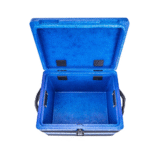
\NPhysical fit is the first low-cost screening step. Place the actual product packaging inside the proposed coolant and insulation arrangement. Check orientation, clearances, fitur rapuh, Label, and access for unpacking. A digital drawing is useful, but it should not replace a practical check of components that flex, tonjolan, or vary within tolerance.
\NNominal capacity can mislead because it may describe the empty cavity. The payload must share that cavity with coolant, jangka pembagi garis, liner, and monitoring equipment. Ask for both the empty internal dimensions and the usable payload envelope in the proposed packout. Do not compare a gross-volume quotation with a net-payload quotation as though they describe equivalent products.
\NBerikutnya, examine handling under the complete loaded condition. Check the grip, keseimbangan, access to latches, and compatibility with the actual trolley, rak, or vehicle. A lightweight empty box can become awkward when coolant and product are installed. The appropriate handling assessment depends on the workplace and should involve the people performing the task.
\NScreen the preparation requirement just as early. A design that depends on a conditioning process your site cannot reliably execute is not ready for purchase. Confirm the storage equipment, ready-stock separation, dan urutan pengepakan. Where different configurations use similar packs, make selection clear enough to survive a busy shift.
\NUntuk sistem yang dapat dikembalikan, inspect the return configuration and cleaning access. Identify where water or residue might remain and how components are checked before release. Do not assume that a box is nestable, washable by a particular method, or suitable for an unlimited number of cycles without product-specific support.
\NThese checks can narrow the shortlist before extensive testing. They are not substitutes for thermal evidence, but they prevent resources being spent proving a design that cannot fit the payload or the workplace. A technically sophisticated container is still the wrong purchase when it makes routine work unnecessarily fragile.
\NCompare complete offers and expose the assumptions
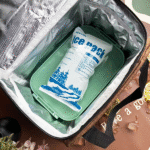
\NRequire each supplier to quote the same defined service. The offer should identify the container, tutup, isolasi, pendingin, sisipan, kemasan luar, identifikasi, and any sample or evaluation support. It should state which elements are included, opsional, or supplied by the buyer.
\NSeparate fixed setup costs from recurring costs. perkakas, initial samples, and development work should not be hidden inside a unit price that makes future replenishment difficult to understand. Sebaliknya, a low recurring price should not distract from a large setup commitment that is justified only by uncertain demand.
\N| Gerbang persetujuan | Evidence to compare | Reason to stop or revise |
| Payload and handling fit | Loaded sample and controlled drawing | Products do not fit with the approved coolant |
| Thermal relevance | Configuration-specific report and conditions | Claimed duration cannot be tied to the proposed packout |
| Kesiapan operasi | Preparation and packing trial | Routine work requires undocumented improvisation |
| Supply consistency | Revision, daftar komponen, inspection agreement | Production identity or substitution controls are unclear |
| Commercial completeness | Itemized offer and confirmed schedule | Essential parts or services are excluded |
| Return-loop readiness | Koleksi, pembersihan, and release process | Reuse depends on unverified recovery assumptions |
Use the gates to make the decision explainable across departments. A low price cannot compensate for an unresolved essential requirement. A supplier can remain under consideration while a gap is addressed, but the gap should not be hidden by a favorable overall score.
\NUntuk kemasan yang dapat dikembalikan, compare cost per completed use using your own circulation assumptions. Include return transport, pembersihan, pengeringan, inspeksi, komponen yang hilang, dan pensiun. Test whether the business case still makes sense when turnaround is slower or recovery is less reliable than hoped. Those are scenarios for evaluation, not predicted results.
\NPerbandingan lingkungan membutuhkan disiplin yang sama. Compare equivalent protected deliveries and include the relevant life-cycle stages. A lighter package, a recyclable resin, or a reusable label alone does not establish a better overall outcome. Require evidence for any quantified claim that influences the purchasing decision.
\NAsk the supplier to confirm minimum order quantity, ruang lingkup penyesuaian, and lead time for the actual configuration. Do not treat a catalogue statement as a commitment for a modified product. Record which commercial dates depend on artwork, gambar, persetujuan perkakas, or the completion of a trial.
\NMake the pilot reveal ordinary mistakes
\NA useful pilot is designed to expose the ways the system may be used incorrectly. Ask someone unfamiliar with the design to pack from the instructions. Observe whether the sequence, component orientation, coolant readiness, and closure are clear without coaching. Record the points where the operator has to guess.
Alat pengambilan keputusan yang berguna
Periksa detailnya sebelum Anda memilih kemasan
Alat cepat ini dapat membantu Anda membandingkan risiko rute, kebutuhan ukuran, pilihan pendingin, dan detail kemasan sebelum Anda meminta penawaran.
Pemilih Kemasan
Bandingkan opsi kemasan berinsulasi berdasarkan produk, rute, dan kebutuhan suhu.
Temukan kemasannyaPendingin & Referensi PCM
Bandingkan opsi cairan pendingin dan PCM ketika suatu rute memerlukan dukungan suhu tambahan.
Bandingkan pilihanPelapis Kotak & Ukuran Penutup Palet
Centang kotak logika ukuran penutup palet dan liner untuk proyek pengemasan berinsulasi.
Perkiraan ukuranEvaluate representative payload variations. A partly filled box, a differently arranged carton, or a product packed at the edge of its permitted starting conditions may create a different challenge from the demonstration configuration. The technical team should determine which combinations need testing and how the results will be interpreted.
\NThermal evidence must identify its boundaries. ISTA’s published explanation of 7E makes clear that standard profiles are not customized worst-case lane data. Ask how any standard-profile result relates to the route you plan to operate. Review the payload, pengkondisian, posisi sensor, profil lingkungan, and acceptance criteria rather than selecting the longest number on a chart.
\NMisalnya, consider a wholesaler choosing between two boxes that both fit the same product cartons. One requires several loose coolant pieces that operators can arrange in different ways; the other uses an identified insert arrangement. A pilot can compare packing clarity and test the intended configurations before price becomes the deciding factor. The example does not imply that either design will outperform the other thermally without evidence.
\NInclude receipt in the pilot. Can the recipient open the box without disturbing the evidence needed for inspection? Is the logger easy to locate? Are product and transport labels distinguishable? Can the empty container move into the correct return or disposal flow without ambiguity?
\NRecord what changed during the trial. A last-minute adjustment to coolant quantity or a divider may create a new configuration. Do not approve the original drawing while relying on results from a modified sample. The final report, mencicipi, instruksi, and order specification should describe the same system.
\NA pilot should end with a decision and named restrictions, not a general impression. Approve the configuration for the evaluated use, request a revision, or reject it. Where further evidence is necessary, specify what must be completed before commercial release.
\NProtect the approval after the first delivery
\NThe transition to routine supply is where a carefully chosen design can lose control. Establish a revision identifier that connects the drawing, daftar komponen, sampel yang disetujui, instruksi, and quotation. Ensure that replenishment orders call up that identifier rather than only a broad product description.
\NAgree a proportionate incoming inspection process. Check features that govern assembly and protection, such as lid engagement, dimensi kritis, jumlah komponen, kerusakan yang terlihat, and coolant integrity. The responsible quality team should set the sampling and acceptance approach according to risk. Avoid arbitrary limits copied from unrelated products.
\NDefine change control in practical terms. Which material substitutions, penyesuaian perkakas, coolant revisions, or instruction changes must be reported before shipment? Who reviews the impact? What happens to existing stock? These questions are easier to settle before an urgent shortage makes substitution attractive.
\NUntuk armada yang dapat digunakan kembali, maintain distinct ready, digunakan, under-review, dan negara bagian pensiunan. A returned box is not automatically available for dispatch. Count complete usable systems rather than bases alone, and track recurring component losses so that replenishment matches reality.
\NReview the first operating period with the supplier and the internal process owners. Separate product defects from preparation errors, unsuitable route expansion, dan menerima penundaan. The remedy should address the cause. Replacing every box will not solve missing conditioning capacity, while repeated training will not fix an incompatible lid.
\NKeep a controlled exception process for urgent shipments. Staff should know when to stop and seek approval instead of improvising with an unassessed coolant or a different liner. A purchasing system is stronger when it provides a workable route for exceptions rather than relying on perfect conditions.
\NThe final buying decision should be easy to defend: the payload fits, the evidence is relevant, the operation can execute the instructions, the offer is complete, and production can reproduce the approved configuration. That is a more durable basis for savings than an attractive unit price alone.
\NUse conditional approval carefully. A pilot may demonstrate acceptable handling while leaving thermal evidence or a production inspection item unresolved. Record exactly what has been accepted, what remains open, and which activities are prohibited until closure. Permission to order additional evaluation samples is not permission to ship commercial product. Keeping these decisions separate lets a project progress without turning a provisional observation into an unsupported release.
\NTraining should accompany the first production delivery, not follow the first incident. Give packers the actual component set and ask them to complete a normal assembly, identify a deliberately incorrect component, and explain the response to a delayed dispatch. This is an assessment of whether the instruction can be used, not a test of whether staff can memorize a supplier presentation.
\NThe handoff also needs a named document owner. When a coolant option, label, atau perubahan penutupan, someone must decide whether warehouse instructions, purchasing specifications, and receiving criteria need revision together. A simple shared version identifier can be more useful than several polished documents that describe different configurations. Approve the relationship between those records as well as the physical sample.
\NBefore committing to the order
\NWhat is the most important document in a supplier comparison?
\NThe controlled requirement is the starting point because it makes the offers comparable. It should be supported by the proposed configuration, relevant evidence, dan istilah komersial. No single certificate replaces that set. A report is useful only when you can connect it to the product, metode persiapan, and route described in your requirement.
\NCan a successful sample justify immediate full-scale deployment?
\NA sample can support approval, but it does not by itself establish production consistency or operating readiness. Confirm that the sample matches the ordered revision and that packing, menerima, and replenishment processes are prepared. A phased launch may help reveal practical constraints before the entire planned volume depends on the new system.
\NWhen is customization worth considering?
\NConsider it when an existing option creates a clear problem with payload fit, penanganan, component selection, or the required operating arrangement. Compare the benefit with tooling, contoh, evaluasi, and replenishment implications. Branding alone should not drive an engineering change that adds complexity without improving the delivery task.
\NTentang tempk
\NDan Tempk, kami menggabungkan kemasan terisolasi options with Paket gel, batu bata es, and other cold-chain components. That breadth supports a focused discussion of the box-and-coolant arrangement, while custom packaging options allow a review of requirements that do not fit a stock format. We keep the useful question centered on your payload and route rather than treating a material label as a performance promise. Proposed configurations, available samples, and supporting documentation should be confirmed for the specific purchasing project.
\NShare your requirements for a cool box bulk purchase with Tempk and request a clearly identified sample packout, an itemized offer, and the evidence needed for your internal approval.