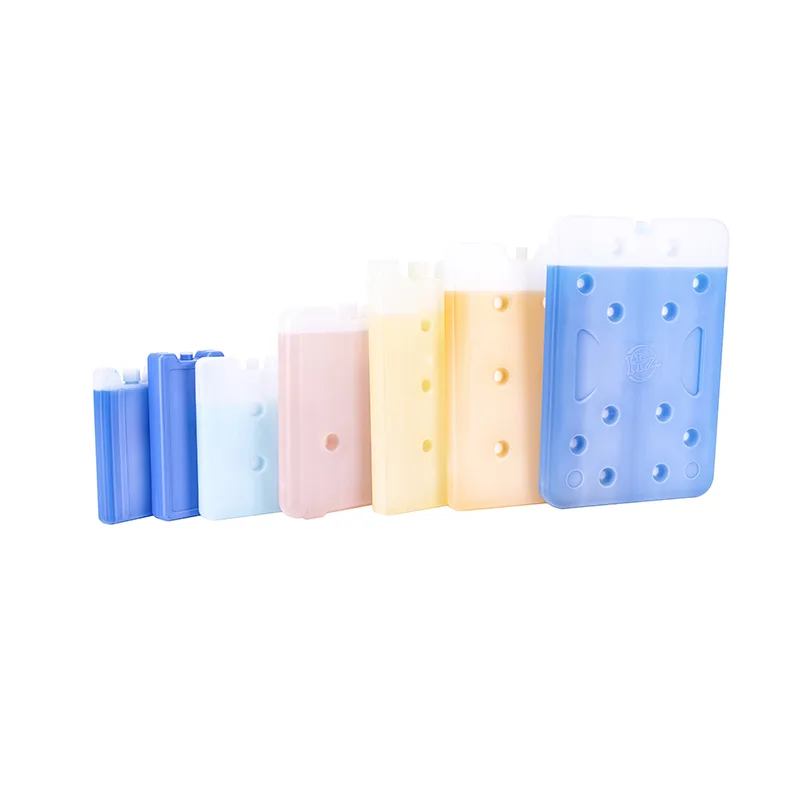
Cool Brick Pharmaceutical Control Is Proven at Receipt, Not in the Freezer
A receiver looking at an alarmed logger does not need to know that the bricks felt cold at dispatch. The receiver needs a traceable answer: Was the approved cool brick pharmaceutical configuration packed and conditioned correctly, did the shipment face the challenge it was designed for, and who can assess the medicine now? That perspective changes the project. Sebuah kaku batu bata pendingin is not purchased as independent protection; it is selected as one controlled component in an insulated, dipantau, sistem yang berkualitas. Many refrigerated medicine flows use 2°C to 8°C, but the required limits are always product-specific. Some medicines have different conditions, and some can be damaged by freezing even during a nominally refrigerated shipment.
Write the Receipt Decision Before Designing the Box
Start with the decision that must be made after delivery. Define the product’s authorized transport conditions, what data must be available, who reviews those data, and which evidence supports release, karantina, eskalasi, atau penolakan. This prevents packaging development from becoming a contest to produce a long, flat temperature graph without a meaningful operating context.
A useful receiving requirement answers five questions:
What identifies the shipment, produk, pack-out revision, dan memantau?
Which temperature limits and time rules apply to this product?
What physical checks are required before unpacking or release?
Who has authority to assess a possible excursion?
What happens when data, segel, komponen, or paperwork are missing?
Temperature-monitor readings are evidence, not protection and not an automatic disposition decision. The assessment may need product stability information, magnitude and duration of exposure, sensor context, and quality authorization. USP material concerning storage, pengiriman, and mean kinetic temperature can inform a procedure, but a summary metric should not be used to dismiss a freeze exposure or replace product-specific evaluation.
Once the end decision is explicit, work backward. The monitor must be retrievable and correctly placed. The pack-out must be linked to a controlled instruction. The brick identity and conditioning state must be verifiable. Qualification must cover the intended load and thermal challenge. Procurement must preserve the component specification that the evidence depends on.
Convert the Medicine and Lane Into User Requirements
The pack-out’s user requirements should be short enough to use and detailed enough to test. Begin with the labeled or otherwise approved product conditions. Avoid treating 2°C to 8°C as a category default. Record sensitivity to freezing, panas, lampu, getaran, orientasi, or other relevant factors without assuming a coolant component addresses them all.
Describe payload boundaries using actual shipping configurations. Minimum load may be thermally vulnerable because it contains less product mass and more void space. Maximum load may restrict circulation or place cartons closer to a brick. If intermediate kits vary, define permitted arrangements or a qualified configuration matrix.
Then document the lane as a sequence of exposures and custody changes. Nominal transit time is only one input. Include pickup windows, memanggungkan, hub, customs or security holds, akhir pekan, last-mile scheduling, jam penerima, dan penundaan yang kredibel. Review summer and winter risks independently. WHO technical guidance separates but connects shipping-container qualification, pembuatan profil rute, dan pemantauan transportasi; that is a helpful model for keeping laboratory evidence tied to field use.
Akhirnya, establish operational constraints. What conditioning equipment is available? How many bricks can be spaced correctly in it? How long may a conditioned component sit before packing? Can staff distinguish similar shells containing different PCM formulas? Can a recipient return reusable components? A design that only works under ideal engineering supervision is not ready for routine distribution.
Use Evidence Gates Instead of Product Superlatives
A controlled project passes through evidence gates. Each gate removes a different uncertainty, and none can be replaced by claims such as “long lasting,” “medical grade,” or “GDP compliant.”
| Gerbang | Keputusan yang harus diambil | Bukti berguna minimum |
|---|---|---|
| Produk | Apa yang harus dilindungi? | Approved conditions, sensitivities, jangkauan muatan |
| Komponen | What exactly is the brick? | Menggambar, shell and fill identification, toleransi, kriteria pemeriksaan |
| Desain | How will parts interact? | Pack-out concept, jarak, pengkondisian, thermal rationale |
| Kualifikasi | Does the system meet requirements? | Protocol and report for defined loads, profil, sensor, dan batasan |
| Jalur | Does intended use match the challenge? | Tinjauan risiko rute, measured data where needed, delay rationale |
| Operasi | Can sites reproduce and evaluate it? | Controlled instructions, pelatihan, pemantauan, menerima, penyimpangan |
| Siklus hidup | Will evidence survive change and reuse? | Supplier notification, inspeksi, catatan, review or requalification rules |
This sequence exposes gaps early. A pengirim yang memenuhi syarat report cannot establish the identity of a proposed substitute brick. Detailed material data cannot prove the finished shipper. Excellent lane data cannot rescue an assembly that staff cannot reproduce. The purchasing dossier should preserve all seven links.
Balance Coolant, Isolasi, Muatan, and Air
Passive thermal performance comes from heat transfer. Energy moves through the container by conduction, konveksi, dan radiasi. Insulation slows that movement. The brick absorbs or releases energy as its temperature changes and, for a PCM, as material changes phase. The payload and internal air respond according to their mass, pengaturan, kemasan, and contact with surrounding surfaces.
This is why “more coolant” is not an engineering rule. A larger or colder brick might extend warm-side protection, yet increase cold-contact risk, consume payload volume, obstruct circulation, or exceed conditioning capacity. Demikian pula, a material’s thermal-conductivity value does not prove the performance of a box with corners, jahitan, a lid, and manufacturing variation.
Freeze-sensitive medicines require deliberate separation from very cold surfaces. A frozen water-based brick placed against a product carton can cause a local excursion even when a central air sensor remains acceptable. Sebuah pengatur jarak, conditioned buffer, revised geometry, or suitable PCM may be considered, but each becomes part of the controlled configuration. The PCM label alone proves nothing about phase behavior or suitability; formula-specific information and system testing are needed.
Alat pengambilan keputusan yang berguna
Periksa detailnya sebelum Anda memilih kemasan
Alat cepat ini dapat membantu Anda membandingkan risiko rute, kebutuhan ukuran, pilihan pendingin, dan detail kemasan sebelum Anda meminta penawaran.
Pendingin & Referensi PCM
Bandingkan opsi cairan pendingin dan PCM ketika suatu rute memerlukan dukungan suhu tambahan.
Bandingkan pilihanPemeriksa Risiko Rute
Tinjau kondisi jalur sebelum memilih kemasan untuk mengetahui kebutuhan pengoperasian sebenarnya.
Periksa risiko ruteKalkulator Es Kering
Perkirakan kebutuhan es kering untuk pengiriman beku atau sangat dingin sebelum pengepakan.
Perkirakan es keringConditioning establishes the starting boundary. Define equipment set point, pola pemuatan, jarak, tinggal, component status check, removal sequence, and allowed transfer time. A freezer crowded with stacked plates may condition them differently from the setup used during qualification. Document the practical process and test with components prepared that way.
Challenge the System, Then Read the Scope Carefully
Qualification should identify the exact insulation, brick revision, coolant quantity and location, prosedur pengkondisian, payload simulant or product load, posisi sensor, tantangan lingkungan, lamanya, dan kriteria penerimaan. ISTA 7E profiles can challenge thermal kemasan transportasi used in parcel networks. Standar ISTA 20 provides a broader design and qualification process for kontainer pengiriman terisolasi. Neither means that an individual brick is approved for every medicine, pengirim, atau jalur.
Use a generic profile when it is justified, lane data when route-specific behavior matters, or a documented combination. A chamber test often provides repeatable stress; field verification tests assumptions under actual handling. The organization’s risk assessment should define the relationship. Do not market laboratory hold time without explaining the system, profil, muatan, sensor logic, and limits that produced it.
Read failures as information. A corner cold spot may reveal conductive contact, a minimum-load issue, or a conditioning inconsistency. A late warm rise may point to a lid joint, insufficient thermal reserve, or a delay beyond design duration. Investigate calibration, perakitan, chamber execution, and data integrity before redesign. Then change one or more controlled variables with a clear hypothesis and retest as appropriate.
EU GDP expects medicinal-product transport to preserve acceptable conditions within a quality-managed, pendekatan berbasis risiko. WHO good storage and distribution practices address documented responsibilities, pemantauan, kualifikasi, and controls across the distribution chain. These principles define how evidence is governed. They do not confer compliance on an HDPE shell, PCM fill, or finished pack-out merely because a standard name appears in a report.
Pilot Hipotetis: Make Uncertainty Visible
Suppose a quality team is introducing a reusable rigid plate on a refrigerated medicine lane. This hypothetical example assumes an approved 2°C to 8°C requirement and known freeze sensitivity; it supplies no claim about a particular product, lamanya, or Tempk configuration.
The project team first freezes the requirements, not the bricks: batasan produk, two payload extremes, credible route delay, summer and winter challenges, menerima jam, and monitoring responsibilities. A proposed PCM plate is dimensioned to fit a defined insulated carton with a separator preventing direct payload contact. The supplier provides component drawings and formula-specific information, while packaging engineering owns the system design.
Development work identifies the most challenging sensor positions. Formal testing uses the operating conditioning process and approved acceptance criteria. A limited lane pilot then checks packer execution, waktu serah terima, memantau pengambilan, dan respons penerima. Reusable units are uniquely identified for the pilot and move through inspection, pembersihan, status segregation, dan rekondisi.
The rollout decision is not just pass or fail. The team lists residual risks, approved configurations, training needs, kinerja pemulihan, open deviations, and triggers for review. If a route lacks reliable receiving or brick return, it can remain on another qualified configuration. A controlled partial rollout is stronger than an unsupported claim of universal fit.
Operate the Evidence Chain Every Day
Saat pengepakan, verify the current work instruction, shipper and component identity, brick condition and status, correct load configuration, pemisah, memantau aktivasi, penutup, dan label. Record enough information to reconstruct the shipment without creating paperwork nobody uses. Photographs or scans can support controls when governed appropriately, but they do not replace training and accountability.
Before the first commercial shipment, conduct a line-readiness review with the actual people, peralatan, and storage locations. Confirm that incoming bricks can be matched to the approved specification and segregated by fill and status. Load conditioning equipment at the expected operating density, confirm recovery after door openings, and make contingency space visible. Have more than one trained operator assemble each permitted load case from the instruction without coaching. Challenge the error controls by presenting a damaged plate, a similar-looking unapproved item, an overdue conditioned batch, and an unavailable monitor. The desired result is not speed; it is correct recognition and escalation. Akhirnya, ask the receiving site to rehearse an alarm and a missing-data event. Close every readiness gap before release, or document a controlled temporary measure with quality approval. This commissioning work tests process capability around the qualified pack-out without claiming new thermal performance.
Saat diterima, inspect for damage, kebocoran, seal issues, unexpected layout, and data availability. Move suspect payload to the defined holding condition while authorized staff assess it. Do not use brick thaw state as a pass/fail shortcut. Close the record with disposition, alasan, and any corrective action.
Untuk digunakan kembali, treat every return as an incoming component. Periksa jahitannya, topi, membentuk, permukaan, label, and contamination against written criteria. Clean and dry with a compatible method. Keep dirty, membersihkan, rusak, dikondisikan, and ready units separated. There is no defensible universal reuse-cycle count; retirement should follow component evidence, observed condition, and approved procedure.
Periodically trend alarms, durasi rute, packaging deviations, brick rejects, pengembalian kerugian, kapasitas pengkondisian, penundaan penerima, dan perubahan pemasok. Those data reveal drift before it becomes routine. Change control should assess alterations to mold, damar, topi, mengisi, label, kemasan karton, pengirim, muatan, pemisah, peralatan pengkondisian, pembawa, rute, or monitoring plan. The outcome may be documented rationale, targeted verification, atau kualifikasi ulang.
Two Final Questions Before Approval
What is the most important supplier question?
Ask which evidence applies to the exact component and configuration you plan to buy. That opens the necessary follow-ups: material and fill identity, revisi gambar, toleransi, pengkondisian, inspeksi, tested shipper and payload, mengubah pemberitahuan, dan konsistensi produksi. A claim without its conditions cannot support approval.
When is a reusable brick the wrong choice?
It may be a poor fit when the route cannot recover components, cleaning or status control is impractical, conditioning capacity is inadequate, geometry sacrifices essential payload space, or qualification shows unacceptable hot or cold risk. A flexible coolant, another PCM format, a different passive system, or an active solution may fit better. Decide from requirements and evidence, not a reuse preference.
Kesimpulan: Control the Decision, Not Just the Temperature
The strongest pharmaceutical pack-out begins with the release decision at receipt and traces backward through monitoring, risiko jalur, kualifikasi, desain sistem, and component evidence. Pendingin, isolasi, muatan, and air must be evaluated together. Product-specific limits, especially freeze sensitivity, govern the result; 2°C to 8°C is common but never universal. Routine instructions, reuse controls, tinjauan data, and change management preserve what testing established. A rigid cool brick is valuable when it makes that evidence chain more repeatable, not when it is treated as the chain itself.
Tentang tempk
Component choices matter most when they map directly to an approved pack-out concept. Tempk menyediakan batu bata es yang dapat digunakan kembali and PCM ice plates for insulated cartons, kotak medis, Tas yang lebih dingin, and repeatable assemblies; public products include HDPE ice bricks. We can discuss volume, bentuk cetakan, topi, warna cangkang, rumus PCM, label, and carton packing for a defined project. Those options can align the brick with a shipper and operating plan, while the buyer’s quality and packaging teams retain responsibility for qualifying the complete configuration and its intended use.
Before sample approval, compare the proposed brick drawing and conditioning assumptions with your user requirement; Tempk can help define the available component options.