Foil Bubble Liner untuk Pengiriman Bahan Makanan: Bagaimana Pembeli Harus Menentukannya
The right foil bubble liner for grocery delivery specification starts with a short list of facts: persyaratan suhu produk, durasi rute, ukuran karton, rencana pendingin, dan bukti apa yang dibutuhkan penerima. Untuk pengiriman bahan makanan, liner dapat mengurangi paparan termal dan meningkatkan efisiensi pengepakan, tapi itu tidak bisa menggantikan desain paket lengkap. Panduan ini memberi pembeli cara praktis untuk menentukan, tes, dan mencari sumber liner tanpa bergantung pada klaim yang tidak jelas.
Liner, pendingin, karton, dan rute harus diperlakukan bersama-sama
A foil bubble liner is a passive insulation layer. Ini dapat memperlambat perolehan atau kehilangan panas, memantulkan panas radiasi dari dinding karton, tambahkan sedikit bantalan, dan membantu menciptakan permukaan kemasan bagian dalam yang lebih bersih. Ini bukan lemari es, ini bukan perangkat pengontrol suhu aktif, dan itu tidak menghilangkan kebutuhan akan cairan pendingin yang tepat. Untuk pengiriman bahan makanan, batas ini sangat penting karena kiriman mungkin melewati beberapa titik serah terima sebelum penerima membuka kartonnya.
Bayangkan liner sebagai salah satu bagian dari tumpukan termal kecil. Karton bergelombang luar memberi bentuk dan kekuatan penanganan. Liner menambahkan lapisan reflektif dan ruang udara. Paket gel, batu bata es, Paket PCM, atau es kering memberikan energi dingin jika diperlukan. Pengemasan produk mengendalikan kebocoran, kebersihan, dan kontak langsung. Rute tersebut kemudian menambah stres yang sebenarnya: waktu tinggal pengendara, dermaga pemuatan yang hangat, repeated carton opening, paparan di depan pintu, kondensasi, and mixed chilled or frozen baskets. Jika salah satu dari bagian ini lemah, linernya mungkin disalahkan meskipun masalahnya sebenarnya adalah ukuran karton, massa pendingin, atau penanganan yang buruk.
Inilah sebabnya mengapa pertanyaan pembeli pertama harus mengenai muatan dan rute, bukan ketebalan liner saja. A shipment containing produce, item susu, chilled meal ingredients, minuman, tambahan beku, and mixed grocery baskets needs a different risk review than a generic ambient parcel. Anda harus menentukan kondisi produk yang diperlukan saat pengiriman, waktu penanganan yang diharapkan, proses penerimaan, dan kriteria penolakan sebelum membandingkan sampel liner. Spesifikasi yang bersih membuat percakapan pemasok lebih cepat dan mengurangi kemungkinan disetujuinya opsi berbiaya rendah karena alasan yang salah.
Memetakan rute sebelum memutuskan kapal sudah cukup
Pemetaan rute adalah latihan sederhana yang dilewati banyak tim. Tuliskan di mana karton yang dikemas akan diletakkan sebelum diambil, bagaimana itu dimuat, apakah itu memasuki hub parsel, berapa lama ia bisa menunggu di dalam kendaraan, apakah pengendara atau kurir membuka tas pengiriman yang lebih besar, dan bagaimana penerima memeriksa paket tersebut. Untuk pengiriman bahan makanan, peta rute ini sering kali mengungkapkan risiko yang tidak dapat diatasi oleh spesifikasi kapal saja.
Setelah peta terlihat, mencocokkan setiap risiko dengan pengendalian. Rider dwell time, dermaga pemuatan yang hangat, repeated carton opening, paparan di depan pintu, kondensasi, and mixed chilled or frozen baskets may require more coolant, karton yang berbeda, penutupan yang lebih kuat, label peringatan, jendela pengiriman yang lebih pendek, atau pencatat data. The foil bubble liner may support these controls by reducing heat transfer and improving the inner pack surface, namun hal ini tidak dapat menutupi setiap kesenjangan operasional.
Peta rute juga membantu pengelompokan SKU. Products such as produce, item susu, chilled meal ingredients, minuman, tambahan beku, and mixed grocery baskets may not share the same sensitivity or handling tolerance. Jika satu paket digunakan untuk semua SKU, item dengan risiko tertinggi harus lulus ujian. Jika spread SKU terlalu lebar, mungkin lebih baik menentukan dua paket daripada memaksakan satu desain liner untuk mencakup semuanya.
Struktur bahan: apa yang harus diterjemahkan pembeli ke dalam operasi
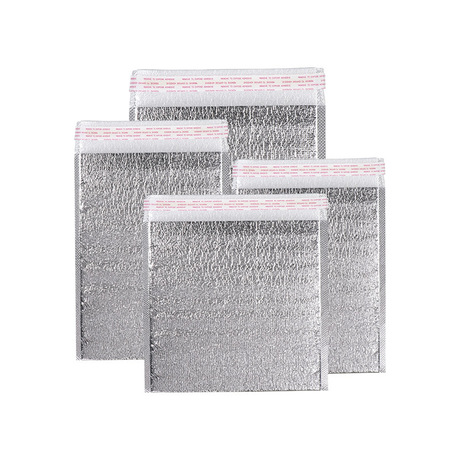
A foil bubble liner combines a reflective surface with bubble cushioning. The foil-facing layer helps reduce radiant heat transfer, while the trapped air spaces in the bubble layer slow conduction through the liner. Untuk pengiriman bahan makanan, this is useful when the parcel faces short periods of heat exposure, pementasan hangat, or mixed handling environments. The design still depends on correct closure and enough cold media.
A common mistake is to evaluate only shine and thickness. The real questions are whether the liner wraps the payload without gaps, whether corners are protected, whether the seal or flap stays closed, and whether moisture affects the layers. In carton-based programs, the most elegant material can underperform if the pattern leaves open corners or if staff rush the insert process.
Untuk setiap struktur material, tanyakan apa yang akan tetap sama antara sampel dan produksi. Perubahan dalam film, tinggi gelembung, kepadatan busa, penentuan ukuran, lapisan, laminasi, penyegelan tepi, atau pola lipat dapat mengubah perilaku liner. Dalam pengiriman bahan makanan, perubahan kecil mungkin tidak terlihat oleh pengemas, tapi nanti bisa muncul sebagai kondensasi, produk yang dihancurkan, tanda terima yang lebih hangat, atau keluhan pelanggan.
Penggunaan yang memperhatikan kepatuhan tanpa menuntut liner secara berlebihan
Program pengiriman makanan dan pengiriman daging harus memisahkan penanganan sanitasi dari kinerja termal. Penyimpanan bersih, prosedur kendaraan atau pengiriman yang benar, instruksi tertulis, dan penerimaan cek mungkin relevan tergantung pada pasar dan jenis produk. Di Amerika Serikat, aturan Transportasi Sanitasi FDA membingkai tanggung jawab bagi pengirim, loader, operator, dan penerima dalam pengangkutan makanan dengan motor atau kereta api, namun pembeli masih perlu memastikan aturan mana yang berlaku pada operasi mereka.
Liner dapat mendukung program tersebut dengan melindungi bagian dalam karton, mengurangi paparan suhu, dan membantu staf berkemas secara konsisten. Itu tidak menentukan suhu makanan yang aman, tidak membersihkan produk, dan tidak mendokumentasikan rutenya. Untuk pengiriman bahan makanan, kata-kata yang paling aman adalah liner merupakan salah satu bagian dari rencana penanganan yang terkendali. Jika produk tersebut beresiko tinggi, fana, atau dikirim melalui rute panjang yang tidak terkendali, pembeli harus menambahkan pemantauan yang sesuai dan meninjau kemasan dengan tim keamanan pangan mereka.
Aturan internal yang berguna itu sederhana: semakin sensitif muatannya dan semakin tidak pasti rutenya, semakin banyak dokumentasi yang Anda perlukan. Aturan Transportasi Sanitasi FDA, USDA cold food handling references, ISTA thermal transport packaging standards, Tempk packaging range can guide the conversation, tapi pembeli tetap harus menanyakan kualitasnya sendiri, peraturan, atau tim keamanan pangan sebelum menyetujui paket produksi. The liner should not be used for uncontrolled long dwell windows, high-risk frozen deliveries without enough refrigerant, and any program that requires a qualified pengirim termal unless the whole shipping system has been reviewed for that risk.
Tabel verifikasi praktis untuk pembeli
Gunakan tabel ini sebelum persetujuan sampel. Hal ini membuat diskusi terfokus pada persyaratan pengiriman, bukan pada bahasa brosur.
| Daerah spesifikasi | Pertanyaan keputusan | Respons pemasok yang membantu |
|---|---|---|
| Persyaratan suhu | Kondisi apa yang harus dipertahankan produk pada saat diterima? | Permintaan untuk menentukan rentang, lamanya, dan kriteria penerimaan sebelum mengutip. |
| Geometri karton | Akankah liner menutup tanpa celah sudut atau kehilangan ruang muatan? | Sebuah gambar, garis mati, atau sampel jadi cocok dengan karton. |
| Rencana media yang dingin | Dimana paket gelnya, PCM, batu bata es, atau es kering duduk? | Sketsa paket dan peringatan tentang risiko kontak langsung jika relevan. |
| Menguji bukti | Apakah kinerja berdasarkan rute Anda atau klaim umum? | Profil uji, muatan, kondisi sekitar, dan kriteria lulus/gagal. |
| Pengendalian produksi | Bisakah sampel yang disetujui diulangi dalam skala besar? | Spesifikasi bahan, metode pemeriksaan, dan mengubah pemberitahuan. |
Inti dari tabel ini adalah untuk membuat asumsi terlihat. Setelah asumsi ditulis, pembeli dapat memutuskan apa yang membutuhkan lembar data pemasok, apa yang memerlukan pengiriman percobaan, dan apa yang memerlukan persetujuan tim mutu. Disiplin tersebut sangat berguna ketika tekanan harga mendorong tim menuju kapal yang lebih ringan atau lebih murah sebelum risiko rute dapat dipahami.
Pertanyaan pemasok yang benar-benar mengubah hasil
A strong supplier conversation for foil bubble liner is specific. Instead of asking whether the liner is good for grocery delivery, tanyakan ukuran karton apa yang didukung, lapisan bahan apa yang digunakan, toleransi apa yang dikontrol, bagaimana ujung-ujungnya disegel, bagaimana liner dikemas untuk pengiriman, dan apa yang terjadi jika materi yang disetujui diubah. Hal ini mengubah diskusi dari bahasa penjualan menjadi kontrol produksi.
Untuk pesanan massal, carton nesting, kecepatan jalur paket, liner seal strength, food-contact layer review, opsi cetak, and sample consistency should be visible before the purchase order is finalized. Jika Anda membutuhkan pencetakan khusus, tanyakan apakah perubahan tinta atau laminasi mempengaruhi waktu tunggu, Daur ulang, tinjauan kontak makanan, atau ketersediaan bahan. Jika Anda membutuhkan beberapa ukuran, tanyakan apakah setiap ukuran akan menggunakan gambar dan sampel terpisah. Jika Anda mengimpor, tanyakan bagaimana labelnya, karton, pengepakan kompresi, dan paletisasi memengaruhi penerimaan di gudang Anda.
Alat pengambilan keputusan yang berguna
Periksa detailnya sebelum Anda memilih kemasan
Alat cepat ini dapat membantu Anda membandingkan risiko rute, kebutuhan ukuran, pilihan pendingin, dan detail kemasan sebelum Anda meminta penawaran.
Kalkulator Paket Es
Perkirakan jumlah paket es gel untuk pengiriman dingin dan perencanaan rute yang praktis.
Perkirakan kantong esKalkulator Es Kering
Perkirakan kebutuhan es kering untuk pengiriman beku atau sangat dingin sebelum pengepakan.
Perkirakan es keringKetahanan Jatuh Bahan Isolasi
Tinjau ketahanan jatuh dan faktor penanganan sebelum memilih bahan insulasi.
Periksa resistensiPemasok juga harus merasa nyaman mendiskusikan batasan. Pemasok yang mengklaim setiap kapal sesuai dengan setiap rute menciptakan risiko bagi kedua belah pihak. Jawaban yang lebih baik terdengar lebih bersyarat: liner ini mungkin cocok untuk rute pendek dengan cairan pendingin yang tepat; desain ini memerlukan uji coba untuk jalur yang lebih panjang; produk ini memerlukan struktur insulasi yang berbeda; klaim ini memerlukan dokumentasi. Jawaban bersyarat sering kali lebih dapat diandalkan daripada pernyataan yakin tanpa konteks.
Menerima cek mengubah kemasan menjadi bukti
Inspeksi penerimaan harus dirancang sebelum pengiriman produksi pertama meninggalkan gudang. Untuk pengiriman bahan makanan, penerima dapat memeriksa kondisi produk, kerusakan karton, keadaan kantong es, kebocoran yang terlihat, posisi kapal, integritas segel, atau catatan suhu jika pemantauan digunakan. Tanpa standar penerimaan, klaim menjadi subyektif dan sulit untuk diselidiki.
The foil bubble liner can support a cleaner receiving experience when it is sized well and used consistently. Sebuah liner yang bergeser, air mata, memerangkap cairan di tempat yang salah, atau membuat karton sulit dibuka dapat menimbulkan keluhan meskipun produknya dapat diterima. Pembeli harus mempertimbangkan orang yang membuka paket, bukan hanya orang yang mengemasnya.
Jika terjadi keluhan, tinjau seluruh rantai sebelum menyalahkan satu komponen. Periksa apakah produk telah dikondisikan sebelumnya dengan benar, apakah media dingin dibekukan atau dikondisikan sesuai rencana, apakah linernya cocok dengan kartonnya, apakah rutenya berubah, apakah kartonnya tertunda, dan apakah penerima mengikuti instruksi. Pendekatan akar penyebab ini menghindari perubahan material berulang-ulang yang tidak pernah menyelesaikan masalah sebenarnya.
Contoh praktis: mengubah sampel menjadi paket yang dapat digunakan
In a common grocery delivery program, pembeli dapat menggunakan satu karton untuk beberapa produk: menghasilkan, item susu, chilled meal ingredients, minuman, tambahan beku, and mixed grocery baskets. Muatan campuran tersebut menciptakan godaan untuk menggunakan satu liner dan satu rencana pendingin untuk setiap pesanan. Pendekatan yang lebih baik adalah dengan mengelompokkan pengiriman berdasarkan sensitivitas, panjang rute, dan penanganan risiko, kemudian uji kelompok dengan risiko tertinggi sebelum memperlakukan liner sebagai standar.
This keeps the foil bubble liner from being judged by an easy route while being deployed on a difficult one. Ini juga memberikan instruksi yang lebih jelas kepada pengepakan, karena mereka tahu kapan harus menambahkan cairan pendingin, kapan harus menggunakan karton yang berbeda, dan ketika kiriman memerlukan peninjauan ekstra.
Untuk pengiriman bahan makanan, hasil yang bermanfaat bukanlah lulus atau gagal secara umum. Ini adalah metode pengepakan tertulis yang dapat diulangi oleh gudang. Metodenya harus mencakup cara liner dimasukkan, tempat muatan berada, bagaimana media dingin diatur, bagaimana karton ditutup, dan apa yang harus diperiksa oleh penerima. Setelah proses didefinisikan, pembeli dapat membandingkan pilihan pemasok berdasarkan konsistensi, bukan hanya pada tampilan permukaan saja.
FAQ
Is a foil bubble liner enough for grocery delivery by itself?
TIDAK. A foil bubble liner is a passive insulation component. Ini dapat memperlambat perpindahan panas dan meningkatkan pengemasan berbasis karton, tapi masih membutuhkan karton yang tepat, pengaturan muatan, media dingin, proses penanganan, dan menerima cek. Untuk rute berisiko tinggi, pembeli harus menguji paket lengkap daripada mengandalkan tampilan liner.
Apa yang harus saya konfirmasi sebelum memesan sampel?
Konfirmasikan dimensi karton, jenis muatan, kondisi produk yang diperlukan, durasi rute, rencana media yang dingin, risiko kelembaban atau kebocoran, dan kebutuhan dokumentasi. Mintalah sampel jadi kepada pemasok yang sesuai dengan bahan produksi dan metode penyegelan yang diinginkan. Untuk pengiriman bahan makanan, lebih baik menguji kemasan yang realistis daripada liner kosong yang rapi.
Kapan saya harus mempertimbangkan sistem yang lebih berat daripada liner?
Pertimbangkan pengirim berinsulasi yang lebih kuat, kotak kaku, paket yang memenuhi syarat, atau kontrol aktif ketika rutenya panjang, paparan lingkungan tidak pasti, produk tersebut diatur, or the shipment involves uncontrolled long dwell windows, high-risk frozen deliveries without enough refrigerant, and any program that requires a qualified thermal shipper. Sebuah liner bisa bermanfaat, namun hal ini tidak boleh diperluas melampaui perannya yang sudah teruji.
Bagaimana cara membandingkan pemasok secara adil?
Berikan setiap pemasok profil pengiriman yang sama, ukuran karton, asumsi muatan, rencana media yang dingin, dan permintaan dokumentasi. Bandingkan tidak hanya harga satuan tetapi juga dimensi jadi, konsistensi sampel, pengendalian materi, metode pengepakan, kemampuan untuk mendukung pekerjaan khusus, dan kesediaan untuk menyatakan batasan produk.
Kesimpulan: tentukan liner sebagai komponen yang dikontrol
A foil bubble liner can be a useful choice for grocery delivery, namun harus dipilih sebagai bagian dari paket rantai dingin yang lengkap. Pembeli harus menentukan persyaratan produk, risiko rute, geometri karton, rencana pendingin, dan menerima bukti sebelum menyetujui sampel.
The most important practical checks are fast packing, karton sesuai, reflective heat shielding, Bantalan, manajemen kebocoran, and compatibility with gel packs or ice bricks. Jika pemeriksaan tersebut ditangani lebih awal, liner dapat mendukung proses pengepakan yang lebih bersih, pengendalian gudang yang lebih baik, dan lebih sedikit perselisihan saat diterima. Jika mereka diabaikan, bahkan liner yang bagus pun dapat digunakan di jalur yang salah atau dirakit dengan cara yang salah.
Pendekatan pengadaan yang paling aman adalah dengan mengajukan pertanyaan bersyarat dan memerlukan jawaban yang jelas. Apa yang terbukti? Itu tergantung pada rute Anda? Apa yang harus diuji? Perubahan apa yang memerlukan persetujuan? Pertanyaan-pertanyaan itu membuat paket akhir tetap jujur.
Tentang Tempk
Tempk menyediakan kemasan rantai dingin pilihan untuk makanan, farmasi, dan pengiriman sensitif suhu lainnya. Rangkaian produk yang diterbitkannya meliputi liner kotak terisolasi, kantong termal, Gel Ice Packs, EPP dan kotak pengiriman dingin, penutup palet terisolasi, dan bahan kemasan rantai dingin terkait. Untuk proyek kapal, Tempk dapat membantu pembeli membandingkan desain liner berbahan karton dengan media pendingin, persyaratan muatan, dan mengarahkan risiko sebelum berpindah dari sampel ke pengadaan massal. Untuk pengiriman bahan makanan, peran praktisnya adalah membantu menyelaraskan desain liner dengan kesesuaian karton, media dingin, dan batasan operasional pembeli alih-alih memperlakukan liner sebagai solusi universal.
For a foil bubble liner for grocery delivery project, kirim Tempk rute Anda, karton, muatan, dan memerlukan kondisi produk untuk menerima rekomendasi yang lebih terfokus.
Jumlah kata dalam tubuh: 2364 kata-kata