How to Source a Manufacturer Dry Ice Pack for Insulin Delivery
The best manufacturer es kering pack for insulin delivery is not selected by catalog temperature or pack price. It is selected through a controlled chain of decisions. The insulin label defines the thermal target. The route defines the challenge. The coolant and insulation create a packout. Qualification defines where that packout can be used. Production controls keep it from changing unnoticed. This order matters because ordinary dry ice is much colder than the storage range on many insulin labels, which also warn against freezing. A buying team should be willing to end the project with a gel, PCM, aktif, or separate-shipment solution instead.
Use approval gates rather than a long wish list
Traditional requests for quotation often combine every preference into one document: waktu tahan yang lama, low price, ukuran kompak, pencetakan khusus, “medical grade,” and global compliance. The supplier can answer those items while the central question remains unresolved: will the defined payload stay within its permitted conditions?
A gate process makes each decision conditional on evidence.
| Gerbang persetujuan | Question that must be answered | Minimum useful evidence | Reason to pause |
|---|---|---|---|
| Definisi produk | What conditions apply to this exact insulin and shipment status? | Approved label, pasar, presentasi, quality-approved range and excursion process | Generic requirement such as “keep cold” |
| Identitas pendingin | What is the proposed “dry ice pack”? | Komposisi, technical description, informasi keselamatan, persiapan, klasifikasi transportasi | Supplier cannot distinguish solid carbon dioxide from gel, PCM, or hydrated sheet |
| Desain sistem | What complete arrangement protects the payload? | Daftar bahan, usable payload drawing, fixed packout, contact protection, penutup | Loose components with no reproducible configuration |
| Bukti termal | Under what conditions did the system pass? | Protokol, profil lingkungan, min/max load, keadaan pendingin, peta sensor, full traces, kriteria | Duration claim without test context |
| Kesiapan operasional | Can staff reproduce, mengirimkan, menerima, and investigate it? | Instruksi kerja, training trial, monitor workflow, contingency and quarantine process | Success depends on an expert improvising each box |
| Pengendalian produksi | Will commercial units match approved samples? | Critical specifications, lot controls, inspeksi, keterlacakan, mengubah pemberitahuan | Material substitutions can occur without review |
The table is intentionally sequential. A team should not negotiate custom artwork at the production-control gate if it has not established the coolant's identity at the second gate. Each pause prevents later work from creating false confidence.
Gate one: turn the insulin label into a transport requirement
Begin with an exact product record, not the word “insulin.” Capture brand or nonproprietary name as applicable, kekuatan, container or pen presentation, unopened or in-use status, pasar, and approved labeling revision. Confirm who owns stability assessment and excursion disposition.
Many unopened insulin products carry refrigerated storage instructions around 2°C to 8°C and explicit “do not freeze” language. Current U.S. Humalog labeling is one example. The FDA also warns that insulin exposed to freezing should not be used and advises avoiding freezing when ice is used in an emergency. These are strong reasons not to make ordinary dry ice the default. They are not permission to assume every insulin has identical storage time, room-temperature allowance, or transport conditions.
The quality-approved requirement should answer:
What range must be maintained during normal distribution?
Does the allowed condition differ for unopened and in-use units?
Are any excursions supported, and who may evaluate them?
Must the product remain in its original carton?
Which monitoring records are required?
What is the smallest order and the heaviest order?
How much justified contingency time is included?
Treat a permitted room-temperature period carefully. It may be tied to a product's use instructions and final discard date. It does not automatically convert a commercial lane into uncontrolled ambient transport. The quality team should decide how the approved labeling and stability data apply.
This gate should produce a short, signed design input. Tanpanya, the packaging supplier is being asked to make a medicinal-product decision outside its proper role.
Gate two: replace the sales name with a material identity
“Dry ice pack” is not a reliable material specification. Procurement should obtain enough information to place the proposed component in one of four categories.
Ordinary dry ice is solid carbon dioxide. It creates a very low-temperature source, menyublim menjadi gas, requires a package that releases gas, and can trigger dangerous-goods requirements for air transport. It is normally associated with frozen or deeply frozen payloads, although specialized multi-zone designs may use it with isolated compartments.
An engineered dry-ice-compatible component is a film, kantong, menyisipkan, pembagi, baki, or other element designed for conditions involving ordinary dry ice. Compatibility should be tied to a defined material, suhu, mechanical function, dan tes. The term does not mean that the component generates dry ice or that it makes a refrigerated insulin zone safe.
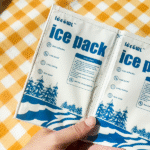
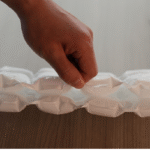
A gel, terhidrasi, or PCM pack stores thermal energy in water-based or other phase-change material. Some hydrated polymer sheets are marketed as Paket es kering because they are compact before activation or dry to handle. They are not solid carbon dioxide. Their preparation, perilaku kebocoran, phase transition, and shipping status are different.
A qualified passive system is the complete pengirim terisolasi and controlled packout supported by thermal evidence. It may contain one of the coolant types above. The qualification belongs to the tested configuration and conditions, not to every loose component bearing the same logo.
Request the safety data and technical datasheet appropriate to the actual product. If the supplier considers a composition proprietary, it can still state the functional material class, relevant hazards, klasifikasi transportasi, phase behavior needed for use, and compatibility limits. “Secret formula” is not an adequate response to a safety or classification question.
Gate three: design a thermal envelope around the route
A route is a time-and-temperature sequence. Map it from coolant preparation through recipient acceptance.
Di tempat asal, include staging outside the refrigerator, waktu pengepakan, courier wait, and missed pickup. Dalam transit, include sorting, cross-docking, customs where applicable, unconditioned vehicles, and different parcel orientations. Di tempat tujuan, include depot hold, last-mile vehicle exposure, pengiriman gagal, waktu di ambang pintu, and the period before the parcel reaches controlled storage.
Berikutnya, define the payload envelope. The lightest parcel often faces greater cold-side risk because it has less thermal mass. The fullest parcel may reduce air channels but place product closer to the walls or leave less coolant space. Use internal drawings showing usable payload dimensions after every pack, pembagi, monitor, and restraint is installed. An external box dimension or gross cavity volume is not enough.
The packout should physically control:
Coolant quantity and location
Insulin location and orientation
Separation from frozen surfaces
Movement after normal handling
Void space and permitted filler
Pantau penempatannya
Lid and closure sequence
Labels and shipment identification
If ordinary dry ice remains under consideration, the design must manage two additional boundaries. It must prevent the insulin zone from falling below its permitted limit, and it must permit carbon dioxide gas to escape without creating pressure. A fully sealed outer package is unsafe. Materials near the refrigerant should also be assessed for low-temperature brittleness, retak, adhesive failure, and loss of cushioning.
For most refrigerated-insulin evaluations, it is sensible to test an appropriate gel or PCM architecture before accepting the complexity of a dry-ice-isolated system. That is a design priority, not a universal rule. The correct choice comes from the route and evidence.
Gate four: make the test report answer the buying decision
A good thermal report tells a reviewer what was built, how it was challenged, Apa yang terjadi, and what conclusion is justified. A certificate image or a single duration number cannot do that.
Ask for these report elements:
Identification of the exact shipper, isolasi, pendingin, pemisah, payload chamber, penutup, and component revisions
Coolant preparation records, including the defined state at loading
Payload or simulant description, load configuration, dan pengkondisian awal
Ambient chamber profile and the rationale for warm, dingin, and delay challenges
Alat pengambilan keputusan yang berguna
Periksa detailnya sebelum Anda memilih kemasan
Alat cepat ini dapat membantu Anda membandingkan risiko rute, kebutuhan ukuran, pilihan pendingin, dan detail kemasan sebelum Anda meminta penawaran.
Pemilih Kemasan
Bandingkan opsi kemasan berinsulasi berdasarkan produk, rute, dan kebutuhan suhu.
Temukan kemasannyaPelapis Kotak & Ukuran Penutup Palet
Centang kotak logika ukuran penutup palet dan liner untuk proyek pengemasan berinsulasi.
Perkiraan ukuranPendingin & Referensi PCM
Bandingkan opsi cairan pendingin dan PCM ketika suatu rute memerlukan dukungan suhu tambahan.
Bandingkan pilihanSensor model, status kalibrasi, interval perekaman, and placement map
Predetermined upper and lower acceptance criteria
Packout time, test start definition, orientasi, and recorded deviations
Complete time-temperature traces and the location of any extremes
A conclusion limited to the tested system and approved range of use
Standar ISTA 20 describes a structured qualification process for kontainer pengiriman terisolasi, and ISTA 7E includes profiles developed for parcel-delivery thermal testing. Referencing those standards can make the supplier's method easier to assess. It does not eliminate the need to examine lane relevance, representative loads, cold-side performance, dan eksekusi.
Sensor placement deserves particular scrutiny. Air next to the lid may respond quickly to ambient changes. A sensor touching coolant may show a cold extreme that is not representative of the carton. A center sensor may miss a frozen corner. Qualification should use enough locations to map the payload space and identify likely hot and cold points. The commercial monitor can then be placed using that knowledge.
Challenge both seasonal directions. A warm profile tests capacity against heat entry. A cold profile may reveal that the design overcools, especially with a small load or freshly conditioned packs. If a design change fixes one direction, repeat the relevant other challenge; more thermal resistance around the payload can also reduce cooling later in a warm journey.
Gate five: prove that the pack station can reproduce the laboratory
Laboratory staff tend to follow a protocol carefully. Commercial operations face interruptions, different shifts, ruang sempit, embun beku, kondensasi, handwritten notes, and a queue of parcels. Operational qualification closes that gap.
Invite representative packers who did not develop the system. Give them the proposed work instruction, komponen, and normal tools. Observe rather than coach. Look for ambiguous pack orientation, similar-looking coolant states, a divider that can be omitted, an easy way to close the lid incorrectly, and steps that demand impractical timing.
Conditioning is often the weak point. The instruction should state how packs are arranged in the freezer or conditioning equipment, how readiness is established, what happens after removal, and when a pack must not be used. For hydrated sheets, define water exposure, drainase, mass or dimensional checks if relevant, freezing arrangement, and leakage inspection. Untuk PCM, confirm the intended phase state rather than relying on surface feel.
The commercial monitor workflow should also be rehearsed. Putuskan siapa yang memulai perangkat, confirms activation, associates its serial number with the parcel, retrieves or views the result, and acts on an alarm. A monitor is evidence, bukan pendinginan. An acceptable reading cannot repair an inconsistent packout, and an alarm should trigger quarantine and investigation rather than an automatic assumption that the insulin is unusable or acceptable.
Receiving instructions should cover package damage, kebasahan, displaced components, label yang hilang, and monitor results. Jika terjadi tamasya, preserve the shipment, data, and lot information. A designated quality function should use approved stability information and, jika perlu, the insulin manufacturer's input to determine disposition.
Gate six: review ordinary dry ice as a shipping hazard
If the selected system contains actual solid carbon dioxide, procurement needs dangerous-goods and workplace-safety review in addition to thermal approval.
Dry ice is identified as “Carbon dioxide, padat,"Dan 1845 untuk transportasi udara. Current IATA acceptance criteria require packaging that permits gas release and applicable marking with UN 1845 and the dry-ice shipping name. The net quantity, label, dokumentasi, operator, pesawat terbang, and state requirements depend on the shipment and current rules. Confirm them with qualified dangerous-goods personnel and the carrier rather than copying instructions from an old web page.
The work area also needs suitable ventilation and handling controls. Carbon dioxide is colorless and odorless, can accumulate where ventilation is poor, and can displace oxygen. Kontak langsung dengan es kering dapat menyebabkan radang dingin. Pelatihan, peralatan pelindung, penyimpanan, quantity management, tanggap darurat, and access control should match the operation.
Do not apply this entire framework to a water-based pack merely because its product name contains “dry ice.” Classification follows the substance. Sebaliknya, do not relabel actual solid carbon dioxide as a “cooling pack” to avoid the rules.
Gate seven: protect the approved design during scale-up
The move from sample to production is a controlled transfer, not a repeat purchase.
Create an approved component specification or master sample for characteristics that can affect performance: bahan, massa terisi, hydration behavior, geometri segel, ukuran, coolant grade, insulation density or construction, spacer thickness, penutup, and label location as applicable. The list should come from a risk assessment and test history.
Agree on incoming and in-process controls. The manufacturer might inspect raw material identity, integritas segel, fill or component mass, ukuran, penampilan, dan banyak pengkodean, tergantung pada produknya. The buyer should define receiving checks and sampling appropriate to its quality system. A visual check alone may miss a formulation or insulation change.
Change notification should include alterations to coolant composition, film, proses penyegelan, insulation source, perkakas, ukuran, karton luar, supplier site, and test method when those features could affect approved use. Not every change requires full requalification, but every relevant change deserves a documented impact assessment.
Traceability connects a complaint or excursion to a component lot and packout record. Capture enough information to investigate without burdening operators with unusable paperwork. Supplier batch, shipment identifier, persiapan pendingin, packout date, monitor identity, and receiving result are common data relationships to consider.
Commercial terms come after technical scope is stable. Compare minimum order, waktu tunggu, Kustomisasi, penyimpanan, efisiensi palet, disposal or return, and freight based on confirmed supplier information. Include pack preparation labor, conditioning equipment capacity, berat pengiriman, pemantauan, dangerous-goods services, and potential rework in the cost model.
Contoh praktis: an RFQ that changes direction
Imagine a home-delivery company issues an RFQ for a dry ice pack because summer parcels have arrived warm. Three suppliers respond. One offers ordinary dry ice. One offers a water-activated sheet marketed under the same phrase. One proposes a PCM set inside an insulated shipper.
Instead of comparing pack prices, the company runs the gates.
At product definition, quality confirms that the intended unopened insulin units have refrigerated labeling and must not be frozen. At material identity, procurement classifies the three proposals correctly. At route mapping, the team finds two different risks: high afternoon vehicle temperatures and small parcels left at the doorstep. It also discovers that the packing station cannot safely support routine dry-ice storage without new controls.
The ordinary dry-ice proposal is not automatically rejected, but it now carries additional thermal-isolation, ventilasi, dangerous-goods, keamanan, dan persyaratan pelatihan. The hydrated sheet proposal needs a repeatable water-uptake and conditioning method. The PCM system offers a potentially simpler preparation route, but its usable payload is smaller and its test report does not yet cover the minimum order.
The company asks the remaining suppliers to test defined minimum and maximum loads against approved warm and cold profiles, using the proposed commercial packout and mapped sensor positions. It then runs an operator pilot and reviews production change controls. The final selection may be PCM, conditioned gel, or another system. The RFQ's original wording no longer dictates the outcome.
This example has no claimed customer result. Its value is the decision sequence: mengenali, bound, tes, beroperasi, dan kontrol.
Three valid outcomes buyers should keep open
Outcome one: a refrigerated passive system. Gel or PCM coolant inside a qualified insulated packout meets the defined range and route. This is often the most straightforward direction for freeze-sensitive refrigerated insulin, provided cold-side risk is controlled.
Outcome two: a specialized dry-ice architecture. Ordinary dry ice is justified by the overall shipment, while tested isolation protects a separate insulin zone. This outcome carries added material, ventilasi, dangerous-goods, and operational controls.
Outcome three: a different logistics plan. Insulin and frozen goods travel in separate packages, a refrigerated vehicle or active container is used, the service time is shortened, or delivery conditions change. Packaging selection should be allowed to improve the route instead of compensating for every avoidable risk.
An approval process is stronger when “none of the proposed packs” is an acceptable interim decision.
Pertanyaan yang sering diajukan
What should be in an initial manufacturer brief?
Include the exact insulin presentation and market, approved temperature requirement, shipment status, muatan minimum dan maksimum, usable-space needs, asal dan tujuan, seasonal route profile, planned duration plus delay allowance, moda transportasi, memantau ekspektasi, and requested evidence. Ask the supplier to identify coolant chemistry and propose a complete packout rather than quote a loose component.
How do I verify that a dry ice pack is not ordinary dry ice?
Request the technical datasheet, composition or material class, informasi keselamatan, instruksi persiapan, dan klasifikasi transportasi. A pack that is hydrated with water and frozen is not solid carbon dioxide. Product naming alone is insufficient. If the answer remains ambiguous, do not approve shipping or handling instructions until classification is resolved.
Can the manufacturer choose the insulin temperature range?
TIDAK. The required conditions come from the approved product labeling and the medicine owner's quality and stability assessment. A packaging manufacturer can design and test against a stated range, explain limitations, and supply evidence. It should not invent a generic insulin range or make the final product-disposition decision after an excursion.
When should minimum-load testing be required?
Whenever the commercial program permits a small payload, it should be represented or scientifically justified. A light load can respond faster to nearby coolant and may move more easily, increasing freeze risk. The heaviest load also matters because it changes usable space, aliran udara, and cooling demand. Qualification should bound the intended configurations.
Is an air shipment compliant if the box is vented?
Venting is necessary when ordinary dry ice is used, but it is not the only requirement. Current marks, Label, jumlah bersih, dokumentasi, penerimaan operator, variasi operator, aircraft limitations, and national rules may apply. A qualified dangerous-goods professional should review the exact shipment. Thermal qualification and transport compliance are separate decisions.
How often should a qualified packout be reviewed?
Use a risk-based review tied to changes and performance. Bahan, perumusan, pemasok, perkakas, dimensi, rute, muatan, pengkondisian, peralatan, monitor, or instruction changes may trigger an impact assessment. Tamasya, keluhan, and trend data can also justify review. Avoid promising a fixed universal interval without considering the applicable quality system and market.
What is the role of a temperature data logger?
A logger creates a time-temperature record for qualification, pemantauan, or investigation. It does not cool the insulin. Select its accuracy, selang, jangkauan, kalibrasi, tanggapan, penempatan, and data access around the decision you need to make. Define who reviews the record and what happens when it indicates an excursion.
The sourcing result is a controlled lane, not a cold pack
An insulin-delivery program is ready to scale when six relationships are clear: label to temperature target, route to ambient challenge, coolant to thermal behavior, packout to qualification, operator to work instruction, and production lot to change control. Ordinary dry ice, a low-temperature-compatible component, a gel or PCM pack, and a qualified passive system are different objects within those relationships.
Use the keyword to find candidates, then leave the keyword behind. The final specification should name materials, konfigurasi, tes, tanggung jawab, and limitations precisely enough that purchasing, kualitas, Operasi, and the manufacturer are approving the same thing.
Tentang tempk
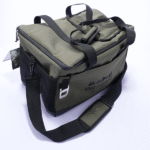
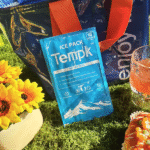
Tempk is a Shanghai Tempk Industrial Co., Ltd. brand offering ice packs, tas terisolasi dan kotak, pembawa suhu insulin, dan kemasan pengatur suhu khusus. We can use a buyer's product range, muatan, rute, and packaging objectives to frame a component and sample discussion. We do not treat a paket pendingin by itself as proof of insulin protection; the selected configuration still needs product-specific review, relevant thermal evidence, operational instructions, and approval within the buyer's quality system.
Send Tempk your design inputs and preferred qualification evidence to compare suitable coolant and insulated-packaging directions before committing to bulk production.