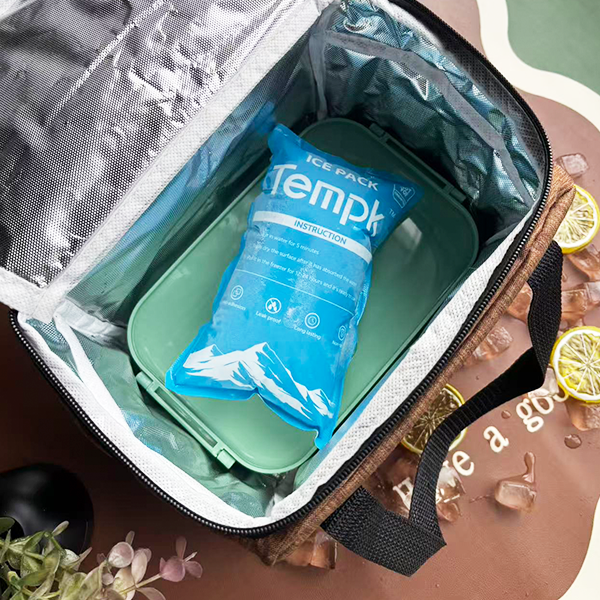
A Control Framework for Wholesale Dry Ice Pack for Milk Transport
Grosir Paket es kering for milk transport should enter purchasing only after milk, kemasan, rute, and receiving requirements are defined. The pack in this framework is a water-activated coolant sheet that is hydrated and frozen. Ini bukan es kering karbon dioksida padat, and it is not a cooling system for bulk milk tankers. For packaged milk inside kotak terisolasi atau tas jinjing, the sheet can absorb route heat. Reliable use depends on controlling product starting condition, persiapan lembar, kontak dingin langsung, liquid-package movement, kebocoran, penahanan sekunder, pemantauan, konsistensi pemasok, and handover time. The framework below turns those dependencies into decision gates.
Gerbang 1: Define the Milk and Legal Scope
Mengenali:
- Raw, pasteurized, aseptic, or other processing category.
- Didinginkan, beku, or shelf-stable condition.
- Grade or program status where relevant.
- Package format and fill volume.
- Distribution market and responsible authority.
- Product temperature and exposure criteria.
- Receiving and disposition procedure.
This gate determines whether hydration sheets are relevant. Specialized bulk raw-milk transport follows different equipment and regulatory controls. A sheet may fit packaged retail or institutional milk but should not be proposed as a tanker solution.
Di Amerika Serikat, the Grade "A" Pasteurized Milk Ordinance is used through the cooperative milk-safety framework and jurisdictional adoption. Current requirements and product applicability should be verified. Sanitary transportation requirements may also apply, with milk-program waivers or other arrangements relevant in some situations. International routes require separate review.
Gerbang 2: Establish Product Identity and Boundaries
The item description should name the water-activated hydration sheet and distinguish it from solid carbon dioxide. Obtain construction, dimensi kering dan terhidrasi, tata letak sel, instruksi aktivasi, pembekuan dan penyimpanan, item and lot identification, intended contact condition, cacat, dan mengubah pemberitahuan.
This boundary avoids three mistakes:
1. Applying solid-dry-ice temperatures or duration claims to a water sheet.
2. Ignoring carbon dioxide safety and transport rules if actual solid dry ice is used.
3. Mengobati Paket gel, bahan perubahan fase, and hydration sheets as interchangeable because their shapes are similar.
The product's role should be written plainly: passive heat absorption inside a specified insulated packout. It does not pasteurize milk, correct warm loading, sanitize equipment, or decide product acceptance.
Gerbang 3: Design Around Fluid Packages
Milk packages carry mobile liquid mass. Braking, tetes, and orientation changes load caps, segel, pouch edges, sudut karton, jangka pembagi garis, and coolant cells.
| Design risk | Packout response to evaluate | Bukti |
|---|---|---|
| Cap or seal leakage | Upright restraint and clearance | Vibration and orientation check |
| Pouch puncture | Smooth divider and fixed sheet position | Compression and sharp-edge trial |
| Glass breakage | Cell separation and impact protection | Distribution simulation |
| Carton wetting | Drainase, liner, and moisture-tolerant support | Post-exposure strength |
| Local milk freezing | Buffer or controlled spacing | Interface and product data |
| Pergeseran beban | Right-sized insert and void control | Before-and-after geometry |
| Large leak | Secondary containment and segregation | Defined leak scenario |
The chosen response becomes part of the controlled bill of materials. A divider is not optional dunnage if it holds the cold spacing or protects caps.
Define a leakage pathway
Assume that one primary package can fail. Decide where milk goes, which components it contacts, how much the containment can manage, how the leak becomes visible, dan bagaimana penerima menanganinya. A liner should not merely hide wetness.
Assess the effect of milk on insulation, Label, pengambilan logger, neighboring food, and reusable components. Cleaning and product disposition should already exist in procedures.
Protect against local freezing
Frozen water-based sheets can be colder than the appropriate condition for chilled milk. A package-wall sensor and representative product measurement help reveal contact risk. The buffer or gap must remain stable during route vibration and condensation.
Gerbang 4: Control Starting Conditions
Define milk release and packing:
- Storage location and condition.
- Sampling or measurement method.
- Picking and consolidation time.
- Ambient packing exposure.
- Hold rule for nonconforming milk.
- Time from sheet freezer to closure.
- Pre-dispatch staging.
Warm milk consumes coolant capacity and creates spatial gradients. Passive packaging should not be used to turn an uncontrolled pull-down process into an apparently compliant shipment.
Use the same starting conditions in development, kualifikasi, dan operasi. Record reasonable evidence so deviations can be investigated.
Gerbang 5: Qualify Hydration and Freezing
The dry sheet changes at the user site. Make activation a controlled process.
Menerima: Confirm item, banyak, tata letak sel, dimensi kering, menghitung, kebersihan, dan integritas.
Hidrat: Follow item-specific instructions with controlled water, peralatan, kelompok, dan penerimaan.
Mengeringkan: Remove free water consistently and inspect seams.
Membekukan: Prove rack pattern, ukuran tumpukan, aliran udara, freezer recovery, status, and release at peak demand.
Panggung: Keep released sheets identified and limit warm exposure.
Assemble: Verify the correct sheet and position against the packout revision.
Underhydration can reduce thermal mass; excessive or uneven expansion can compress milk packages and change spacing. Measure attributes that affect use, including hydrated fit.
Gerbang 6: Build the Packout Evidence
Gunakan tangga bukti.
Component review
Konfirmasikan dokumen, persiapan, hydrated geometry, kondisi jahitan, kebocoran, penanganan, dan penggunaan material.
Packout development
Compare box, tote, liner, pengekangan, penahanan, penyangga, penempatan lembar, and load tiers. Use actual packages. Map likely hot and cold locations.
Route-relevant qualification
Challenge the final bill of materials with defined product and coolant starting conditions, a justified ambient profile, lokasi sensor, pengulangan, dan kriteria penerimaan. Include package and leakage observations.
Operational verification
Run normal staff, hydration equipment, freezer, assembly line, kendaraan, dan menerima langkah. Observe peak workload.
Verifikasi sedang berlangsung
Review monitoring, kebocoran, damaged packages, penundaan rute, keluhan, supplier lots, and process changes.
Never accept a duration number without its box, muatan, kondisi awal, persiapan pendingin, profil lingkungan, sensor, dan lulus kriteria.
Gerbang 7: Create the Route and Receiving Agreement
Map dispatch through receipt:
Alat pengambilan keputusan yang berguna
Periksa detailnya sebelum Anda memilih kemasan
Alat cepat ini dapat membantu Anda membandingkan risiko rute, kebutuhan ukuran, pilihan pendingin, dan detail kemasan sebelum Anda meminta penawaran.
Ketahanan Jatuh Bahan Isolasi
Tinjau ketahanan jatuh dan faktor penanganan sebelum memilih bahan insulasi.
Periksa resistensiPemilih Kemasan
Bandingkan opsi kemasan berinsulasi berdasarkan produk, rute, dan kebutuhan suhu.
Temukan kemasannyaPendingin & Referensi PCM
Bandingkan opsi cairan pendingin dan PCM ketika suatu rute memerlukan dukungan suhu tambahan.
Bandingkan pilihan1. Closed packout enters staging.
2. Loader places it by stop sequence.
3. Vehicle or carrier maintains agreed conditions.
4. Driver limits openings and reports delays.
5. Receiver accepts within the planned window.
6. Receiver inspects and moves milk to correct storage.
For covered sanitary transportation, communication among shipper, pemuat, pembawa, and receiver can be an important responsibility. Define instructions and records according to the operation and applicable rules.
Exception decisions
Warm milk, partial sheets, leaking packages, damaged totes, vehicle failures, route extensions, pengiriman gagal, and monitor alerts each need a preassigned response. Drivers maintain closure and communicate; authorized quality or food-safety personnel decide disposition.
For home routes, tell customers to retrieve promptly, inspect for leaks or damage, follow label storage, and contact support when delivery is delayed or questionable. Do not promise that visible ice proves acceptability.
Gerbang 8: Approve Wholesale Production Supply
Create an approved supplier specification that includes:
- Product identity and revision.
- Construction and material information.
- Dry and hydrated geometry.
- Cell and seam layout.
- Preparation and storage.
- Lot and carton marking.
- Defect criteria.
- Packaging and pallet configuration.
- Ubah pemberitahuan.
- Complaint and nonconformance response.
Confirm production against the sample through incoming and periodic functional checks. Trend uneven hydration, seam failures, kebocoran, and fit changes by lot.
Review commercial continuity: pesanan minimum, waktu tunggu, ramalan, surge capacity, stok pengaman, and alternate-source strategy. Qualify backup items before an interruption. Similar color or size is not equivalence.
Gerbang 9: Close the Return Loop
Reusable totes and sheets require clean and dirty separation.
Sebagai imbalannya:
- Place used items in closed, identified bins.
- Inspect and segregate milk-contaminated components.
- Clean or handle according to material-compatible procedures.
- Check tears, jahitan, noda, bau, deformasi, dan identifikasi.
- Melepaskan, karantina, Rekening ulang, or dispose through status control.
Milk residue should never enter a clean freezer flow. Open consumer returns may not provide enough hygiene control for reuse. Evaluate the actual network.
Track retrieval and acceptance rates. A reusable label does not establish repeated successful use.
Gerbang 10: Review Cost, Keberlanjutan, and Change Together
Calculate cost per successfully delivered milk order, including sheet, kargo, hidrasi, freezer use, pengekangan, penahanan, pemantauan, tenaga kerja, kembali, pembersihan, kebocoran, menolak, and reshipment.
Use the same system boundary for environmental review. Dry inbound storage may reduce transport volume, but water and freezing add impacts. Reuse can reduce purchases but adds reverse logistics. Milk loss carries upstream production, pengolahan, pendinginan, and distribution burdens.
Changes should trigger review:
- Milk formulation, pengolahan, kemasan, or fill.
- Kuantitas pesanan.
- Sheet material, sel, ukuran, lokasi, atau instruksi.
- Kotak, liner, pengekangan, or containment.
- Hydration station or freezer.
- Rute, kendaraan, pembawa, berhenti, atau menerima.
- Return and cleaning process.
Document whether each change needs a file review, fit test, focused comparison, atau kualifikasi ulang. Update the controlled work instruction before launch.
Know When Passive Packaging Is Not Enough
A hydration-sheet packout should be rejected or escalated when its operating boundaries do not match the milk route. Warning signs include routine delays beyond the tested profile, uncontrolled product release, inability to freeze peak volume, repeated opening of the same tote, inadequate leak containment, uncertain receiving, or a requirement for active temperature regulation.
Alternative controls may include a right-sized refrigerated vehicle, wadah aktif, improved cold staging, revised route, shorter delivery window, appointment receiving, or a different coolant and insulation system. The correct alternative depends on milk, kemasan, skala, dan yurisdiksi.
Do not force a passive design to absorb a recurring process failure. Extra sheets can increase cold-contact risk and payload pressure while leaving the underlying delay or sanitation problem unchanged. Juga, a thicker box cannot correct milk that begins outside its release condition.
Record the fit decision and its assumptions. If operations later exceed them, require reassessment. Knowing when not to use the sheet is part of responsible wholesale sourcing and prevents a low-cost component from becoming an expensive source of milk rejection.
A Practical End-to-End Example
A distributor plans home delivery of refrigerated milk cartons in an insulated reusable tote. Development shows that center cartons warm slowly, but corner cartons touching side sheets become excessively cold and the bottom paperboard weakens from condensation.
The team introduces a fixed moisture-tolerant side spacer, improves drainage, and uses secondary containment that keeps liquid away from the tote insulation. It tests full and partial loads because the partial load shifts more. Sensors are placed at the cold interface, central product, and warm lid corner. The route trial includes repeated van openings and a defined doorstep handover.
Operations then verifies peak hydration and freezer capacity. Drivers receive delay and failed-delivery rules; receivers receive inspection instructions. Production lots are checked against the approved hydrated geometry. The solution comes from coordinated controls, not a larger coolant count.
Pertanyaan yang sering diajukan
What is the first gate in selecting a hydration sheet for milk?
Define the milk category, kemasan, kondisi yang diperlukan, rute, and legal or program scope. Then confirm that the quoted coolant is a water-activated frozen sheet. Without those boundaries, ukuran lembar, menghitung, and price cannot be compared meaningfully.
Should a bottle touch the frozen sheet?
Do not assume direct contact is acceptable. It can create local freezing and pressure against the bottle or cap. Evaluate the exact package, susu, sheet condition, dan rute. A controlled spacer may be needed, but it must also allow adequate heat transfer.
How should partial milk loads be handled?
Treat them as defined configurations. Lower mass and more void can change warming and allow packages or sheets to move. Use a right-sized insert, smaller tote, or separately tested placement rather than filling the space informally.
Who decides whether milk with a temperature alert can be accepted?
The authorized quality or food-safety role should interpret the data against product-specific and applicable program criteria. The decision may consider sensor location, lamanya, kondisi paket, dan bukti lainnya. A driver, pemasok pendingin, or customer should not make an unsupported determination.
What is the strongest supplier evidence?
A controlled production specification, item-specific preparation and hydrated geometry, relevant material documentation, identifikasi banyak, defect controls, mengubah pemberitahuan, and production consistency are stronger than a context-free cooling-duration claim. The buyer still needs complete-packout route evidence.
Kesimpulan
A control framework makes a wholesale dry ice pack for milk transport part of a traceable system. Define packaged milk and jurisdiction, confirm the hydration-sheet identity, manage fluid packages and leaks, control starting temperature and activation, memenuhi syarat rute, mempersiapkan penerimaan, approve production supply, and manage returns and changes. The sheet absorbs heat; the operating system protects the milk. Keeping those roles distinct produces safer decisions and clearer wholesale specifications.
Tentang tempk
Tempk, itu kemasan rantai dingin merek Shanghai Tempk Industrial Co., Ltd., offers hydration coolant sheets and kemasan terisolasi. Packaged-milk operators can provide Tempk with milk category, package drawing, load tiers, tote or box, rute, peak activation volume, and containment plan to discuss component samples. The buyer's qualified teams remain responsible for milk criteria, ruang lingkup regulasi, Keamanan Pangan, pengujian, persetujuan rute, menerima, dan disposisi.
CTA: Provide Tempk with one complete packaged-milk design input to begin a controlled sample, bugar, and route evaluation.