


Jangan memuat produk hangat
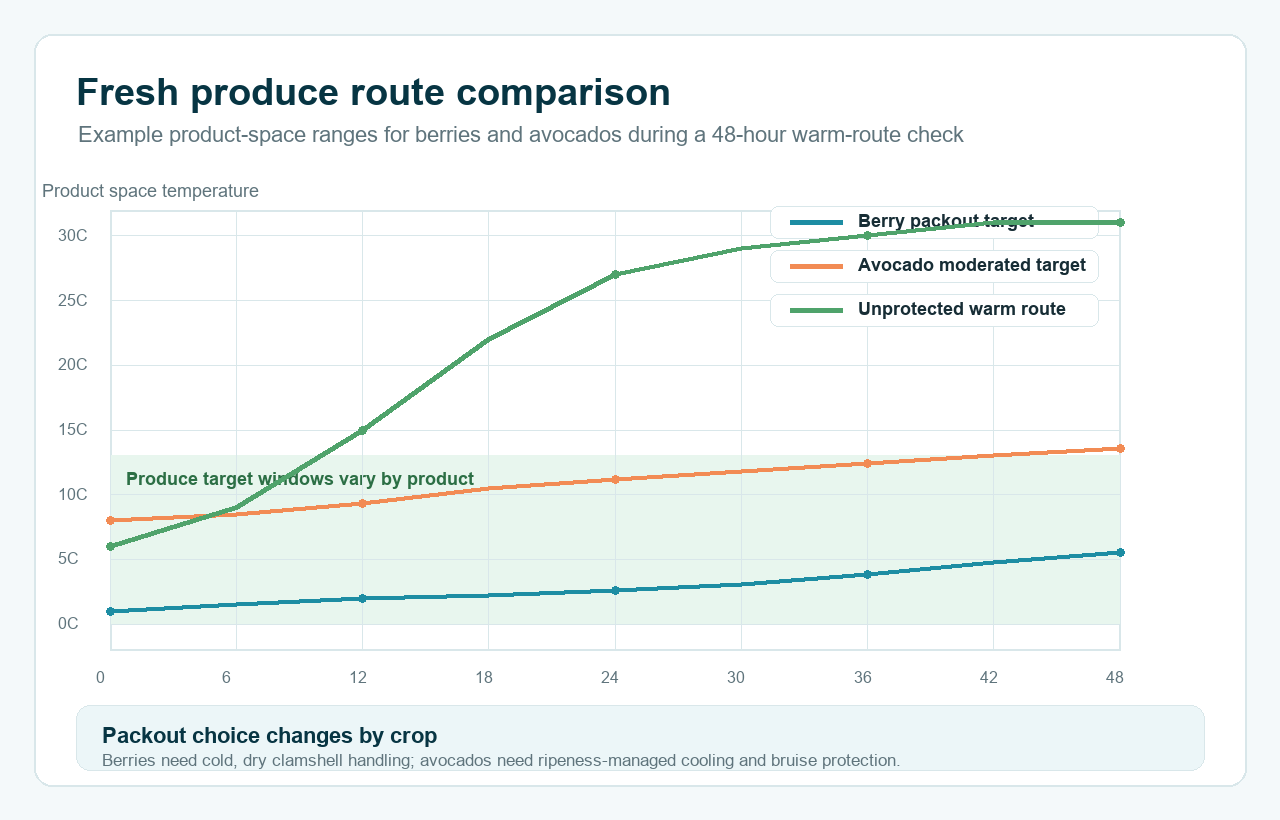
Paket gel ekstra tidak dapat sepenuhnya memperbaiki buah hangat. Produk yang didinginkan sebelumnya menurunkan beban panas dan menjaga jalur dingin tetap stabil.
Buah & Rantai Dingin Sayuran
Pengiriman produk segar membutuhkan lebih dari sekedar udara dingin. Paket praktis harus mengontrol pra-pendinginan, kelembaban, aliran udara, kompresi, kondensasi, dan mengatur waktu tanpa membekukan produk atau merusak kemasan ritel.
Keputusan Kategori
Paket buah dan sayuran gagal karena berbagai alasan. Buah beri memar dan bocor, blueberry kehilangan mekar dan kekencangannya, alpukat membutuhkan kontrol kematangan, dan jamur atau asparagus dapat rusak karena kesalahan kelembapan dan aliran udara. Paket terbaik dibuat berdasarkan sensitivitas suhu produk, tingkat pernapasan, format paket, dan menerima cek.
Paket gel ekstra tidak dapat sepenuhnya memperbaiki buah hangat. Produk yang didinginkan sebelumnya menurunkan beban panas dan menjaga jalur dingin tetap stabil.
Gunakan bantalan penyerap, tas kapal, dan celah aliran udara untuk mencegah tanda dehidrasi dan kondensasi.
Kemasan beku dapat meratakan kulit kerang, tandai buah, atau memblokir ventilasi ketika muatan tidak didukung.
Pemeriksaan kedatangan harus mencakup ketegasan, kekeringan, memar, bocor, bunga, kondisi batang, dan kekuatan karton.
Rute Produk Bernilai Tinggi
Halaman-halaman ini memberikan saran pengemasan tingkat produk, rentang awal cairan pendingin, persyaratan pra-pendinginan, dan pemeriksaan validasi untuk tiga rute produksi yang sudah dimasukkan ke dalam grup solusi ini.
Pengiriman kulit kerang yang sudah didinginkan sebelumnya berfokus pada memar, kebocoran, kondensasi, dan penahanan dingin tanpa kontak beku.
Lihat solusi stroberi buah beri kecilKemasan kulit kerang berventilasi yang melindungi mekarnya bunga, ketegasan, aliran udara, dan presentasi ritel kering.
Lihat solusi blueberry Peka terhadap kematanganRute yang dikelola suhu berfokus pada kematangan, memar, risiko cedera dingin, dan dukungan karton.
Lihat solusi alpukatPerencanaan rute
Pengirim yang sama dapat melakukan hal yang berbeda jika muatannya berupa kulit kerang beri yang berventilasi, karton alpukat yang sudah matang, atau nampan jamur dengan kelembapan tinggi. Gunakan pilihan rute ini sebagai titik awal sebelum pengujian produk.
| Kondisi pengiriman | Arah paket yang khas | Arah cairan pendingin | Apa yang harus diverifikasi |
|---|---|---|---|
| Pengiriman dingin di hari yang sama Produk yang sudah didinginkan sebelumnya, rute kota pendek, waktu dermaga terbatas | Lapisan karton berinsulasi atau pengirim EPS kompak dengan pembagi produk dan bantalan penyerap | Paket gel yang dikondisikan di dinding samping atau sudut atas, terlindung dari ventilasi kulit kerang | Suhu pusat produk, kekeringan paket, memar buah beri, izin ventilasi, dan kondisi pendingin yang tersisa |
| Rute parsel semalam Paparan depot, van panas, 18-36jam jendela pengiriman | Kotak berinsulasi EPP atau EPS, tas kapal, karton luar yang lebih kuat, dan memperbaiki kantong pendingin | Paket gel atau PCM dingin dipilih berdasarkan kisaran target, massa muatan, ukuran kotak, dan kondisi sekitar | Titik terpanas dalam muatan, risiko titik dingin di dekat cairan pendingin, kondensasi, dan kompresi paket ritel |
| Rute cuaca panas atau rawan penundaan Lingkungan tinggi, risiko bertahan akhir pekan, serah terima yang lebih lama | Isolasi lebih tebal, margin cairan pendingin yang lebih tinggi, logger, dan mengurangi ruang kosong di dalam pengirim | Tata letak cairan pendingin perimeter dengan pembagi; hindari menambahkan bobot beku keras langsung pada produk | Suhu puncak, membekukan risiko, pemulihan kelembaban, kekuatan karton, dan cacat kedatangan khusus produk |
Panduan Produksi Pendukung
Panduan pendukung ini membantu pembeli membandingkan risiko produk terdekat tanpa mengubah setiap produk menjadi halaman solusi terpisah.
Tautan Internal yang Berguna
Bagikan jenis produk, suhu pulp atau produk pada saat pengepakan, format paket, berat muatan, durasi rute, kisaran lingkungan musim panas, dan menerima cek. Tempk dapat membantu memilih pengirim, tata letak pendingin, lapisan penyangga, dan rencana validasi.
Minta peninjauan paket produkDukungan paket khusus
Untuk ukuran karton tetap, batas muatan, persyaratan merek, jalur musiman, atau target validasi, Tempk dapat mengadaptasi solusi ini ke dalam paket rantai dingin khusus.