


Pelunakan dan pembekuan kembali mengubah kualitas
Tabung mungkin terlihat beku saat pengiriman sementara produk sudah kehilangan tekstur halusnya.
Rantai Dingin Bak Es Krim
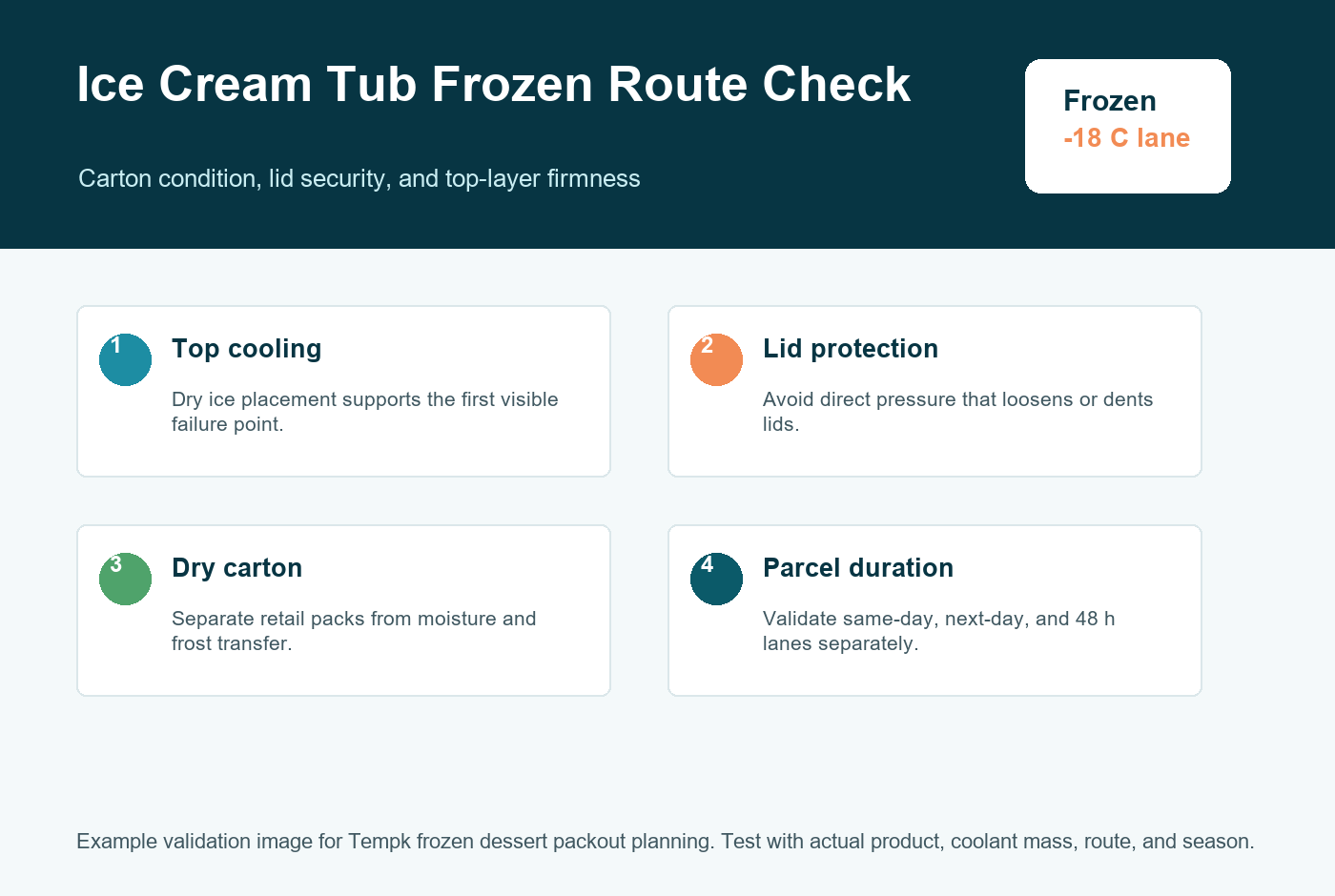
Bak es krim lebih kuat dibandingkan kue yang dihias, tapi tetap saja gagal saat tutupnya dilonggarkan, karton menjadi basah, produk melunak, atau tekanan es kering merusak kemasan ritel. Kemasannya harus menahan rute beku dan melindungi tumpukan bak.
Risiko Produk
Paket yang tepat harus melindungi kualitas kedatangan, tidak hanya menunjukkan jejak logger dingin. Poin risiko di bawah ini menentukan massa es kering, isolasi, dukungan produk, ventilasi, dan menerima cek.
Tabung mungkin terlihat beku saat pengiriman sementara produk sudah kehilangan tekstur halusnya.
Es kering, jangka pembagi garis, dan bak lainnya tidak boleh menekan tutupnya hingga keluar dari posisinya.
Embun beku dan kondensasi dapat melemahkan selongsong kertas, Label, dan karton luar.
Kemasannya harus berukuran sedemikian rupa sehingga masih ada perlindungan beku pada waktu penerimaan yang diharapkan.
Rekomendasi Berbasis Rute
Ini adalah rentang awal yang praktis untuk pengujian rute. Massa es kering akhir dan ketebalan isolasi harus diverifikasi dengan muatan sebenarnya, pengirim, modus operator, rute, dan menerima standar.
| Kondisi pengiriman | Paket Tempk yang direkomendasikan | Memulai arah es kering | Posisi es kering | Apa yang harus divalidasi |
|---|---|---|---|---|
| Pengiriman beku di hari yang sama 8-18jam rute, lingkungan di bawah 22 C, bak beku keras | Pengirim EPS atau EPP, pemisah bak mandi, liner, zona es kering, dan karton luar berventilasi | Tentang 1.5-2.5 kg es kering untuk a 2-5 kg muatan bak sebagai rentang pengujian awal. Gunakan kalkulator es kering untuk muatan dan rute sebenarnya. | Zona es kering atas atau samping dengan pembatas; jauhkan es kering dan bungkusan berat dari tutup bak mandi. | Kekerasan bak mandi, segel tutup, label kekeringan, kondisi karton, dan sisa es kering |
| Rute parsel semalam 18-36jam rute, penanganan depo, ambient 22-30 C | Pengirim EPS/EPP lebih tebal, tumpukan bak tetap, pelapis kelembaban, pemisah es kering, dan penebang | Tentang 3.0-5.0 kg es kering untuk tes parsel kecil. Sesuaikan dengan jumlah bak mandi, volume kotak, tingkat isolasi, dan batas pembawa. | Tata letak es kering di bagian atas dan samping dengan sekat yang kuat dan jalur ventilasi gas. | Bak mandi paling hangat, gerakan tutup, embun beku, karton basah, dan sisa es kering |
| Rute cuaca panas atau rawan penundaan 30-35 C lingkungan, 36-48h risiko, kemungkinan diadakan di akhir pekan | Pengirim berinsulasi berkinerja lebih tinggi, margin es kering yang lebih besar, karton yang diperkuat, pengirim ventilasi, dan pencatat rute | Tentang 5.0-8.0 kg es kering untuk pengujian lanjutan. Konfirmasikan ruang kepala, aturan label, dan pembatasan operator sebelum penskalaan. | Es kering keliling dengan sekat dan tanpa tekanan tutup langsung; menjaga bak tetap tegak dan stabil. | Suhu puncak, es kering tersisa karena pengiriman tertunda, tekstur produk, kondisi label, dan kompresi karton |
Massa es kering adalah titik awal, bukan jaminan. Sesuaikan dengan suhu produk saat pengepakan, berat muatan, Ukuran pengirim, bahan isolasi, bentuk es kering, durasi rute, profil lingkungan, dan aturan operator. Es kering tidak boleh disegel dalam wadah kedap udara, dan pengiriman udara atau parsel mungkin memerlukan pelabelan dan dokumentasi khusus.
Struktur Paket
Paket makanan penutup beku memerlukan dukungan produk dan pemisahan es kering sebelum pengirim disegel. Mulailah dengan kondisi produk, kekuatan paket ritel, dan ventilasi, lalu ukuran es kering dan isolasi.
Proses Pengepakan
Pengirim harus mengawetkan produk beku, bukan menyelamatkan yang sudah melunak. Penanganan yang baik sebelum penyegelan mengurangi permintaan es kering dan mencegah cacat produk yang terlihat.
Jangan biarkan bak berada pada suhu kamar saat kemasan sedang disiapkan.
Jaga agar bak mandi tetap tegak, mengurangi ruang kosong, dan hindari tekanan dari tutup hingga es kering.
Gunakan pembatas dan pelapis agar label dan karton tidak membeku atau basah.
Tinjau kekerasan, segel tutup, label kekeringan, kondisi karton, jejak suhu, dan sisa es kering.
Kapan Mengubah Desain
Tingkatkan lapisan, pemisah es kering, dan manajemen kelembaban sebelum mengubah suhu rute.
Kurangi tekanan tumpukan, tambahkan pembagi, dan jauhkan es kering dari tutupnya.
Meningkatkan margin isolasi, sesuaikan massa es kering, mengurangi durasi rute, atau mengubah ukuran pengirim.
Sumber Daya Terkait
Bagikan ukuran bak mandi, format karton, jumlah muatan, suhu produk, waktu rute, jangkauan sekitar, modus operator, dan menerima cek. Tempk dapat membantu memilih pengirim, tata letak es kering, jangka pembagi garis, ventilasi, dan langkah validasi.
Minta peninjauan rute yang dibekukanDukungan paket khusus
Untuk ukuran karton tetap, batas muatan, persyaratan merek, jalur musiman, atau target validasi, Tempk dapat mengadaptasi solusi ini ke dalam paket rantai dingin khusus.