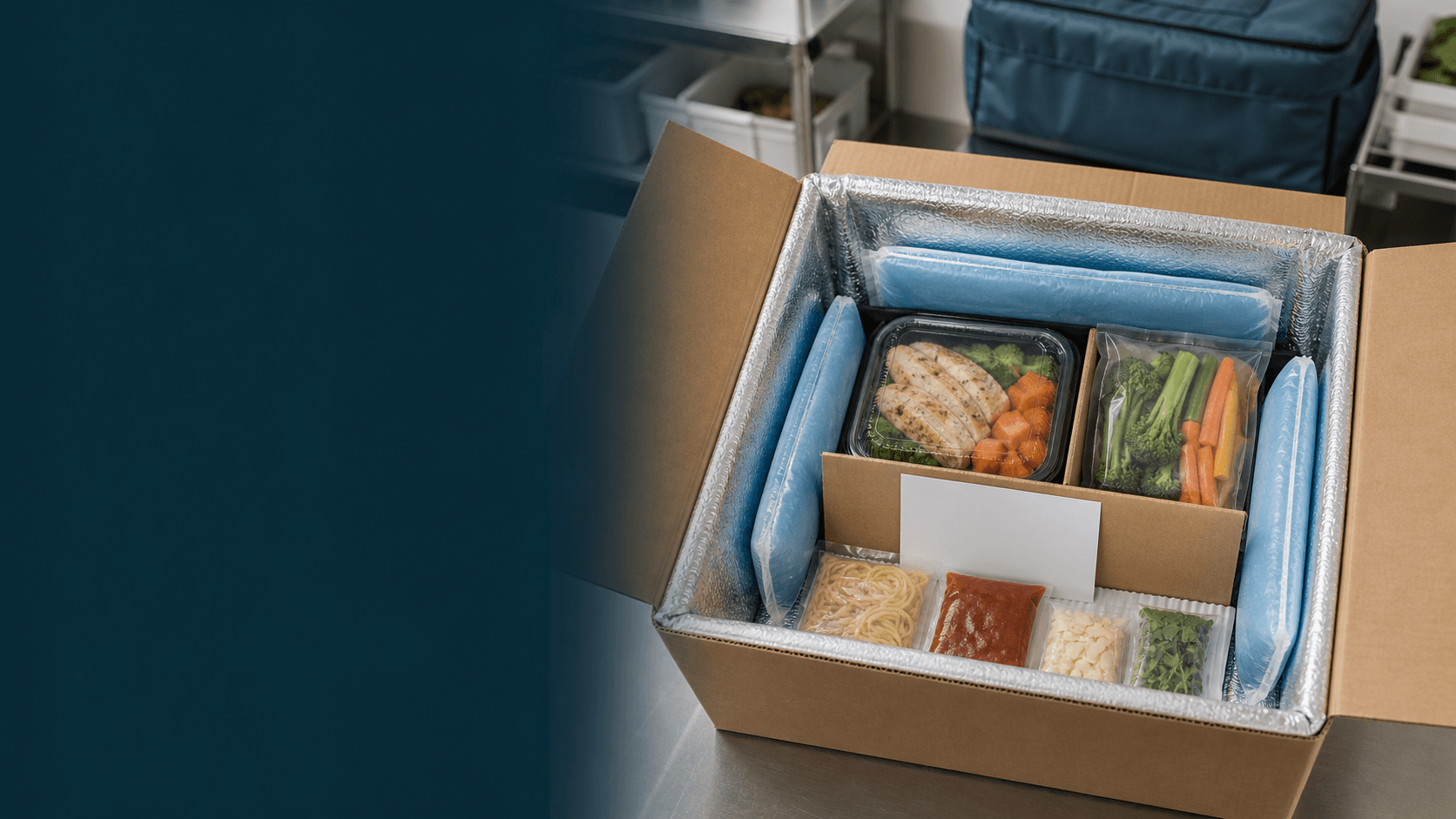
A Specification Framework for a High Density Foam Ice Box Supplier
The strongest way to source a foam ice box is to remove “high density” from the first decision gate. Comece com o produto e rota, select a material system, define how density and thickness are controlled, test the finished box, and connect production changes to evidence. This framework helps a buyer evaluate a high density foam fornecedor de caixa de gelo without turning one material number into a performance guarantee.
The outcome is a controlled construction with clear limits. Compras, embalagem, qualidade, operações, and the manufacturer each own part of the decision.
Portão Um: Write the Use Requirement
Name the contents, embalagem do produto, condições exigidas, carga útil, refrigerante, jornada, exposição sazonal, aberturas, manuseio, limpeza, monitoring where used, recebendo, retornar, e rota de fim de vida. The product owner should define acceptance; a passive container cannot set or verify the correct temperature requirement by itself.
Identify constraints on outside size, volume utilizável, peso embalado, cubo de envio, and staff lifting. Include credible damage and delay scenarios. A lightweight single-trip parcel, a returnable food box, and a protected pharmaceutical shipper can require different constructions even if their internal volumes match.
Mark mandatory requirements separately from preferences. This lets the supplier propose a different foam or hybrid without silently changing an essential interface.
Portão Dois: Name the Material System Correctly
The specification should identify molded EPS, molded EPP, a rigid polyurethane core within a defined shell, a VIP arrangement, or another precise construction. Record grade identifiers, density method where relevant, grossura, lid and joints, forros, facings, adesivos, concha, junta, hardware, e revisão.
Use each technology within its factual boundary. Bead foams depend on bead and molding fusion. Rigid foam depends on reaction, preencher, ligação, and enclosure. VIPs depend on evacuated-panel barrier integrity and protection. Hybrids add interfaces and traceability needs. A common marketing phrase does not make their controls interchangeable.
Ask the supplier to state assumptions and exclusions. If a quotation covers only the foam body, distinguish outer carton, refrigerante, forro, trabalho de teste, and assembly costs.
Portão Três: Define Density and Thickness as Controlled Inputs
State the apparent-density method, condicionamento, sample location, unidades, tolerância, amostragem, and reaction to a failure. Do not copy a target from another polymer or box. The selected range should have a reason connected to molding, mecânica, peso, custo, or validated design work.
Define thickness on a section drawing, including corners, tampa, passos, articulações, recessos, and panel edges. Nominal wall thickness on a catalog page may hide local reductions. Link the drawing to internal dimensions so increased insulation is not purchased without understanding the payload and freight effect.
Density and thickness still do not prove thermal duration. They sit beside fusion or fill, fechamento da tampa, articulações, condição física, refrigerante, carga útil, e exposição ambiental.
Evidence Map for Release
| Camada | Controlled information | Liberar pergunta |
|---|---|---|
| Material | Polymer or panel identity, nota, relevant declarations | Is the intended input being used? |
| Processo | Moldagem, fusão, preencher, conjunto, controles de manuseio | Can production create the intended component? |
| Geometria | Sections, tampa, articulações, interfaces, dimensões utilizáveis | Does the completed design match the drawing? |
| Physical | Compressão, impacto, pilha, encerramento, inspeção de danos | Does handling preserve functional construction? |
| Térmico | Complete packout under stated conditions | Does this configuration meet its acceptance rule? |
| Operação | Pacote, monitor, receber, limpar, retornar, aposentar | Can users reproduce and maintain the system? |
| Mudar | Notification and risk assessment | Does previous evidence remain applicable? |
The layers are connected but not substitutes. A material certificate does not pass a box-level thermal protocol, and a thermal pass does not excuse uncontrolled production changes.
Portão Quatro: Prototype the Complete Packout
Create a dimensional loading plan with payload, refrigerante, forro, divisor, monitor, e estiva. Check gross internal volume, net usable payload, exterior cube, and packed weight. Have intended operators load and close the box. Observe upside-down parts, caixas esmagadas, interferência da tampa, and ambiguous coolant placement.
The packout controls thermal mass and temperature distribution. Precondition contents and coolant according to the approved method. If load quantity varies, define separate arrangements or justified dunnage. A test with an empty box or water bottles may answer a development question but should not be presented as evidence for an unrelated commercial payload.
Photograph the configuration and give it an identifier. Physical customization, including a new cavity, tampa, handle recess, or panel layout, creates a new design question.
Portão Cinco: Build Box-Level Thermal and Physical Evidence
Approve a protocol before testing. Identify model revision, carga útil, refrigerante, condicionamento, perfil ambiente, mapa de sensores, aberturas, duração, amostras, e critérios de aceitação. Preserve data, ambient records, packout photographs, e desvios. Read a hold-time result only inside those conditions.
Physical conditioning should reflect the route: parcel impact and compression, repeated closed-loop handling and washing, empilhar cargas, or puncture hazards for panels. Inspect the box after physical challenges. If damage could change insulation or closure, a thermal comparison may be appropriate.
Field verification can test operational assumptions, while ongoing monitoring can detect drift. Neither should become a universal performance claim for untested products, temporadas, ou rotas.
Portão Seis: Qualify Production Repeatability
Use representative pilot units from the intended molding and assembly process. Review part weight, dimensões, density samples, fusão de contas, foam fill, colocação do painel, ajuste da tampa, articulações, hardware, rótulos, and packaging according to the selected construction. Compare them with the tested revision.
The inspection plan should state method, freqüência, limite, registro, e resposta. Hidden insulation may need process data or periodic destructive samples. A visual final check cannot confirm every void, bond, or panel barrier.
Agree how nonconforming units are contained and how corrective actions are verified. The supplier’s ability to explain variation is more useful than a promise that every piece is identical.
Portão Sete: Control Cleaning, Reutilizar, and Retirement
Identify the surface that contacts contents or soil. Verify cleaning chemistry, concentração, tempo de contato, temperatura, pressão, abrasão, limpar, and drying for shell, espuma, forro, junta, rótulos, adesivo, and panels. Food-contact or pharmaceutical suitability needs exact, market-relevant evidence and cannot be inferred from density.
Para reutilização, create dirty, limpar, lançado, em quarentena, reparar, e situação de aposentado. Inspect cracks, separação de contas, compressão, wet cores, punção, deformação da tampa, odor, contaminação, and identifiers. Repair only with controlled components and a release check.
Ferramentas úteis de decisão
Verifique os detalhes antes de escolher a embalagem
Essas ferramentas rápidas podem ajudá-lo a comparar o risco da rota, necessidades de dimensionamento, escolhas de refrigerante, e detalhes da embalagem antes de solicitar um orçamento.
Forro de caixa & Dimensionamento da cobertura de paletes
Verifique a lógica de dimensionamento do forro da caixa e da tampa do palete para projetos de embalagens isoladas.
Dimensionamento estimadoGerador de lista de verificação de conformidade
Crie uma lista de verificação prática para revisão de embalagens, envio, e documentação.
Lista de verificação de construçãoVerificador de risco de rota
Revise as condições da pista antes de selecionar a embalagem para requisitos operacionais reais.
Verifique o risco da rotaFor single-trip designs, plan protective packaging and destination handling. Recyclability claims should reflect actual collection and material condition in the target market.
Gate Eight: Compare Total Delivered Service
Normalize supplier scope for tooling, amostras, material, moldagem, conchas, painéis, forros, refrigerante, caixas externas, testando, densidade de paletes, frete, inspeção, limpeza, retorna, reparar, perda, substituição, e descarte. Use multiple trip-count and recovery scenarios for reuse. Keep one-time and recurring costs separate.
Density affects material mass and may affect processing or durability, but it is not a total-cost metric. VIPs may preserve payload at higher component cost. EPP may support a return loop that requires washing and recovery. EPS may suit a protected one-way lane with destination material handling. Rigid-core shells may add weight and hardware but protect insulation.
Select the system that delivers the defined service with acceptable evidence and manageable operations. Update the model after pilot and launch data.
Exemplo prático: closing the evidence gates
A buyer initially asks for the densest possible foam. The supplier proposes two materials, and packaging engineering shows that the same exterior size produces different payload, manuseio, e economia de retorno. The team defines density methods, creates packouts, runs comparable tests, inspects pilot units, and models landed service. The final choice uses a moderate controlled input within a better lid and joint design.
The decision improves because density moved from slogan to one traceable parameter.
Final Governance Controls
Before controlled scale-up of a chemistry-defined caixa de espuma, create a change-notification matrix covering polymer grade, blowing or expansion inputs, bead supplier, alvo de densidade, ciclo de moldagem, formulação de espuma, fonte do painel, filme de barreira, concha, adesivo, forro, geometria da tampa, and subcontracted assembly. The matrix helps both parties distinguish a meaningful technical change from an administrative update.
In cross-functional review of a chemistry-defined foam box, track production data after launch. Peso da caixa, dimensões, closure observations, dano, resultados de temperatura, reclamações, and supplier deviations can reveal drift. Trend by model, revisão, muito, e pista. A density certificate may remain unchanged while molding fusion, assembly gaps, or handling produces a new pattern of failures.
Before controlled scale-up of a chemistry-defined foam box, set objective retirement criteria for reusable constructions. Procure por rachaduras, permanent compression, separação de contas, distorção da tampa, damaged facings, punção, water ingress, odor, uncleanable soil, and missing identification. A cosmetic dent may be acceptable while a small barrier-film puncture may be critical. Criteria should reflect the actual insulation technology.
In cross-functional review of a chemistry-defined foam box, compare repair options honestly. Some reusable EPP components can be replaced as inserts, while a damaged molded body may be retired. A rigid-foam box may allow shell hardware repair but not a wet core. A punctured VIP can require panel replacement or module retirement. Repairability depends on design access and controlled parts, not the material category alone.
Before controlled scale-up of a chemistry-defined foam box, ask for sample identification that survives cutting and testing. Mark the box model, revisão, production date or lot, cavity where relevant, foam grade, and assembly status. A loose foam coupon cannot prove the density, fusão, articulações, or thickness distribution inside a finished container. Keep coupon data and box-level evidence connected but distinct.
Before controlled scale-up of a chemistry-defined foam box, define how density is sampled. Apparent density may vary by location, skin, molded insert, or whole-part calculation. Condicionamento de estado, specimen location, mass and volume method, unidades, tolerâncias, e frequência de amostragem. If the method destroys the box, agree on periodic samples or retained process coupons rather than pretending every unit can be checked the same way.
Make the quotation identify what testing applies to. A supplier may show a material report, a generic box test, or a report for another size. Record the model, revisão, carga útil, refrigerante, perfil ambiente, sensores, e passar regra. Evidence becomes valuable when its scope matches the item and configuration offered.
Before controlled scale-up of a chemistry-defined foam box, clarify customization limits. A new cavity, thicker wall, deep logo, altered lid, drainage hole, handle recess, forro, or panel layout can change thermal bridges, molding fill, estresse, e volume de carga útil. Treat physical customization as an engineering revision, not only an artwork choice, and select the evidence needed before release.
Before controlled scale-up of a chemistry-defined foam box, create a change-notification matrix covering polymer grade, blowing or expansion inputs, bead supplier, alvo de densidade, ciclo de moldagem, formulação de espuma, fonte do painel, filme de barreira, concha, adesivo, forro, geometria da tampa, and subcontracted assembly. The matrix helps both parties distinguish a meaningful technical change from an administrative update. This application point is reviewed at stage 2 of the same program.
In cross-functional review of a chemistry-defined foam box, track production data after launch. Peso da caixa, dimensões, closure observations, dano, resultados de temperatura, reclamações, and supplier deviations can reveal drift. Trend by model, revisão, muito, e pista. A density certificate may remain unchanged while molding fusion, assembly gaps, or handling produces a new pattern of failures. This application point is reviewed at stage 2 of the same program.
At release of a chemistry-defined foam box, review corners and lid interfaces separately from flat walls. Heat can bypass a strong wall through a gap, thin edge, uninsulated handle zone, or poorly compressed seal. Mechanical damage also starts at corners and hinges. Section drawings and sensor placement should reflect these nonuniform features rather than assuming one average wall.
Perguntas frequentes
What should a buyer provide before requesting a foam density?
Provide contents, exigência de temperatura, rota, duração, temporadas, refrigerante, carga útil, dimensões, manuseio, limpeza, modelo de retorno, e necessidades de evidências. Then work with technical teams to select chemistry, construção, density method, e espessura. A density target without use context can add cost without solving the actual risk.
Can two foams with the same density be treated as equivalent?
Não. Polymer chemistry, nota, cell or bead structure, moldagem, fusão, geometria, umidade, grossura, and assembly can differ. Even within one family, the finished parts need controlled comparison. Equivalence should be demonstrated for the functions that matter, not inferred from one number.
What evidence should support a thermal-duration statement?
Look for a report identifying box revision, carga útil, refrigerante e condicionamento, temperaturas iniciais, perfil ambiente, sensores, aberturas, duração, amostras, e regra de aceitação. Compare those conditions with the intended lane. The statement should remain limited to the tested configuration and justified extrapolations.
Which changes should trigger technical review?
Review changes to polymer grade, alvo de densidade, bead or chemical source, ciclo de moldagem, formulação de espuma, grossura, tampa, articulações, painel, concha, adesivo, hardware, ferramenta, subcontratado, carga útil, refrigerante, ou rota. The response can range from documents to samples or retesting based on risk.
Conclusão
A disciplined specification begins with use, names the material system, defines density and thickness methods, prototypes the packout, tests the box, qualifies production, controls reuse, and models total service cost. That sequence respects the boundaries among EPS, PPE, rigid PU, VIP, and hybrid designs while keeping evidence connected to the actual shipment.
Sobre Tempk
Tempk, associado a Xangai Tempk, suprimentos caixas térmicas médicas, Caixas EPP, Caixas isoladas VIP, plástico caixas de cadeia de frio, e opções de refrigerante correspondentes. Buyers can bring payload, rota, pacote, construção, and evidence requirements to compare appropriate categories. Final system assessment remains tied to the buyer’s product and operating conditions.
Próximo passo: Send Tempk your use requirement and evidence checklist to begin a structured material and supplier comparison.