


O centro muda lentamente
Uma superfície fria não garante que o núcleo do cheesecake tenha permanecido dentro da faixa refrigerada acordada.
Cadeia Fria de Cheesecakes
Os cheesecakes têm mais massa do que muitas sobremesas de padaria. A embalagem deve conter uma rota refrigerada estável, apoiar a panela ou tábua, proteger a crosta, e evitar condensação ou bordas congeladas.
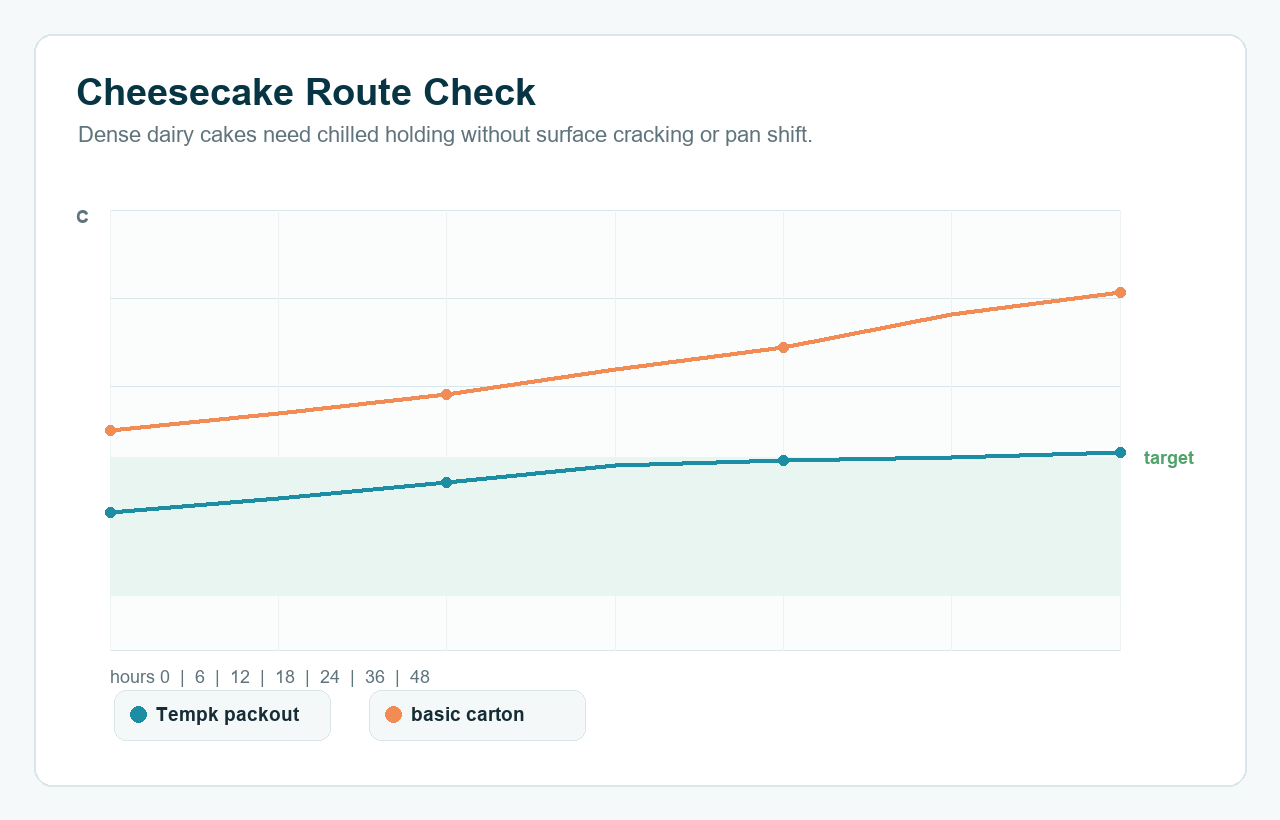
Risco do Produto
O pacote certo deve proteger a qualidade do recebimento, não apenas mantém um registrador de temperatura frio. Os pontos de risco abaixo determinam a escolha do isolamento, posição do refrigerante, suporte ao produto, e verificações de validação.
Uma superfície fria não garante que o núcleo do cheesecake tenha permanecido dentro da faixa refrigerada acordada.
Pontos frios rápidos, vibração, ou o suporte da panela solto pode causar rachaduras ou defeitos nas bordas.
A condensação e a água de refrigeração descongelada podem danificar a textura da crosta e a apresentação da padaria.
Uma base fraca permite dobrar, pressão de canto, ou fricção nas paredes laterais durante o manuseio.
Recomendação baseada em rota
Estes são pontos de partida práticos para o planejamento de amostras. O peso final do líquido refrigerante e a espessura do isolamento devem ser verificados com a sobremesa real, Carton, rota, e recebendo padrão.
| Condição de envio | Pacote temporário recomendado | Direção inicial do refrigerante | Posição do refrigerante | O que validar |
|---|---|---|---|---|
| Entrega refrigerada no mesmo dia 8-18rota h, ambiente abaixo 22 C, bolo pré-resfriado | Forro de caixa isolado ou remetente compacto de EPS, base rígida, suporte para panela ou placa, saco de forro, e folha absorvente | Sobre 0.4-0.9 kg total de embalagens de gel condicionado para um 1-3 kg de carga útil de sobremesa gelada. Bolos densos podem precisar de menos pull-down, mas de isolamento mais estável. | Colocação na parede lateral com divisória; evite o contato direto com o frio nas bordas da panela ou no lado da crosta. | Temperatura central e de borda, secura da crosta, rachaduras superficiais, estabilidade básica, e estado restante do líquido refrigerante |
| Rota de encomendas noturnas 18-36rota h, exposição de depósito e van, ambiente 22-30 C | Caixa isolada EPP ou EPS, inserção de base rígida, barreira de umidade, ajuste de panela fixa, e caixa externa mais forte | Sobre 0.9-1.6 kg total de pacotes de gel ou PCM resfriado para um pacote pequeno. Validar a temperatura central, não apenas a temperatura da superfície. | Duas posições laterais ou lateral mais superior com camadas de proteção espessas e sem pressão de carga superior. | Rastreamento do registrador principal, risco de borda fria, suavidade da crosta, movimento panorâmico, e compressão de caixa |
| Rota com clima quente ou propensa a atrasos 30-35 C ambiente, 36-48h risco, retenção de depósito mais longa | Remetente EPP/EPS mais espesso, maior margem de isolamento, base reforçada, barreira de umidade, e registrador de rotas | Sobre 1.6-2.8 kg de refrigerante total ou um sistema PCM para um pacote pequeno. Use camadas de buffer para evitar bordas congeladas. | Layout de refrigeração perimetral com divisórias em todos os lados voltados para o produto; mantenha o líquido refrigerante longe dos pontos de contato da crosta. | Temperatura central máxima, temperatura de borda mais baixa, suando, rachaduras, condição da crosta, e recebendo aparência |
A massa do refrigerante é um ponto de partida, não é uma garantia. Ajuste pela temperatura do produto na embalagem, bolo ou peso da caixa, Tamanho da caixa, material de isolamento, condicionamento de refrigerante, duração da rota, perfil ambiente, e recebimento de cheques. Mais gelo pode criar caixas molhadas, bordas congeladas, ou danos à superfície quando o suporte e o amortecimento estão errados.
Estrutura do pacote
As sobremesas precisam de suporte do produto antes da adição do refrigerante. Comece com o tabuleiro, frigideira, Carton, e folga de superfície, em seguida, coloque líquido refrigerante ao redor do produto protegido.
Processo de embalagem
Uma caixa mais fria não pode consertar uma sobremesa que começa quente, solto, inclinado, ou pressionado contra a tampa. O processo de embalagem deve eliminar esses riscos antes da selagem.
Cheesecakes densos precisam de tempo de resfriamento suficiente antes de serem embalados; a temperatura da superfície por si só pode enganar.
Use uma base rígida e limite o espaço vazio para que sobremesas pesadas não se movam durante o manuseio dos pacotes.
Escolha embalagens de gel condicionado ou PCM e separe-as do produto com divisórias.
Inspecione rachaduras superficiais, suavidade da crosta, umidade, movimento panorâmico, e dados do registrador após receber.
Quando mudar o design
Melhorar o pré-resfriamento, aumentar a margem de isolamento, ajustar a massa do refrigerante, e validar com um registrador do lado do núcleo.
Reduza a exposição direta ao líquido refrigerante, trocar o condicionamento do refrigerante, ou adicione divisórias mais grossas.
Melhorar a barreira de umidade, camada absorvente, e separação do líquido refrigerante em vez de apenas alterar a temperatura.
Recursos relacionados
Compartilhe o peso do cheesecake, formato pan ou tabuleiro, tamanho da caixa, temperatura do produto, duração da rota, faixa ambiente, e recebimento de cheques. Tempk pode ajudar a escolher o isolamento, layout do refrigerante, suporte básico, e etapas de validação.
Solicite uma revisão do pacoteSuporte a pacotes personalizados
Para tamanhos de caixa fixos, limites de carga útil, requisitos de marca, pistas sazonais, ou alvos de validação, A Tempk pode adaptar esta solução em um pacote personalizado de cadeia de frio.