


Não carregue produtos quentes
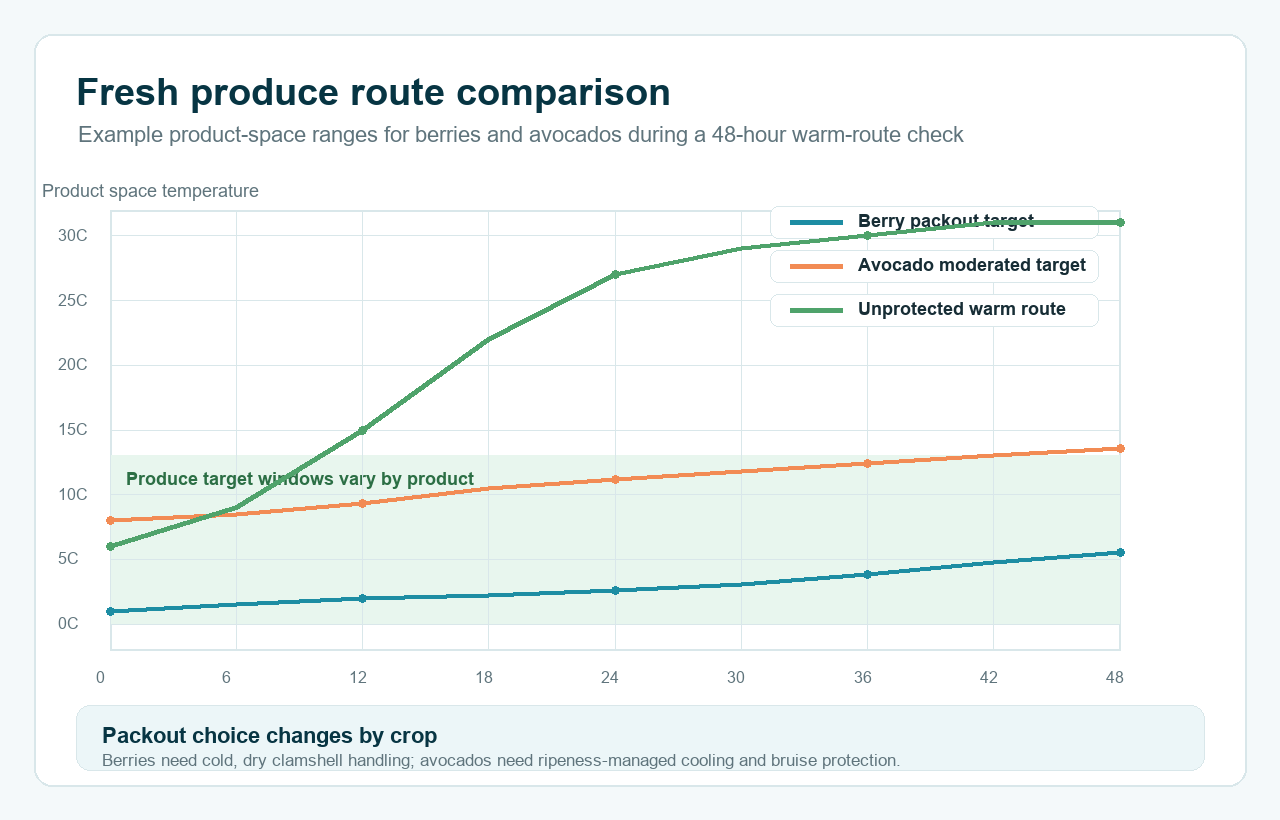
Pacotes extras de gel não conseguem corrigir totalmente frutas quentes. O produto pré-resfriado reduz a carga de calor e mantém a pista fria estável.
Frutas & Cadeia de frio de vegetais
As remessas de produtos frescos precisam de mais do que ar frio. Um pack prático tem que controlar o pré-resfriamento, umidade, fluxo de ar, compressão, condensação, e tempo de rota sem congelar o produto ou danificar as embalagens de varejo.
Decisões de categoria
As embalagens de frutas e vegetais falham por diferentes razões. Bagas machucadas e vazando, mirtilos perdem flor e firmeza, abacates precisam de controle de maturação, e cogumelos ou aspargos podem ser danificados por erros de umidade e fluxo de ar. O melhor pacote é construído em torno da sensibilidade à temperatura do produto, taxa de respiração, formato de pacote, e recebimento de cheques.
Pacotes extras de gel não conseguem corrigir totalmente frutas quentes. O produto pré-resfriado reduz a carga de calor e mantém a pista fria estável.
Use almofadas absorventes, sacos de forro, e lacunas de fluxo de ar para evitar marcas de desidratação e condensação.
Pacotes congelados podem achatar conchas, marcar fruta, ou bloquear aberturas de ventilação quando a carga útil não for suportada.
As verificações de chegada devem incluir firmeza, secura, contusões, vazar, florescer, condição da haste, e resistência da caixa.
Rotas de produtos de alto valor
Estas páginas fornecem conselhos sobre embalagens em nível de produto, faixas de partida de refrigerante, requisitos de pré-resfriamento, e verificações de validação para as três rotas de produção já incorporadas neste grupo de soluções.
Remessas de conchas pré-resfriadas com foco em hematomas, vazamentos, condensação, e retenção a frio sem contato com congelamento.
Ver solução de morango Baga pequenaPacotes em concha ventilados que protegem a floração, firmeza, fluxo de ar, e apresentação de varejo seco.
Ver solução de mirtilo Sensível à maturidadeRotas gerenciadas por temperatura com foco na maturidade, contusões, risco de lesão por frio, e suporte de caixa.
Ver solução de abacatePlanejamento de rota
O mesmo transportador pode ter um desempenho diferente quando a carga útil é uma concha de baga ventilada, uma caixa de abacate maduro, ou uma bandeja de cogumelos com muita umidade. Use essas opções de rota como ponto de partida antes de testar o produto.
| Condição de envio | Direção típica do pacote | Direção do refrigerante | O que verificar |
|---|---|---|---|
| Entrega refrigerada no mesmo dia Produto pré-resfriado, rota curta da cidade, tempo de doca limitado | Forro de caixa isolado ou remetente compacto de EPS com divisórias de produto e almofada absorvente | Pacotes de gel condicionado nas paredes laterais ou no canto superior, protegido longe das aberturas de ventilação | Temperatura central do produto, secura da embalagem, hematomas, folga de ventilação, e estado restante do líquido refrigerante |
| Rota de encomendas noturnas Exposição do depósito, calor da van, 18-36h janela de entrega | Caixa isolada EPP ou EPS, saco de forro, caixa externa mais forte, e bolsas de refrigeração fixas | Pacotes de gel ou PCM resfriado selecionados por faixa-alvo, massa de carga útil, Tamanho da caixa, e condição ambiental | Ponto mais quente na carga útil, risco de ponto frio perto do refrigerante, condensação, e compactação de pacotes de varejo |
| Rota com clima quente ou propensa a atrasos Ambiente alto, risco de retenção de fim de semana, transferência mais longa | Isolamento mais espesso, maior margem de refrigeração, registrador, e espaço livre reduzido dentro do expedidor | Layout de refrigeração perimetral com divisórias; evite adicionar peso congelado diretamente no produto | Temperatura máxima, risco de congelamento, recuperação de umidade, resistência da caixa, e defeitos de chegada específicos do produto |
Guias de produção de apoio
Esses guias de apoio ajudam os compradores a comparar os riscos de produtos próximos sem transformar cada produto em uma página de solução separada.
Links internos úteis
Compartilhe o tipo de produto, temperatura da polpa ou do produto na embalagem, formato de pacote, peso da carga útil, duração da rota, gama ambiente de verão, e recebimento de cheques. Tempk pode ajudar a escolher o remetente, layout do refrigerante, camadas de buffer, e plano de validação.
Solicite uma revisão da embalagem de produtosSuporte a pacotes personalizados
Para tamanhos de caixa fixos, limites de carga útil, requisitos de marca, pistas sazonais, ou alvos de validação, A Tempk pode adaptar esta solução em um pacote personalizado de cadeia de frio.