


Os clientes notam danos na textura
Alimentos congelados podem congelar novamente e parecer duros enquanto a textura, forma, ou a qualidade já mudou.
Remessas congeladas de DTC
Remessas congeladas de DTC precisam de mais do que uma fonte fria. A embalagem deve manter os produtos bem congelados, separar gelo seco de embalagens de varejo, permitir a saída do gás, proteger rótulos e caixas, e tornar o recebimento do cliente seguro e simples.
Risco do Produto
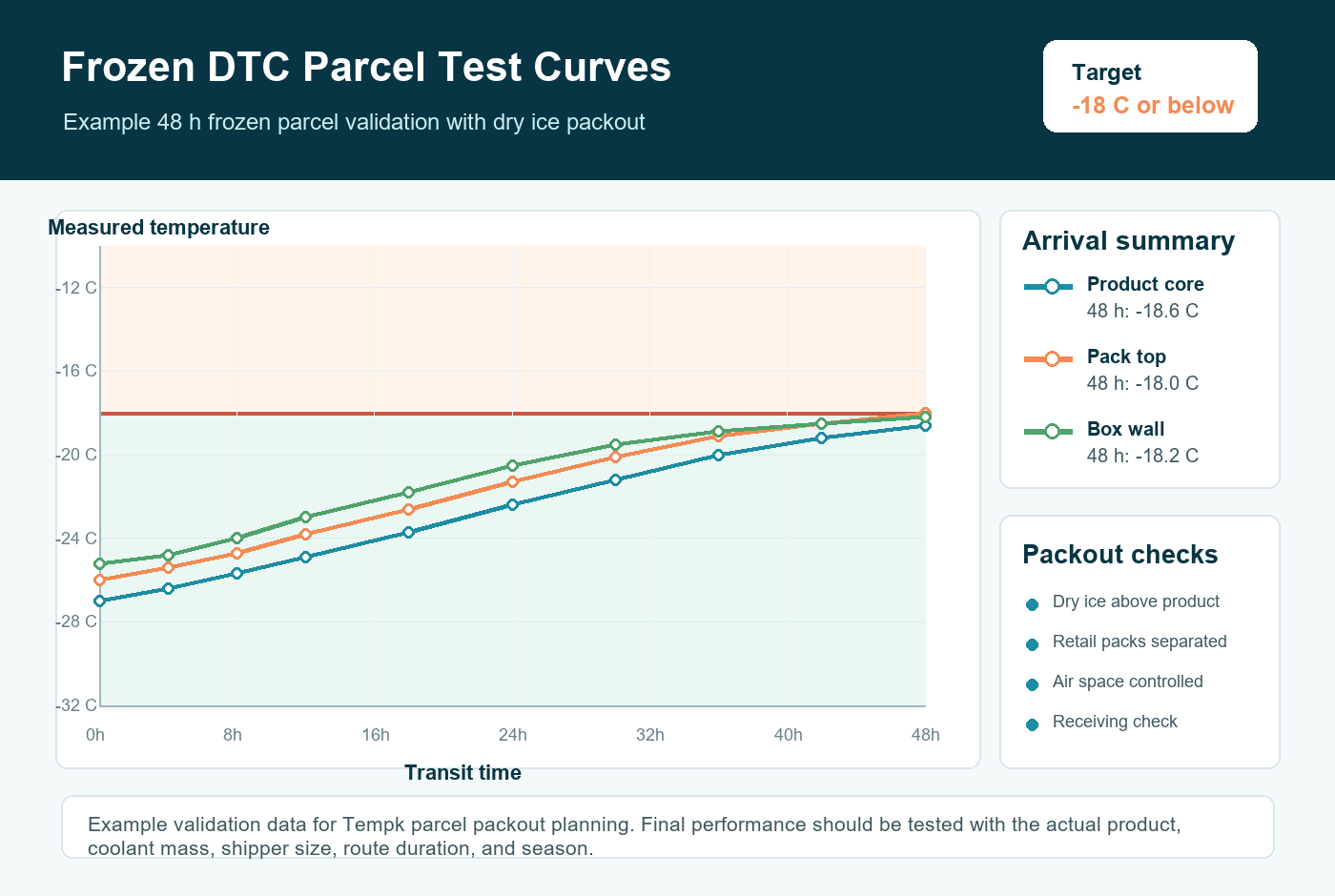
A embalagem certa deve proteger o produto real e a decisão de recebimento, não apenas mostra um rastreamento de registrador frio. Esses riscos determinam o isolamento, escolha do refrigerante, posição do refrigerante, suporte interno, e verificações de validação.
Alimentos congelados podem congelar novamente e parecer duros enquanto a textura, forma, ou a qualidade já mudou.
O gelo seco sublima em gás e pode exigir regras de rotulagem e manuseio específicas da transportadora.
Geada, pressão, e caixas molhadas podem danificar as etiquetas e fazer com que a entrega pareça insegura.
As caixas podem incluir banheiras, embalagens a vácuo, bandejas, ou bolsas que respondem de maneira diferente à pressão e ao contato frio.
Recomendação baseada em rota
Estes são pontos de partida práticos para o planejamento de amostras. Massa final do refrigerante, espessura de isolamento, e o suporte interno deve ser validado com a carga útil real, rota, serviço de correio, e recebendo padrão.
| Condição de envio | Pacote temporário recomendado | Direção inicial do refrigerante | Posição do refrigerante | O que validar |
|---|---|---|---|---|
| Entrega congelada no mesmo dia 8-18rota h, ambiente abaixo 22 C, carga útil congelada | Remetente EPS ou EPP, forro, divisores de produtos, zona de gelo seco, e caixa externa ventilada | Sobre 1.5-2.5 kg de gelo seco por 1-3 kg de carga útil congelada como intervalo de teste inicial. Use a calculadora de gelo seco para obter as condições reais da rota. | Zona de gelo seco superior ou lateral com divisória e headspace; mantenha o gelo seco longe de embalagens frágeis. | Condição muito congelada, gelo seco restante, secura da caixa, condição do rótulo, e abertura segura para o cliente |
| Pacote DTC noturno 18-36rota h, manuseio de depósito, ambiente 22-30 C | Remetente EPS/EPP mais espesso, divisor de gelo seco, linhas de produtos fixas, forro, registrador, e caixa externa forte | Sobre 3.0-5.0 kg de gelo seco para um teste de pacote pequeno. Ajustar por peso do produto, volume da caixa, isolamento, tempo de rota, e limites da operadora. | Layout de gelo seco superior e lateral com cobertura total da divisória e caminho de ventilação. | Temperatura máxima, gelo seco restante, firmeza do produto, nível de geada, pressão da caixa, e condição do pacote de varejo |
| Rota DTC em clima quente ou propensa a atrasos 30-35 C ambiente, 36-48h risco, fim de semana é possível | Transportador isolado de alto desempenho, câmara de gelo seco maior, caixa reforçada, divisores de produtos, e registrador de rotas | Sobre 5.0-8.0 kg de gelo seco para testes prolongados de pequenas parcelas. Confirme o headspace, ventilação, e requisitos da operadora antes do dimensionamento. | Perímetro e gelo seco superior com divisórias; evite contato direto com etiquetas, bolsas, ou bandejas frágeis. | Condição de recebimento atrasado, gelo seco restante, descongelar evidências, molhamento da caixa, e clareza no tratamento do cliente |
A massa do refrigerante é um ponto de partida, não é uma garantia. Ajuste pela temperatura do produto na embalagem, peso da carga útil, tamanho do remetente, material de isolamento, condicionamento de refrigerante, duração da rota, perfil ambiente, manuseio de transportadora, e recebimento de cheques. Mais refrigerante pode criar congelamento, dano de pressão, embalagem molhada, ou manuseio inseguro de gelo seco quando a separação e as instruções estão erradas.
Estrutura do pacote
Pacotes de encomendas precisam de suporte de produto, separação de refrigerante, e receber clareza antes que o remetente seja fechado. Comece com a carga útil e os critérios de aceitação, então dimensione o isolamento e o refrigerante.
Processo de embalagem
Um remetente mais forte ajuda, mas condição de carregamento, separação de refrigerante, suporte interno, e as instruções de recebimento geralmente decidem se o pacote é aceito.
Não embale produtos macios e espere que o gelo seco restaure a qualidade.
Banheiras separadas, bolsas, bandejas, ou caixas para que itens pesados não esmaguem embalagens frágeis.
Crie uma zona de gelo seco com divisórias, Headspace, e um caminho de gás seguro.
Inspecione o gelo seco restante, dureza do produto, geada, condição do rótulo, e clareza nas instruções de manuseio.
Quando mudar o design
Melhorar divisórias, forro, resistência da caixa, e separação de gelo seco antes de alterar a massa de gelo seco.
Aumentar a margem de isolamento, ajustar a massa de gelo seco, reduzir o tempo da rota, ou altere o tamanho do remetente.
Melhorar o aviso de gelo seco, instruções de manuseio, ventilação, e separação das embalagens de varejo.
Recursos relacionados
Compartilhe o mix de produtos, alvo congelado, peso da carga útil, Tamanho da caixa, tempo de rota, faixa ambiente, modo de operadora, e requisitos de recebimento do cliente. Tempk pode ajudar a escolher a massa de gelo seco, isolamento, divisores, ventilação, e etapas de validação.
Solicite uma revisão do pacote de encomendasSuporte a pacotes personalizados
Para tamanhos de caixa fixos, limites de carga útil, requisitos de marca, pistas sazonais, ou alvos de validação, A Tempk pode adaptar esta solução em um pacote personalizado de cadeia de frio.