


Intenção de temperaturaPlaneje 0-4 C ou o requisito de rótulo do produto, com recheios pré-resfriados e carregamento rápido do remetente.
Solução de cadeia de frio para sanduíches e enrolados
Sanduíches e wraps precisam de controle refrigerado para recheios, mas os clientes julgam o envio pela textura do pão, forma de embrulho, condição do rótulo, e quão limpo o item se apresenta após a entrega. A embalagem deve resfriar o recheio sem molhar o papel, esmagando pão, ou bordas congeladas.
O que o pacote precisa controlar
Regra do refrigeranteUse pacotes de gel ou PCM nas laterais ou na parte superior com uma barreira contra umidade. Não pressione pacotes congelados diretamente em embalagens de pão ou papel.
Foco na embalagemTextura de pão, retenção de forma, secura do papel, e a temperatura de enchimento precisam ser verificadas em conjunto.
Escolha o pacote por condição de rota
| Condição da rota | Configuração de embalagem | Faixa preliminar de refrigerante | Colocação e recebimento de cheque |
|---|---|---|---|
| Transferência local refrigerada, 4-8 h | Formato de caixa isolada ou bag-in-box, divisor de pilha, pacotes de gel laterais, papel protegido da umidade. | 0.4-0.9 kg de pacotes de gel ou PCM para um 1-3 kg de carga útil. | Verifique a temperatura de enchimento, superfície do pão, forma de embrulho, e secura do rótulo. |
| Rota no mesmo dia, 8-18 h | EPP ou caixa isolada, bandeja interna, barreira de umidade, refrigerante lateral/superior com espaçador. | 0.9-1.8 kg de pacotes de gel ou PCM para um 1.5-4 kg de carga útil. | Use divisórias para que o líquido refrigerante não deslize para dentro do pão durante o manuseio. |
| Rota quente ou atraso na entrega, 18-24 h | Isolamento mais espesso, bandeja interna mais forte, refrigerante equilibrado ao redor, mas não em cima dos sanduíches. | 1.8-2.8 pacotes de gel kg ou PCM, validado com a altura real da pilha. | Se o pão ficar encharcado, melhore a barreira de umidade e o fluxo de ar antes de aumentar o refrigerante. |
Use essas faixas como ponto de partida para revisão de embalagens. Confirme a massa final do líquido refrigerante com o rótulo do produto, estado de pré-resfriamento, tamanho do remetente, duração da rota, perfil ambiente, e um teste de registro de temperatura.
Como Tempk construiria a remessa
Pré-resfriar sem secar o produto
Recheios frios ajudam no percurso, mas o pão exposto pode secar ou absorver umidade. Mantenha a embalagem de produção fechada antes de carregar.
Separe o papel da condensação
Use uma barreira contra umidade ou capa interna para que os pacotes de gel descongelados não molhem os rótulos, envoltórios de papel, ou superfícies de pão.
Controlar a pressão da pilha
Use uma bandeja, divisor, ou inserção de caixa para evitar que o líquido refrigerante pesado e as camadas superiores deformem as embalagens.
Inspecione a apresentação no recebimento
Registrar temperatura de enchimento, textura de pão, forma de embrulho, condição do rótulo, condensação, e refrigerante restante.
Pontos de falha comuns para prevenir
Para alimentos preparados, uma chegada fria é apenas parte da decisão. A remessa também precisa parecer limpa, fique seco, proteger a textura, e passar na verificação de qualidade do receptor.
- Pão encharcado ou papel de embrulho molhado devido à condensação.
- Sanduíches achatados após o líquido refrigerante ou as caixas superiores serem pressionadas.
- Recheios quentes quando a embalagem protege a apresentação, mas não tem tempo de resfriamento.
- Bordas de pão congelado devido ao contato direto do pacote de gel.
Curva de validação e recebimento de evidências
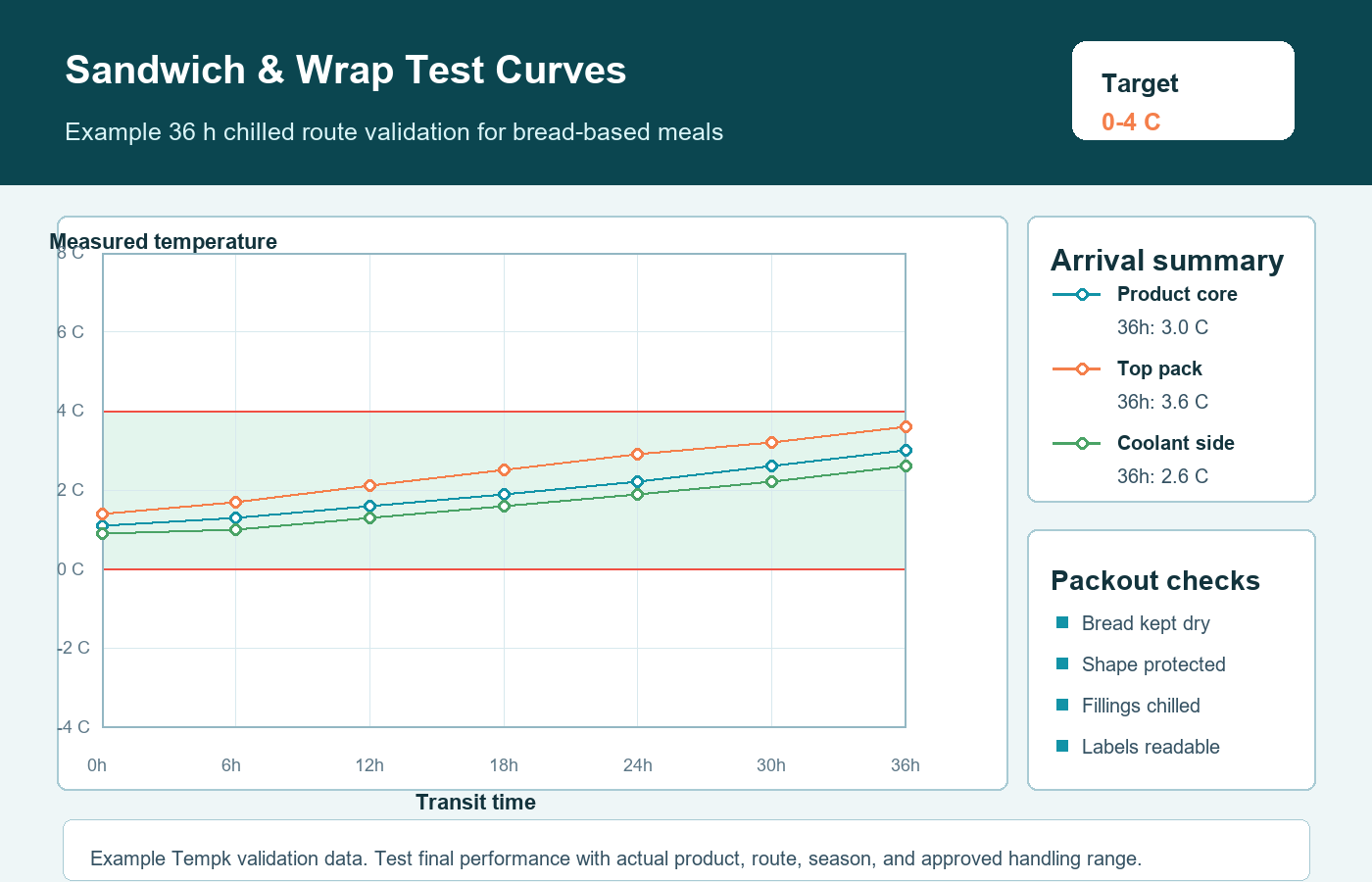
Revise a curva com o produto real, massa de refrigerante, tamanho do remetente, duração da pista, e estação. Adicione fotos de chegada e notas de recebimento para que a embalagem seja avaliada pela temperatura e condição do produto em conjunto.
Páginas relacionadas para planejamento de embalagem
Categoria de alimentos preparadosRefeições prontas refrigeradasSaladas prontasGuia de refeições sous-videSacos de entrega isolados para entrega de sanduíches e embalagensBolsas de gelo em gel para entrega de sanduíches e wrapsForros de caixa isolados para entrega de sanduíches e embalagensFerramentas da cadeia de frioContactar a Tempk
Notas práticas de rota
Proteja a textura do pão e os recheios resfriados juntos
Sanduíches e wraps precisam de temperatura baixa, mas o pão e as tortilhas podem ficar molhados se a condensação for mal controlada. A embalagem deve manter os recheios seguros sem sacrificar a textura.
Onde este produto geralmente falha
Queixas típicas são pão encharcado, envoltórios esmagados, umedecimento de rótulo, vazamento de curativo, e centros quentes em pacotes empilhados.
Configuração de embalagem para testar primeiro
Use bandejas ou mangas rígidas, mantenha o líquido refrigerante pesado longe da pilha de sanduíches, e adicione um tampão de condensação onde os pacotes ficam próximos ao papelão.
Escolha do refrigerante
Use pacotes de gel resfriado ao redor da pilha, não diretamente sob embalagens em papel. O PCM é útil quando a rota inclui vans de entrega quente ou recebimento atrasado no escritório.
Verificação de validação de rota
Verifique a temperatura central, textura de pão, secura do rótulo, e embalar paixão. As verificações de sabor e textura são importantes para este tipo de produto.
Detalhe da embalagem
As rotas de sanduíches e wraps devem proteger a textura do pão
Caso de uso
Sanduíches e wraps precisam de manuseio refrigerado, mas muita condensação pode fazer pão, tortilhas, e mangas de papel inaceitáveis. O plano de refrigeração deve manter a temperatura de enchimento enquanto mantém a embalagem de papel seca.
Escolha da embalagem
Use pacotes de gel resfriado posicionados lateralmente ou PCM com um tampão de umidade. Não empilhe líquido refrigerante pesado diretamente em embalagens macias, e mantenha os molhos ou as xícaras de molho na posição vertical dentro da embalagem interna.
O que Tempk deve validar
Tempk deve validar a temperatura central, textura de pão, secura da manga, condição do rótulo, e resistência ao esmagamento. Para entrega em escritório ou catering, incluir um período de espera pós-entrega no teste.
Suporte a pacotes personalizados
Precisa desta pista construída em torno de seu produto e rota?
Para tamanhos de caixa fixos, limites de carga útil, requisitos de marca, pistas sazonais, ou alvos de validação, A Tempk pode adaptar esta solução em um pacote personalizado de cadeia de frio.
Precisa que esta rota de alimentos preparados seja verificada antes do envio?
Envie o formato do produto, temperatura alvo, tamanho da carga útil, dimensões do pacote, duração da rota, condição ambiente, e recebendo padrão. Tempk pode ajudar a comparar o isolamento, pacote de gel ou layout PCM, forros, divisores, e etapas de validação.
Solicite uma revisão do pacote