


Intenção de temperaturaPlaneje 0-4 C ou o requisito de rótulo do produto, com saladas pré-refrigeradas e embaladas a seco.
Solução de cadeia de frio para saladas prontas para consumo
Saladas prontas para consumo são sensíveis a hematomas nas folhas, condensação, vazamentos de curativos, e contato direto com congelamento. A embalagem deve manter uma rota refrigerada enquanto mantém as folhas crocantes, conchas intactas, e copinhos separados da fonte fria.
O que o pacote precisa controlar
Regra do refrigeranteUse pacotes de gel condicionado ou 5 C PCM nas laterais ou acima de um espaçador. Evite o contato direto do congelamento nas folhas ou no topo das conchas.
Foco na embalagemBaixa pressão, equilíbrio de umidade, separação de curativos, e a apresentação em concha limpa impulsiona a aceitação.
Escolha o pacote por condição de rota
| Condição da rota | Configuração de embalagem | Faixa preliminar de refrigerante | Colocação e recebimento de cheque |
|---|---|---|---|
| Rota local, 4-8 h | Caixa isolada, suporte em concha, refrigerante lateral, forro seco. | 0.4-0.8 kg de pacotes de gel condicionado ou PCM para um 1-2 kg de carga útil. | Verifique a textura da folha, selo de copo de curativo, e condensação na concha. |
| Rota no mesmo dia, 8-18 h | EPP ou caixa isolada, divisor de pilha de baixa pressão, refrigerante lateral/superior com espaçador. | 0.8-1.6 kg de pacotes de gel condicionado ou 5 C PCM para um 1-3 kg de carga útil. | Evite a pressão direta do pacote de gel nas verduras; inspecionar bordas de folhas congeladas. |
| Rota da cidade quente, 18-24 h | Isolamento mais espesso, forro de controle de umidade, refrigerante balanceado em torno da cavidade de carga útil. | 1.6-2.6 kg PCM ou pacotes de gel condicionado, ajustado por teste de rota. | Se as folhas murcharem ou congelarem, ajuste a temperatura e o espaçamento do líquido refrigerante antes de aumentar a massa. |
Use essas faixas como ponto de partida para revisão de embalagens. Confirme a massa final do líquido refrigerante com o rótulo do produto, estado de pré-resfriamento, tamanho do remetente, duração da rota, perfil ambiente, e um teste de registro de temperatura.
Como Tempk construiria a remessa
Embale saladas frias e secas
Folhas úmidas e conchas quentes criam condensação rapidamente. Pré-resfrie o produto e evite carregar a embalagem externa molhada.
Proteja a pilha de garras
Use divisórias ou uma bandeja interna para que o líquido refrigerante pesado não esmague as tampas ou machuque as folhas.
Escolha um layout de refrigeração mais suave
UM 5 C PCM ou pacote de gel condicionado pode ser melhor do que um pacote congelado mais frio quando o congelamento das folhas é o principal risco.
Inspecione a textura no recebimento
Registrar a temperatura do produto, hematomas nas folhas, bordas congeladas, vazamento de curativo, rachaduras em concha, e secura do rótulo.
Pontos de falha comuns para prevenir
Para alimentos preparados, uma chegada fria é apenas parte da decisão. A remessa também precisa parecer limpa, fique seco, proteger a textura, e passar na verificação de qualidade do receptor.
- Bordas das folhas congeladas devido ao contato direto do pacote de gel.
- Verduras murchas após transferência quente ou isolamento insuficiente.
- Vazamento do copo de curativo durante o manuseio lateral.
- Esmagamento em concha, etiquetas molhadas, ou condensação voltada para o cliente.
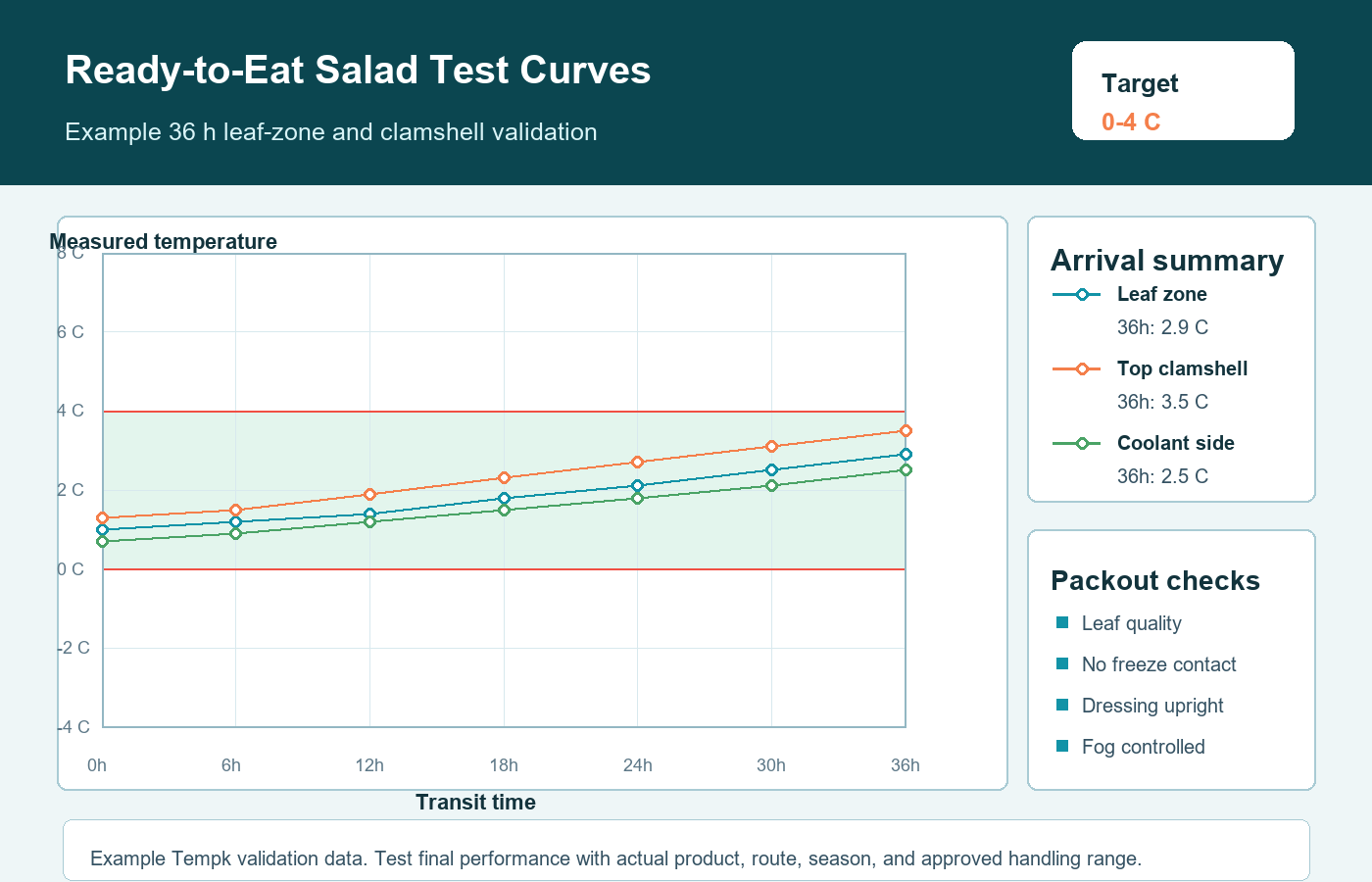
Curva de validação e recebimento de evidências
Revise a curva com o produto real, massa de refrigerante, tamanho do remetente, duração da pista, e estação. Adicione fotos de chegada e notas de recebimento para que a embalagem seja avaliada pela temperatura e condição do produto em conjunto.
Páginas relacionadas para planejamento de embalagem
Categoria de alimentos preparadosRefeições prontas refrigeradasSanduíches & embrulhosGuia de sopas geladasSacos de entrega isolados para entrega de saladas prontas para consumoBolsas de gelo em gel para entrega de saladas prontasForros de caixa isolados para entrega de saladas prontas para consumoFerramentas da cadeia de frioContactar a Tempk
Notas práticas de rota
Mantenha as saladas crocantes sem congelar as bordas das folhas
Saladas prontas precisam de frio, ventilação, e proteção contra pontos frios diretos. Muito contato com o frio pode danificar as bordas das folhas, mesmo quando o conjunto geral parece aceitável.
Onde este produto geralmente falha
Murcha de folhas, congelamento de borda, vazamentos de curativos, etiquetas molhadas, e tigelas trituradas são as principais falhas de qualidade.
Configuração de embalagem para testar primeiro
Use saladeiras rígidas ou conchas com controle de vazio. Coloque os pacotes de gel em torno de uma divisória e mantenha os copos de molho na vertical e separados das folhas verdes.
Escolha do refrigerante
Os pacotes de gel resfriados são normalmente mais seguros do que os pacotes congelados em contato direto. Use PCM quando a rota tiver alta exposição no verão ou tempo de entrega incerto.
Verificação de validação de rota
Inspecione a textura da folha, selos de copo de molho, tampas de concha, e água grátis na embalagem. Uma embalagem de salada deve incluir uma verificação visual de frescor.
Detalhe da embalagem
Caixas de salada precisam de proteção contra frio sem congelamento de folhas
Caso de uso
Saladas prontas para consumo podem ser danificadas pelo contato direto com embalagens congeladas. As bordas das folhas podem congelar enquanto o centro da tigela permanece dentro do alcance, portanto, o líquido refrigerante deve ser separado por uma divisória ou colocado em canais laterais.
Escolha da embalagem
Mantenha os copos na posição vertical e longe das folhas. Se a rota incluir entrega quente na milha final, aumente o isolamento ou use PCM em vez de pressionar pacotes de gel mais frios contra as saladeiras.
O que Tempk deve validar
Para testes temporários, forneça o tamanho da tigela, mistura de verduras, posição do copo de vestir, contagem de pacotes, e duração da rota. Verifique a crocância das folhas, congelamento de borda, água grátis, segurança da tampa, secura do rótulo, e temperatura de chegada. Para entrega de refeições ou catering de escritório, adicione uma pequena espera pós-entrega na validação porque as saladas geralmente esperam antes de serem abertas.
Suporte a pacotes personalizados
Precisa desta pista construída em torno de seu produto e rota?
Para tamanhos de caixa fixos, limites de carga útil, requisitos de marca, pistas sazonais, ou alvos de validação, A Tempk pode adaptar esta solução em um pacote personalizado de cadeia de frio.
Precisa que esta rota de alimentos preparados seja verificada antes do envio?
Envie o formato do produto, temperatura alvo, tamanho da carga útil, dimensões do pacote, duração da rota, condição ambiente, e recebendo padrão. Tempk pode ajudar a comparar o isolamento, pacote de gel ou layout PCM, forros, divisores, e etapas de validação.
Solicite uma revisão do pacote