Article Body
\ناختيار أ 20 Liter Ice Chest Supplier You Can Put into Daily Operation
\ناختر أ 20 لتر مورد صندوق الثلج by proving the complete packing arrangement, not by accepting the capacity label as a payload promise. Start with your packaged goods and route, establish how the coolant and product will be prepared, and then check the evidence for that exact configuration. A successful sample should also survive an ordinary warehouse trial and translate into a repeatable production specification. These steps connect fit, حماية درجة الحرارة, وتكلفة التشغيل, while preventing a compact box from becoming an oversized assumption about what your delivery system can handle.
\نBegin with the Order That Is Hardest to Pack
\نThe easiest order rarely exposes the limits of a container. A single small carton can leave plenty of room for coolant and handling. The more revealing starting point is a normal commercial order with awkward tray dimensions, fragile seals, several product packs, or a loading orientation that cannot be changed.
\نAsk your team to describe that order as it leaves production. Measure the full primary and secondary packaging, including any protective sleeve. Record whether the goods may be rotated, مكدسة, or placed against a separator. The drawing should reflect how the products must travel, not how they could theoretically occupy the smallest space.
\نNow distinguish three spaces: the nominal cavity, the space allocated to refrigerant and protective components, and the usable product envelope. This distinction avoids promising customers a twenty-liter load when the approved packout has a smaller payload compartment. Ask the supplier to state its capacity convention in writing.
\نFit should be tested with the complete arrangement. A carton that slides easily into the empty shell may become difficult to remove after side packs are installed. A top coolant layer can interfere with the lid. A cavity that narrows toward the base can prevent the bottom product layer from matching the upper one.
\نConsider normal variation rather than approving a single unusually favorable sample. كرتون المنتج, refrigerant pouches, and molded components have dimensional variation. Agree which tolerances matter and how the worst credible combination will be addressed. The objective is a packout that workers can assemble without forcing the closure or improvising a new arrangement.
\نIf the order does not fit, reconsider the geometry before reducing protection. A differently shaped cavity, another approved refrigerant layout, or a different container size may be preferable. Removing coolant or required separation merely to preserve a capacity target changes the system and requires a new technical assessment.
\نDescribe the Journey as a Sequence of Exposures
\نA route requirement should begin when the prepared goods leave controlled storage and end at the agreed receiving boundary. Between those points, identify packing, التدريج, تحميل, عبور, عمليات التسليم, منتظر, والاستلام. Some stages are predictable; others require an agreed allowance or contingency.
\نAvoid giving the supplier only a driving time. A package that waits for collection or sits at an unattended destination can experience a materially different journey from a direct transfer into controlled storage. The relevant duration is the exposure your packaging must cover, not a timetable that omits inconvenient stages.
\نAlso state whether the chest stays closed. A shared delivery chest opened at several stops is not the same operating case as a sealed parcel. Removing goods changes the remaining load and can expose its arrangement to disturbance. Ask whether the proposed evaluation represents those activities.
\نThe product requirement comes before the coolant choice. Establish the permitted temperature range, sensitivity to excessive cooling, حالة البداية, واستلام القرار. و حاوية معزولة يبطئ نقل الحرارة, while a selected refrigerant provides thermal capacity. Neither component automatically makes the combination appropriate for every chilled or frozen product.
\نA hypothetical buyer shipping individual meal trays illustrates the distinction. The same nominal chest might be used for a direct business delivery or several residential stops. Rather than declaring one hold time for both, the buyer should compare the actual exposure and handling patterns. One shell may remain useful, but the evidence and instructions may need to differ.
\نUse this route description to separate established facts from questions. Known loading times and product requirements belong in the specification. Unknown destination delays or unconfirmed carrier arrangements remain development inputs. Making uncertainty visible is safer than hiding it inside a broad request for “all-day cooling.”
\نAsk for Evidence That Matches the Proposed Purchase
\نA sample, a technical datasheet, and a thermal report answer different questions. The sample shows what you can inspect and handle. The datasheet describes selected product characteristics. The report records what happened under a particular evaluation. None of these should be made to stand in for the other two.
\نLink the report to the offered model and packout revision. Look for the refrigerant specification, الكمية والتنسيب, وصف الحمولة, شروط البداية, ملف تعريف المحيط, مواقف الاستشعار, ومعايير القبول. If those details do not match the intended operation, ask what further evaluation is necessary.
\نTemperature records need interpretation at relevant locations. A single average can hide a warm corner or excessive cooling next to a refrigerant. An air reading may not represent a product measurement. The supplier should explain what the sensors were intended to establish and why the chosen positions are meaningful.
\نDo not accept the longest demonstrated duration without reading the conditions attached to it. A result for a continuously closed package and a particular payload does not automatically extend to a partly filled, repeatedly opened chest. Any extension should have an explicit technical basis rather than a sales assumption.
\ن| Purchase question | Useful acceptance evidence | What remains separate |
| Can the order fit? | Approved loading drawing and physical fit trial | Thermal suitability |
| Can the configuration protect the goods? | Relevant temperature evaluation and stated limits | Routine operator execution |
| Can staff prepare it correctly? | Warehouse trial with usable instructions | Long-term production consistency |
| Can returned units be used again? | Cleaning and condition-release criteria | Actual return economics |
| Can repeat batches remain equivalent? | Controlled specification and change notification | Future route changes |
Each row closes a different uncertainty. Approving the purchase requires the evidence to work together, not one attractive document to cover every question. Keep unresolved restrictions visible in the release decision so they are not forgotten when the first bulk order arrives.
\نRun a Trial with the People Who Will Use the Chest
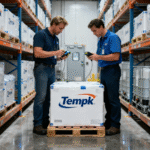
\نThe operating trial should use the actual packing area and the proposed instructions. Watch how staff select components, identify prepared coolant, تحميل المنتج, close the chest, and record completion. Ask them to perform the work rather than simply confirm that the instructions look understandable.
\نPreparation deserves its own check. Refrigerant must reach the condition specified for the packout, and the product must enter at its required starting condition. If the operation cannot reliably provide those inputs, a favorable laboratory result does not make the system ready for launch.
أدوات اتخاذ القرار مفيدة
تحقق من التفاصيل قبل اختيار التغليف
يمكن أن تساعدك هذه الأدوات السريعة في مقارنة مخاطر المسار, احتياجات التحجيم, خيارات المبرد, وتفاصيل التعبئة والتغليف قبل أن تطلب عرض أسعار.
مقاومة سقوط المواد العازلة
مراجعة مقاومة السقوط وعوامل المناولة قبل اختيار المواد العازلة.
تحقق من المقاومةبطانة الصندوق & تحجيم غطاء البليت
تحقق من منطق تحديد حجم بطانة الصندوق وغطاء منصة التحميل لمشاريع التغليف المعزولة.
تقدير الحجممرجع المواد العازلة
قارن بين خيارات المواد العازلة لاحتياجات التعبئة والتغليف المختلفة لسلسلة التبريد.
قارن الموادObserve the points where people hesitate. Similar-looking refrigerants, ambiguous lid orientation, التسميات المخفية, and tight loading clearances can cause repeated errors. Improving these details may be more useful than adding another page to the instruction sheet. Where a change affects the approved arrangement, review it technically before adopting it.
\نHandling should be assessed with the fully loaded package. Consider grip, توازن, available vehicle space, and access at the delivery point. A compact nominal volume does not establish that the loaded unit is suitable for every manual-handling situation. Your workplace assessment should account for the actual weight and task.
\نFor reusable chests, extend the trial through return and release. Record whether all components come back, whether identification remains readable, and how damaged or unclean units are segregated. A container awaiting inspection is not available packing stock, even if it is physically inside the warehouse.
\نCompare cost using the observed process. Include the quoted container, المبردات, protective components, حَشد, تحضير, الشحن, recovery where relevant, والاستبدال. Keep one-time development costs distinct from repeat shipment costs. This avoids a misleading comparison between an empty chest quotation and a fully prepared delivery system.
\نThe trial should also produce a clear rule for selecting the arrangement when a new order reaches the packing bench. Define the order family by observable features such as approved product packages and loading orientation. A vague category such as a small order can mean different things to different people and may hide a materially different coolant-to-payload relationship.
\نGive exceptions an owner. If a product package is outside the approved envelope, the operator should know whether to stop, use a separately approved alternative, or request a review. The process should not reward improvisation merely because the lid can still be closed. A container that physically accepts a different load has not automatically been shown suitable for it.
\نKeep the decision rule accessible where work happens. A concise visual reference can identify the permitted components and loading sequence, while the controlled technical record retains the underlying evidence. These serve different users and should remain consistent. A simplified instruction must not omit a safety-critical or performance-critical step just to fit on a small label.
\نAt the end of the pilot, ask whether the proposed standard reduces or increases decisions for the operator. A well-defined arrangement should remove uncertainty. If every order requires personal judgment about where to put coolant or how to fill a gap, the project has not yet converted its engineering into a repeatable process.
\نThis is also a useful point to review the number of alternatives being introduced. Each additional configuration requires identification, تمرين, توافر المكونات, وتغيير السيطرة. Retain variants that solve a real requirement, but avoid creating separate versions for differences that do not affect the function or the operating decision.
\نConvert the Trial into a Controlled Ordering Specification
\نThe final purchase description should identify the model, مراجعة, المكونات المضمنة, الأبعاد الحرجة, and any approved custom features. Reference the loading arrangement and operating instructions separately so that commercial changes do not accidentally alter the technical system.
\نAsk what will happen if the supplier changes a material source, mold detail, إدراج, إنهاء, or refrigerant. The answer should describe notification and review before affected units enter use. Change control does not mean that every adjustment is forbidden; it means that relevant consequences are considered rather than discovered after a shipment problem.
\نAgree how incoming batches will be checked. Inspection may include identification, أبعاد, حالة, إنهاء, and representative loading checks, depending on the risks. Avoid vague criteria that different inspectors interpret differently. Photographs and approved physical references can make the requirements clearer.
\نSeparate stock availability from customization. A request for a twenty-liter chest may be answered by an existing model, a configurable assembly, or a proposed new design. Confirm which option is being quoted and what remains to be developed. An online category name should not be treated as proof that the exact requested capacity is available immediately.
\نBuild a controlled fallback into the launch plan. A missing component or delayed order should not force the packing team to create an unreviewed substitute. Identify who can authorize alternatives, ما هي الأدلة المطلوبة, and when shipments should be held instead. These decisions are easier to make before demand creates pressure.
\نأخيراً, retain a simple award rationale: why this configuration was selected, what it was evaluated against, and where its limits lie. That record helps a new buyer, a new warehouse supervisor, or a future supplier understand the intended system without reconstructing the project from scattered emails.
\نQuestions Buyers Raise Before the First Bulk Order
\نShould the supplier quote a twenty-liter stock model or a custom design?
\نAsk for both routes only when they address the same payload and operating requirement. A stock model may reduce development effort, while a custom design may resolve a genuine fit or handling problem. Compare the complete scope, including samples, الأدوات حيثما ينطبق ذلك, تقييم, وتكرار العرض. Do not choose customization merely to preserve a nominal capacity label.
\نCan a larger quantity of refrigerant fix a marginal packout?
\نAdditional refrigerant changes the assembly and may affect payload space, local temperatures, تحضير, والتعامل معها. It should not be used as an informal correction without assessment. Ask whether a revised configuration can be evaluated against the actual requirement. Sometimes a different geometry or route arrangement is more appropriate than adding coolant to a poorly fitting chest.
\نWhen is a reusable version worth considering?
\نConsider reuse when there is a credible recovery process and the returned chest can be inspected, تمت المحافظة عليه, and made available for another shipment. Evaluate actual turnaround and losses rather than assuming repeated use. A reusable design can be operationally attractive, but its value depends on the loop surrounding it, not solely on the material or purchase price.
\نWhat should block release even after a successful thermal test?
\نUnresolved preparation requirements, تناسب الحمولة السيئة, ambiguous assembly instructions, unsuitable receiving arrangements, or unconfirmed production equivalence can still prevent release. The thermal test addresses only the configuration and conditions evaluated. Routine operation also needs the right inputs, trained users, and controlled components. Approve the full workflow, not just the temperature graph.
\نحول Tempk
\نو Tempk, نحن نقدم العبوة المعزولة and refrigerant options that can be considered together during packout review. We also discuss custom manufacturing requirements where an existing arrangement does not fit the intended shipment. For buyers assessing a 20 liter ice chest supplier, those capabilities support a practical conversation about payload geometry and operating conditions rather than a capacity-only purchase. The exact model, نطاق التخصيص, and supporting evaluation should be confirmed for your project.
\نSend Tempk your representative product package and route description to discuss the next suitable sample.