Cool Brick Logistics Works Best When You Design From Receipt Backward
A shipment is not successful when the lid closes. It is successful when the receiver can accept the payload with evidence that the defined process was followed. That makes receipt the best starting point for cool brick logistics. Decide what condition, السجلات, and inspections the consignee needs; then work backward through handovers, التعرضات المحيطة, التعبئة, تكييف, and product selection. A reusable rigid الطوب المبرد can support that chain by adding thermal capacity in a stable shape. It cannot qualify the shipper, set the payload range, or prove what happened in transit.
Begin With the Acceptance Decision
Ask the receiving team what would cause it to accept, الحجر الصحي, or reject the shipment. The answer may involve a temperature record, مؤشر درجة الحرارة والوقت, an intact seal, a correct label, a pack-out record, حالة المبرد, وقت الوصول, or visual evidence of damage. For some food routes, the process may be relatively simple. للمنتجات الطبية, اللقاحات, التشخيص, or high-value materials, quality review may be more formal.
This backward view prevents the packaging team from optimizing the wrong outcome. A pack-out can look tidy at dispatch but leave the receiver unable to retrieve data. A logger may record the route but sit in a location that does not support the intended decision. A brick can remain partly frozen at delivery while the payload experienced an unacceptable local exposure. None of those observations can be reduced to “the coolant was still cold.”
Define the acceptance logic in plain language:
The product-specific temperature condition that must be maintained.
The time window covered, including staging and post-delivery handling.
The evidence and inspection available at receipt.
The person authorized to interpret an alarm or deviation.
The disposition process when evidence is incomplete.
Only then should you convert the journey into a thermal and operational design brief.
Build a Chain of Evidence, Not a List of Products
Every stage should preserve an assumption made by the stage before it. The following table links decisions to proof.
| منصة | Decision that must be controlled | Useful evidence or operating control | إشارة الفشل |
|---|---|---|---|
| تعريف المنتج | Required range and sensitivity are correct | Approved product information and quality review | Staff use a generic chilled category |
| تعريف الطريق | Duration and ambient risks are realistic | Lane map including dwell, التأخير, وعمليات التسليم | Transit estimate excludes staging or weekends |
| التصميم الحراري | العزل, سائل التبريد, حمولة, and dividers work together | Defined configuration and development data | A component claim substitutes for system evidence |
| تكييف | Bricks start in the approved state | Equipment instruction, stock separation, فحص الافراج | Frost or elapsed freezer time is the only check |
| التعبئة والتغليف | كمية, الموضع, الانفصال, and closure are repeatable | Visual work instruction and completion record | Packers improvise when payload changes |
| ينقل | Shipment follows the controlled route and handling plan | Carrier instruction, الأختام, تتبع, monitoring as justified | Unowned dwell or unexpected rehandling |
| Receipt and return | Acceptance and asset recovery are completed | تقتيش, مراجعة البيانات, quarantine path, return scan | Payload is accepted before evidence is reviewed |
The table is useful because it exposes unsupported leaps. If route time is undefined, a hold-time claim has no operational meaning. If brick conditioning is uncontrolled, thermal test results may not represent daily work. If the consignee cannot act on logger data, monitoring becomes a record without a decision.
Convert the Route Into a Thermal Envelope
The thermal envelope describes the heat challenge the pack-out must manage. It includes the required product range, درجات حرارة البداية, الوقت الإجمالي, الظروف المحيطة, heat-transfer paths, and margin for credible variation. It should capture more than the scheduled transport leg.
Separate the clocks
At least four clocks may run during one shipment:
Payload time outside controlled storage during picking and packing.
Coolant staging time after conditioning.
Closed-shipper transport and dwell time.
Arrival-to-storage time at the destination.
Combining these into a single optimistic “delivery time” hides risk. A local route may have little driving but long dock waits. A parcel may arrive on schedule and still sit in receiving. The design should use a justified total exposure period and clearly assigned limits.
Treat hot and cold risk separately
العزل يبطئ حركة الحرارة; it does not decide which direction is safe. Frozen coolant near a sensitive product can create cold spots even while external heat enters through the walls. A pack-out needs appropriate coolant conditioning, تباعد, المقسمات, and payload placement. WHO vaccine guidance, على سبيل المثال, warns that freeze-sensitive vaccines can be damaged by contact with frozen packs. The general lesson is to follow product-specific instructions rather than treating colder as safer.
Use physics without pretending the model is the route
Coolant absorbs sensible heat as its temperature rises. If it changes phase, it can absorb latent heat during that transition. كتلة, القدرة الحرارية, سلوك المرحلة, and starting state all contribute to the energy budget. Geometry controls how quickly heat reaches the coolant and where local gradients form.
These concepts help screen designs. They do not prove duration. طبقات, قنوات الهواء, كثافة الحمولة, أحداث الافتتاح, manufacturing variation, and real handling complicate the model. Use calculation to ask better questions, testing to evaluate the assembly, and monitoring to learn whether operations match the design.
Specify the Brick as an Engineered Part
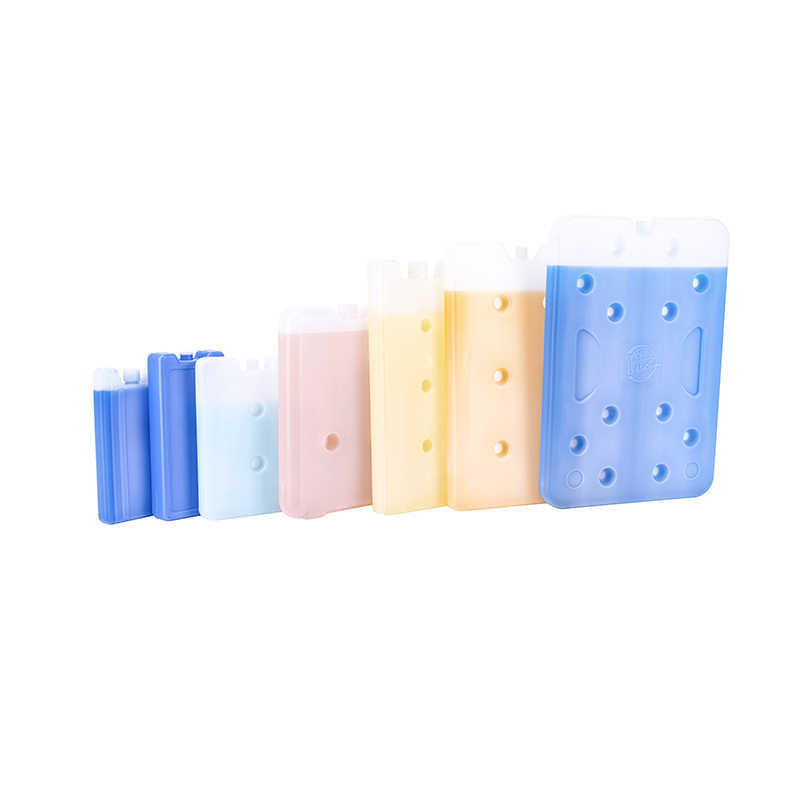
A purchasing description such as “blue الطوب الجليدي القابل لإعادة الاستخدام” is not enough for a controlled pack-out. The specification should identify the features that matter to fit, السلوك الحراري, الاحتواء, التعامل, and version control.
Confirm external dimensions rather than nominal volume alone. Include filled mass or an agreed tolerance where it matters. Identify shell material, cap or closure design, fill or PCM formula, ملصق, لون, والتعبئة الكرتون. State conditioning, تخزين, تنظيف, and inspection expectations. If the brick locates in a molded recess, define the geometry tightly enough to preserve fit.
Nominal volume can be ambiguous. It may describe internal fill, advertised capacity, or a product family. Usable payload loss depends on the brick's outer displacement and required spacing. Measure it in the intended container.
Formula control matters because two identical shells can contain coolants with different behavior. Use labeling or shell color to reduce mix-ups, but support the visual cue with purchasing and lot controls. Ask how the supplier manages a formula, كاب, الراتنج, قالب, ملصق, or packing change. A change that appears minor commercially can affect conditioning, ملائم, خطر التسرب, أو الأداء الحراري.
Rigid cool bricks are often selected for their repeatable geometry. Protect that advantage by controlling substitutions. مرنة حزمة هلام of similar mass is not automatically equivalent. A thicker brick with the same nominal volume can change surface area and airflow. A different PCM phase specification can change the temperature region where latent heat is absorbed.
أدوات اتخاذ القرار مفيدة
تحقق من التفاصيل قبل اختيار التغليف
يمكن أن تساعدك هذه الأدوات السريعة في مقارنة مخاطر المسار, احتياجات التحجيم, خيارات المبرد, وتفاصيل التعبئة والتغليف قبل أن تطلب عرض أسعار.
سائل التبريد & مرجع PCM
قارن خيارات سائل التبريد وPCM عندما يحتاج المسار إلى دعم إضافي لدرجة الحرارة.
قارن الخياراتمحدد التعبئة والتغليف
قارن بين خيارات التغليف المعزولة حسب المنتج, طريق, ودرجة الحرارة اللازمة.
البحث عن التعبئة والتغليفمقاومة سقوط المواد العازلة
مراجعة مقاومة السقوط وعوامل المناولة قبل اختيار المواد العازلة.
تحقق من المقاومةMake Conditioning and Pack-Out Observable
An operator should be able to tell what state a brick is in, where it belongs, and what to do when something is wrong. If those decisions live only in a technical report, the warehouse process will drift.
Conditioning instructions should cover equipment, loading arrangement, طريقة التحضير, release criterion, التدريج, and stock segregation. Do not assume the freezer display equals brick core temperature. تدفق الهواء, استعادة, brick stacking, and incoming state all influence readiness. When multiple PCM formulas are present, give them separate storage locations and unambiguous identification.
The pack-out instruction should show the complete three-dimensional assembly. Identify bottom, جانب, and top bricks; توجيه; حمولة; المقسمات; المسجل; fill material; غطاء; ختم; والتسميات. Include an approved response for undersized or oversized payloads. خلاف ذلك, packers will solve fit problems by removing a component or compressing the container.
Use controls that match the failure mode. A count sheet catches missing bricks but not wrong placement. A photograph can confirm placement but may not prove formula. A scan can confirm identity but not conditioning. Combining a few simple controls is often stronger than adding one complicated technology.
The first five shipments are a training test
Early production shipments reveal whether the design is practical. Observe how long packing takes, which instructions cause hesitation, whether bricks become mixed, كيف يغلق الغطاء, where condensation appears, and how receipt and return work. These observations do not replace qualification, but they can expose human and material issues before volume increases.
Match Qualification and Monitoring to the Risk
Qualification is a documented demonstration that a defined system performs as intended under specified conditions. The scope can differ by organization, منتج, والسوق. ل الشاحن السلبي, the controlled system may include container, نموذج وكمية سائل التبريد, تكييف, حمولة, الفواصل, إنهاء, ملف تعريف المحيط, مواقع الاستشعار, ومعايير القبول.
ISTA 7E is relevant to thermal exposure testing of individual packaged products in parcel delivery networks and can support الشاحن المعزول اختبار. It should be applied within its intended scope. A test profile does not guarantee every route, and an ISTA reference should not be attached casually to a single cool brick.
Good distribution practice expectations for medicinal products direct attention to maintaining required storage conditions in transportation and using risk-based controls. WHO technical guidance similarly addresses conditioning, تحميل, التعامل, يراقب, وتأهيل حاويات الشحن. The responsible statement is therefore specific: a named pack-out was evaluated for a defined application. “Globally compliant coolant” is not a useful technical conclusion.
Monitoring strategy should answer a decision. Define whether data is needed for qualification, route characterization, routine release, exception investigation, or continuous improvement. Confirm logger accuracy, معايرة, الفاصل الزمني للتسجيل, عتبات الإنذار, تأخير البدء, الموضع, ملاءمة البطارية, مزامنة الوقت, واسترجاع البيانات. Do not invent or copy a logger specification from another application.
عند الاستلام, a written decision tree should address alarms, البيانات المفقودة, damaged sensors, late arrival, الأختام المكسورة, and pack-out deviations. Temperature data needs product and quality context; an alarm is a signal for review, not always an automatic conclusion about product disposition.
Engineer the Reuse Loop With the Outbound Loop
A reusable brick has environmental and economic potential only when it returns and remains serviceable. قبل توسيع النطاق, determine the number of units needed across five states: مستعد, في مرحلة انتقالية, awaiting return, في انتظار التنظيف, وتكييف. Add a justified buffer for demand variation and retirement rather than assuming every purchased brick is dispatch-ready.
Inspection criteria should be objective enough for different staff to apply consistently. الشقوق, انتفاخ, تسرب, ضرر الإغلاق, تحديد غير قابل للقراءة, abnormal residue, or unexplained mass change may require segregation. Cleaning must be compatible with the shell, كاب, ملصق, وملء الاحتواء. Define drying and storage so clean units do not become mixed with returns.
For sustainability decisions, compare services rather than objects. The service is a successful temperature-controlled delivery, not ownership of a reusable item. Consider material production, inbound packing, طاقة التكييف, النقل للخارج, حركة العودة, غسل, خسارة, ضرر, ونهاية الحياة. Reuse often aligns with source-reduction priorities when loops work well, but the route-specific result depends on actual circulation.
Track data that can improve both cost and environmental performance: معدل العودة, الوقت المستغرق, damage source, cleaning exceptions, emergency replacement purchases, and completed uses before retirement. Avoid promising a fixed reuse count unless it is supported for the product and use conditions.
A Pilot Designed From Receipt Backward
Imagine a healthcare distributor sending a منتج حساس لدرجة الحرارة to several clinics. The clinics need a clear acceptance process, and the distributor wants a reusable rigid-brick pack-out. No route performance number is assumed.
The project begins at the clinic. The receiver must inspect the seal, retrieve the temperature record, confirm shipment identity, and move the product into appropriate storage. An exception path identifies who to contact and where to hold the product while data is reviewed.
Working backward, the team maps a direct route and a transfer route. It includes pharmacy staging, جمع البريد السريع, مستودع يسكن, clinic arrival, and after-hours delivery. The thermal group selects candidate brick shapes based on actual container geometry and payload patterns. Quality reviews product limits and cold-exposure risk.
Development trials compare configurations with representative payloads. The team evaluates both warm and cold locations, إنهاء, conditioning feasibility, and operator handling. A protocol then defines the chosen assembly, حساب تعريفي, أجهزة استشعار, معايير القبول, and approved operating method. Route trials use monitoring to examine execution at handovers.
The return pilot runs simultaneously. Clinics scan or record empty-box return, the depot inspects and cleans bricks, and conditioned stock is segregated from returns. Data shows where assets wait and why units are rejected. Only after both outbound and reverse processes are workable does procurement scale the program.
The pilot succeeds because “fit” includes the receiving decision, الأدلة الحرارية, daily work, and asset recovery. Selecting the brick is one important step inside that design.
Questions That Settle Difficult Decisions
Should a buyer ask for the coldest PCM formula?
لا. Ask for a formula and conditioning approach suited to the payload's permitted range and the pack-out design. A colder surface can increase freeze or overcooling risk. The useful evidence concerns the actual formula, كتلة, الموضع, العزل, حمولة, ملف تعريف المحيط, ومعايير القبول, not a claim that lower is always stronger.
How should a supplier's hold-time statement be assessed?
Request the complete context: حاوية, brick type and count, تكييف, حمولة, شروط البداية, ملف تعريف المحيط, مواقف الاستشعار, طريقة الاختبار, وتمرير المعايير. Compare those conditions with your lane. If important details differ, treat the statement as background information and evaluate the intended configuration rather than transferring the duration.
What makes a pack-out repeatable?
Repeatability comes from controlled components and observable work. Use identified brick models, تكييف واضح, مواقف ثابتة, defined payload patterns, necessary dividers, visual instructions, تقتيش, وقواعد الاستثناء. Training and periodic observation matter. A rigid brick supports repeatability through stable geometry, but process control creates it.
When does a change need review?
Review changes that could affect thermal behavior, ملائم, الاحتواء, تعريف, التعامل, أو الأدلة. Examples include a new fill formula, راتنج القشرة, كاب, قالب, عدد الطوب, عملية التكييف, العزل, مقسم, حمولة, طريق, أو الملف الشخصي المحيط. The depth of assessment should be risk-based and governed by your quality process.
Can monitoring replace package qualification?
لا. Qualification evaluates whether a defined system is capable under specified conditions. Routine monitoring records a shipment at selected locations. Monitoring can verify execution and reveal exceptions, but it does not redesign an inadequate pack-out. The two activities answer complementary questions.
القرار النهائي: Control the Whole Journey
The strongest cool brick logistics program begins with the receiver's acceptance decision and works backward. It defines the product limits, طريق, thermal envelope, brick specification, تكييف, التعبئة والتغليف, مؤهل, يراقب, استجابة الاستثناء, and return loop as one connected process.
That approach also creates a clearer buying standard. Choose a brick whose geometry, مادة, يملأ, تعريف, and packing can be controlled inside the intended system. Require evidence with stated conditions. Then observe daily work and manage change. The result is not a magical coolant; it is a shipment process that can be explained, متكرر, وتحسينها.
حول Tempk
لوازم تيمبك الطوب الجليدي القابل لإعادة الاستخدام وألواح الثلج PCM لـ أكياس أكثر برودة, صناديق طبية, كرتون معزول, and repeated pack-out layouts. Its public product range includes HDPE ice bricks. Projects may be customized by volume, شكل القالب, تصميم الغطاء, لون القشرة, صيغة PCM, وضع العلامات, والتعبئة الكرتون. Those choices can support physical fit, formula identification, and warehouse standardization. Tempk can help frame a suitable component discussion, while the buyer retains responsibility for matching the complete system to payload limits, ظروف الطريق, مؤهل, يراقب, والمتطلبات المعمول بها.
Ready to specify the component inside a controlled system? مشاركة الحمولة الخاصة بك, العزل, نطاق درجة الحرارة, طريق, عملية التكييف, pack-out drawing, and return plan with Tempk for a focused sample discussion.