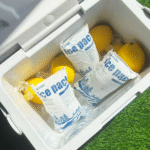
There is no universally best position for الثلج الجاف في مبرد. قمة, bottom and distributed arrangements create different temperature patterns. Choose placement using the product limits, a dry-ice-compatible container and monitored testing of the complete load—not a rule that cold air falls.
Confirm the container and product are suitable
Use dry ice only where the container manufacturer permits it. Confirm the liner, إنهاء, separators and payload packaging are compatible with the intended exposure. A drain opening is not automatically an approved gas-release design.
Dry ice can overcool freeze-sensitive goods. Do not assume a layer of cardboard makes it suitable for chilled medicines, beverages or other products that must not freeze. Define both the upper and lower product temperature limits before selecting a layout.
Compare the layouts as test candidates
| مُرَشَّح | What to examine |
|---|---|
| Above the payload | Local overcooling near the upper product layer, clearance at closure and movement during handling. |
| Below the payload | Cold spots near the base, load-bearing separators and warming in distant product locations. |
| Multiple positions | Whether coverage improves without creating extra cold-contact zones or obstructing gas release. |
Conduction through contacting components, spaces between items and changing exposure all affect the result. The direction of air movement alone cannot establish which layout keeps every product location within range.
Run a useful placement comparison
- Keep the container model, حمولة, dry-ice form and starting mass constant between candidate layouts.
- Use the same conditioning procedure and representative ambient exposure.
- Place sensors at justified warm and cold locations inside the product space.
- Include the intended shipping duration and credible receiving delays.
- Record temperature traces, residual dry-ice mass and any movement or damage.
- Accept a layout only when the defined product limits are met throughout the exposure.
If a top arrangement succeeds in one small load, do not extend the result to a taller or lighter load without assessment. Changes in dimensions, mass and empty space can change the temperature pattern.
Preserve the tested layout in daily packing
Create a packing drawing that shows dry-ice locations, separator material and thickness, product orientation and allowable load variations. Check that routine handling does not shift the dry ice or crush the separator. The drawing should also identify the closure and gas-release features that operators must preserve.
أدوات اتخاذ القرار مفيدة
تحقق من التفاصيل قبل اختيار التغليف
يمكن أن تساعدك هذه الأدوات السريعة في مقارنة مخاطر المسار, احتياجات التحجيم, خيارات المبرد, وتفاصيل التعبئة والتغليف قبل أن تطلب عرض أسعار.
حاسبة علبة الثلج
تقدير كمية عبوات الثلج الهلامي للشحنات المبردة والتخطيط العملي للمسار.
تقدير عبوات الثلجمرجع المواد العازلة
قارن بين خيارات المواد العازلة لاحتياجات التعبئة والتغليف المختلفة لسلسلة التبريد.
قارن الموادحاسبة الثلج الجاف
تقدير احتياجات الثلج الجاف للشحنات المجمدة أو شديدة البرودة قبل التعبئة.
تقدير الثلج الجافFor US aircraft or water transport, gas-release packaging requirements are addressed in 49 CFR 173.217: ثاني أكسيد الكربون, صلب. Obtain the carrier’s applicable acceptance requirements; a successful thermal test does not approve the shipment.
يطلق الثلج الجاف ثاني أكسيد الكربون; enclosed spaces can become hazardous. يرى CDC: dry ice exposure and ventilation.
الأسئلة المتداولة
Is bottom placement always better for longer trips?
لا. Duration performance must be demonstrated for the actual loading arrangement and exposure.
How much dry ice should I add?
Determine quantity from appropriate measurements and testing. There is no universal daily amount for every cooler.
Can I add regular ice after testing?
That changes the configuration, introduces meltwater and requires a fresh compatibility and performance assessment.
Plan quantity and placement together
Read the dry ice quantity calculation guide when defining trial mass. Keep the accepted mass and accepted layout together in one packing instruction.