Pharmaceutical packaging for المنتجات الحساسة لدرجة الحرارة should begin with the product's approved condition and known sensitivities, then convert those requirements into physical protection, operating controls and reviewable evidence. Temperature range alone is not enough. A product may also be freeze-sensitive, حساسة للوقت, حساسة للضوء, قابل للكسر, orientation-dependent or vulnerable to moisture and contamination.
The packaging team does not decide whether a drug remains acceptable after an excursion. That decision belongs to the product owner and responsible quality process, using approved information and relevant stability knowledge. Packaging should create a defined distribution environment and provide the evidence needed for that decision.
Establish the approved requirement
Before choosing a shipper, coolant or logger, collect the sources that govern the product:
• Approved label or product information. • Relevant stability and excursion-assessment information available to the quality team. • Market-specific storage and distribution requirements. • Internal quality procedures and customer requirements. • Primary-container constraints, such as orientation, light protection or direct-contact restrictions.
في الولايات المتحدة, 21 CFR 211.142 requires appropriate conditions of temperature, humidity and light so that finished-drug quality is not affected, بينما 21 CFR 211.150 requires written distribution procedures and lot traceability for recall. EU Good Distribution Practice similarly requires the supplying wholesale distributor to maintain defined conditions during transport and demonstrate that quality and integrity were not compromised. These provisions establish responsibilities; they do not assign the same temperature range or packaging design to every product.
Build a product risk profile
| مخاطر المنتج | Questions to answer | Packaging or process response to evaluate |
|---|---|---|
| التعرض للحرارة | What upper limit and exposure duration matter? Where can high ambient temperatures occur? | العزل, قدرة المبرد, ملف تعريف الطريق, dwell control and receiving window |
| Freeze or overcooling | Is the product damaged by freezing or local cold spots? Can coolant touch the payload? | المبرد المكيف, نقطة المرحلة, الانفصال, payload spacing and cold-risk sensors |
| حساسية الوقت | How long can the shipment remain outside controlled storage? What delay margin is required? | Closure-to-opening duration, خطة الطوارئ, dispatch timing and delivery confirmation |
| Light sensitivity | Does the primary package provide enough protection throughout handling? | Opaque secondary packaging, controlled opening and receiving instructions |
| الضرر الميكانيكي | Are vials, المحاقن, pens or devices vulnerable to shock, vibration or compression? | إدراجات, المقسمات, التحكم في الاتجاه, outer-carton strength and distribution testing |
| Moisture or contamination | Could condensation, leakage or surface contamination affect labels or packaging? | الحواجز, طبقات ماصة, sealed secondary containment where required, cleaning and drying controls |
| Security and traceability | What evidence must follow the shipment and lot? | Tamper controls, تسميات, سجلات الشحن, handoff documentation and exception reporting |
The response column contains options to evaluate, not universal prescriptions. The final configuration must reflect the actual product, التعبئة والتغليف الأولية, route and applicable rules.
Translate the risk profile into a complete packout
A passive pharmaceutical packout normally combines several functions:
- Outer protection resists normal handling and carries shipment labels.
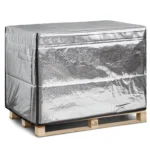
- Insulation slows heat transfer between the payload zone and the ambient environment.
- Temperature-stabilizing medium absorbs or releases heat for a finite period.
- Separation and support control coolant contact, payload position and mechanical movement.
- Monitoring records selected conditions but does not itself protect the product.
- Operating instructions control conditioning, تحميل, إنهاء, إرسال, receipt and data review.
WHO model guidance describes active and passive transport systems and treats temperature-monitoring devices as key components of a quality-assured transport system. The packaging bill of materials and the operating process must be documented together. Changing one part can change the thermal response.
Design against both warm and cold failure modes
Warm excursions are visible in many project briefs, but cold risk is often under-specified. المجمدة حزم هلام or cold surfaces placed close to a small payload can create local cold zones. The average air temperature or one centrally placed sensor may miss that risk.
للمنتجات الحساسة للتجميد, the design review should consider coolant phase and conditioning, separation distance, كتلة الحمولة, sensor positions and winter exposure. A packout may need different seasonal configurations or a different temperature-stabilizing medium. Any seasonal change must be controlled through separate part lists and clear operator instructions.
Treat route duration as an operating window
The relevant duration starts when the completed packout is closed and ends when the receiver opens it or transfers the payload into approved storage. Carrier transit time alone can omit packing queues, مجموعة, التدريج, جمارك, يحمل المستودع, failed delivery attempts and receiver delays.
The WHO transport route profiling guidance explains how critical control points and ambient data can support packaging decisions. A route profile should identify where the shipment is exposed, how long exposure can last and which contingencies are realistic. When a standard profile is used, document why it represents the intended operation.
Define monitoring before the test
A data logger records conditions at its sensor location. It does not prove that every unit in the payload experienced the same temperature, and it does not cool the shipment. Sensor placement should be chosen to detect plausible warm and cold risk based on the packout geometry and qualification plan.
Define the following before testing or routine shipment:
أدوات اتخاذ القرار مفيدة
تحقق من التفاصيل قبل اختيار التغليف
يمكن أن تساعدك هذه الأدوات السريعة في مقارنة مخاطر المسار, احتياجات التحجيم, خيارات المبرد, وتفاصيل التعبئة والتغليف قبل أن تطلب عرض أسعار.
أداة تقييم مخاطر المسار
قم بمراجعة ظروف المسار قبل اختيار التغليف لمتطلبات التشغيل الحقيقية.
فحص مخاطر المساربطانة الصندوق & تحجيم غطاء البليت
تحقق من منطق تحديد حجم بطانة الصندوق وغطاء منصة التحميل لمشاريع التغليف المعزولة.
تقدير الحجمأداة اختيار العبوة
قارن بين خيارات التغليف المعزولة حسب المنتج, طريق, ودرجة الحرارة اللازمة.
البحث عن التعبئة والتغليف• Logger type, calibration status and recording interval. • Sensor location and attachment method. • Start and stop procedure. • Alarm settings, إذا تم استخدامه. • Person responsible for downloading and reviewing data. • Acceptance criteria and escalation path. • Record retention and linkage to the shipment or lot.
The monitoring plan should fit the decision it supports. A receiver cannot act on a logger if the data-access process, المنطقة الزمنية, alarm interpretation or deviation owner is unclear.
Qualify the configuration and the operating method
Qualification should describe the user requirement, the exact packout, the tested payload range, the external profile, the sensors and the acceptance criteria. It should also show how the routine process reproduces the tested setup.
A useful protocol answers:
• Which product condition and risk is the test designed to protect? • Which minimum and maximum loads are within scope? • Which hot and cold profiles are represented? • How are coolants and payloads conditioned? • Where are sensors placed, ولماذا? • What constitutes a pass, deviation or invalid run? • Which changes require documented review or retesting?
معيار ISTA 20 and Test Standard 7E can provide a structured process and thermal parcel profiles for حاويات شحن معزولة. They should be selected because they fit the distribution problem, not because a standard name alone guarantees product acceptance.
Make the receiving process part of the design
The shipment is not controlled until the receiver knows what to do. Receiving instructions should cover inspection of the outer package and closure, transfer to approved storage, logger stop and data access, visible damage or leakage, missing labels and the escalation path for temperature or handling deviations.
An excursion should trigger the approved quality process, not an automatic release or rejection based only on the packaging supplier's opinion. The assessment may need the time-temperature record, معلومات استقرار المنتج, route history and condition of the shipment. Define who has authority to decide and how the result is documented.
Control changes across procurement and operations
Review changes to insulation, صياغة المبرد, كمية المبرد, مورد المكونات, أبعاد, فواصل, حمولة, تسلسل الحزمة, موقف المسجل, طريق, season or carrier handling. Procurement terms should require notification of relevant supplier changes, and internal procedures should prevent informal substitutions during packing.
Prepare a product and lane brief before requesting packaging
Send suppliers a controlled brief containing the product limits, الحساسيات, حمولة, التعبئة والتغليف الأولية, طريق, مدة, التعرضات الموسمية, خطة المراقبة, معايير القبول ومتطلبات التوثيق. Ask for a defined configuration and test boundary in return. That exchange is more useful than requesting a generic "pharma box" or treating a nominal temperature label as a complete shipping specification.
الأسئلة المتداولة
Who decides whether a pharmaceutical product is acceptable after a temperature excursion?
The product owner and responsible quality process make that decision using approved product information, relevant stability knowledge, the time-temperature record and other shipment evidence. A packaging supplier should not make the final disposition decision.
Where should a temperature logger be placed in the packout?
Placement should be justified by the packout geometry and qualification plan so the monitoring point can detect plausible warm or cold risk. A single central location is not automatically representative of every unit in the payload.
Does shipment monitoring replace packaging qualification?
لا. Monitoring records conditions at selected locations during a shipment. Qualification evaluates whether a defined packaging configuration and operating method can meet predetermined criteria under specified conditions.
References and further reading
• 21 CFR 211.142 Warehousing procedures • 21 CFR 211.150 Distribution procedures • EU Guidelines on Good Distribution Practice • WHO model guidance for storage and transport of time and temperature sensitive pharmaceutical products • WHO transport route profiling guidance • ISTA Standard 20 and Standard 7E information