


ثلج جاف depletion
قد يفقد مسار يبدو قصيراً الثلج الجاف بسرعة في الطقس الحار أو أثناء النقل الجوي أو مع انتظار طويل عند الاستلام.
ناقلات العلاج الجيني often move in frozen, مجمد فائق البرودة, or عميق البرودة lanes. The right setup depends on the ملصقed range and قارورة format: a ثلج جاف shipper may be suitable for one lane, while another route needs a موثق dry shipper.
Vector shipments need temperature control and physical control at the same time. The route should prevent ذوبان, إعادة التجميد, قارورة movement, ثلج جاف contact damage, and paperwork problems.
قد يفقد مسار يبدو قصيراً الثلج الجاف بسرعة في الطقس الحار أو أثناء النقل الجوي أو مع انتظار طويل عند الاستلام.
Repeated door-open checks or slow التسليم can warm قوارير enough to create a route exception.
Loose racks, direct ثلج جاف contact, and frost-wet paperwork can cause receiving problems even when ثلج جاف remains.
| حالة المسار | هدف درجة الحرارة | إعداد التغليف | تخطيط وسيط التبريد أو dry shipper | فحص الاستلام |
|---|---|---|---|---|
| ثلج جاف route, 0-24 ح | Use the product-approved frozen or فائق الانخفاض range and avoid ذوبان during إعداد التغليف. | Vented ثلج جاف shipper, قارورة rack support, ثلج جاف barrier, absorbent or secondary containment, and protected document sleeve. | للطرود الصغيرة, initial tests often start around 3-7 kg ثلج جاف, then adjust by lane temperature, الحمولة mass, وقواعد الناقل. | مسجل بيانات curve, remaining ثلج جاف, قارورة position, no wet مستندات, and immediate مجمد transfer. |
| ثلج جاف route, 24-48 h or hot season | Maintain the frozen range through pickup, تحويل, خطر عطلة نهاية الأسبوع, وتأخير الاستلام. | Higher-capacity shipper, top and side ثلج جاف placement with separation, مراجعة مخاطر الطريق, and receiver appointment. | Many small-to-medium trials begin around 8-15 kg ثلج جاف. Use the ثلج جاف calculator, then validate the real shipper and lane. | ثلج جاف remaining, no ذوبان evidence, rack condition, outer كرتون integrity, and receiving timestamp. |
| عميق البرودة or product-specific route | Use a موثق dry shipper when the product ملصق or SOP requires LN2 conditions. | شاحن جاف مشحون مسبقًا, قارورة كاسيت or حاوية support, سلسلة الحيازة records, ختم العبث, and الاتجاه control. | Plan by dry shipper hold-time reserve, not ثلج جاف mass. Do not substitute ثلج جاف for a عميق البرودة route unless the product owner approves. | dry shipper status, حيازة records, الاتجاه, التسليم notes, ونقل التخزين. |
استخدم هذه القيم كنقاط بداية لأخذ العينات والاقتباس. المبرد النهائي, بي سي إم, ثلج جاف, العزل, الشاحن الجاف, مسجل بيانات, and handling choices must be موثق with the real الحمولة, خط, عملية الناقل, موسم, وإجراءات الاستلام.
Choose ثلج جاف, فائق الانخفاض, or dry shipper logic from the product ملصق and SOP before choosing a box.
Use rack support and barriers so قوارير do not press directly into ثلج جاف blocks or loose pellets.
Put مستندات in a dry sleeve and away from the ثلج جاف zone so receiving can read ملصقs and release paperwork.
العلاج الجيني lanes should arrive to an assigned مجمد, trained receiver, and documented transfer process.
هذه هي المشاكل المرئية والتشغيلية التي يجب على المحضر المرسل التقليل منها قبل وصول الشحنة إلى المستلم.
استخدم منحنى الاختبار كمقارنة عملية, then validate with the actual الحمولة, الشاحن, تكوين الشاحن المبرد أو الجاف, مدة الممر, ملف تعريف المحيط, وعملية الاستلام.
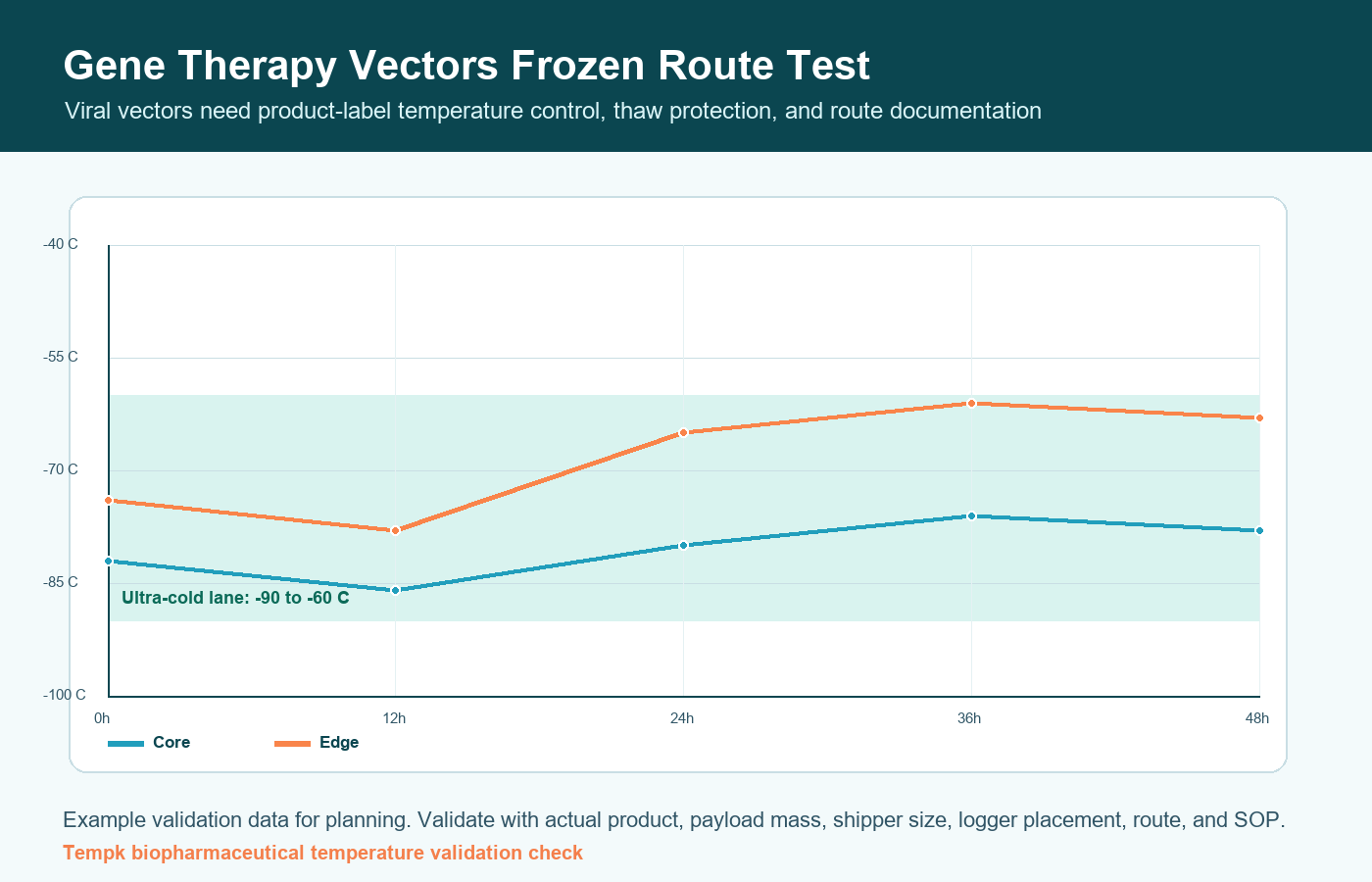
Use these pages to compare nearby الأدوية البيولوجيةceutical routes, خيارات المبرد, خيارات العزل, والأسئلة المتعلقة بمخاطر الطريق قبل أخذ العينات.
ناقلات العلاج الجيني may require deep frozen or عميق البرودة transport, اعتمادا على صياغة. The إعداد التغليف should be selected from the product stability requirement, not from general pharmaceutical practice.
المخاطر الرئيسية هي نفاد الثلج الجاف وكسر القوارير والذوبان أثناء تأخير الجمارك وتعطل المسجل وفقدان وثائق الحيازة.
Use قارورة racks, الاحتواء الثانوي, and a الحمولة zone that keeps samples stable during handling. Documentation should stay accessible without opening the cold zone.
Use ثلج جاف or عميق البرودة equipment according to the موثق lane. معيار 2 ل 8 C packaging is not suitable for deep frozen ناقل shipments.
Check ثلج جاف margin, الحمولة temperature, قارورة integrity, الجمارك تسكن, and سلسلة الحيازة records before approving the lane.
Custom إعداد التغليف support
لأحجام الكرتون الثابتة, الحمولة limits, متطلبات العلامة التجارية, الممرات الموسمية, أو أهداف التحقق من الصحة, Tempk can adapt this solution into a custom cold-chain إعداد التغليف.
Share the ناقل type, ملصقed storage range, قارورة or rack format, مدة الطريق, الحالة المحيطة, ثلج جاف allowance, carrier steps, and receiving مجمد plan. Tempk can help compare ثلج جاف mass, هيكل الشاحن, فواصل, وفحوصات التحقق من الصحة.
Request a إعداد التغليف review