


Cold face freeze risk
يمكن لعبوات الجل المجمدة أن تخلق نقطة باردة محلية حتى عندما يبقى المسجل المركزي ضمن النطاق المتوقع.
أجسام مضادة وحيدة النسيلة are often shipped as refrigerated أدوية بيولوجية, where the main packaging problem is not simply staying cold. The إعداد التغليف has to prevent heat exposure, freezing at the coolant face, كرتون crush, التكثيف, and vibration-related stress during التسليم.
The product ملصق and sponsor SOP decide the final range. For packaging planning, the common risks below are the ones to remove before التحقق من المسار.
يمكن لعبوات الجل المجمدة أن تخلق نقطة باردة محلية حتى عندما يبقى المسجل المركزي ضمن النطاق المتوقع.
يلتقط, aircraft transfer, مسكن المستودع, and receiving delay often create the warmest point near the top or outer wall.
رُطُوبَة, tight dividers, or heavy coolant can damage secondary كرتونs, ملصقs, and serialized paperwork.
| حالة المسار | هدف درجة الحرارة | إعداد التغليف | تخطيط وسيط التبريد أو dry shipper | فحص الاستلام |
|---|---|---|---|---|
| Controlled courier or clinic delivery, 0-8 ح | يحافظ على 2-8 C planning while avoiding any freeze contact. | Pre-conditioned EPP or insulated كرتون shipper, الحمولة sleeve, حاجز الرطوبة, and one مسجل بيانات near الحمولة. | ل 3-8 L الشاحن, محاكمة 0.8-1.5 كجم مشروط 2-8 C PCM or refrigerated عبوات جل تبريد behind a divider. | No cold marks, ملصق dry, كرتون intact, سجل درجة الحرارة, and التسليم time. |
| Parcel or specialty courier, 8-24 ح | Hold refrigerated range through pickup, الفرز, وتأخير الاستلام. | عزل أعلى, top and side buffer pads, separated PCM layer, two مسجل بيانات positions for warm edge and cold face. | Start small-lane trials around 1.5-3.5 كجم 2-8 سي بي سي ام. Increase coolant only after cold-spot review. | حافة دافئة, وجه بارد, كرتون crush, التكثيف, وتأخير المتلقي. |
| Hot season or international route, 24-48 ح | Prevent heat exposure without creating freeze risk during preconditioning or flight transfer. | Validated shipper, seasonal lane profile, الحمولة spacer, absorbent or moisture-control layer, and receiver-ready التسليم plan. | Longer lanes may need 3-6 kg PCM in a larger shipper. Use route testing before live commercial shipments. | Full curve review, حالة المبرد المتبقية, no wet paperwork, وتوقيع المتلقي. |
استخدم هذه القيم كنقاط بداية لأخذ العينات والاقتباس. المبرد النهائي, بي سي إم, ثلج جاف, العزل, الشاحن الجاف, مسجل بيانات, and handling choices must be موثق with the real الحمولة, خط, عملية الناقل, موسم, وإجراءات الاستلام.
Load the جسم مضاد كرتونs into a stable إعداد التغليف. Do not use the shipper to cool a warm الحمولة.
Keep PCM or عبوات جل تبريد behind foam, المموج, or molded spacing so كرتونs cannot touch a frozen or over-cold surface.
Use dividers that hold the كرتون without compression and keep paperwork away from condensation zones.
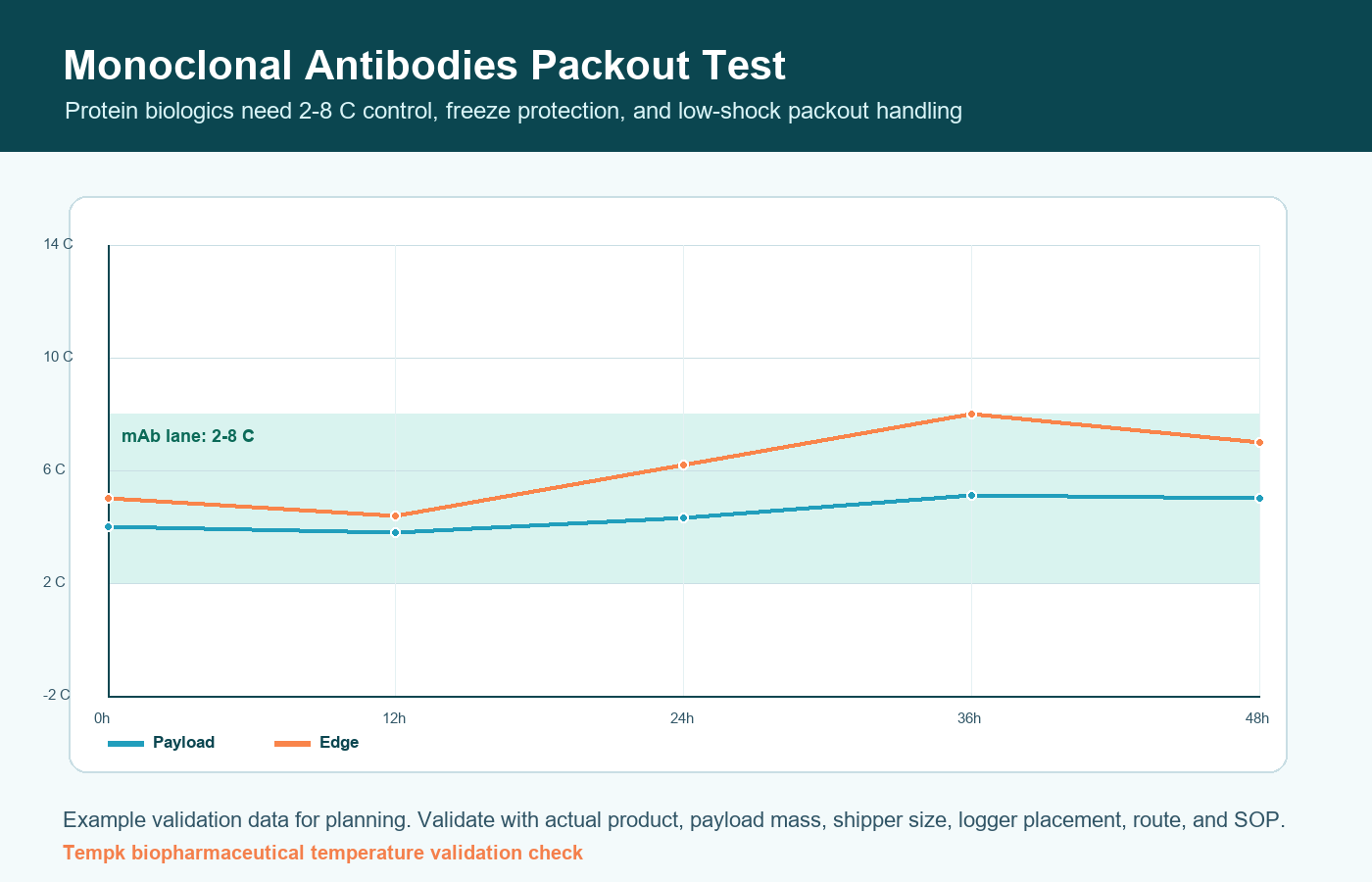
During testing, place sensors at the likely warm edge and the coolant-side risk point, ليس فقط في المركز.
هذه هي المشاكل المرئية والتشغيلية التي يجب على المحضر المرسل التقليل منها قبل وصول الشحنة إلى المستلم.
استخدم منحنى الاختبار كمقارنة عملية, then validate with the actual الحمولة, الشاحن, تكوين الشاحن المبرد أو الجاف, مدة الممر, ملف تعريف المحيط, وعملية الاستلام.
Use these pages to compare nearby الأدوية البيولوجيةceutical routes, خيارات المبرد, خيارات العزل, والأسئلة المتعلقة بمخاطر الطريق قبل أخذ العينات.
أجسام مضادة وحيدة النسيلة are commonly refrigerated أدوية بيولوجية where freeze exposure and vibration can threaten product quality. The packaging should hold temperature and protect قوارير or prefilled units.
تشمل المخاطر الرئيسية تلامس التجمد وكسر القوارير وسحق الكرتون وسوء وضع مسجل الحرارة وتأخر الاستلام في المستشفى.
Use a qualified الحمولة cavity with قارورة dividers or كرتون support. Keep coolant behind spacers and add cushioning where the lane has high handling intensity.
يستخدم 2 ل 8 C PCM or conditioned عبوات جل تبريد for موثق refrigerated lanes. Avoid ثلج جاف unless the product is ملصقed for frozen transport.
Check مسجل بيانات data, قارورة condition, كرتون integrity, وتلقي الوقت. Include a vibration-sensitive lane if air express handling is expected.
أجسام مضادة وحيدة النسيلة need stable refrigerated transport and protection from freezing. The إعداد التغليف should hold قوارير or كرتونs securely so vibration and impact do not become a hidden risk.
يستخدم 2 ل 8 C PCM or conditioned عبوات جل تبريد behind spacers. Add قارورة dividers, a protected الحمولة cavity, and a مسجل بيانات placed with the medicine rather than beside the coolant.
Tempk validation should include قارورة count, كرتون size, مدة الطريق, air express handling, وتأخير الاستلام. مراجعة الحد الأدنى لدرجة الحرارة, vibration-sensitive damage, كرتون integrity, and مسجل بيانات data.
Custom إعداد التغليف support
لأحجام الكرتون الثابتة, الحمولة limits, متطلبات العلامة التجارية, الممرات الموسمية, أو أهداف التحقق من الصحة, Tempk can adapt this solution into a custom cold-chain إعداد التغليف.
Share the جسم مضاد presentation, كرتون count, النطاق المستهدف, حجم الشاحن, مدة الطريق, ملف تعريف المحيط, التسليم points, and مسجل بيانات requirement. Tempk can help compare PCM mass, العزل, divider structure, وتخطيط التحقق من الصحة.
Request a إعداد التغليف review