


Freeze contact at the وسيط تبريد face
يمكن لعبوات الجل المجمدة أو قوالب الثلج أن تخلق نقطة باردة لا تظهر عند قراءة مسجل في المركز فقط.
تحتاج شحنات خلايا الدم الحمراء إلى تحكم مبرد دون تجميد المكون أو ضغط الأكياس ضد عملية التبريد الصلبة. The إعداد التغليف should protect the component, التسمية, مجموعة المستندات, وتسجيل درجات الحرارة في نفس الوقت.
ينبغي الحكم على شحنات منتجات الدم من خلال تاريخ درجة الحرارة وحالة الاستلام. التفاصيل أدناه هي إرشادات تخطيط التعبئة والتغليف; يجب أن تتبع المعالجة النهائية إجراءات منشأتك والمتطلبات المحلية.
يمكن لعبوات الجل المجمدة أو قوالب الثلج أن تخلق نقطة باردة لا تظهر عند قراءة مسجل في المركز فقط.
نقل الباب مفتوحا, وقت انتظار البريد السريع, وتأخير الاستلام يمكن أن يرفع الحمولة الخارجية بشكل أسرع من المتوقع.
إدراجات ضيقة, heavy وسيط تبريد, أو قد يؤدي التكثيف إلى إتلاف الأكياس, ملصقات, والأوراق اللازمة عند الاستلام.
| حالة المسار | هدف درجة الحرارة | إعداد التغليف | تخطيط وسيط التبريد أو الثلج الجاف | فحص الاستلام |
|---|---|---|---|---|
| مركبة تسيطر عليها أو ساعي قصير, 0-6 ح | المحافظة على التعامل مع المبردات وتجنب التجميد; align with the facility procedure for خلايا الدم الحمراء. | Pre-conditioned insulated عبوة شحن طبية, بطانة ماصة, مهد الحقيبة, one مسجل بيانات near الحمولة, وسيط تبريد separated by divider. | Often no مجمد وسيط تبريد against الحمولة. ل 3-8 طرد L, امتحان 0.8-1.5 كجم مشروط 2-8 هلام C أو PCM خلف حاجز. | منحنى درجة الحرارة, لا علامات باردة, التسمية الجافة, دعم الأكياس, and التسليم time. |
| الطرود القياسية أو الطريق الصيفي, 6-24 ح | طريق مبرد مع حماية أقوى من الجانب الدافئ وعدم وجود اتصال مباشر بالجليد. | EPP or كرتون معزول shipper, مقسم سمكا, احتواء ثانوي ماص, two مسجلات بيانات for warm and cold positions. | ابدأ التجارب حولك 1.5-3.5 كجم مشروط 2-8 جل C أو PCM للطرود الصغيرة; زيادة فقط بعد مراجعة البقعة الباردة. | حافة دافئة, وجه بارد, التكثيف, سهولة قراءة التسمية, وتأخير الاستلام. |
| طريق الشتاء البارد أو النقل الجوي | منع التجمد من التعرض للمحيط مع الاستمرار في التحكم في المبرد. | شاحن عالي العزل, وسيط تبريد reduced or buffered, تخطيط الاتصال غير المباشر, الحمولة wrapped in support sleeve. | استخدم PCM المكيف بدلاً من هلام التجميد حيث تكون مخاطر البرودة مرتفعة. اختبر أدنى درجة حرارة محيطة متوقعة قبل الشحن المباشر. | درجة الحرارة الدنيا, موقع البقعة الباردة, مرونة الحقيبة, جفاف الكرتون الخارجي, والساعي يسكن الوقت. |
استخدم هذه النطاقات كنقطة بداية لأخذ العينات والاقتباس. Final وسيط تبريد, بي سي إم, ثلج جاف, العزل, ويجب التحقق من صحة خيارات المراقبة باستخدام الحمولة الحقيقية, حجم الشاحن, مدة الطريق, عملية الناقل, موسم, وإجراءات الاستلام.
The component should enter a stable refrigerated إعداد التغليف. لا تعتمد على الصندوق لسحب الحمولة الدافئة إلى النطاق مرة أخرى.
استخدم مقسمًا, فاصل الرغوة, or الحمولة sleeve so عبوات جل تبريد or PCM cannot touch bags directly.
Place مستندات outside wet zones and use absorbent or leak-resistant containment around the الحمولة.
ضع أحد المستشعرات بالقرب من الحافة الدافئة المحتملة وجهاز استشعار آخر بالقرب من نقطة الخطر في جانب تبريد وسيط أثناء التحقق من الصحة.
هذه هي المشكلات المرئية والتشغيلية التي يجب على المحضر المرسل تقليلها قبل وصول الشحنة إلى المستلم.
استخدم منحنى الاختبار كمقارنة عملية, then validate with the actual الحمولة, الشاحن, وسيط تبريد or ثلج جاف mass, مدة الممر, ملف تعريف المحيط, وعملية الاستلام.
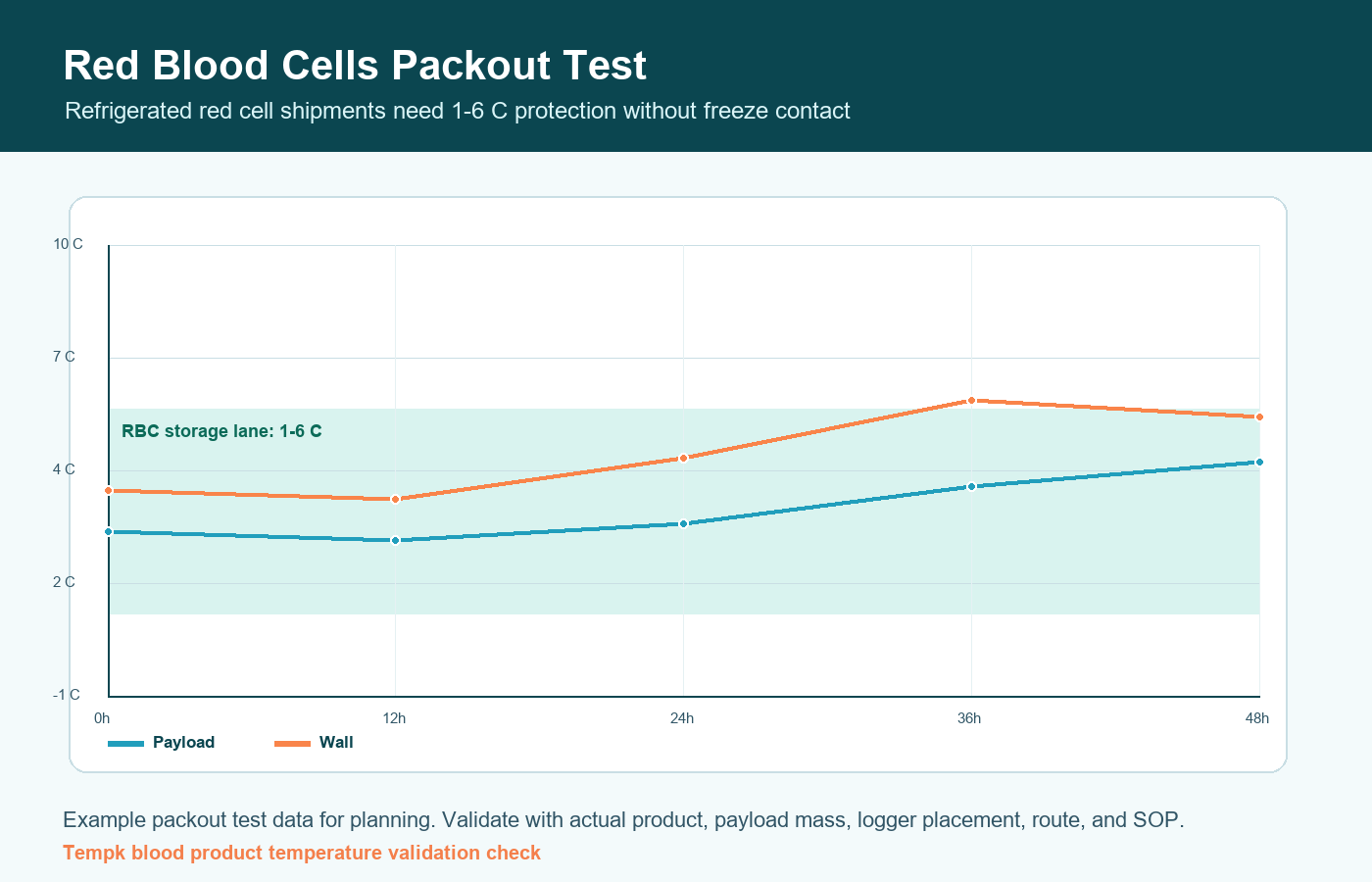
استخدم هذه الصفحات لمقارنة طرق إنتاج دم القريبة, وسيط تبريد choices, خيارات العزل, والأسئلة المتعلقة بمخاطر الطريق قبل أخذ العينات.
تتطلب خلايا الدم الحمراء نقلاً مبرداً متحكماً به مع وضع دقيق لمسجل البيانات. يجب أن يمنع التغليف التسخين والتجمد العرضي أثناء التسليم.
تجميد التعرض, تأخير الاستلام الدافئ, ضغط على الأكياس points, and poor الحمولة separation are the main failure modes.
استخدم عبوة شحن دم مؤهلة مع حجرة حمولة وبطانة ماصة وفصل عن وسيط التبريد. أبقِ الأكياس مسطحة بما يكفي لتجنب ضرر الضغط.
استخدام المؤهلين 1 ل 6 ج- مكونات التغليف. Do not substitute عبوات جل مجمدة قياسية without full validation.
Review minimum and maximum مسجل بيانات data, حالة الحقيبة, التحكم في التسرب, والوقت من التسليم إلى التخزين الخاضع للرقابة.
خلايا الدم الحمراء require a qualified مبرد route, ليس صندوقًا عامًا لأكياس الثلج. The الحمولة area should protect bags from direct وسيط تبريد and include enough absorbent control for leakage risk.
استخدام التحقق من صحتها 1 ل 6 C components and keep the مسجل درجة الحرارة in the الحمولة zone. A مسجل بيانات against the cold wall may overstate freeze risk, while a مسجل بيانات outside the الحمولة may miss warming.
يجب أن تغطي مراجعة Tempk عدد الحقائب, الحمولة mass, مدة الطريق, التسليم time, واستلام سير العمل. التحقق من الحد الأدنى والحد الأقصى لدرجة الحرارة, حالة الحقيبة, تسرب, ونقلها إلى التخزين الخاضع للرقابة.
Custom إعداد التغليف support
لأحجام الكرتون الثابتة, الحمولة limits, متطلبات العلامة التجارية, الممرات الموسمية, أو أهداف التحقق من الصحة, Tempk can adapt this solution into a custom cold-chain إعداد التغليف.
مشاركة نوع المكون, الحمولة count, حجم الحقيبة أو الحاوية, النطاق المستهدف, مدة الطريق, الحالة المحيطة, خطوات البريد السريع, التسليم limit, and فحوصات الاستلام. يمكن أن يساعد Tempk في مقارنة الشاحن, وسيط تبريد layout, إدراج الدعم, موقف المراقبة, وخطة التحقق من الصحة.
Request a إعداد التغليف review