


الصقيل وجودة السطح
يمكن أن تؤثر تقلبات درجات الحرارة على طلاء الجليد, مظهر السطح, وثقة العملاء.
تحتاج منصات المأكولات البحرية المجمدة إلى تحكم مجمد مع حماية جودة السطح. يجب أن يدير مسار النقل حالة التزجيج وتسرب الكراتين وفصل الروائح وكراتين الحواف المكشوفة وأي دعم بالثلج الجاف أثناء النقل.
يجب تقييم مسارات المنصات بحسب درجة الحرارة على مستوى الحمولة وحالة الاستلام. توفر الخطة أدناه نقطة بداية عملية قبل إجراء اختبار المسار باستخدام نمط المنصة الفعلي وعملية المقطورة.
يمكن أن تؤثر تقلبات درجات الحرارة على طلاء الجليد, مظهر السطح, وثقة العملاء.
يمكن أن يؤدي ذوبان الجليد أو تلف الكرتون إلى إنشاء مياه ذائبة, رائحة, وتلقي المخاوف المتعلقة بالصرف الصحي.
مأكولات بحرية منصات may need separation from mixed products, عبوة قابلة للإرجاع, أو كرتون ماص.
| حالة المسار | هدف درجة الحرارة | إعداد حماية الحمولة | تخطيط وسيط التبريد أو الغطاء | فحص الاستلام |
|---|---|---|---|---|
| Frozen مستودع to مقطورة مبردة, 0-4 h تعرض الرصيف | Keep مأكولات بحرية frozen, المخطط لها عادة بالقرب -18 ج, وحماية حواف المنصة المكشوفة. | Pre-frozen منصة, غطاء مجمد أثناء النقل, فصل التسرب/الرائحة إذا كان مختلطًا, الأعلى-الحافة-المركز مسجلات بيانات. | Usually no ثلج جاف if active frozen transport is stable. Use a frozen cover or liner for تعرض الرصيف. | Edge and درجة حرارة المركز, حالة الصقيل, ابتلال الكراتين, رائحة, ووقت النقل. |
| مركز تحويل شحنات or multi-stop frozen route, 4-12 ح | Frozen route with added protection for مأكولات بحرية surface quality and leakage control. | Frozen غطاء منصة or liner, نمط كرتوني مستقر, طبقة التحكم في التسرب عند الحاجة, separated ثلج جاف if validated. | ثلج جاف backup may be tested around 10-25 kg per منصة when allowed, مع التحكم في التهوية والاستقبال. | منحنى مسجلات البيانات, ذوبان الحواف, الصقيل, تسرب, نقل الرائحة, and remaining ثلج جاف. |
| خطر التأخير أو الجزء المجمد السلبي, 12-24 ح | Validated frozen protection with clear ثلج جاف, غطاء, وإجراءات الاستلام. | كفن مجمد عالي الأداء, فصل التسرب/الرائحة, ثلج جاف zones away from carton damage, مراجعة مخاطر الطريق. | عن 25-55 kg ثلج جاف may be needed for some منصةized مأكولات بحرية lanes; حساب والتحقق من صحة المسار. | خريطة درجة الحرارة, حالة الصقيل, ابتلال الكراتين, رائحة, ثبات الحمولة, and ثلج جاف remaining. |
استخدم هذه النطاقات لأخذ العينات والاقتباس. Final ثلج جاف, بي سي إم, عبوة جل, غطاء, أو يجب تأكيد اختيارات الخطوط الملاحية المنتظمة باستخدام كتلة المنصة, نمط الكرتون, مدة الطريق, تهوية, قواعد الناقل, التعرض المحيطي, واستلام المناولة.
لا تجمع بين المأكولات البحرية والكرتون الممتص للرائحة إلا إذا تم فحص البطانة أو خطة الفصل.
استخدم الغطاء, بطانة, and خريطة مسجلات البيانات to protect the top and outer edge where warming starts first.
استخدم البطانات أو طبقات الفصل عندما يؤدي تلف المياه الذائبة أو الكرتون إلى إبطاء استلام الأحمال المجاورة أو تلويثها.
If ثلج جاف is required, كتلة الخطة, الموضع, تهوية, وضع العلامات, واستلام المناولة قبل اختبار المسار.
هذه هي المشكلات المرئية والتشغيلية التي يجب على خطة المنصة تقليلها قبل وصول الحمل إلى جهاز الاستقبال.
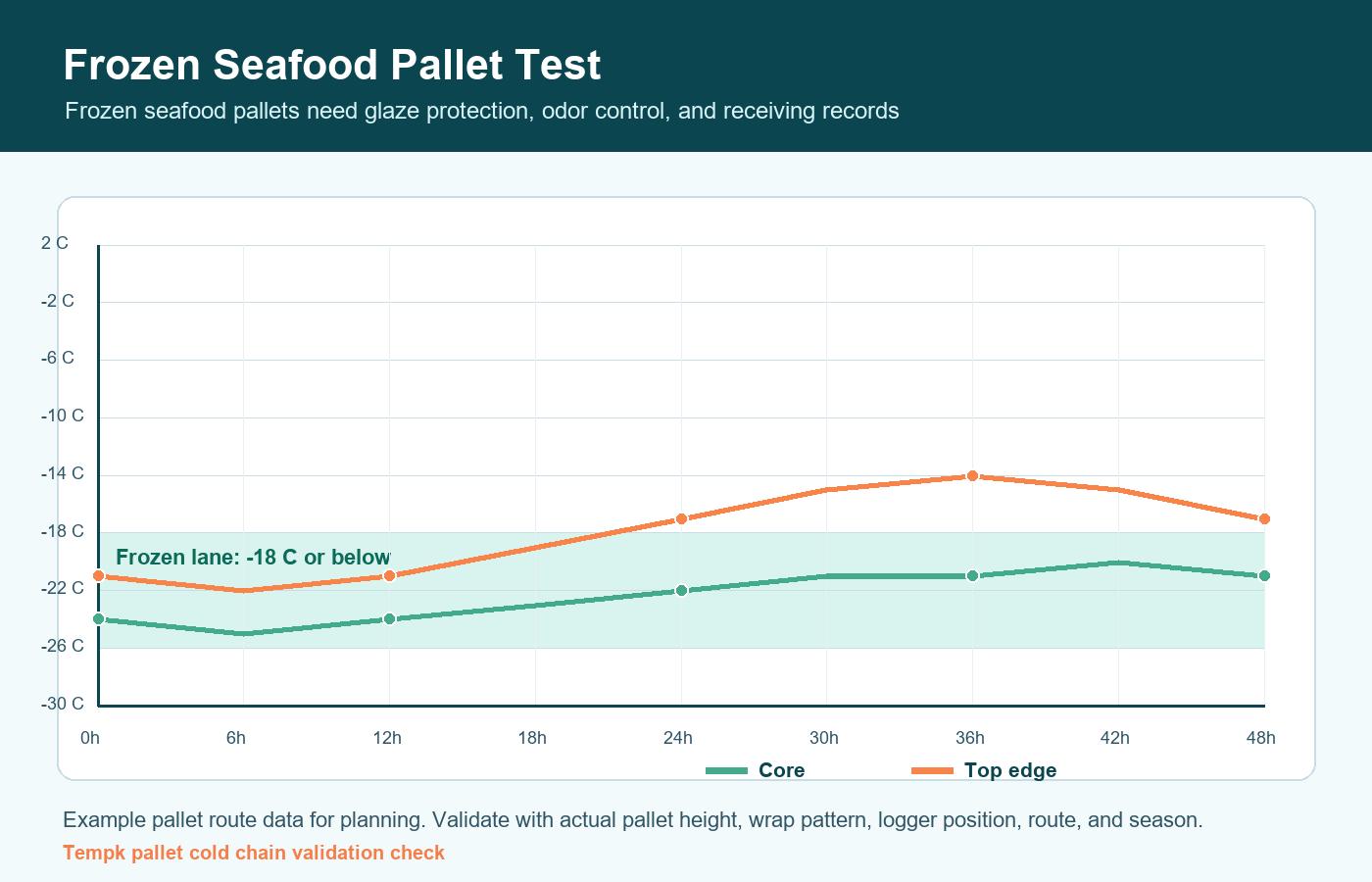
استخدم منحنى الاختبار كمقارنة عملية, ثم قم بالتحقق من صحة الكتلة الفعلية للمنصة, غطاء, بطانة, دعم المبرد, عملية المقطورة, والموسم. For منصات, the حافة مكشوفة and top layer often matter as much as the core.
Use these pages to compare nearby مسارات المنصات, ثلج جاف planning, اختيار العزل, وتوجيه المخاطر قبل أخذ العينات.
منصات مأكولات بحرية مجمدة need frozen temperature plus moisture and odor control. Glazed مأكولات بحرية, كرتون مع بطانات, ويمكن أن تتصرف أحمال الأنواع المختلطة بشكل مختلف في نفس المقطورة.
الأعطال النموذجية هي كرتون الزاوية المذابة, فقدان الصقيل, مأكولات بحرية odor in the trailer, كراتين مبللة, وصناديق سحقت من التراص غير المستوي.
استخدم عبوات داخلية مقاومة للتسرب, كرتون قوي, منصة واقيات الزوايا, وغطاء علوي يحمي من تكثيف الرصيف دون حبس المياه الذائبة.
يُضاف إليه ثلج جاف أو جل مُجمد فقط بعد التحقق من التهوية, التحكم في الرائحة, وسلامة المعالج. لا تضع سائل التبريد في مكان يمكن أن يؤدي إلى كسر طبقات الكرتون.
فحص الزجاج, رائحة, رطوبة الكرتون, and منصة corner temperatures. مأكولات بحرية منصة checks should include a leakage and odor note.
منصات مأكولات بحرية مجمدة should be validated beyond منصة temperature. Glazed مأكولات بحرية, شرائح معلبة, and shellfish can create moisture and odor concerns when edge cartons partially thaw during انتظار على الرصيف.
استخدم كرتونًا قويًا, واقيات الزوايا, وغطاء علوي يحمي من التكثيف دون حبس المياه الذائبة. Supplemental ثلج جاف or frozen gel must not block تدفق الهواء or damage carton seams.
Tempk should map منصة core, الزوايا المكشوفة, طبقة أعلى, ومواقف جانب الرصيف. يجب عند الاستلام التحقق من حالة التزجيج, رائحة, رطوبة الكرتون, منصة stability, وصلابة المنتج.
Custom تجهيز التغليف support
لأحجام الكرتون الثابتة, حدود الحمولة, متطلبات العلامة التجارية, الممرات الموسمية, أو أهداف التحقق من الصحة, Tempk can adapt this solution into a custom cold-chain تجهيز التغليف.
Share the منصة dimensions, كتلة المنتج, نمط الكرتون, درجة الحرارة المستهدفة, وقت الرصيف, نوع المقطورة, مركز تحويل شحنات steps, الحالة المحيطة, واستلام الشيكات. يمكن لـ Tempk المساعدة في مقارنة الأغطية, بطانات, عبوات جل, بي سي إم, ثلج جاف support, مواضع مسجلات البيانات, وخطوات التحقق.
طلب مراجعة مسار المنصة