


قم بتشغيل تقدير المبرد
استخدم وزن الحمولة, حجم المربع, وقت الطريق, ودرجة الحرارة الموسمية قبل وضع اللمسات الأخيرة على حزمة الجل أو كتلة PCM.
لا يتم التعامل مع المحار مثل شرائح السمك. يجب أن تحافظ العبوة على المحار الحي باردًا ورطبًا, حماية الأصداف والعلامات, تجنب الإصابة بالتجميد, ومنع المحار من الجلوس في المياه الذائبة. أفضل تصميم يعتمد على قواعد المحار, موسم, حجم الطلب, ووقت الناقل.
تعتبر كميات سائل التبريد الموضحة أدناه نطاقات بداية للتخطيط. ينبغي التحقق من صحة الحزمة النهائية مع الحمولة الدقيقة, حجم العزل, ممر الناقل, والموسم.
| حالة الطريق | نية درجة الحرارة | إعداد التعبئة والتغليف Tempk | نطاق تخطيط المبرد | موقف المبرد |
|---|---|---|---|---|
| توصيل المطاعم المحلية, 8-18 ح | بارد ورطب, لا تجمد | كرتونة معزولة أو صندوق EPP, كيس أو صينية المحار, بطانة رطبة, قاعدة ماصة. | 0.5-1.0 عبوات جل مكيفة كجم للطرود الصغيرة, تعديلها حسب حجم الطلب. | المبرد فوق أو بجانب القشرة مع مقسم; تجنب الاتصال المباشر بالقشرة. |
| المحار الحي بين عشية وضحاها, 18-30 ح | 0-4 نطاق التخطيط C ما لم ينص المورد على خلاف ذلك | عزل أقوى, تصميم غير محكم عند الاقتضاء, تخطيط داخلي محمي للعلامة. | 1.0-1.8 عبوات جل مكيفة كجم للطرود الصغيرة والمتوسطة الحجم. | أبقِ المحار بعيدًا عن المياه الذائبة واحمي علامة الحصاد من أضرار الرطوبة. |
| الموسم الحار أو الممر الأطول, 30-48 ح | حارة غير متجمدة تم التحقق منها | عزل أعلى, فحص مخاطر الطريق, انخفاض مساحة الرأس, التقاط الناقل في وقت سابق. | 1.8-3.0 عبوات جل مكيفة كجم, تم تأكيده عن طريق الاختبار الموسمي. | إذا أظهرت القذائف التجمد, تقليل مخاطر الاتصال قبل زيادة كتلة المبرد. |
للحصول على تقدير أولي أكثر إحكاما, استخدم حاسبة علبة الثلج ثم قارن بين عائلات المبردات في سائل التبريد & مرجع PCM.
يمكن لتغييرات التصميم الصغيرة أن تحدد ما إذا كان المتلقي يرى طردًا نظيفًا من المأكولات البحرية المبردة أم رطبًا, مضغوط, منتج مجمد جزئيا.
استخدم المورد'النطاق, وضع العلامات, علامة, وقواعد التهوية قبل اختيار تصميم الشاحن المغلق.
استخدم مادة رطبة آمنة للطعام للرطوبة وقاعدة ماصة منفصلة للمياه الذائبة أو التكثيف.
قم بتعبئة المحار حتى لا يتمكن من سحق الملصقات أو بعضها البعض أثناء مناولة الطرود. أبقِ علامة المحار قابلة للقراءة عند الاستلام.
تحقق من إغلاق القشرة, رائحة, رُطُوبَة, تلف القذيفة, حالة العلامة, وأي علامات تجميد.
استخدم فحوصات الاستلام هذه عند ضبط كمية سائل التبريد, سمك العزل, أو الانفصال الداخلي.
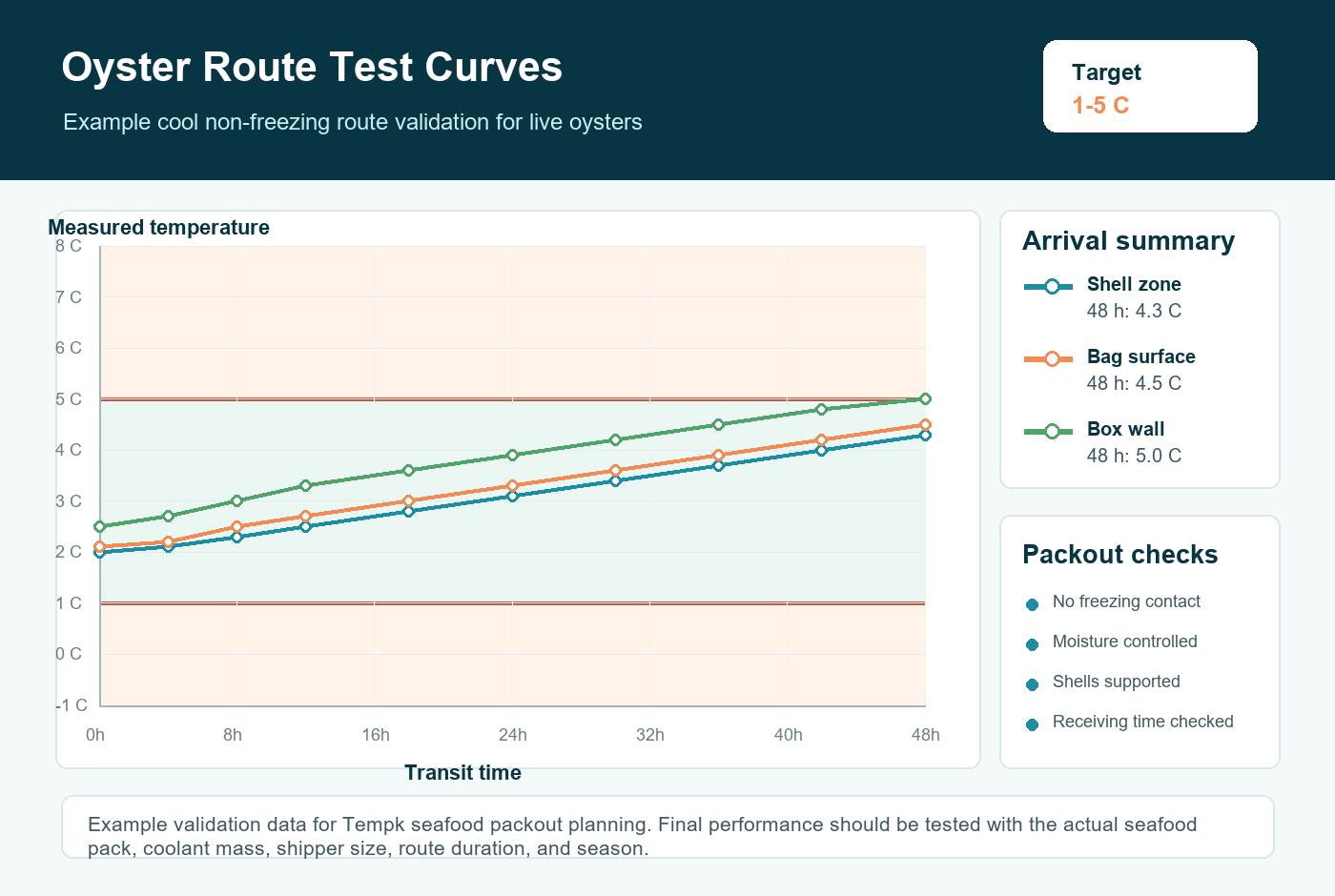
استخدم صفحة المنتج لمنطق التغليف, ثم استخدم الأدوات لتحديد حجم الحزمة التجريبية الأولى قبل اختبار المسار.
استخدم وزن الحمولة, حجم المربع, وقت الطريق, ودرجة الحرارة الموسمية قبل وضع اللمسات الأخيرة على حزمة الجل أو كتلة PCM.
قارن بين عبوات الجل المجمدة, عبوات جل مكيفة, و 0 C PCM بحيث يتم تبريد المنتج دون التعرض لإصابة تجميد مباشرة.
مراجعة وقت المسار, بيك اب يسكن, تأخير الميل الأخير, وعملية الاستقبال قبل الإطلاق.
مشاركة نموذج المأكولات البحرية, وزن الحمولة, حجم المربع, مستوى الخدمة, درجة حرارة المنشأ, موسم الحارة, ونافذة الاستلام. يمكن أن يساعد Tempk في مقارنة العزل, كتلة المبرد, الموضع, وخطوات التحقق.
دعم الحزمة المخصصة
لأحجام الكرتون الثابتة, حدود الحمولة, متطلبات العلامة التجارية, الممرات الموسمية, أو أهداف التحقق من الصحة, يمكن لـ Tempk تكييف هذا الحل في حزمة مخصصة لسلسلة التبريد.