Best Gel Refrigerant Bag Tissue Sample Wholesale Guide for 2026
Gel refrigerant bag tissue sample wholesale is a specialized cold chain topic where packaging safety and temperature control must work together. If you buy these products for pathology workflows, diagnostic logistics, or laboratory transport programs, the right refrigerant bag helps maintain the intended sample condition, supports safer pack-out, and reduces preventable shipping failures. The wrong choice can create confusion, leakage risk, or incorrect temperature management.
This guide will help you answer:
Which gel refrigerant bag tissue sample wholesale format fits refrigerated specimen transport best
When cold packs should be used and when dry ice or another system is more appropriate
What compliance and packaging structure details buyers should verify
How to qualify suppliers and validate pack-outs more effectively
Welche 2026 trends are changing specimen logistics expectations
Why should you think in terms of specimen condition, not cold pack category?
Because tissue sample transport is condition-specific. Some specimens need refrigerated handling. Some require frozen handling. Others may move at room temperature or ambient conditions depending on protocol. A refrigerant bag is only correct when it matches the intended sample state and the packaging method designed for that state.
This is not just a technical detail. Current CDC specimen guidance distinguishes refrigerated, gefroren, room-temperature, and ambient pack-outs clearly. Refrigerated specimens should be conditioned at 2°C to 8°C and packed with refrigerated or frozen cold packs plus insulation. Frozen specimens should be prepared at the required frozen condition and packed with dry ice. WHO guidance for category B biological substances also reinforces triple packaging, absorbent material, Dokumentation, and UN3373 labeling where relevant.
What this means for buyers
You should not approve one generic refrigerant bag for all use cases. Stattdessen, create a condition-based purchasing structure. Refrigerated tissue sample programs should have a validated cold-pack pathway. Frozen programs should have their own dry ice-oriented logic. If ambient or room-temperature samples are also part of the workflow, define those separately too.
What makes a good refrigerant bag for tissue sample transport?
A good refrigerant bag combines thermal fit, Auslaufsicherheit, and pack-out compatibility. The bag should fit around the sealed secondary packaging without crushing it or forcing awkward closure. It should remain leakproof after conditioning, Verpackung, und Transport. It should also be easy for operators to identify, Bühne, and place correctly.
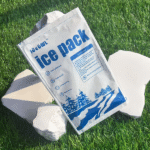
Flexible flat formats are often useful for refrigerated specimen transport because they provide more even contact around the secondary packaging and are less likely to create pressure points. But the exact choice depends on the cooler geometry and the transport duration.
Supplier qualification checklist
Intended use condition clearly stated
Fill weight and dimensional tolerance controlled
Film thickness and seal method documented
Leak testing and QC routine defined
Lot traceability available
Conditioning instructions easy to follow
Validation available in specimen-style pack-out
Why packaging structure matters as much as the refrigerant bag
The refrigerant bag is only one layer in a layered protection system. In compliant specimen transport, primary receptacles, absorbent materials, sekundäre Eindämmung, Isolierung, Beschriftung, Dokumentation, and rigid outers all work together. A well-made cold pack cannot compensate for missing absorbent material, weak secondary packaging, or poor outer protection.
For that reason, the best buyers review the entire specimen transport build. They look at how the refrigerant interacts with the secondary package, how much insulation surrounds the system, how the operator places the pack, and whether the outer closes securely every time.
Pack-out logic that improves performance
Condition the refrigerant correctly before use.
Place primary receptacles and absorbent layers correctly.
Seal the secondary packaging fully.
Position refrigerant around, not against, vulnerable points.
Add insulation and rigid outer packaging.
Apply documentation and labels correctly.
How should you validate a tissue sample refrigerant program?
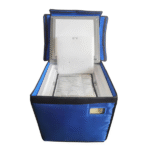
Validate both temperature control and packaging integrity. For refrigerated specimen transport, current CDC guidance explicitly describes placing sealed secondary packaging within an insulated system and surrounding it with refrigerated or frozen cold packs. That means your test should mirror the actual layout. Use representative samples or realistic thermal mass, the actual cooler, the actual refrigerant placement, and the intended trip duration.
If the route is important or variable, use temperature logging during qualification. Logged test results help you see whether the bag is oversized, undersized, or simply poorly placed. They also make future training and troubleshooting much easier.
Validation checklist
Praktischer Fall: A lab network may reduce packing errors simply by pairing one approved flat refrigerant bag with one approved cooler and one photo-based SOP for refrigerated tissue shipments.
Wie sind 2026 trends changing buyer expectations?
In 2026, healthcare and specimen logistics teams are asking for clearer process control. The growth of temperature-sensitive healthcare packaging and the wider use of monitoring tools are pushing buyers toward better evidence, stronger lot discipline, and simpler workflows. Visibility culture from vaccine and biologics logistics is influencing specimen transport too. Even when real-time monitoring is not used for every package, buyers increasingly expect pilot data and stronger validation logic.
Another important trend is operational simplification. Teams want fewer approved pack-outs, schnelleres Training, and lower dependence on individual experience. The best programs are designed so that the correct pack-out is easy for any trained operator to execute.
2026 trends to watch
Condition-specific pack-outs are replacing generic cold-pack purchasing
Temperature logging is becoming more common in qualification work
Lot traceability and documentation are more important in supplier review
SOP clarity is now a competitive advantage in busy lab operations
Right-sizing is being used to improve both handling and efficiency
Häufig gestellte Fragen
Can I use frozen cold packs for refrigerated tissue sample shipping?
Manchmal, depending on the travel profile and the validated packaging design. The required sample condition should always guide the decision.
What is the best format for refrigerated specimen coolers?
Flexible flat refrigerant bags are often useful because they fit around sealed secondary packaging more evenly and cleanly.
What is the most overlooked qualification factor?
The full pack-out structure is often overlooked. Buyers focus on the cold pack and forget the containment layers and operator workflow.
How many approved layouts should I use?
Keep the number small. One validated refrigerated layout and one validated frozen layout are often better than many loosely managed options.
Is unit price the main buying factor?
NEIN. In specimen transport, fitness for the required condition and packaging process matters far more than the lowest unit price.
Zusammenfassung und nächste Schritte
Gel refrigerant bag tissue sample wholesale programs work best when buyers align the refrigerant with the specimen condition, the packaging structure, and the real transport workflow. Focus on leakproof construction, condition-specific qualification, lot traceability, and easy-to-follow SOPs.
If you want a stronger 2026 Programm, separate refrigerated and frozen pathways now, validate each with realistic pack-outs, and reduce option overload for operators.
Über Tempk
Tempk provides temperature-control packaging solutions for applications where thermal stability, saubere Handhabung, and consistent execution matter together. We work on refrigerant design, pack format matching, and workflow-friendly packaging systems that help teams operate with more confidence.
For tissue sample logistics, the best wholesale strategy is a simple, validiert, and condition-specific one.