Cold Chain Express Delivery for Vaccines in 2025?
If you run cold chain express delivery for vaccines, you’re balancing speed with something tougher: temperature integrity you can prove. Most routine vaccine lanes are planned around 2° C - 8 ° C., while some lanes require frozen or ultra-cold handling. A single preventable handoff delay can trigger an excursion, and a single missing record can trigger a quarantine. In 2025, the teams that win are the ones that standardize packouts, reduce dwell time, and make “proof” automatic.
Dieser Artikel wird für Sie antworten
- Wie cold chain express delivery for vaccines should be defined so teams stop guessing
- So stellen Sie ein temperature lanes and match them to packaging and monitoring
- Where excursions really happen (and how to prevent them in the first and last hour)
- A 90-zweites Entscheidungsinstrument to choose the right lane approach
- Ein einfaches SOP checklist drivers and staff will actually follow
- 2025 trends raising expectations for evidence, Kalibrierung, and lane validation
What Does Cold Chain Express Delivery for Vaccines Really Mean?
Direkte Antwort: Cold chain express delivery for vaccines is fast delivery that keeps vaccines inside their labeled temperature range from pickup to receipt, Verwendung validierter Verpackungen, controlled handoffs, and monitoring evidence. Speed reduces time risk, Aber systems reduce temperature risk. Your goal is not “arrive cold.” Your goal is arrive in-range with proof.
Im wirklichen Leben, vaccine delivery behaves like a relay race with a fragile baton. Most failures happen at handoffs, not highways. So your definition must include routing, packout discipline, und was passiert, wenn etwas schief geht.
The “Range–Time–Proof” rule (the simplest definition you can train)
| Promise | What breaks it | What fixes it | Was es für Sie bedeutet |
|---|---|---|---|
| Reichweite (Temperatur) | Wrong packout, poor coolant placement | Lane-specific packout recipe | Fewer quarantines and write-offs |
| Zeit (Verweilkontrolle) | Late pickup, slow receiving | Cutoff rules + staffed windows | Fewer first/last-hour spikes |
| Nachweisen (Beweis) | No logger, missing records | Monitoring plan + storage by shipment ID | Schnellere Release-Entscheidungen, einfachere Audits |
Praktische Tipps, die Sie jetzt anwenden können
- Write one sentence that defines cold chain express delivery for vaccines for your team.
- Treat hubs and transfer points like mini warehouses, not “quick stops.”
- Buy “proof” upfront: definieren how fast you get data nach der Lieferung.
Fall der realen Welt: A clinic network reduced disputes when it required a temperature summary for every cold chain express delivery for vaccines shipment.
What Temperature Lanes Define Cold Chain Express Delivery for Vaccines?
Direkte Antwort: Cold chain express delivery for vaccines works best when you manage shipments by lane categories (gekühlt, gefroren, Ultra-kalte) and label them clearly. Lanes prevent the most common mistake: treating all vaccines like they behave the same.
The biggest hidden risk is that heat and freezing are both damage for many products. That’s why lane labels and “no direct contact” packouts matter as much as insulation.
Temperature lane planning table (use lanes to stop mistakes)
| Spurbeschriftung | Typisches Ziel | Hauptrisiko | Was es für Sie bedeutet |
|---|---|---|---|
| Refrigerated lane | 2° C - 8 ° C. | Accidental freezing at edges | “No-freeze” packout and barriers |
| Gefrorene Spur | Per product needs | Thaw cycles during delays | Stärkere Isolierung + faster handoffs |
| Ultra-cold lane | Very low targets | Umgang mit Komplexität + verweilen | Specialized packout + strict exception plan |
| Light-sensitive handling | Per product | Belichtung | Keep in original packaging when required |
Praktische Tipps, die Sie jetzt anwenden können
- Put the lane on the shipper: “2–8°C,” “Frozen,” “Ultra-cold.”
- Train one phrase: “Freeze can be damage.”
- Wenn Sie gemischte Produkte versenden, split the shipment unless a trained approver signs off.
Fall der realen Welt: A public health team reduced repeat failures after splitting refrigerated and frozen lanes in its cold chain express delivery for vaccines program.
Where Do Most Excursions Happen in Cold Chain Express Delivery for Vaccines?
Direkte Antwort: Most excursion risk in cold chain express delivery for vaccines shows up during Verpackung, Inszenierung, und Empfangen, not during driving. The highest-risk window is often the first hour and last hour of the shipment lifecycle.
If vaccines sit in a warm staging area for “just a few minutes,” those minutes stack up. Add paperwork delays, verpasste Lieferungen, and door-open stops, and you get temperature drift that no one noticed until the data shows it.
The First-Hour Rule (a simple workflow that prevents spikes)
| Schritt | Was Sie kontrollieren | Was es verhindert | Was es für Sie bedeutet |
|---|---|---|---|
| Pre-stage materials | Packaging readiness | Long exposure time | More stable packout performance |
| Bring vaccines out last | Time outside cold storage | Early warming | Larger safe window |
| Schnell packen, Siegel, versenden | Warme Inszenierung | Temperature spikes | Fewer alarms and quarantines |
| Confirm pickup window | Idle waiting | Uncontrolled dwell | Fewer “mystery” excursions |
Praktische Tipps, die Sie jetzt anwenden können
- Stellen Sie ein maximum staging time (and measure it).
- Prepare paperwork vor vaccines enter the packout area.
- If receiving is uncertain, nicht versenden without a staffed window.
Fall der realen Welt: One site reduced excursion flags after enforcing a strict “no staging over X minutes” rule and building a ready-to-pack station.
What Packaging Works Best for Cold Chain Express Delivery for Vaccines?
Direkte Antwort: The best packaging for cold chain express delivery for vaccines is packaging that matches your lane target, Routenrisiko, and “bad-day” time—not average time. Performance matters, Aber repeatability matters more. A great box with inconsistent packout becomes an unreliable system.
Think of packaging as three jobs: isolieren, stabilize, Und schützen. Your packout recipe should be easy enough that a trained person can execute it the same way every time.
Packaging choice guide (simple comparison)
| Verpackungsoption | Am besten für | Hauptrisiko | Was es für Sie bedeutet |
|---|---|---|---|
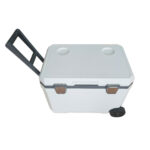
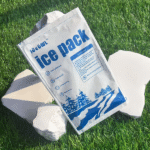
| Isolierter Versender + Gelpackungen | Short refrigerated lanes | Over/under cooling if inconsistent | Works if SOP is strict |
| Isolierter Versender + PCM | 2–8°C “no-freeze” lanes | Wrong conditioning | Stabilere Temperaturen, weniger Gefrierrisiko |
| Dry ice shipper | Frozen/ultra-cold lanes | Sicherheit + Entlüftung + Beschriftung | Starke Kühlung, stricter rules |
| Active container/vehicle | Lang, strict lanes | Kosten + Türdisziplin | Fewer manual steps, higher control |
Coolant placement patterns that reduce risk
| Placement pattern | Am besten für | Risiko | Was es für Sie bedeutet |
|---|---|---|---|
| Spitze + Seiten | Many refrigerated packouts | Cold edges if unprotected | More even cooling with a barrier |
| Sides only | Frostempfindliche Produkte | Warm top layer | Requires verification and discipline |
| Compartmented zones | Gemischte Beladungen (approved only) | Complexity errors | Needs training and packout diagrams |
Praktische Tipps, die Sie jetzt anwenden können
- For refrigerated lanes, uniform stability beats “maximum cold.”
- Add a thin barrier layer so coolant does not touch vials directly when freezing risk exists.
- Standardisieren one packout diagram per lane and post it at the pack station.
Fall der realen Welt: A health system reduced alarms after it banned “custom packing” and used one packout layout per lane.
Ultra-cold lanes: Trockeneis -Grundlagen (keep it safe and predictable)
- Use packaging designed to Entlüftung gas when dry ice is present.
- Train simple PPE rules and “no sealed-tight” habits.
- Choose sensors that actually measure the lane temperatures (avoid blind spots).
Fall der realen Welt: A hospital avoided re-icing chaos by limiting ultra-cold deliveries to staffed windows and enforcing vented packaging rules.
How Should You Monitor Cold Chain Express Delivery for Vaccines?
Direkte Antwort: Monitoring turns cold chain express delivery for vaccines from a promise into evidence. It tells you how high/low, for how long, Und Wo a temperature problem likely happened. Monitoring should be planned by lane risk, not added randomly.
If you can’t monitor everything, don’t guess. Monitor Gassen, then scale coverage based on risk and performance.
Monitoring ladder (choose proof that matches risk)
| Werkzeug | Was es beweist | Beste Verwendung | Was es für Sie bedeutet |
|---|---|---|---|
| Threshold indicator | Pass/fail threshold | Großvolumig, mittleres Risiko | Fast triage |
| Datenlogger | Full temperature curve | Spurvalidierung | Finds where the spike happened |
| Real-time sensor | Live-Benachrichtigungen | Highest risk lanes | Enables intervention |
| Chain-of-custody scans | Handoff history | Geregelte Fahrspuren | Reduziert Streitigkeiten |
A 30-day monitoring plan you can actually run
- Beginnen Sie mit Ihrem highest-risk lanes (seasonal heat/cold, lange Strecken, Multistopp).
- Track two numbers: peak excursion Und Zeit außerhalb des zulässigen Bereichs.
- Review weekly with packout and courier teams.
- Ändern jeweils eine Variable (Kühlmittelmasse, Layout, Inszenierungszeit).
- Expand coverage after you stabilize performance.
Praktische Tipps, die Sie jetzt anwenden können
- Store monitoring results by shipment ID, not email threads.
- Define how fast you can access data (example SLA: innerhalb 24 Std.).
- Put the sensor where failure is most likely, not where it’s easiest.
Fall der realen Welt: One network discovered most spikes happened during “handoff waiting,” then fixed pickup scheduling and reduced alarms within weeks.
How Do You Choose a Courier for Cold Chain Express Delivery for Vaccines?
Direkte Antwort: Choose a courier for cold chain express delivery for vaccines based on lane capability, on-time discipline, handoff behavior, monitoring support, and exception response—not marketing language. A cheap courier that causes quarantines is expensive.
You want a courier that behaves consistently under pressure, especially when something goes wrong.
Courier scorecard (rate 1–5 and compare providers)
| Punktebereich | Weak looks like | Strong looks like | Was es für Sie bedeutet |
|---|---|---|---|
| Lane discipline | Vague “cold shipping” | Defined lane targets on SOPs | Fewer handoff mistakes |
| On-time reliability | Wide windows | Predictable pickup/delivery | Less dwell time |
| Handoff control | Uncontrolled staging | Cutoffs + staffed windows | Fewer first/last-hour spikes |
| Überwachungsunterstützung | Optional or ad hoc | Standard options + Berichterstattung | Schnellere Entscheidungen |
| Exception response | “Case-by-case” | Written escalation protocol | Less chaos during delays |
Praktische Tipps, die Sie jetzt anwenden können
- Pilot the courier on your hardest lane, not your easiest.
- Require a written plan for missed delivery Und late pickup.
- Define who decides “release vs quarantine” when an alarm triggers.
Fall der realen Welt: A vaccination program improved performance after requiring a written delay protocol and measuring handoff waits above a set threshold.
SLA clauses that prevent finger-pointing (keep them simple)
- Lane definitions: the transport range is geschrieben Und sichtbar.
- Datenzugriff: monitoring results available within a defined timeframe.
- Excursion ownership: a named decision owner and escalation path.
- Calibration/maintenance: monitoring devices are maintained on a schedule.
- Delivery rules: no leaving packages unattended or at alternative premises.
Interaktives Entscheidungstool: Which Cold Chain Express Delivery for Vaccines Setup Should You Use?
Use this to pick a practical approach in 90 Sekunden.
Schritt 1: Wählen Sie Ihre Spur aus
- A: Gekühlt (2–8 ° C)
- B: Gefroren
- C: Ultra-kalte / highest sensitivity
Schritt 2: Pick your route profile
- 1: Am selben Tag, direkt
- 2: Am selben Tag, Multistopp
- 3: Next-day or long distance
- 4: Seasonal extremes (hot/cold) or uncertain receiving
Schritt 3: Match to a recommended setup
| Your combo | Verpackung | Überwachung | SOP focus (what you do first) |
|---|---|---|---|
| A + 1 | Standard insulated + no-freeze layout | Spot monitoring | First-Hour Rule + staffed receiving |
| A + 2 | Bessere Isolierung + Türdisziplin | Route sampling | Stop warm staging + limit door-open time |
| B + 3 | High-performance packout | Loggers (Routine) | Cutoffs + exception plan for delays |
| C + 4 | Spezialisiert + dry-ice-safe design | Echtzeit (bevorzugt) | Escalation tree + staffed delivery window |
How Do You Validate Cold Chain Express Delivery for Vaccines Lanes?
Direkte Antwort: Lane validation proves cold chain express delivery for vaccines works in real conditions, not just on a perfect day. You test the route with monitoring, capture dwell times, and lock a lane-specific packout recipe that your team can repeat.
You’re not trying to “pass once.” You’re trying to prove your lane survives normal bad days.
A practical lane validation plan (10 Testsendungen)
Laufen 10 monitored shipments per lane:
- 3 in cooler conditions
- 4 in typical conditions
- 3 in worst-case seasonal conditions (your real pain window)
Schiene:
- Packout-to-pickup time
- Transitzeit
- Delivery-to-storage transfer time
- Temperature curve (or indicator status)
- Root cause notes for any deviation
| Validation check | Was Sie testen | Signal übergeben | Was es für Sie bedeutet |
|---|---|---|---|
| Pickup staging | Warm dwell risk | Stable temps pre-pickup | Better pack station discipline |
| Transit | Vehicle exposure | No out-of-range spikes | Lane is viable |
| Empfang | Desk/doorstep delay | Fast transfer to storage | Fewer avoidable quarantines |
Praktische Tipps, die Sie jetzt anwenden können
- If results vary by driver, your SOP is too vague—add photos and a 60-second checklist.
- If the biggest spike is at pickup, Fix Inszenierung, not the box.
- If the biggest spike is at receiving, erfordern scheduled receiving.
Fall der realen Welt: A depot improved lane performance after discovering most deviations happened during receiving delays, not driving.
What Should You Do During a Vaccine Temperature Excursion?
Direkte Antwort: When an excursion is suspected in cold chain express delivery for vaccines, your first job is to prevent accidental use and protect evidence. Use a simple script so people don’t improvise under stress: DO NOT USE → Store correctly → Show the proof.
The STOP–STORE–SHOW response (einfach und effektiv)
- STOP: Do not use the vaccine. Quarantine it.
- STORE: Keep it at the correct temperature while you evaluate.
- SHOW: Capture evidence (Überwachungsdaten, Zeitstempel, Fotos, Notizen).
| Schritt | Was zu tun | What not to do | Was es für Sie bedeutet |
|---|---|---|---|
| Isolate | Move to marked area | Mixing back into stock | Prevents accidental administration |
| Dokumentieren | Save the temperature curve | “We think it’s fine” | Speeds decisions and audits |
| Entscheiden | Follow the SOP decision owner | Ad-hoc approval | Reduces liability and delays |
Praktische Tipps, die Sie jetzt anwenden können
- Train one phrase: “DO NOT USE.” Make it automatic.
- If you don’t know duration, your monitoring plan is too weak—upgrade the lane.
- If excursions repeat, fix the single biggest dwell-time cause first.
Fall der realen Welt: A clinic reduced repeat excursions after adding a receiving checklist that required immediate transfer to cold storage.
2025 Developments and Trends in Cold Chain Express Delivery for Vaccines
Trendübersicht: In 2025, cold chain express delivery for vaccines bewegt sich in Richtung proof-first operations. Distribution is more decentralized (more clinics, Apotheken, mobile programs), so the winning systems are the ones that stay reliable across many sites. That pushes three priorities: simpler lanes, repeatable packouts, and faster evidence.
Aktueller Fortschritts-Snapshot
- More standardization: fewer packout variants to reduce errors.
- More proof expectations: temperature evidence is increasingly treated as default.
- More handoff measurement: staging time and receiving readiness are being tracked.
- More “freeze-risk” awareness: teams are designing refrigerated lanes to prevent edge freezing, not just warming.
Market insight: Many teams can ship vaccines quickly. Fewer can ship them consistently with low excursions and clean documentation. The advantage comes from treating packaging, Ausbildung, courier selection, and monitoring as one system.
Häufig gestellte Fragen
Q1: What is cold chain express delivery for vaccines?
It’s fast delivery that keeps vaccines in-range end-to-end using a lane-specific packout, controlled handoffs, and monitoring proof.
Q2: What causes most temperature excursions?
Packing delays, warm staging, slow receiving, and missed delivery attempts cause more failures than driving time. Fix dwell time first.
Q3: Do I need monitoring on every shipment?
Nicht immer. Many teams monitor high-risk lanes routinely and use sampling on stable lanes. Start with lane tests, dann skalieren.
Q4: How do I prevent freezing in a 2–8°C lane?
Use a no-direct-contact barrier, avoid over-icing, Verpackungen standardisieren, and validate your worst-case seasonal window.
Q5: What’s the fastest improvement I can make this week?
Enforce a maximum staging time and require staffed receiving windows. These fixes reduce “mystery” excursions fast.
Q6: What should I demand from a courier?
Defined lane targets, on-time discipline, handoff rules, monitoring support, and a written exception protocol with escalation steps.
Q7: How do I validate a new lane?
Laufen 10 monitored test shipments across different conditions, record dwell times, then lock a lane-specific packout recipe and SOP.
F8: What do I do if an alarm appears after delivery?
Quarantine as DO NOT USE, store correctly, capture monitoring evidence, and follow your decision-owner SOP for release or discard.
Zusammenfassung und Empfehlungen
Key Takeaways: Cold chain express delivery for vaccines succeeds when you standardize lanes, Packouts, Überwachungsnachweis, und Übergaben. The biggest risks usually live in the first and last hour—packing, Inszenierung, and receiving—not the road. When you reduce dwell time, use repeatable packout recipes, and store evidence by shipment ID, you cut excursions and speed release decisions.
Aktionsplan (start now):
- Label every shipment by Fahrbahn (gekühlt, gefroren, Ultra-kalte).
- Standardisieren one packout diagram per lane and train it.
- Enforce a maximum staging time at pickup.
- Pilot monitoring on your highest-risk lanes and review weekly.
- Require a courier delay protocol and define your decision owner.
Über Tempk
Und Tempk, we support temperature-sensitive delivery programs with practical packaging and operational guidance built for real workflows. Wir konzentrieren uns auf eine stabile thermische Leistung, repeatable packout methods, and SOP-friendly systems that reduce excursions during the most vulnerable stages—packing, Inszenierung, and last-mile handoffs. Our goal is to help you run cold chain express delivery for vaccines mit Zuversicht, Konsistenz, und revisionssichere Dokumentation.
Aufruf zum Handeln: If you want to reduce excursions quickly, share your lane target, Streckenzeit, transfer points, and seasonal ambient range. We’ll help you map a packout recipe, Überwachungsplan, and lane validation checklist your team can execute every day.