Kühlkettenisolierte Tasche aus Wolle: Build the System Backward From Delivery
A receiver opens a parcel and must decide whether its contents are acceptable. That decision is the right starting point for a cold chain insulated bag wool project. The wool layer matters, but it cannot answer the receiving question by itself. Acceptance depends on product-specific limits, verstrichene Zeit, evidence of temperature exposure, Verpackungszustand, and a predefined excursion process. Design backward from that moment. Define what must be true at delivery, identify the route events that threaten it, and only then specify the bag, Isolierung, Kühlmittel, Nutzlastanordnung, und Bedienelemente.
This route-first method prevents an attractive sample or a broad sustainability claim from becoming the specification. It also produces a packout that procurement can source, quality can approve, warehouse staff can repeat, and receivers can evaluate.
Start With the Receiver's Decision
Bevor Sie Lieferanten kontaktieren, write a short acceptance statement. Es sollte das Produkt identifizieren, the conditions it must experience during transport, the evidence used at receipt, and who has authority to release or reject it. Für Essen, the statement should connect to the organization's food-safety plan and applicable transportation practices. Für Medikamente, Diagnostik, or other regulated products, it should come from approved product information and the quality system. Do not assign a familiar refrigerated range simply because it appears in other cold-chain programs.
The receiving process may use a data logger, eine Zeit-Temperatur-Anzeige, product-temperature measurement, Zeitstempel der Lieferung, physical inspection, or a justified combination. Each tool has limits. A logger records conditions at its sensor location; es schützt die Nutzlast nicht. Surface temperature can differ from product core temperature. Air warms quickly when the bag is opened. A cool carton does not prove that conditions were maintained earlier in the route. Select evidence before testing so the qualification protocol and receiving procedure measure the same thing.
Nächste, define the decision path for a deviation. A temperature alarm should not force an untrained receiver to improvise. The procedure should say how to quarantine the product, preserve the record, inspect the packaging, notify the product owner, and document the final disposition. Some excursions may require a stability-based assessment; others may have a clear rejection rule. The bag supplier is not the authority for product release.
Map the receiving environment as well. Will the shipment be opened immediately in a warehouse, left at a restaurant door, processed in a laboratory accession queue, or delivered to a consumer? Does the recipient return the bag, separate its components, oder wegwerfen? If a proposed recovery instruction is incompatible with the destination, the sustainability strategy is incomplete before the first unit ships.
Build a Failure Budget for the Whole Journey
A passive package has a finite ability to resist and absorb heat. Instead of asking only how long a bag "keeps cold," list where that ability can be consumed. A warm payload consumes coolant capacity during pull-down. A large temperature difference across the wall increases heat flow. Depot wohnen, sun on a vehicle, wiederholtes Öffnen, a compressed base, and a partly closed zipper add exposure. An unexpected delay extends the period over which all losses operate.
Create a route timeline from preconditioning through receipt:
- Storage of empty bags and insulation components
- Coolant conditioning and staging
- Product retrieval and time on the packing bench
- Packout assembly and closure
- Waiting for carrier pickup
- Line-haul, Depot, Cross-Dock, or customs events
- Last-mile delivery and unattended dwell
- Empfang, Inspektion, Datenüberprüfung, und Auspacken
Für jede Stufe, record expected duration, glaubwürdige Verzögerung, Umgebungseinflüsse, handling action, and responsible party. The goal is not to invent one dramatic worst case that can never occur. It is to identify a defensible challenge based on the route and seasonal evidence. WHO route-profiling guidance highlights that transport temperatures fluctuate through time, Jahreszeit, Elevation, Laden, und entladen. Für Paketnetze, ISTA 7E profiles can provide a standardized challenge when they fit the distribution mode. A project team may use those references, Spurdaten, or a justified combination.
Heat risk is only one part of the budget. A frozen coolant can create a cold spot next to a freeze-sensitive product. Condensation can damage labels or soften cartons. Leaking primary packaging can contaminate the inner surface. Overpacking can compress wool panels and prevent full closure. Rough handling can shift a flexible liner. The route plan should identify both warm and cold risk, as well as sanitation, mechanisch, and documentation failures.
Payload extremes often reveal the true design boundary. Test the smallest credible order because it may have less thermal mass and more empty air. Test the largest because it may displace coolant, press on the closure, or compress the insulation. If those cases cannot share one robust configuration, define separate sizes or packout families. Operational simplicity is valuable, but false universality creates hidden variation.
Give the Wool Layer a Precise Job
Wool is useful as a Wärmedämmmaterial because its crimped fibers form a structure containing many small air spaces. In a shipping bag, the required performance comes from the finished insulation pad and assembly, not the fiber name. Specify the wool percentage or blend, supporting fibers and binders, Behandlungen, panel mass, Nenndicke, density or compression state, Abmessungen, and coverage. Include the conditioning state used for measurements.
Thickness must survive use. A wool panel that looks substantial on a bench may flatten under a dense payload or long-term stacking. Compression changes geometry and can change thermal resistance. Panel migration can create a thin corner even when total wool mass remains correct. A retention method, Basisunterstützung, or segmented construction may be needed, but every stitch and joint can also create a heat path. The design should control location without producing large uninsulated bridges.
Wool's ability to exchange water vapor with the surrounding environment is often presented as a condensation solution. Treat it as a material behavior, kein Versprechen. The finished laminate determines whether vapor reaches the fiber, liquid is excluded, or moisture becomes trapped. Assess dry and credible damp conditions, define a leak response, and state whether wet insulation can be dried, ersetzt, oder muss im Ruhestand sein. A water-resistant shell does not automatically make seams or the full bag waterproof.
The wool also needs a hygiene boundary. In most food-shipping designs, product remains in appropriate primary packaging and a cleanable inner layer separates it from the insulation. Confirm suitability of the actual food-contact surface where contact is intended. Under the FDA sanitary transportation framework, Temperaturregelung, suitable and cleanable equipment, Hygiene, and communication may all matter depending on the operation. A natural fiber claim does not replace those controls.
Composition has a labeling boundary too. If a finished bag falls under wool, Textil-, country-of-origin, or responsible-company labeling rules in a target market, verify the required fiber-content and origin disclosures for that product category. Do not assume that industrial packaging is treated exactly like apparel, and do not print "pure wool" when binders, support fibers, or blended pads are present.
Convert the Design Into a Controlled Configuration
The approved unit should be reproducible from a single configuration record. A photograph is helpful but insufficient. The record connects the bill of materials, Abmessungen, Kühlmittel, Nutzlast, Montage, Testnachweise, and change status.
| Configuration element | Definition needed before approval | Common ambiguity to eliminate |
|---|---|---|
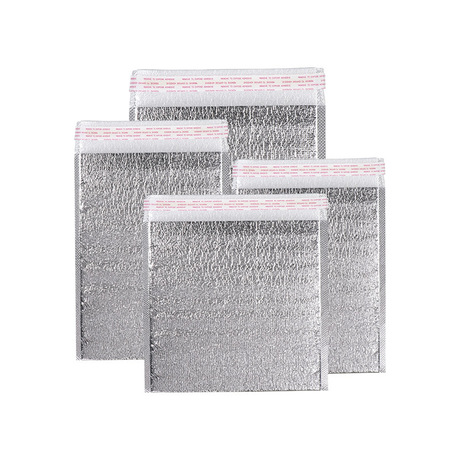
| Bag and closure | Modell, Fertigmaße, Hülse, Liner, Nähte, Reißverschluss oder Klappe, Verschlussmethode | External size presented as usable capacity |
| Wollisolierung | Zusammensetzung, Behandlung, Bindemittel, panel mass, Dicke, Dichte, Abdeckung, Zurückbehaltung | "Natural wool" with no finished-pad specification |
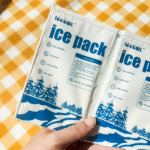
| Kühlmittel | Typ, Einheitsgröße, Menge, conditioning equipment and method, Platzierung | Similar-looking packs substituted by staff |
| Nutzlast | Produktfamilie, Primärverpackung, minimale und maximale Belastung, Ausgangsbedingung | Average order used to represent every shipment |
| Leerenkontrolle | Approved filler, Teiler, Puffer, und Orientierung | Packers improvising with available material |
| Überwachung | Gerät, Kalibrierungsstatus, Startmethode, Intervall, Platzierung, alarm or review limits | Logger added without a data-review procedure |
| Thermische Herausforderung | Umgebungsprofil, Dauer, Sensorpositionen, Laufplan, Akzeptanzkriterien | Headline hold time detached from test conditions |
| Release status | Report version, approving functions, effective date, permitted lanes and seasons | One successful test assumed to cover all routes |
This record also defines procurement's request for quotation. Every bidder should price the same system, including barriers, Drucken, Trenner, Kühlmittel, sample work, and requested testing. Ansonsten, a low unit price may reflect missing components rather than an efficient design.
The supplier's report should make the tested article traceable to the proposed production unit. Retain drawings, Materialien, Losinformationen, assembly photographs, instrument records, Rohdaten, und Abweichungen. A conductivity result from a flat wool specimen can support material control. It cannot replace a whole-pack test with representative seams, Schließung, Kühlmittel, und Nutzlast. Umgekehrt, a passing chamber run does not remove the need to control wool thickness, Masse, Platzierung, and moisture state in routine production.
Für Arzneimittel, EU Good Distribution Practice and other applicable quality requirements may expect manufacturer-defined conditions to be maintained and deviations to be investigated. These responsibilities belong to the distribution system, not to a wool pad. Use careful language such as "evaluated for the defined packout and lane" anstatt "globally compliant."
Hilfreiche Entscheidungshilfen
Überprüfen Sie die Details, bevor Sie sich für die Verpackung entscheiden
Mit diesen schnellen Tools können Sie das Routenrisiko vergleichen, Größenanforderungen, Kühlmittelauswahl, und Verpackungsdetails, bevor Sie ein Angebot anfordern.
Routenrisiko-Checker
Überprüfen Sie die Fahrspurbedingungen, bevor Sie die Verpackung entsprechend den tatsächlichen Betriebsanforderungen auswählen.
Streckenrisiko prüfenEisbeutel-Rechner
Schätzen Sie die Menge an Gel-Eisbeuteln für gekühlte Sendungen und nutzen Sie die praktische Routenplanung.
Schätzen Sie EisbeutelVerpackungsauswahl
Vergleichen Sie isolierte Verpackungsoptionen nach Produkt, Route, und Temperaturbedarf.
Verpackung findenChallenge the Process, Nicht nur der Prototyp
Begin thermal development with controlled chamber work. Predefine product limits, Umgebungseinflüsse, Dauer, Nutzlastkoffer, coolant conditions, Sensorpositionen, und Akzeptanzkriterien. Instrument both likely warm points and locations at risk of overcooling. Record the starting temperature of every relevant component. If a test fails, keep the unit intact long enough to inspect coolant state, Panel-Position, Kompression, Feuchtigkeit, Schließung, und Produktbewegung.
Repeatability matters. One favorable run may be an outlier or a carefully assembled ideal. Multiple builds can reveal unit variation and packer effects. The test plan should be proportionate to product risk and the organization's quality system, aber die Begründung muss dokumentiert werden. Do not average a clear failure out of view.
After the design passes the selected thermal challenges, hand the draft instruction to warehouse staff who did not develop it. Observe without coaching. Do they identify the correct coolant? Can they distinguish the minimum and maximum load diagrams? Do they position the buffer correctly? Does the zipper close without pushing the payload down? Which step causes hesitation?
Revise the instruction until the critical steps are visible and measurable. Use photographs of correct and incorrect conditions. Define maximum staging time where justified, and state what to do if the payload or coolant is outside its starting condition. Simple go/no-go gauges may help verify panel or packout geometry. Color coding can reduce substitutions, provided it remains controlled across suppliers and sites.
Then run a limited distribution pilot. Include representative handovers and monitor handling as well as temperature. Useful observations include time out of controlled storage, verpasste Scans, bag inversion, Abrieb, opening at intermediate points, wet weather, Verzögerung beim Empfänger, Rückkehrverhalten, and cleaning rejects. A pilot is not a marketing case study; it is a source of operational evidence and corrective actions.
Challenge credible deviations deliberately where safe. What happens if pickup is late, the order is at the low payload limit, or the bag is opened for a defined period? What if a reusable unit has completed several cleaning and handling cycles? Robustness work reveals safety margin and procedural sensitivity, but it should not be used to normalize unauthorized practices. Approved limits remain the limits.
Seasonal approval must follow the route rationale. A summer challenge may focus on heat entry, while a winter route can create freezing risk. Neue Ziele, Träger, Nutzlasten, coolant suppliers, or staging practices should go through change assessment. Qualification is a maintained state, not a certificate stored after launch.
Buy the Production State, Not the Golden Sample
Bulk purchasing begins after technical feasibility, not before it. Include critical attributes and tolerances in the purchase specification. Require lot identification for major materials, in-process controls for insulation placement, final checks for dimensions and closure, and workmanship criteria for seams, exposed fibers, Kontamination, und Schäden. Agree on sampling methods and how nonconforming lots are contained.
Natural raw materials vary, so the supplier should explain how wool input is converted into a consistent finished pad. The control might focus on composition, mass per area, thickness under a stated method, Dichte, moisture conditioning, and visual uniformity. Procurement does not need to dictate the supplier's process, but it needs objective acceptance criteria tied to performance risks.
Sample-to-production consistency should be demonstrated with preproduction units made using intended materials, Werkzeuge, and assembly methods. Compare them with an approved reference. If printing or branding changes the shell construction, include the final artwork process in the representative sample. Heavy coatings, additional stitch lines, Taschen, and handles are not always thermally neutral.
The quality agreement or purchasing terms should require advance notice for changes to wool source or blend, Behandlung, Bindemittel, Barrierefolie, Stoff, Reißverschluss, Faden, Plattenabmessungen, Montageort, or key process. Define a risk-based review path. Some changes may need document review and dimensional checks; others may require partial or full thermal requalification. Substitution without assessment is especially dangerous when a product looks unchanged from the outside.
Ask about lead time, Mindestbestellmenge, benutzerdefinierte Optionen, Ersatzkomponenten, and sample support as commercial questions rather than assumed facts. Clarify ownership of designs and test reports. Wenn das Programm wiederverwendbar ist, agree on spare liners, repair permissions, und Ruhestandskriterien. Total delivered cost should include coolant, Verpackungsarbeit, Aufbewahrungswürfel, Produktverlust, Reinigung, kehrt zurück, Ersatz, Überwachung, und Abfallbehandlung, not just the bag price.
Apply the Same Evidence Standard to Sustainability
Wool is renewable and can offer a valuable use for fiber that may not suit apparel. Those attributes justify investigation, not an automatic environmental victory. The finished bag may contain polymer films, coated textiles, synthetische Bindemittel, hook-and-loop material, Reißverschlüsse, Tinte, Etiketten, Und Kühlmittelpakete. State claims by component and mass where possible.
Evaluate the package against a functional unit: delivery of an acceptable payload over the defined route. Include product losses, inbound and outbound transport, bag weight and cube, Kühlmittel, Herstellung, Reinigung, Reverse-Logistik, Reparaturen, und Lebensende. Für ein wiederverwendbares System, use observed completed trips and loss rates from the network. A laboratory flex test is not the same as real reuse.
Destination infrastructure determines whether a pathway is credible. Ask whether households or business receivers can separate the wool pad, whether contamination prevents recovery, and whether local composting or textile programs accept the material and its treatments. "Biologisch abbaubar" should specify the component and conditions. "Recycelbar" should reflect collection and processing, not only theoretical material compatibility.
Regulatory expectations for packaging and waste differ and continue to develop. The European Union's Packaging and Packaging Waste Regulation is one example of a lifecycle-oriented framework, but its obligations depend on packaging type, actor, Markt, and application date. Review current requirements with qualified specialists before finalizing labels or environmental claims in any region.
Sustainability performance should join the operating dashboard. Track acceptable deliveries, temperature deviations, material use per shipment, bag returns, completed trips, Reinigungsausschuss, Reparaturen, Verluste, and actual destination recovery. The strongest environmental improvement may come from a smaller qualified packout, fewer delivery failures, better coolant conditioning, or higher return participation rather than from changing one insulation material.
Approve a System That Ordinary People Can Run
A well-designed cold chain insulated bag wool program begins at receipt and works backward. It defines product acceptance, maps route exposure, gives wool a precise material specification, qualifies the complete packout, challenges human repeatability, and contracts for production control. It treats sanitation, Überwachung, Abweichungen, and environmental claims as operating responsibilities. Wool may be the right insulation layer, but evidence and execution make it a Kühlkettenlösung.
Über Tempk
Tempk supplies temperature-control products including Isoliertaschen, lunch and Liefertasche Formate, Gelpackungen, Eisziegel, Und Kühlboxen. Custom discussions can cover bag size, Beschichtung, Schließung, Branding, Trenner, und Probenauswertung. For a wool-insulated project, we recommend confirming the available fiber construction and documenting the proposed payload, Kühlmittel, Route, and test conditions before approval. We do not treat a material name as a performance guarantee.
Share your receiving criteria, Zeitleiste der Route, minimale und maximale Nutzlasten, and target-market requirements with Tempk. Ask for a sample configuration and an evidence plan that your procurement, Operationen, and quality teams can review together.