Titel: Commercial Ice Box OEM Price: How to Choose the Right Box, Anbieter, and Cost Structure
Beschreibung: Combine technical fit, operating logic, and supplier screening to choose a cold-chain ice box program with more confidence.
Artikel:
Commercial Ice Box OEM Price: Der optimierte Entscheidungsrahmen
When companies compare commercial ice box OEM price, they are usually trying to solve a bigger problem than packaging alone. They need a container program that protects product quality, behaves predictably in real handling, and stays commercially workable from sample approval through repeat orders. The right answer is rarely the cheapest box on paper or the most premium box in a catalog.
A strong decision comes from understanding what the ice box is actually expected to do. Is it mainly a reusable handling container? Is it a passive insulated shipper built around conditioned refrigerants? Does it need branding, benutzerdefinierte Einsätze, Exportverpackung, Datenprotokollierung, or route-specific work instructions? Each of those choices changes cost, Risiko, and supplier fit.
This optimized guide pulls those threads together. It explains the role of the container, the design variables that drive performance, the cost logic behind quotations, and the supplier checks that reduce rework later. Das Ziel ist einfach: help you buy with fewer assumptions and better operational clarity.
What the box is really expected to do
In most industrial and B2B contexts, an ice box is a rigid or semi-rigid container used to slow heat gain and protect temperature-sensitive products during storage, überweisen, or transport. The cooling effect usually comes from refrigerants such as gel packs, water-based ice packs, Phasenwechselmaterial, Eisziegel, oder Trockeneis. The box provides structure and insulation; the packout provides the thermal action.
Für Essen, Verteilung, and general cold-chain work, the same distinction still matters even when regulation is lighter. A box can look impressive but underperform if the refrigerant is wrong, the payload is loaded warm, or the opening pattern is too aggressive. Buyers get better results when they evaluate the complete packout rather than the shell alone.
That is why the most useful buying conversation begins with application details, not with decoration or shell color. Before you compare suppliers, define your product temperature range, typical shipment duration, Umgebungseinflüsse, Handhabungsmethode, hygiene expectations, und Ziel wiederverwenden. Those basics determine whether you need a simple insulated tote, a molded HDPE shell with reusable bricks, an EPP box, a VIP-assisted design, or a different format entirely.
Materialien, Struktur, and design variables
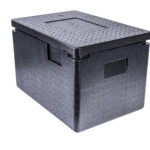
Container performance comes from material choice as much as from overall size. Common formats include molded plastic shells with foam insulation, EPP structures that balance weight and durability, EPS-based disposable formats, and higher-performance systems that use VIP panels to reduce heat transfer in a smaller footprint. Each option has trade-offs in durability, kosten, Reinigbarkeit, Wandstärke, and available internal volume.
Even when HDPE is not explicitly required, shell material still changes the user experience. Rigid plastic can support repeated use and easier cleaning. EPP often reduces weight while keeping better structural resilience than disposable foam. VIP-assisted systems improve thermal margin but raise system cost and call for tighter handling control. Es gibt keinen universellen Gewinner; the better choice depends on route severity, erwartete Wiederverwendung, und die Kosten des Scheiterns.
Pay close attention to geometry as well. Innenmaße, usable height beneath the lid, allowance for refrigerants, Trenner-Layout, and the ratio of product mass to coolant mass all affect real performance. A quotation that lists only outer dimensions tells you very little. Buyers should ask for internal dimensions, usable payload volume, recommended packout configuration, and any design assumptions behind the stated performance claim.
How thermal performance is created in practice
Thermal performance is created by the full packout, not by insulation alone. Actual hold time depends on starting payload temperature, refrigerant quantity and conditioning, Umgebungsprofil, Transitdauer, Öffnungsverhalten, Füllverhältnis, and the amount of empty air inside the box. Two buyers can use the same container and report completely different results because their operating conditions are different.
In food and commercial distribution, the same principle shows up through spoilage, Kondensation, or shorter-than-expected cold life. If drivers open the lid repeatedly, if the payload enters the box above target temperature, or if the vehicle sits in sun during unloading, apparent ‘box performance’ drops fast. A realistic trial should imitate the actual handling rhythm instead of using an idealized bench setup.
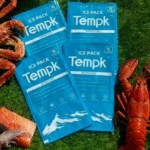
That is also why good suppliers discuss refrigerant strategy early. Gel packs are common and easy to deploy. Ice bricks or molded PCM packs can be more durable and consistent in reusable loops. Dry ice creates a very different thermal environment and may introduce air-shipping labeling and venting requirements. The right choice depends on temperature target, Versanddauer, Sicherheitsüberlegungen, and how disciplined the operating team can be in conditioning and packing.
Why lifecycle cost matters more than the headline quotation
Lifecycle economics are often more useful than first-cost comparisons. A box that is ten percent cheaper but requires extra coolant, breaks latches early, wastes pallet space, or is awkward to clean may cost more over six or twelve months than a better-balanced design. Buyers should compare not just purchase price, but also replacement rate, Auswirkungen auf die Arbeit, refrigerant consumption, Rückflussverlust, and the operational cost of temperature mistakes.
Workflow fit matters just as much. A technically solid container can still frustrate the team if it is heavy when loaded, difficult to stack, slow to open and close, or too large for shelving, vehicle racks, or packing benches. That is why smart sourcing teams ask for loading photos, stacked dimensions, tare weight, and real-use comments from the sampling phase. The more repetitive the operation, the more those small frictions show up as cost.
Seen this way, packaging selection becomes a business process decision rather than a simple unit-price negotiation. The better supplier is usually the one who can explain how the box fits your route, your labor pattern, and your reuse expectations – not merely the one who sends the fastest quotation.
What usually drives cost and quoted price
The quoted number for an ice box is shaped by more than size. Materialauswahl, Isolationsdicke, Formenkomplexität, lid and latch hardware, gasket design, Zubehör, Kältemittel, Einsätze, Branding, test samples, Verpackungsmethode, and order volume all affect price. When buyers compare quotations, they should first check whether the suppliers are quoting the same scope. A cheap number can hide thinner walls, lower-spec components, or missing items such as coolant packs, Kartons, or spare parts.
Tooling and development decisions also matter. Custom molds, custom liners, engraved logos, Sonderfarben, and unique internal fittings can make strong business sense when the program will run at stable volume, but they change the economics of the first order. Aus diesem Grund, total project cost should include sample rounds, Pilotläufe, change requests, and any qualification or transport testing you require before full release.
Operating cost can easily outweigh the initial quotation. A lower-cost box that cracks early, leaks cold through a poor lid fit, or forces excessive refrigerant use may be more expensive over time than a better-built alternative. In reusable loops, it is useful to compare service life, Reinigungsaufwand, Renditeeffizienz, and replacement rate alongside the first price.
How OEM and customization projects stay on track
OEM and custom projects succeed when the buyer defines performance before decoration. Brand printing, shell color, and packaging appearance are important, but they should come after route, Temperatur, and handling requirements are clear. The more disciplined process is to lock down use case, internal dimensions, refrigerant method, loading direction, and expected cleaning or reuse pattern first, then finalize cosmetics around that structure.
Sample-to-production consistency deserves special attention. Buyers should ask how materials are controlled, whether equivalent substitutions are allowed, how dimensional tolerances are managed, and what happens if a latch, Dichtung, einfügen, or refrigerant supplier changes. A packaging project that looks good at sample stage can drift later if those controls are loose. That matters even more when the box is part of a temperature-sensitive workflow.
Custom work should also address practical details that are easy to miss in the early stage: barcode position, cleaning labels, Benutzeranweisungen, coolant identification, pallet count per carton size, nesting or stacking behavior, and repair or replacement parts for reusable components. These are not cosmetic extras. They shape how easy the program will be to run at scale.
Where different box formats make sense
In der Praxis, the right box format changes with the route. Short urban delivery loops may prioritize quick turnaround, Leichtes Gewicht, und leicht Reinigung. Regional distribution may favor stronger shells and better stacking. Longer passive shipments may justify thicker insulation, better refrigerants, or VIP-assisted structures. If the box is being opened often, lid design and discipline may matter more than published hold time under closed conditions.
For commercial food operations, the priorities often expand beyond hold time. Teams also care about loading speed, ergonomic handling, back-of-house storage, wash cycle labor, and how the box behaves after dozens or hundreds of turns. That makes durability and workflow compatibility just as important as initial unit price.
A good supplier will usually discuss these scenarios in terms of real use conditions instead of generic claims. That does not mean every supplier will run a complex study. It means they should at least be able to explain how the container is meant to be loaded, where the thermal margin comes from, and which operating assumptions sit behind the recommendation.
What buyers should check before placing a bulk order
Shortlisting suppliers is easier when you compare them against the same practical questions. The most useful checklist is one that links design detail to operational reality instead of treating all boxes as interchangeable commodities. Ask for answers in writing when the project matters.
• Internal dimensions, usable payload volume, and the amount of space lost to refrigerants or inserts
• Shell material, Isolationstyp, lid construction, gasket design, and closure hardware
• Recommended refrigerant format and the conditioning method assumed behind any performance claim
• Expected stacking behavior, nesting or return efficiency, and durability under repeated handling
• Cleanability, Ablaufdesign, and whether the box fits your hygiene routine or wash-down process
• Labeling and traceability options such as barcodes, molded marks, Loskontrolle, or user instructions
• Sample-to-production consistency, Änderungskontrollrichtlinie, and how material substitutions are approved
• Tooling responsibility, ownership of molds, artwork approval flow, and timeline for revisions
• MOQ, pilot order policy, lead time by season, and what triggers a price change
A supplier who can explain these points clearly is usually more valuable than one who offers only a low headline quotation. In realen Projekten, clarity reduces redesign, delayed approvals, and field problems after launch.
FAQ
How long does an OEM ice box project usually take?
That depends on whether you are adapting an existing design or building a new one. Existing molds can move relatively quickly, while new molds, Einsätze, artwork reviews, and sample rounds add time. Ask suppliers to break the project into sample, Genehmigung, Pilot, and production stages instead of giving one broad promise.
Why do quotations for similar-looking boxes vary so much?
Suppliers may be quoting different wall structures, insulation types, Kältemittel, Hardware, Kartons, MOQs, or testing scope. Always compare the technical specification and included accessories before comparing the price.
Should the best commercial box always have the longest hold time?
NEIN. In commercial use, Ergonomie, Stapelung, Reinigungsaufwand, and turn speed can matter as much as closed-lid hold time. The best box is the one that fits the real workflow without driving up labor or replacement cost.
What should I request before approving a sample?
Ask for internal dimensions, recommended packout, material details, lid and closure specification, and a clear statement of the conditions behind any performance claim. Those basics prevent many misunderstandings later.
Final takeaways
The smartest buying decision is usually the one that matches packaging format to operating reality. Whether you are sourcing a simple insulated box, a reusable HDPE shell, a commercial distribution container, or a more controlled pharmaceutical packout, the same rule applies: Definieren Sie die Route, das Temperaturziel, the handling rhythm, and the real cost model before you compare suppliers.
When that work is done early, quotations become easier to read, samples become more useful, and the final program is less likely to drift after launch. That is the difference between buying a container and building a packaging solution that people can actually run.
Über Tempk
Tempk is the brand of Shanghai Huizhou Industrial Co., Ltd. Based on its public website, we focus on temperature-controlled packaging and offer product lines such as gel ice packs, Eisziegel, Isoliertaschen, isolierte Boxauskleidungen, and medical ice box formats including plastic, EVP, and VIP options. Our site also highlights custom packaging support for food and pharmaceutical applications. When a project needs a practical cold-chain packout direction, we aim to help match container format, Auswahl des Kältemittels, and route needs.
Nächster Schritt
If you are comparing options for this project, ask for a packout recommendation based on your target temperature, Versanddauer, and handling pattern before you approve the first bulk order.