Trockeneisbag Mylar: Wie verpacken Sie es sicher??
Wenn Sie eine Entlüftung planen, können Sie sicher einen verwenden, Abstand, and correct ice mass. Dry ice sits at −78.5 °C and turns into gas; sealed Mylar traps that gas and can burst. Use a vent path, keep gentle folds, and size the dry ice with a simple rule so product stays frozen and shippers stay compliant.
-
Wann ist ein dry ice bag mylar die richtige Wahl?
-
How do you pack and vent to prevent ruptures?
-
How much dry ice should you plan per lane?
-
How does Mylar compare to LDPE and nylon?
-
Welche 2025 trends matter for materials and labels?
Was ist a dry ice bag mylar– und wann sollten Sie es verwenden?
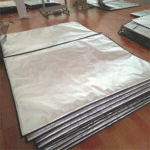
Verwenden Sie a dry ice bag mylar as a high-barrier liner or sleeve, not as an airtight chamber. It blocks odor and moisture, hält Kartons trocken, and protects presentation. But if you seal it fully around dry ice, CO₂ pressure can split the film or seams. Always design a deliberate vent path and place the bag where gas can escape.
Mylar (biaxially oriented PET) shines as a vapor/odor shield and print surface. At deep-cold temperatures it stiffens, so avoid tight creases and crushed corners. For ecommerce frozen food, a hybrid is common: LDPE inside for flex, dry ice bag mylar outside for barrier, both vented.
How does a Mylar dry ice bag behave at −78.5 °C?
Mylar is strong at room temperature and becomes more brittle when very cold, especially at fold lines. Its oxygen and moisture barriers are excellent, but CO₂ must vent. Heat-seals are reliable; für Trockeneis, use partial seals, micro-notches, or a membrane patch to release gas in a controlled way.
| Eigentum (typisch) | Mylar (BoPET) | LDPE | Nylon 6 | Was es für Sie bedeutet |
|---|---|---|---|---|
| Feuchtigkeitsbarriere | Hoch | Medium | Medium | Cartons stay drier with Mylar. |
| Oxygen barrier | Hoch | Niedrig | Mittel–Hoch | Better odor/flavor protection. |
| Flex at −78.5 °C | Moderate–Low | Mäßig | Mäßig | Avoid sharp creases in Mylar. |
| CO₂ permeability | Niedrig | Höher | Medium | Low permeation demands venting. |
| Heat-sealability | Exzellent | Gut | Gut | Partial/vented seals work best. |
Wie packst du a dry ice bag mylar to prevent bursts?
The core rule: lass aus. Use a fin-seal notch (2–3 mm), 2–4 micro-perforations per 100 cm² on the top panel, or a small breathable membrane patch. Maintain spacer gaps so gas can flow to the cooler headspace and out through a vent crack. Label UN1845 for air, und vermeiden Sie luftdichte Behälter.
Schritt für Schritt (reliable 36–48 h parcel):
-
Pre-freeze payload ≤ −18 °C; pre-cool shipper.
-
Line shipper; add bottom spacer.
-
Lastprodukt; Hohlräume füllen.
-
Add vented dry ice bag mylar oben; spread pellets evenly.
-
Add top pad; Liner schließen; keep lid crack/vent.
-
Markieren Sie „Trockeneis, UN1845” with net kg; keep package not airtight.
Dry-ice sizing mini-calculator
Dry ice bag mylar vs LDPE vs nylon: Welches sollten Sie auswählen??
If dryness/odor control is the goal, wähle ein dry ice bag mylar; if flex/fold durability is paramount, LDPE or nylon may be easier. Many teams run hybrids: LDPE inner for flex, dry ice bag mylar outer for barrier. Add a vent path in all cases.
| Anwendungsfall | Beste Wahl | Warum | Alternative | Praktischer Hinweis |
|---|---|---|---|---|
| Geruch & oxygen control | dry ice bag mylar | Superior barrier | Nylon laminate | Keep vent path active. |
| Grobe Handhabung | LDPE | Weich, resists cracking | Nylon | Pair with Mylar outer liner. |
| Mixed coolants (PCM + Trockeneis) | Mylar liner + LDPE inner | Barriere + biegen | Coex films | Stabilizes sidewalls. |
| Food contact sleeve | Nylon/PE | Common grades, hart | Mylar/PE | Validate seals. |
What labels and rules apply to dry ice bag mylar In 2025?
Für Luft, declare “Dry Ice, UN1845” with net kg and ensure packaging can vent CO₂. Keep packages not airtight. Post clear handling icons, and train teams to use PPE and ventilate workspaces. Für Boden, follow carrier guidance; same venting and labeling discipline reduces returns and safety incidents.
2025 Trends formen dry ice bag mylar und Tiefkühlversand
Expect vent-friendly laminates, membrane vents, and smarter SOPs. Teams are standardizing vent notches and pre-sealed patches, adding QR-coded instructions, and adopting recyclable mono-material structures. Hybrid coolant strategies (PCMs + Trockeneis) are rising to buffer temperature extremes while preserving unboxing quality.
Neueste Entwicklungen auf einen Blick
-
Laser micro-vents: Precise CO₂ release without over-perforation.
-
Membrane patches: Tyvek-style breathers embedded in Mylar windows.
-
Digitale SOPs: QR links to lane-specific pack steps reduce errors.
FAQs
Kann ich ein versiegeln? dry ice bag mylar completely airtight?
NEIN. Airtight sealing traps CO₂ and can cause a burst. Add a notch, Mikroperforationen, or a membrane vent.
Where should the bag sit—top or bottom?
Top is safer. CO₂ sinkt; top placement vents gas and avoids direct freeze shock.
How many perforations are safe?
As few as needed—often 2–4 per 100 cm² on the top panel only. Over-perforation defeats barrier benefits.
Why does Mylar crack at deep-cold temps?
It stiffens at −78.5 °C, and sharp folds create stress risers. Runde Ecken, avoid tight pleats, choose thicker gauges.
Can I mix PCMs with dry ice inside a dry ice bag mylar System?
Ja. Place PCMs around sides and the vented Mylar dry ice pouch on top to avoid product over-freezing.
Zusammenfassung & Nächste Schritte
Key Takeaways: Verwenden Sie eine Entlüftung dry ice bag mylar as a barrier liner, top-place it with spacers, right-size dry ice with the calculator, and standardize labeling and PPE. Hybrids with LDPE boost durability; validation beats guesswork every time.
Mach das als nächstes:
-
Pick your vent method and bag gauge.
-
Run a 48-hour pilot with a data logger.
-
Adjust dry-ice mass using real lane data.
-
Publish a one-page SOP with photos.
-
Train the bench; audit monthly.
Über Tempk
We engineer cold-chain kits that pair vented dry ice bag mylar liners with matched insulation, Beschriftung, and SOPs. Our customers report fewer ruptures and “wet box” issues, and often cut dry-ice use after lane validation. We publish tools, Checklisten, and calculators so your team hits temperature and presentation targets on the first attempt.
Ready to standardize your program? Book a 20-minute consult and get a lane-specific spec for your SKUs.