TrocknerpackDisposal: Was ist die sicherste Methode?
Ich frage mich, wie man einen –78 ° C Block abgraben kann, ohne Rohre zu schädigen, Haustiere, oder der Planet? Dry ice pack disposal is easy when you follow three rules: Entlüftung, evaporate, and recycle. This guide gives you step‑by‑step instructions that meet 2025 safety codes and ESG goals.
Dieser Artikel wird antworten:
-
Why can’t you toss dry Eisbeutel in the sink or trash?
-
How long does a pack take to sublimate in home or warehouse settings?
-
What PPE and ventilation meet OSHA/49 CFR requirements?
-
Which parts of the pack can you recycle or compost in 2025?
-
How do businesses design a zero‑injury, zero‑waste disposal workflow?
Why Is Proper Dry Ice Pack Disposal Critical?
Dry ice sublimates into CO₂ gas, expanding 750× its solid volume—sealed bins can burst and enclosed rooms can hit dangerous 5,000 ppm levels. Mishandling also cracks sinks, ruins floors, and risks frostbite. By venting packs outdoors or in a fume hood, you eliminate pressure build‑up and protect staff.
How to Dispose of Dry Ice Packs at Home
Quick steps (takes 5 minutes of active time):
-
Choose a ventilated spot. A shaded patio table or garage with the door open works.
-
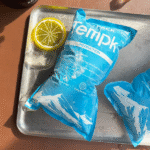
Place the pack on a heat‑safe tray. Never on tile or metal that can crack.
-
Leave it alone. A standard 1 kg flat pack vanishes in 12–18 hours at 20 °C.
-
Check vent patches. Ensure they’re unblocked—CO₂ must escape.
-
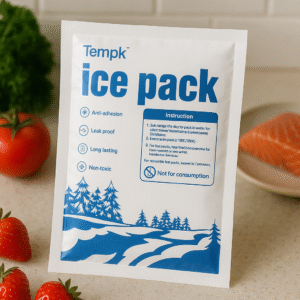
Recycle the film. Am meisten 2025 packs use #4 LDPE; drop at store collection bins.
Real‑life hack: Prop the pack on a wire rack. Airflow speeds sublimation by ~15 %.
Common Home Mistakes & Korrekturen
| Fehler | Risiko | Easy Fix |
|---|---|---|
| Tossing in sink | Pipe fractures | Let it sublimate on tray |
| Sealing in trash bag | Bruch des Beutels | Keep pack unsealed |
| Handling bare‑handed | Erfrierung | Verwenden Sie isolierte Handschuhe |
Industriell & Lab Disposal: OSHA‑Ready SOP
-
Designated vent room with exhaust fan ≥ 6 air changes/hour.
-
CO₂ monitor alarms at 1,000 ppm—triggers HVAC boost.
-
Steel mesh bins hold packs while gas disperses.
-
PS: loose thermal gloves, Sicherheitsbrille.
-
Film stream: bale LDPE liners, send to recycler or waste‑to‑energy plant.
Fallbeispiel: A pharma 3PL cut disposal labor 30 % by combining mesh bins and timed exhaust fans that clear CO₂ in 20 minutes.
2025 Eco Options: Beyond Landfill
-
Plant -Basis -Airgel -Liner—compostable in 180 days.
-
Brewery‑sourced CO₂ packs—carbon‑negative cradle‑to‑gate.
-
Refill programs—suppliers reload empty films, slashing virgin plastic by 70 %.
Market data shows a 10 % CAGR in closed‑loop dry‑ice packaging through 2028 as ESG reporting tightens.
FAQ
Can I pour hot water on dry ice to speed disposal?
No—the violent gas release can splash ice shards; stick to passive venting.
Is CO₂ gas harmful outdoors?
It disperses quickly; risk is minimal in open air.
What if film isn’t recyclable locally?
Ship to a specialized LDPE recycler or join a vendor take‑back scheme.
Zusammenfassung & Empfehlungen
Sicher dry ice pack disposal boils down to venting in open air, avoiding plumbing, and recycling the outer film. Follow the tray method at home or the OSHA‑ready SOP in warehouses, and you’ll eliminate injuries and equipment damage.
Nächste Schritte:
-
Print our one‑page disposal poster for your break room.
-
Audit your facility’s CO₂ monitors—upgrade if alarms don’t meet 1,000 ppm.
-
Ask suppliers about refillable or plant‑based pack options to hit your ESG targets.
Übertempk
We create recyclable Thermoverpackung that protects products and the planet. Our AeroShield™ dry‑ice packs use plant‑based liners and brewery‑captured CO₂, cutting carbon 28 %. Tech support is online 24/7 for safe‑handling advice.
Need a disposal SOP template? Request it here.