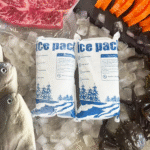
Transport von Insulin durch Städte, Länder oder einfach nur auf einem langen Wochenendausflug ist es nicht so einfach, es in eine Kühlbox zu werfen. Insulin loses potency when it freezes or overheats, yet ordinary ice melts quickly and can leak. FDA approved dry ice sheets for insulin sound like the perfect solution, but the term is often misunderstood. In Wirklichkeit, dry ice is solid carbon dioxide at –78.5 °C (–109 °F), and contact with it can freeze insulin. This guide explains what “FDA approved” really means for dry ice packaging, Wann (and when not) to use dry ice sheets, and how to build a safe pack out to keep your insulin between 2 °C und 8 °C.

What does FDA approval mean for dry ice sheets? Learn about FDA regulations for packaging materials and why the CO₂ itself isn’t “genehmigt”.
Are dry ice sheets safe for insulin? Understand why direct contact with –78 °C dry ice can damage insulin and how to buffer extreme cold.
How do you build a safe pack out? Step by step instructions for layering phase change materials (PCMs), insulation and dry ice.
Wie viel Trockeneis sollten Sie verwenden?? Use formulas and sizing rules to calculate the right amount and avoid freezing.
What are the regulations? Know the 2.5 KG Airline Grenze, labeling rules and packaging requirements.
Was sind die neuesten Trends?? Erkunden 2025 Innovationen in der Kühlkettenlogistik, biodegradable packaging and IoT monitoring.
Are FDA Approved Dry Ice Sheets Safe for Insulin?
Direkte Antwort: Dry ice sheets are not inherently “FDA approved,” and they are rarely safe for insulin by themselves. Dry ice sits at –78 °C and can freeze and denature insulin if it comes into direct contact. The FDA doesn’t actually approve the carbon dioxide ice; instead it regulates the Verpackungsmaterialien that may contact food or drugs. Für Insulin, which must stay between 2 °C und 8 °C to maintain potency, using dry ice requires a buffer layer such as phase change material (PCM) bricks set to +5 °C, otherwise the extreme cold will ruin the medicine.
Erläuterung: Verständnis “FDA approval” for dry ice sheets
When marketing describes “FDA approved dry ice sheets,” it usually refers to the packaging films, gels and adhesives that wrap or accompany the dry ice, not the CO₂ itself. Die USA. Food and Drug Administration (FDA) treats any substance intended to contact food or pharmaceuticals as a food contact material. Manufacturers must submit data through the Food Contact Notification (FCN) Verfahren showing that chemicals won’t migrate into foods at unsafe levels. For dry ice packs, compliance typically involves:
Outer films: Polyethylen hoher Dichte (HDPE) oder Polypropylen (Pp) films that are inert and resist chemical migration. These plastics protect your insulin from contamination and are sturdy enough for cold conditions.
Refrigerant gels: Food grade super absorbent polymers that absorb water and freeze into a viscous mass. They must be non toxic and formulated to prevent chemical leaching when frozen and thawed.
Sealants and adhesives: Food safe hot melt adhesives create leak proof seals.
Etiketten: UN1845 hazard labels warn handlers that carbon dioxide (Trockeneis) is inside.
daher, an FDA compliant dry ice sheet for insulin must use food safe plastics and gels, but the CO₂ inside will still sit at –78 °C. Without proper buffering, insulin will freeze and crystallize.
Tisch 1: Components of an FDA compliant dry ice sheet and their benefits
| Komponente | Typisches Material | Food safety significance | Praktischer Nutzen für Sie |
| Äußere Filme | HDPE, LDPE oder PP | Inert plastics resist chemical migration and remain flexible at low temperatures | Keeps insulin containers free from chemical contamination and prevents film cracking |
| Kältemittel Gel | Food grade superabsorbent polymer | Non toxic gel forms ice without leaching chemicals | Provides cooling without leaving messy water; reusable and safe |
| Dichtungsmittel & Klebstoffe | Lebensmittelechte Schmelzklebstoffe | Maintain leak proof seals | Prevents leaks during travel and protects other items in your kit |
| Beschriftung & Markierung | UN1845 hazardous material labels | Required for transport under DOT/IATA rules | Vermeidet Bußgelder, ensures airline compliance and informs carriers |
Praktische Tipps und Vorschläge
Verify documentation: Always request an FDA compliance certificate from your supplier. Ohne Beweis, you risk using materials that may leach chemicals into your medicine.
Never let dry ice touch insulin: Even with FDA compliant packaging, you must separate insulin from dry ice. Verwenden +5 °C PCM bricks or gel packs as a buffer.
Beschriften Sie es deutlich: Mark packages with “Contains Dry Ice” and the net weight of dry ice, as required by DOT/IATA.
Ask for insulation quality: When ordering, confirm that the outer film thickness matches your cold chain duration and ambient conditions.
Fallbeispiel: A seafood company switched to polyethylene wrapped dry ice packs after learning that some generic packs used recycled plastics with unknown additives. By verifying FDA compliance and adding a cardboard barrier between the ice and their product, they eliminated customer complaints of off flavors.
How to Package Insulin with Dry Ice Sheets Properly
Keeping insulin cold without freezing is like balancing on a tightrope. Dry ice provides ultra cold temperatures for frozen vaccines but will freeze insulin without a protective buffer. The safe solution is to build a layered pack out using phase change materials, Isolierung und belüftete Behälter.
Schritt für Schritt: Building a safe pack out
Pre condition your PCM: Ort +5 °C PCM bricks or gel packs in the refrigerator for at least 24 Stunden, um sie bei 2–8 °C zu stabilisieren. Do not put them in the freezer, as they could become too cold.
Bereiten Sie das Insulin vor: Put insulin pens or vials in a rigid plastic or metal case to prevent crushing and provide structural support.
Schicht mit PCM: Wrap the insulin case with PCM bricks on all sides, leaving a 1–2 cm buffer between the insulin and any sub zero element. This creates a thermal “sandwich” that keeps temperatures in the safe 2–8 °C range.
Isolierung hinzufügen: Use high quality insulation like expanded polystyrene (EPS), expandiertes Polypropylen (EVP) oder vakuumisolierte Paneele (VIPs) um die Wärmeübertragung zu verlangsamen.
Trockeneis legen: Put dry ice sheets or blocks außerhalb der PCM-Schicht in the outer compartment of your cooler. Leave room for gas to escape and never seal the container airtight. Trockeneis untermauert in Co₂ -Gas; Ein verschlossener Behälter kann explodieren.
Beschriften und lüften: Markieren Sie den Behälter mit „DRY ICE / KOHLENDIOXID, SOLID“ und das Nettogewicht, and ensure the lid has vents or holes for gas release.
Überwachen Sie die Temperatur: Place a temperature data logger near the insulin compartment. Stellen Sie Alarme ein 2 °C und 8 °C with a delay (um 10 Minuten) for handling events. Checking the log ensures your pack out stayed within range throughout the journey.
Tatsächlicher Fall: A remote clinic sent insulin vials to a rural area by layering +5 °C PCM-Steine in einem mit VIP ausgekleideten Container. Sie platzierten 0.8 kg Trockeneis im Außenfach and vented the box. The logger recorded temperatures between 3.5 °C und 6 °C über 48 Std., meeting regulatory requirements and preventing freeze damage.
Tisch 2: Pack out steps, recommended conditions and benefits
| Schritt | Aktion | Empfohlener Zustand | Profitieren Sie davon |
| 1 | Pre condition PCM bricks or gel packs | Refrigerate at 2–8 °C for ≥24 h | Stabilizes PCM at the correct temperature before packing |
| 2 | Platzieren Sie das Insulin in einem starren Behälter | Use hard plastic/metal container | Verhindert physische Schäden und sorgt für Struktur |
| 3 | Legen Sie PCM um das Insulin herum | 4–6 sides with 1–2 cm buffer | Maintains 2–8 °C zone; verhindert das Einfrieren |
| 4 | Isolierung einlegen | EPS, EPP- oder VIP-Panels | Verlangsamt die Wärmeübertragung, verlängert die Haltezeit |
| 5 | Trockeneis positionieren | Außerhalb der PCM-Schicht; Lassen Sie Entlüftungsraum | Sorgt für zusätzliche Kühlung, ohne mit Insulin in Kontakt zu kommen |
| 6 | Label and ventilate container | Markieren Sie mit „Trockeneis / Kohlendioxid, Solid“ und Nettogewicht | Complies with DOT/IATA; warns handlers |
| 7 | Überwachung mit Datenlogger | Legen Sie Benachrichtigungen fest unter 2 °C und 8 °C | Bestätigt die Temperaturkontrolle und bietet einen Prüfpfad |
Praktische Tipps für häufige Szenarien
Kurztrip (≤18 Stunden, mild climate ≤25 °C): Verzichten Sie auf Trockeneis. PCM bricks alone can maintain 2–8 °C. Zwei +5 °C PCM bricks in an insulated case are sufficient.
Moderate Reise (25–32 °C, 18–36 Stunden): Fügen Sie zusätzliche Isolierung und einen zusätzlichen PCM-Stein hinzu. Nur verwenden 0–0.5 kg/day of dry ice if ambient temperature is high.
Heißes Klima (≥32 °C) oder mehrtägiger Ausflug (>36 Std.): Verwenden Sie a buffered dry ice pack out. Add four or more +5 °C PCM-Steine und 0.5–0,8 kg Trockeneis pro Tag. Always keep dry ice outside the PCM layer to prevent freezing.
Stellen Sie sich fünf Fragen: Wie lange dauert Ihre Reise?? What’s the peak temperature? How many pens or vials? Werden Sie ohne Kühlung sein?? Erlauben die Fluglinienregeln Trockeneis auf Ihrer Route?? Answering these determines whether you need dry ice.
Vorwiegen und beschriften: Airlines typically allow bis zu 2.5 kg (5.5 lb) Trockeneis pro Passagier. Mark the net weight on the label and ensure ventilation.
Führen Sie einen Probelauf durch: Führen Sie vor Ihrer eigentlichen Reise einen 12–24-Stunden-Test mit einem Temperaturlogger durch, um sicherzustellen, dass Ihr Rucksack eine Temperatur von 2–8 °C aufrechterhält.
Managing the amount of dry ice
Trockeneis sublimiert bei ca 5–10 Pfund (2.27–4,54 kg) pro 24 Std.. To estimate how much you need, multiply your cooler’s volume by the temperature difference and factor in transit time. A simple formula used by logistics experts is:
(Kühlervolumen × Temperaturunterschied × 0.12) ÷ 150 × 1.25
Zum Beispiel, A 100 L container traveling from 25 °C to –70 °C requires ~9.5 kg of dry ice. If your insulin trip is shorter and only requires 0 ° C bis +5 °C, you’ll need far less; a small cooler for a weekend trip may only use 0.5–1 kg of dry ice with proper PCM buffering. Remember that airlines limit each passenger to 2.5 kg, so adjust accordingly and consider splitting shipments or adding gel packs.
Regulierungs- und Sicherheitsaspekte
Shipping with dry ice involves more than just packing; you must comply with several regulations and safety guidelines.
Verpackungsanforderungen und Belüftung
Gasentlüftung: Packages containing dry ice must allow carbon dioxide gas to escape. Dry ice must never be sealed in an airtight container.
Paketintegrität: The package must be strong enough to withstand normal handling and prevent any loss of contents due to vibration, temperature or altitude changes.
Materialauswahl: Vermeiden Sie Kunststoffe, die bei niedrigen Temperaturen spröde werden; use commercially available dry ice packaging intended for extreme cold.
Markieren und Beschriften: Each package must be marked with “Carbon dioxide, fest“ oder „Trockeneis“, the shipper’s and recipient’s name and address, und die net quantity of dry ice. The outermost container must carry a Gefahrenklasse 9 Etikett und die UN -Nummer 1845.
Gewichtsbeschränkungen: The maximum allowable net quantity of dry ice in a package is 200 kg for commercial cargo, but airlines and the FAA limit passengers to 2.5 kg (5.5 lb) per package and per passenger. Erkundigen Sie sich immer bei Ihrem Mobilfunkanbieter.
FAA and DOT rules for passenger travel
Die Federal Aviation Administration (FAA) classifies dry ice as a Gefahrgut. Passengers may carry dry ice in baggage only with airline approval. The FAA requires that:
The package must not be airtight and must allow CO₂ to vent.
The package must be labeled “Dry ice” or “Carbon dioxide, solid” and show the Nettogewicht Trockeneis or state that it’s 2.5 kg oder weniger.
Arzneimittelverpackungsvorschriften
Unter 21 CFR 211.94(B), container closure systems for pharmaceuticals must protect against foreseeable external factors that can cause deterioration or contamination. Für Insulinversand, Oft ist eine Dreifachverpackung erforderlich: ein Primärcontainer (Fläschchen oder Stift), a secondary packaging (starres Gehäuse), und eine äußere isolierte Verpackung mit Trockeneis. The Parenteral Drug Association (PDA) and ASTM also publish standards for thermal packaging tests.
Sicherheitstipps zum Umgang mit Trockeneis
Tragen Sie Schutzausrüstung: Trockeneis kann Erfrierungen verursachen. Tragen Sie isolierte Handschuhe, Tragen Sie bei der Handhabung eine Schutzbrille und eine Latzhose.
Vermeiden Sie eine luftdichte Lagerung: Never store dry ice in glass or sealed containers; sublimation can cause pressure build up and explosion.
Separate Inhalte: Keep insulin or other products separate from dry ice; its only purpose is to keep the system cold.
Calculate sublimation rate: Erwarten 5–10 lb of dry ice to sublimate every 24 Std. and factor in an extra day for delays.
Ergänzung mit Gelpackungen: Combining dry ice with frozen gel packs can reduce the amount of dry ice needed and mitigate extreme cold.
Alternatives to Dry Ice Sheets for Insulin
Dry ice isn’t always the best or safest choice for insulin. Alternatives like gel packs and phase change materials often keep insulin within the safe range without complicated regulations.
Gel packs and PCM bricks
Gelpacks sind mit ungiftigem Material gefüllte Beutel, food grade gels that freeze at around 0–4 °C and remain flexible. Medical grade gel packs can maintain refrigerated temperatures up to 33 hours and room temperature hold times over 52 Std.. Phasenwechselmaterial (PCM) Ziegel engineered to melt at +5 °C provide precise temperature control for 24–48 hours and can be reused thousands of times. Both options avoid the need for vented packaging and hazardous material labeling.
Hydrogel evaporative packs use crystals that absorb water and slowly evaporate, keeping contents around +20 ° C für 45 Std.. They are lightweight and convenient for outdoor travel or room temperature insulin but cannot maintain refrigerated conditions.
Advantages of gel packs and PCMs (auf einen Blick)
| Lösung | Kühlbereich | Typische Haltezeit | Wiederverwendbarkeit & Nachhaltigkeit | User benefits |
| Medical grade gel pack | 0–4 °C | Bis zu 33 Stunden gekühlt; 52 Stunden bei Raumtemperatur | Wiederverwendbar, ungiftig, dicht | Sicher für die Mitnahme im Flugzeug; verhindert das Einfrieren; flexibel und langlebig |
| +5 °C PCM brick | +2 ° C bis +8 °C | 24–48 Stunden je nach Isolierung | Sehr wiederverwendbar; umweltfreundlich | Präzise Temperaturregelung; Vorschriftenregulierung; reduziert Abfall |
| Hydrogel-Verdunstungspackung | ~+20 °C | 45 Stunden oder mehr | Nach Rehydrierung wiederverwendbar | Ideal for room temperature insulin; leicht; TSA-zugelassen |
Tips for using alternatives
Entscheiden Sie sich für PCMs für lange Reisen: PCM bricks preconditioned to +5 °C offer tight control and are safe for insulin. They’re easy to reuse and avoid hazardous classification.
Kombinieren Sie Gelpacks mit Isolierung: For short flights, one gel pack may suffice, Das Hinzufügen einer Isolierhülle oder einer reflektierenden Folie kann die Haltezeit jedoch verdoppeln.
Verdunstungspackungen richtig hydrieren: Soak hydrogel packs in clean water for the recommended time, then blot off excess moisture before placing them in your travel kit.
Store and reuse gel packs correctly: Refreeze gel packs flat for 24 hours before each trip; auf Undichtigkeiten prüfen; rotate packs and mark the date and number of uses.
2025 Trends und Innovationen in der Kühlkettenlogistik
Die Kühlkettenbranche entwickelt sich rasant weiter. Supply constraints, sustainability pressures and new technologies are reshaping how companies transport temperature sensitive products.
Marktdynamik
The global dry ice market is growing despite headwinds. Demand has been climbing around 5 % pro Jahr, während die CO₂-Versorgung nur wächst 0.5 %, Dies führt zu periodischen Engpässen und Preisschwankungen. Spot prices have surged by up to 300 % bei Versorgungsengpässen. Auch so, Der Markt wurde mit bewertet USD 1.54 Milliarden in 2024 und wird voraussichtlich erreicht werden USD 2.73 Milliarden von 2032 (compound annual growth rate ~7.4 %). Growth is fueled by rising demand for biologics, mRNA vaccines and frozen food delivery.
Dry ice formats and performance
Not all dry ice is equal. Large blocks or slabs sublimate slowly and are ideal for bulk shipments or long durations. Pellets und Nuggets, with more surface area, provide rapid cooling but vaporize faster, making them suitable for pre chilling or short hauls. Thin slices or custom cuts balance coverage and duration, fitting neatly into packaging systems to reduce voids. Choosing the wrong format can compromise product integrity—small pellets may supercool pharma payloads if not properly vented, while large blocks may be too slow for fast e commerce shipments.
Packaging and insulation innovations
Thermal performance depends as much on Containerdesign as on the ice itself. Poorly designed containers accelerate sublimation; optimized insulation can stretch hold times significantly. Key factors include pre conditioning containers before loading, Minimierung des Leerraums, and arranging the dry ice above the payload so cold air sinks. In 2025, Innovationen umfassen:
Biologisch abbaubare Folien: Manufacturers are experimenting with polylactic acid (PLA) and cellulose films that can be FDA compliant. These reduce plastic waste but may have shorter shelf lives.
Intelligente Sensoren: Real time data loggers with Bluetooth or cellular connectivity alert shippers to temperature excursions. Über 70 % of shippers now require real time monitoring for pharmaceuticals.
Hybridsysteme: Combining dry ice with wiederverwendbare PCMs reduces the required amount of dry ice and limits supercooling. Pharma & biotech companies are validating packaging against both undercooling and supercooling, incorporating monitoring and barrier technologies.
Verteilte Produktion: To avoid supply shortages, manufacturers are building local CO₂ production hubs and diversifying suppliers.
Key takeaways for travelers and small shippers
Match the format to your needs: Use thin dry ice sheets or pellets for small, well insulated containers and blocks for longer journeys.
Invest in high performance insulation: Vacuum insulated panels and EPS with high density slow sublimation and extend hold time.
Balance dry ice with PCMs: Many pharma companies now use Hybridlösungen that combine dry ice with PCM bricks to mitigate extreme cold.
Plan for volatility: Supply shortages and price swings may affect availability. Consider reusable PCM and gel packs as back ups.
Häufig gestellte Fragen (FAQ)
Q1: Can I bring a dry ice sheet on an airplane for my insulin?
Ja, but there are strict rules. Airlines and the FAA limit dry ice to 2.5 kg (5.5 lb) per passenger or package. The package must vent CO₂ gas and be marked “Dry ice” or “Carbon dioxide, fest“ mit dem Nettogewicht. Always check with your airline and ensure your container is vented and labeled. Consider using gel or PCM packs when possible to avoid extra paperwork.
Q2: What’s the ideal temperature range for insulin during travel?
Insulin should be kept zwischen 36 °F und 46 ° F (2 °C–8 °C) gemäß FDA-Richtlinien. Ungeöffnetes, in diesem Bereich gelagertes Insulin bleibt bis zum Ablaufdatum wirksam. Einmal geöffnet, it can be kept at room temperature (59 °F–86 °F) für bis zu 28 Tage, aber es sollte niemals einfrieren. Wenn Insulin extremen Temperaturen ausgesetzt ist oder gefriert, discard it and use a new vial or pen.
Q3: How much dry ice should I use for a 48 hour insulin shipment?
Eine gängige Regel ist 5–10 Pfund Trockeneis pro 24 Std.. For a 48 hour shipment in hot conditions, Sie könnten es brauchen 0.5–0,8 kg Trockeneis pro Tag alongside multiple +5 °C PCM-Steine. Always ensure dry ice stays outside the PCM layer and that the container is vented.
Q4: Was ist der Unterschied zwischen Trockeneisplatten?, Gel-Packs und PCM-Steine?
Dry ice sheets contain solid CO₂ at –78 °C and offer intense cold for frozen goods but can freeze insulin. Gelpackungen frieren herum 0 °C and provide cooling for 12–36 hours; they’re reusable and don’t require hazardous labeling. PCM-Steine für +5 °C maintain insulin safely within 2–8 °C for 24–48 hours and are the best choice for most insulin travel.
Q5: Wie überprüfe ich, ob eine Trockeneisplatte wirklich FDA-konform ist??
Die FDA selbst genehmigt kein Trockeneis. Stattdessen, check that the Verpackungsmaterialien (Film, gel and sealants) are listed in the FDA’s food contact substance inventory. Ask your supplier for Food Contact Notification (FCN) Dokumentation and verify that the outer film is HDPE/PP and the gel is food grade polymer. Also confirm that the product comes with proper UN1845 labeling and hazard class 9 Markierungen.
Q6: Are there eco friendly options for dry ice sheets?
Ja. In 2025, some manufacturers use biodegradable polymers wie Polymilchsäure (PLA) or cellulose for outer films. These materials can be FDA compliant but may have shorter shelf lives. You can also reduce dry ice use by opting for Hybridsysteme that combine smaller amounts of dry ice with reusable PCM bricks, cutting CO₂ usage and waste.
Zusammenfassung & Empfehlungen
Key Takeaways:
Dry ice itself is not FDA approved—only the packaging materials are regulated, and CO₂ always sits at –78 °C.
Insulin muss dazwischen bleiben 2 °C und 8 °C; direct contact with dry ice will freeze and denature it.
To use dry ice sheets safely, build a layered pack out: pre condition +5 °C PCM-Steine, wrap insulin in PCM, Isolierung hinzufügen, then place dry ice outside the PCM layer.
Etikett, vent and follow regulations: Mark packages “Dry Ice/Carbon Dioxide, Solide", include net weight, vent the container and respect the 2.5 KG Airline Grenze.
In Betracht ziehen gel packs or PCM bricks as safer alternatives; they avoid hazardous labeling and maintain 2–8 °C without freezing.
Umsetzbare Empfehlungen:
Wählen Sie das richtige Kühlmittel: Für Fahrten unter 24 hours or moderate climates, verwenden +5 °C PCM bricks or gel packs. Reserve dry ice for long journeys in high heat and always buffer it with PCM.
Überprüfen Sie die Compliance: Verify that any dry ice sheet or pack uses FDA compliant films and gels. Ask for documentation and ensure UN1845 hazard labels.
Bereiten Sie sich richtig vor: Pre condition PCMs, layer them around insulin, ventilate the container and add a temperature logger. Perform a trial run to confirm the system before real travel.
Bleib informiert: Bleiben Sie auf dem Laufenden 2025 innovations such as biodegradable materials and smart sensors. These can reduce waste and give you real time assurance during transit.
Kontaktieren Sie Experten: For complex shipments or high value pharmaceuticals, consult a cold chain specialist like Tempk to design a validated packaging solution tailored to your route and ambient conditions.
Über TempPK
TemPK is an innovative cold chain technology company specializing in Isolierte Verpackung, ice packs and phase change materials für Lebensmittel und Pharmazeutika. Wir entwickeln reusable dry ice packs, +5 °C PCM bricks and vacuum insulated boxes designed to maintain stringent temperature ranges. Unser r&D center focuses on sustainable materials and smart temperature monitoring. We hold international quality certifications and operate eco friendly production facilities. Durch Kombinieren science based design and field tested solutions, we help customers ship temperature sensitive goods safely and sustainably.
Aufruf zum Handeln: Need help designing a compliant pack out for insulin or other medicines? Contact TemPK’s cold chain experts to get a customized solution. We can assess your route, calculate the right combination of PCM and dry ice, and provide validated packaging to ensure your medicines arrive safely.