WHICH IS BETTER: GEL PACK OR PCM PACK?
Neither Gelpackungen nor PCM packs is automatically the right choice for every temperature-controlled shipment. The better choice depends on the target temperature, Nutzlastempfindlichkeit, Streckenbelichtung, Konditionierungsprozess, Isoliersystem, loading layout, and validation requirement. A gel pack may be practical for one shipment profile, while a PCM pack may provide a more suitable control concept for another. The correct question is not “Which coolant is best?” but “Which thermal-control approach can be specified, konditioniert, geladen, and validated for this shipment?”

A useful comparison starts with five decisions:
- What temperature range must the payload stay within?
- Is the payload sensitive to freezing or overheating?
- What route and ambient exposure must the package tolerate?
- Can the conditioning and loading procedure be repeated reliably?
- What evidence is required before the configuration is approved?
The coolant is only one part of the system. Die Kiste, Isolierung, Nutzlast, Barrieren, Luftraum, Kühlmittelplatzierung, Konditionierungszustand, Handhabungssequenz, and sensor plan all affect the result. Tempks [Kühlkettenwerkzeuge](https://www.tempcontrolpack.com/cold-chain-tools/) Und [Verpackungsauswahl](https://www.tempcontrolpack.com/cold-chain-tools/packaging-selector/) can help organize the early selection discussion, but the final decision should be tied to a project-specific packout review.
## Gel-Packs und PCM-Packs: What the Comparison Is Really About
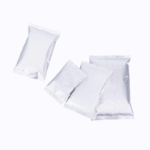
The words “gel pack” and “PCM pack” describe different aspects of thermal-control design. A gel pack generally refers to a flexible or semi-flexible package containing a gel formulation that is conditioned before use. A PCM pack refers to a package containing a phase-change material selected around a target transition behavior. In der Praxis, product construction, Füllformulierung, Gehäuse, Abmessungen, and conditioning instructions vary by supplier and product family.
This means the label alone does not provide enough information for a shipment decision. Two products called gel packs may have different flexibility, fill behavior, surface construction, conditioning requirements, or use limitations. Two PCM products may also differ in transition point, Formfaktor, Gehäuse, Kapazität, and packout role. The selection record should therefore identify the actual product or configuration being considered rather than relying on a category name.
| Auswahlfaktor | Gelpackung | PCM-Paket | What must be confirmed |
| - | - | - | - |
| Thermal-control concept | Gel formulation conditioned for the intended use | Phase-change formulation selected for the project temperature objective | Actual product data and intended application |
| Flexibilität | Often available in flexible formats, depending on construction | May be flexible, starr, or supplied in another form | Fit, Handhabung, and contact requirements |
| Konditionierung | Must follow the approved conditioning procedure | Must follow the approved conditioning procedure for the selected PCM | Ausrüstung, Zeit, Ausgangszustand, and confirmation method |
| Platzierung | May be arranged around or beside the payload | May require defined placement and separation | Packout drawing and loading instruction |
| Nutzlastrisiko | Contact and local temperature effects must be reviewed | Transition behavior and contact effects must be reviewed | Freeze sensitivity and allowable excursions |
| Validierungsbedarf | Complete configuration must be tested | Complete configuration must be tested | Umfang, Akzeptanzkriterien, und Wiederholbarkeit |
The table is a framework, not a product-performance ranking. It is intentionally written without unsupported temperature, hold-time, or capacity values.
## Start With the Target Temperature and Payload
The target temperature should be defined before selecting the coolant. Record the approved range, Ausflugsregeln, Produktempfindlichkeit, Nutzlastmasse, Paketabmessungen, Ausgangsbedingung, and the required shipment duration. The phrase “cold chain” is too broad to determine a coolant choice by itself.
Freeze sensitivity deserves special attention. A payload may need to remain refrigerated but must not be exposed to a frozen surface or an excessively cold local zone. In dieser Situation, the design may require barriers, Abstandshalter, eine andere Kühlmittelanordnung, a different conditioning process, or a different thermal-control concept. The selection should be based on the payload environment, not just the nominal temperature label of the coolant.
Use a payload brief such as this:
| Payload question | Record before selection |
| - | - |
| What is being shipped? | Product category and packaging layers |
| What temperature range applies? | Approved minimum, maximal, and excursion rule |
| Is freezing a concern? | Ja, NEIN, or conditions requiring separation |
| What is the payload size and mass? | Menge, Abmessungen, Anordnung, and total mass |
| What is the starting condition? | Ambient, gekühlt, or another controlled state |
| What is the shipment target? | Planned transit and design exposure |
| What handling risks exist? | Übergaben, Verzögerungen, Fahrzeugexposition, Zoll, oder Warten vor der Haustür |
| Welche Nachweise sind erforderlich? | Internal design review, customer review, or formal validation |
A product selection made without this information is a preliminary option, not an approved packout design.
## How Route Risk Changes the Choice
Route risk can change the amount of control, Trennung, and validation needed. A predictable route with controlled handoffs is different from a route with high ambient exposure, uncertain delays, or multiple transfers. The coolant should be selected in the context of that route rather than evaluated as an isolated component.
Consider these route questions:
- Is the shipment kept in controlled storage from origin to destination?
- How long can it remain on a dock or in a vehicle?
- Could it experience high ambient temperature or seasonal variation?
- Are weekends, Feiertage, Zoll, or delivery exceptions in scope?
- Could the box be opened or repacked during handling?
- Does the route require monitoring or a contingency plan?
For a variable route, the packout may need more explicit loading instructions, stärkere Trennung, a defined monitoring plan, or additional validation profiles. Neither gel nor PCM should be described as a universal solution simply because it has worked in a different route or box.
A route-risk review also helps prevent an incorrect use of “hold time.” A duration stated for one configuration and exposure should not be transferred to another payload, Jahreszeit, or carrier without evidence. The article can explain how to make the decision, but it should not invent a general performance number.
## Conditioning Is Part of the Product Choice
Conditioning is not a minor operating detail. It affects the starting state of the thermal-control component and therefore affects the behavior of the complete packout. The selection record should explain how the chosen gel or PCM product is conditioned, how the condition is confirmed, how long the component remains outside controlled storage before loading, and how the operator is expected to place it.
Compare the two options through the operational questions below:
| Conditioning question | Warum ist es wichtig |
| - | - |
| What equipment or environment is used? | The starting state may vary between facilities |
| What is the conditioning start and end record? | Supports repeatability and traceability |
| How is readiness confirmed? | Prevents loading by guesswork |
| How long is the handling window? | Limits uncontrolled change before closure |
| Is the loading sequence documented? | Prevents incorrect placement or missing barriers |
| What happens after a deviation? | Defines whether to correct, wiederholen, or hold the shipment |
A selection that looks attractive in a product comparison may be difficult to operate consistently. Umgekehrt, a product that fits an existing conditioning and loading process may reduce operational variation. The selection should therefore include the people who will actually condition and pack the shipment.
Do not publish a fixed conditioning temperature, Dauer, Füllgewicht, or handling instruction unless it is supported by an approved product or project record. When the value is not confirmed, describe the field that must be recorded instead.
Hilfreiche Entscheidungshilfen
Überprüfen Sie die Details, bevor Sie sich für die Verpackung entscheiden
Mit diesen schnellen Tools können Sie das Routenrisiko vergleichen, Größenanforderungen, Kühlmittelauswahl, und Verpackungsdetails, bevor Sie ein Angebot anfordern.
Trockeneisrechner
Schätzen Sie vor dem Verpacken den Bedarf an Trockeneis für gefrorene oder ultrakalte Sendungen.
Schätzen Sie TrockeneisCompliance-Checklisten-Generator
Erstellen Sie eine praktische Checkliste für die Verpackungsüberprüfung, Versand, und Dokumentation.
Checkliste erstellenReferenz zu Isoliermaterialien
Vergleichen Sie die Auswahl an Isoliermaterialien für unterschiedliche Kühlkettenverpackungsanforderungen.
Vergleichen Sie Materialien## Freeze Sensitivity and Contact Management
Freeze sensitivity should be treated as a packout design issue. A coolant component can create local contact conditions that differ from the average temperature in the box. Direkter Kontakt, insufficient spacing, ungleichmäßige Belastung, or an incorrectly positioned barrier may create a risk even when the overall packout appears well insulated.
The design review should decide:
- Whether direct coolant-to-payload contact is allowed;
- Which barriers or spacers are required;
- Whether the payload should be centered or separated from a cold surface;
- Which sensor location represents the contact-risk area;
- How the operator verifies the barrier is present;
- What acceptance criterion addresses the risk;
- Whether the risk changes with payload size or arrangement.
Gel and PCM should be compared using these actual design questions. Avoid vague statements such as “PCM is safer” or “gel is always more flexible.” The relevant question is whether the selected construction, Konditionierungszustand, Platzierung, and separation are suitable for the defined payload and route.
If a product is sensitive to freezing, a project review should include an explicit contact-risk assessment. The result should be recorded in the packout drawing and loading instruction, not left as an informal operator preference.
## Packout-Passform, Handhabung, and Repeatability
A coolant that performs well in isolation may not fit the required packout. Review the usable internal volume, coolant dimensions, Nutzlast-Fußabdruck, Deckelfreiraum, barrier thickness, Ladereihenfolge, and final closure. A design that cannot be packed consistently is not a reliable design, regardless of the coolant category.
Compare practical handling factors:
| Handling factor | Questions for the design team |
| - | - |
| Fit | Does the component fit without forcing the payload or insulation out of position? |
| Orientierung | Can the operator identify the correct direction and location? |
| Menge | Can the required quantity be checked before closure? |
| Trennung | Are barriers and spacers visible and repeatable? |
| Ausbildung | Can a trained operator reproduce the layout from the instruction? |
| Inspektion | Is there a final visual or procedural check? |
| Kontrolle ändern | What happens if the size, Material, oder Lieferantenwechsel? |
Document the chosen layout with a versioned drawing or photograph. If a component is substituted, assign a new configuration review unless the change has been assessed and shown not to affect the approved scope.
Repeatability is especially important when the same product will be packed at more than one location. The design should identify which steps are critical and how each site will confirm them. This is often more useful than comparing categories using generic claims.
## Build a Selection Decision Before Testing
A selection decision should explain why the chosen option fits the shipment requirement and what still needs to be tested. Use a decision matrix rather than a simple winner statement.
| Entscheidungsfrage | Gel pack decision | PCM pack decision | Evidence still needed |
| - | - | - | - |
| Does the option fit the payload layout? | Confirm dimensions and placement | Confirm dimensions and placement | Verpackungszeichnung |
| Does it address freeze sensitivity? | Confirm contact and barrier strategy | Confirm transition and contact strategy | Risk review and sensor plan |
| Can conditioning be repeated? | Confirm work instruction and readiness check | Confirm work instruction and readiness check | Conditioning record |
| Is the route profile covered? | Define exposure and validation scope | Define exposure and validation scope | Route-risk profile |
| Can operators load it consistently? | Confirm quantity, Orientierung, und Trennung | Confirm quantity, Orientierung, und Trennung | Operator check |
| What claim can be published? | Only the confirmed scope | Only the confirmed scope | Approved source and review |
The matrix should end with one of four outcomes: proceed to testing, revise the design, collect missing product information, or stop the selection. “Selected” should not be treated as equivalent to “validated.”
## Validate the Complete Configuration
After the preliminary choice, validate the complete configuration against the defined shipment profile. Notieren Sie die Nutzlast, Kasten, Isolierung, Kühlmitteltyp, Menge, Platzierung, Konditionierung, Streckenbelichtung, Sensorpositionen, sampling details, Akzeptanzkriterien, Abweichungen, Rohdaten, and final decision.
A comparison article should make this point clear: there is no meaningful universal ranking between gel packs and PCM packs without a common payload, common packout, common conditioning procedure, common exposure, and common acceptance criteria. If those conditions are not available, the responsible output is a selection framework, not a fabricated head-to-head test.
For project requirements, Tempks [Brauch Kaltkettenverpackung](https://www.tempcontrolpack.com/custom-cold-chain-packaging/) pathway can connect the shipment profile with concept review, Probenvorbereitung, Konditionierung, und thermische Tests. Any project result should be reported only within its tested scope.
## Common Selection Mistakes
Avoid these mistakes when comparing gel packs and PCM packs:
- Choosing by product label without defining the payload;
- Treating a nominal temperature as a complete performance claim;
- Assuming more coolant automatically improves the packout;
- Ignoring freeze sensitivity and direct-contact risk;
- Using a conditioning instruction from a different product or facility;
- Comparing products in different boxes or with different payloads;
- Calling a design option validated before testing it;
- Publishing a hold-time figure without a matching test record;
- Treating a supplier change or size change as automatically equivalent;
- Writing a product-category comparison that does not help the operator make a decision.
The better approach is to define the shipment, compare the actual options, document the operational requirements, and test the configuration that will really be used.
## Checkliste für die endgültige Auswahl
Before choosing a gel pack or PCM pack for a temperature-controlled shipment, bestätigen:
- The payload and approved temperature range are documented.
- Freeze sensitivity and contact restrictions are identified.
- The route and design exposure are defined.
- The insulation and usable packout volume are known.
- Conditioning and loading can be repeated.
- Kühlmittelplatzierung, Menge, Barrieren, and orientation are documented.
- Sensor positions and acceptance criteria address the main risks.
- Any published specification is supported by an approved source.
- The selection is clearly separated from validation approval.
- The final result is limited to the tested configuration and conditions.
Gel packs and PCM packs should be selected by shipment requirement, not by category preference. A credible choice explains the target temperature, Nutzlastempfindlichkeit, Routenrisiko, Konditionierungsprozess, Packout-Passform, operator controls, und Validierungsplan. When the shipment profile is defined, Tempk can help move from a preliminary comparison to a project-specific cold chain packaging configuration