Buying well in this category means separating core needs from assumptions. Once you define the real handling conditions, it becomes much easier to see whether a premium feature is useful, whether a simpler format will do the job, or whether you are about to buy the wrong container for the right reason.
In der Praxis, the container should be treated as a reusable handling and transport asset used in field-to-packhouse handling, Vorkühlung, palletized transport, Empfang, and cross-dock movement where airflow and washability are essential. That distinction matters because the vented plastic crate is part of the handling system, not the entire product protection strategy. It should support cleanliness, Rückverfolgbarkeit, and efficient movement without being mistaken for a refrigeration system. A vented crate can support cooling and product protection, but it cannot correct poor pre-cooling, bad pallet airflow, or incorrect reefer settings.
For imported food and agricultural goods, airflow and washability help, but they sit alongside sanitation and traceability duties. The container has to be easy to clean, easy to identify, and strong enough to protect the product through repeated wet handling and cross-border movement.
What Buyers Are Usually Trying to Solve
The fastest way to judge fit is to look at the real operating scenario rather than the catalog category. For produce imports, a vented crate often makes sense when the buyer needs quicker heat removal, cleaner reuse, and stronger protection than one-way corrugated can deliver. Importers moving berries, citrus, Tomaten, leafy vegetables, or mixed horticultural products also care about how the crate behaves after washing, because slow drying and trapped residue can become an operational problem.
A good crate choice supports the entire chain: Kühlung, Stapelung, Transport, store-level handling, Und, if the program is reusable, the trip back to the wash site. This is why the same vented plastic crate can be an excellent choice in one workflow and the wrong answer in another.
For produce and agricultural imports, airflow and durability help only when sanitation and identification are designed into the program as well. Reusable formats need to be washed, getrocknet, inspiziert, and traced just as seriously as they are stacked and shipped.
How to Compare Design Without Overbuying
Once the use case is clear, the next question is how the container behaves under repeated handling. Für diese Kategorie, the most important variables usually include airflow through vent geometry, compression strength when stacked, surface smoothness for bruise reduction, and washdown durability and drainage. These are not abstract technicalities. They determine whether operators can pack quickly, whether the load stays protected, and whether the container still performs after months of reuse.
Commercial product literature for vented reusable containers consistently treats open sidewalls as an airflow, Drainage, and drying feature. That is useful when product heat, Abwaschen, or retained moisture matter, but it also means the load is less shielded from splash, debris, and direct handling. Major reusable packaging lines use stack-only, stack-and-nest, and attached-lid formats for different reasons. Stack-only designs usually maximize interior cube, while tapered stack-and-nest formats reduce empty return volume at the cost of some usable space and dunnage precision.
Check how the vent pattern handles airflow, Drainage, und Reinigung. Large openings can improve cooling and drying, but they also expose the load to more debris and splash.
Look at real stacking behavior, not just a catalog photo. Stable column stacking, corner support, and pallet fit matter more than a vague claim of being stackable.
Review nesting efficiency in empty return conditions. A high nesting ratio reduces dead cube in trucks and warehouses, but deep taper can reduce usable volume when the tote is full.
Ask for the true internal dimensions and usable volume. External size alone does not tell you whether the container fits your trays, Packungen, or protective inserts.
Review how the container is labeled and identified. Flat label panels, molded IDs, or barcode-ready surfaces become important once the program scales beyond a single room or lane.
Wenn du kannst, compare these points with a physical sample rather than a specification sheet alone. A container that looks acceptable on paper may feel awkward on a line, unstable on a pallet, or difficult to wash and relabel once it enters real operations.
Where This Format Usually Works Best
The best applications are the ones where the container solves a repeat problem. For produce import programs, that often means improving one or more of these points: handling protection, Inszenierungsdisziplin, sauberere Präsentation, more stable stacking, or easier return logistics.
For produce imports, a vented crate often makes sense when the buyer needs quicker heat removal, cleaner reuse, and stronger protection than one-way corrugated can deliver. Importers moving berries, citrus, Tomaten, leafy vegetables, or mixed horticultural products also care about how the crate behaves after washing, because slow drying and trapped residue can become an operational problem. A good crate choice supports the entire chain: Kühlung, Stapelung, Transport, store-level handling, Und, if the program is reusable, the trip back to the wash site.
If your workflow is irregular, Ein Weg, or highly unpredictable, a reusable program may still work, but the bar for justification is higher. That is especially true when losses, cleaning complexity, or cross-border recovery of empties will drive the total cost more than the container purchase itself.
A Quick Comparison Before You Shortlist Suppliers
Most buying mistakes happen when teams compare formats that solve different problems. The table below is not a brand ranking. It is a way to separate the main option types so you can match them to the workflow instead of paying for the wrong strength.
| <stark>Option</stark> | <stark>Am besten für</stark> | <stark>Hauptstärke</stark> | <stark>Wichtigste Vorsichtsmaßnahme</stark> |
| Vented reusable crate | cooling-sensitive fresh produce | Luftstrom, Waschbarkeit, Wiederholung verwenden | needs a return and sanitation system |
| Solid reusable tote | items that need splash protection | better barrier against debris | less airflow for pre-cooling |
| One-way corrugated box | single-trip or low-return lanes | low initial unit cost | weaker in moisture and repeated handling |
Use a table like this as a starting point, not a final approval. Once you narrow the category, you still need to confirm dimensions, Auspacken, handling fit, and supplier consistency in the exact version you plan to buy.
What Buyers Should Ask Before Ordering in Bulk
The supplier decision is not only about price. In a real B2B program, you are buying mold design control, Materialkonsistenz, and long-run availability as much as the container itself. A supplier who cannot hold dimensions, Materialspezifikation, or repeat part identity can turn a sensible packaging choice into a recurring operational problem.
Zu diesem Thema, the review should pay close attention to food-contact resin and hygiene support, standardized footprints for pallets and retail systems, traceability fields or molded ID options, and cold-room and wash-line durability. If your program will involve multiple sites, multiple SKUs, or a long service life, those questions matter early because they are expensive to fix later.
Confirm internal and external dimensions, true usable volume, and any tolerance range that could affect fit on shelves, Paletten, Karren, or conveyors.
Ask which resin is used and whether the supplier can hold that material specification over time. In sensitive operations, an unannounced material change can create new cleaning or performance issues.
Review the closure, Entlüftung, Drainage, and handle design in the exact version you plan to buy. Small hardware or mold differences can change how the container behaves in the field.
Check stackability, Verschachtelung, and return efficiency under your real handling pattern, including pallet height, backhaul distance, and whether operators load by hand or with equipment.
Understand hygiene and cleaning expectations. A reusable container is only valuable when it can be washed, getrocknet, inspiziert, and returned without introducing operational risk.
For food and agricultural use, review wash-line compatibility, drain behavior, and how identification stays legible after repeated cleaning and wet handling.
Specify labeling and traceability needs upfront, including barcode panels, molded IDs, Farbcodierung, quarantine tags, or other status markers.
Ask for load guidance under realistic conditions: full stack weight, Temperatureinwirkung, Nasshandhabung, Sturzrisiko, and repeated opening or washing cycles.
Clarify MOQ, Vorlaufzeit, tooling or customization options, replacement availability, and whether approved samples match volume production.
Document sample-to-production consistency and change control. This matters especially when the container has to fit a qualified pack-out, a clean workflow, or an automated handling step.
Do not approve a supplier on sample quality alone. Ask how the approved sample will be protected from silent changes in resin, mold condition, Hardware, insulation layout, or accessory parts once production volumes increase.
Where Buyers Commonly Overestimate the Container
For imported food and agricultural goods, airflow and washability help, but they sit alongside sanitation and traceability duties. The container has to be easy to clean, easy to identify, and strong enough to protect the product through repeated wet handling and cross-border movement.
For produce and agricultural imports, airflow and durability help only when sanitation and identification are designed into the program as well. Reusable formats need to be washed, getrocknet, inspiziert, and traced just as seriously as they are stacked and shipped. Bei vielen Einsätzen, the container also has to support lot identification, inbound checks, and a wash process that does not leave moisture trapped in corners or labels unreadable after repeated cycles.
That is why container choice should be discussed with operations, Qualität, und Logistik zusammen. A crate or tote that improves airflow but complicates cleaning, Identifikation, or product protection may not improve the program overall.
Common Buying Mistakes
A lot of container programs fail for ordinary reasons. The format itself may be sound, but a few overlooked details create friction every day until the buyer concludes that reusables were a bad idea.
Buying maximum ventilation without checking whether the commodity needs more splash or bruise protection.
Ignoring washdown, Trocknen, and return logistics while focusing only on the crate’s initial purchase price.
Choosing a footprint that stacks poorly on local pallets, store displays, or wash-line equipment.
Treating reusability as a sustainability win without confirming traceability, recovery rate, and sanitation discipline.
The cure is not a more complicated specification. It is a clearer one: define the route or workflow, define the control points, and make the supplier prove fit against those realities before volume approval.
How to Validate Fit Before Full Rollout
A short pilot often reveals more than a long specification review. Run the container through your real packing routine, transport touches, receipt checks, and return or cleaning steps. That process quickly shows whether the handles are awkward, the labels peel, the stack becomes unstable, or the thermal pack-out is too easy to improvise incorrectly.
If several teams will touch the asset, include them all in the pilot: Operationen, Logistik, Qualität, and the receiving site. The best packaging programs are not the ones that look excellent in one department. They are the ones that make sense across the full loop.
During the pilot, write down what must stay fixed in production. That may include resin type, wall format, insert layout, Entlüftungsmuster, coolant arrangement, lid hardware, or labeling location. Those points become the backbone of change control once you move to volume.
Sustainability Without Oversimplifying the Decision
Industry discussion around reusable packaging has shifted from simple waste reduction to a broader view of service life, Renditeeffizienz, repairability, und Rückverfolgbarkeit. A reusable asset only performs well when the loop around it is realistic. That means you should be cautious with simplistic claims. A reusable format is not automatically the better environmental or economic choice if return distances are long, recovery rates are poor, or wash steps are inefficient.
Für einige Bahnen, the sustainability win comes from longer service life and fewer damaged shipments. Für andere, it comes from standardized footprints, better fleet visibility, or the ability to repair or replace only a few components instead of the entire package.
The practical test is straightforward: can your organization recover the container, clean it, identify it, and put it back to work without creating hidden labor or quality risk? Wenn die Antwort ja ist, the reusable case becomes much stronger. Wenn nicht, the sustainability story stays theoretical.
FAQ
Why choose a vented crate instead of corrugated for imported produce?
Reusable crates generally provide better airflow, wet-strength, Waschbarkeit, and repeat handling performance, especially in high-volume lanes.
Does more ventilation always mean better produce life?
Nicht unbedingt. The vent pattern has to match the commodity, cooling method, liner setup, and stacking pattern.
What should buyers ask a crate manufacturer?
Ask about resin, vent design, top-load performance, wash-line compatibility, Verschachtelungsverhältnis, molded identification options, and sample-to-production consistency.
Fazit
A good decision in this category is not about finding the most impressive catalog line. It is about matching the container to fresh fruits, Gemüse, Kräuter, and other perishable produce entering an importer or wholesale distribution network, the route or workflow, and the controls needed around it. When the fit is right, the container becomes a quiet operational asset rather than a constant exception.
If you remember only one rule, let it be this: test the exact design against your real handling conditions before scaling the order. That is the safest way to confirm whether the supplier’s promise will survive daily use, repeated cleaning, and the operational variation that comes with growth.
Über Tempk
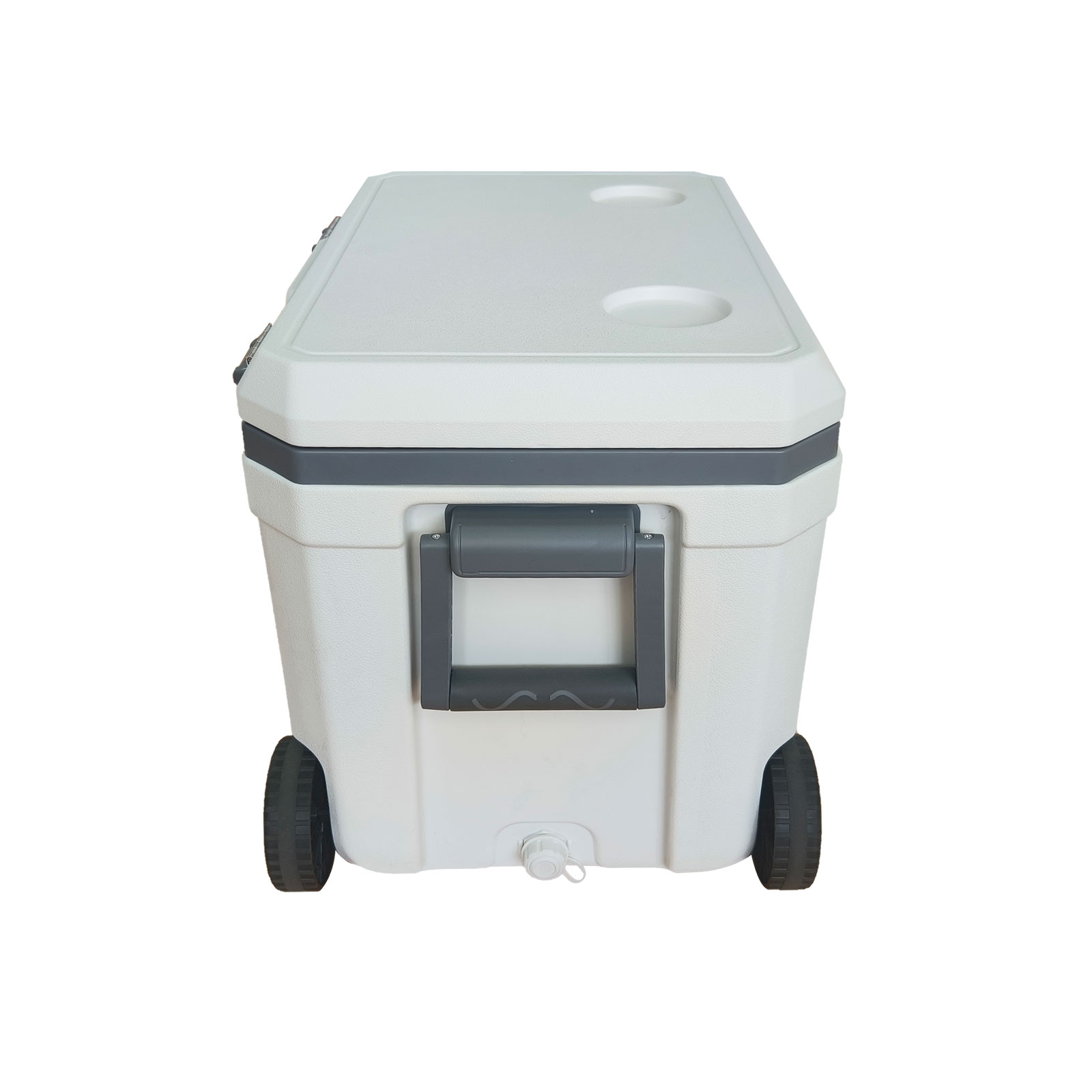
We focus on temperature-controlled packaging for business and consumer applications. Tempk, eine Marke von Shanghai Huizhou Industrial Co., Ltd., presents product lines such as ice packs, Isoliertaschen, Kühlboxen, Palettenabdeckungen, and custom temperature-control packaging. The company also highlights a CNAS-certified lab and custom solution support for food, pharmazeutisch, Gesundheitspflege, and logistics use cases. Zu diesem Thema, the most relevant fit is cold-chain packaging solutions for produce logistics, inklusive Isoliertaschen, Boxen, Eisbeutel, and custom transport support when temperature control is needed beyond the crate itself.
Nächster Schritt
If you are comparing bulk options, ask for a sample and line it up against your real handling, Reinigung, and route conditions before placing volume.