So legen Sie isolierte Palettenabdeckungen für Fische ab der Sendung fest
Beginnen Sie ein Fischpalettenabdeckungsprojekt nicht mit dem Vergleich der Folienschichten. Beginnen Sie mit dem Empfangen: In welchem Zustand müssen die Meeresfrüchte sein?, Welche Beweise stützen die Akzeptanz?, und welche Expositionsereignisse dieses Ergebnis gefährden könnten? Isolierte Palettenabdeckungen für Fische kann dann als sekundäre Barriere konzipiert werden, die den Wärmefluss während dieser Ereignisse verlangsamt. Sie kühlen die Ladung nicht, Warmen Fisch kalt stellen, Ersetzen Sie das Eis oder eine qualifizierte Kühlmittelpackung, Erstellen Sie eine HACCP-Kontrolle, oder jede Route qualifizieren.
Wenn man von der empfangenden Entscheidung aus rückwärts arbeitet, wird eine Spezifikation erstellt. Es verbindet die Gefahrenanalyse für Meeresfrüchte, Produktzustand, Palette, Kühlanlage, Routendaten, Abdeckungskonstruktion, Überwachung, und Bedienerverfahren. Jede Verbindung muss eindeutig sein, bevor die Abdeckung in den regulären Versand aufgenommen wird.
Entscheidung 1: Definieren Sie den akzeptablen Ankunftsstatus
Schreiben Sie separate Akzeptanzerklärungen für die Lebensmittelsicherheit, Qualität, und körperliche Verfassung. Die Lebensmittelsicherheitserklärung sollte aus der Gefahrenanalyse und dem HACCP-Plan des verantwortlichen Verarbeiters stammen. Die Qualitätsaussage kann eine produktspezifische Temperatur beinhalten, eingefrorener Zustand, verbleibendes Eis, sensorische oder Haltbarkeitskriterien, und Kundenanforderungen. Bei der physischen Annahme kann es sich um Siegel handeln, Integrität der Vakuumverpackung, Kartons, Glasur, Leckage, Kontamination, und Etiketten.
Diese Trennung verhindert einen häufigen Fehler: Verwenden eines Core-Logger-Messwerts als Antwort auf jede Frage. Eine Temperaturkurve kann eine Zeit-Temperatur-Beurteilung unterstützen. Es kann nicht angezeigt werden, ob eine Vakuumverpackung ausgelaufen ist, Ein Karton ist zusammengebrochen, oder Schmelzwasser verunreinigte die Palette. Physikalische Beobachtungen können keinen unsichtbaren Temperaturverlauf rekonstruieren.
Verarbeiter von Meeresfrüchten in den USA, abgedeckt durch 21 CFR -Teil 123 Sie müssen eine Gefahrenanalyse durchführen und einen HACCP-Plan umsetzen, wenn Risiken für die Lebensmittelsicherheit mit hinreichender Wahrscheinlichkeit auftreten. Die FDA-Richtlinie zu Gefahren und Kontrollen in Fisch und Fischereiprodukten stellt Produkte bereit- und gefahrenspezifische Kontrollinformationen. Histaminbildende Spezies, gekochte gekühlte Produkte, rohe, verzehrfertige Meeresfrüchte, und sauerstoffreduzierter verpackter Fisch kann unterschiedliche Strategien erfordern. Ein Hersteller von Palettenabdeckungen sollte niemals den kritischen Grenzwert festlegen.
Der FDA-Lebensmittelkodex ist ein nützlicher Kontext für den Einzelhandel und die Gastronomie, einschließlich Kalthaltung und Zeit-/Temperaturkontrolle für sichere Lebensmittel, Es handelt sich jedoch um einen Modellcode und nicht um eine universelle internationale Spezifikation für Fischpaletten. Export, Großhandel, Verarbeitung, und Spezialprodukte können anderen validierten Kontrollen und Gerichtsstandsregeln unterliegen. Dokumentieren Sie, welche Behörden und Kundenvorgaben gelten.
Entscheidung 2: Identifizieren Sie die thermische Lücke, Minute für Minute
Teilen Sie die Fahrspur in kontrollierte und exponierte Abschnitte auf. Zu den kontrollierten Segmenten kann ein Kühlraum gehören, Gefrierschrank, Kühlwagen, oder angetriebener Container. Zu den exponierten Segmenten gehört auch die Inszenierung, Laden, Cross-Docking, Inspektion, Luftfrachtstau, Zoll, Stromanschluss, Entladung, und Empfangen.
Für jedes exponierte Segment, Aufnahmedauer, schattige Umgebungstemperatur, direkte Strahlung, Wind oder Ventilatorluftstrom, Bodenkontakt, Türposition, und jede Abdeckungsöffnung. Nutzen Sie Routinedaten und einen glaubwürdigen Verzögerungsfall. Vermeiden Sie es, nur für eine durchschnittliche Reise zu entwerfen. Eine verpasste Verbindung oder eine Warteschlange am Dock kann das Risiko dominieren, selbst wenn der Großteil der Route gut kontrolliert ist.
Geben Sie dann in messbarer Sprache die Aufgabe des Deckblatts an. Zum Beispiel: „Reduzieren Sie die Wärmeentwicklung an der Ober- und Außenverpackung einer Palette mit gefrorenem Fisch beim Transfer von Kühlspeicher in einen angetriebenen Exportcontainer, inklusive einer definierten Leistungsverzögerung.“ Diese Aussage identifiziert den Standort, Produktzustand, Ereignis, und objektiv. Es wird nicht garantiert, dass die Abdeckung einen unbegrenzten gefrorenen Zustand aufrechterhalten kann.
Wenn die Gefährdung durch einen behebbaren Prozessfehler verursacht wird, Korrigieren Sie es zuerst. Kürzere Dockverweildauer, ein vorgekühltes Fahrzeug, bessere Türdisziplin, angetriebene Inszenierung, oder ein geänderter Termin könnte eine zusätzliche Isolierung übertreffen. Die Abdeckung sollte die Widerstandsfähigkeit erhöhen, nachdem der Primärvorgang abgeschlossen ist.
Entscheidung 3: Wählen Sie die primäre Kältequelle
Die Isolierung verringert die Wärmeübertragungsrate; Es leitet die einströmende Wärme nicht unbegrenzt ab. Definieren Sie die Quelle, die den Produktzustand festlegt und aufrechterhält.
Für frischen Fisch, Die zugelassene Kühlung kann auf Eis basieren, gekühltes Meerwasser, mechanische Kühlung, oder eine andere kontrollierte Methode. Die Leitlinien der FAO legen in vielen Frischfischsystemen stets Wert auf eine schnelle Kühlung und die richtige Verwendung von Eis. Bringen Sie eine Abdeckung erst an, nachdem das Produkt seinen genehmigten Zustand erreicht hat, es sei denn, der validierte Prozess sieht ausdrücklich die Abdeckung während des Abkühlens vor.
Für gekühlt verpackte Meeresfrüchte, Das primäre System ist in der Regel die gekühlte Lagerung und der Transport, möglicherweise unterstützt durch eine qualifizierte Kühlmittelanordnung für freiliegende Segmente. Kühlmittel müssen gezielt platziert werden. Übermäßig Kaltpackungen kann zu lokalem Einfrieren führen, während unzureichende oder schlecht verteilte Packungen warme Zonen hinterlassen können. Kondensation und Gehäusekompatibilität gehören zum Design.
Für gefrorenen Fisch, Der Gefrierschrank und das Kühlfahrzeug oder der Kühlcontainer halten den spezifizierten Gefrierzustand des Produkts aufrecht. Eine Abdeckung kann die Exposition bei kurzer Übertragung abmildern. Es sollte nicht zur Planung einer langen Reise ohne Motor verwendet werden.
Wo die Hygienevorschriften der FDA für den Transport gelten, Die versicherten Parteien haben Verantwortung im Zusammenhang mit Hygienepraktiken, geeignete Transportmittel, und angemessene Temperaturkontrolle für Lebensmittel, die dies aus Sicherheitsgründen benötigen. Eine abgedeckte Palette in einem ungeeigneten oder schlecht bedienten Fahrzeug bleibt eine ungeeignete Sendung.
Entscheidung 4: Konstruieren Sie die physische Schnittstelle
Messen Sie die fertige Palette in ihrer größten zugelassenen Konfiguration. Überhang einbeziehen, Riemen, Stretchfolie, Eckbretter, Topform, Etiketten, Abflüsse, Lüftungsschlitze, und Gabelstaplereinträge. Notieren Sie die niedrigsten und höchsten zulässigen Lasten, wenn erwartet wird, dass eine Abdeckungsfamilie für mehrere Höhen geeignet ist.
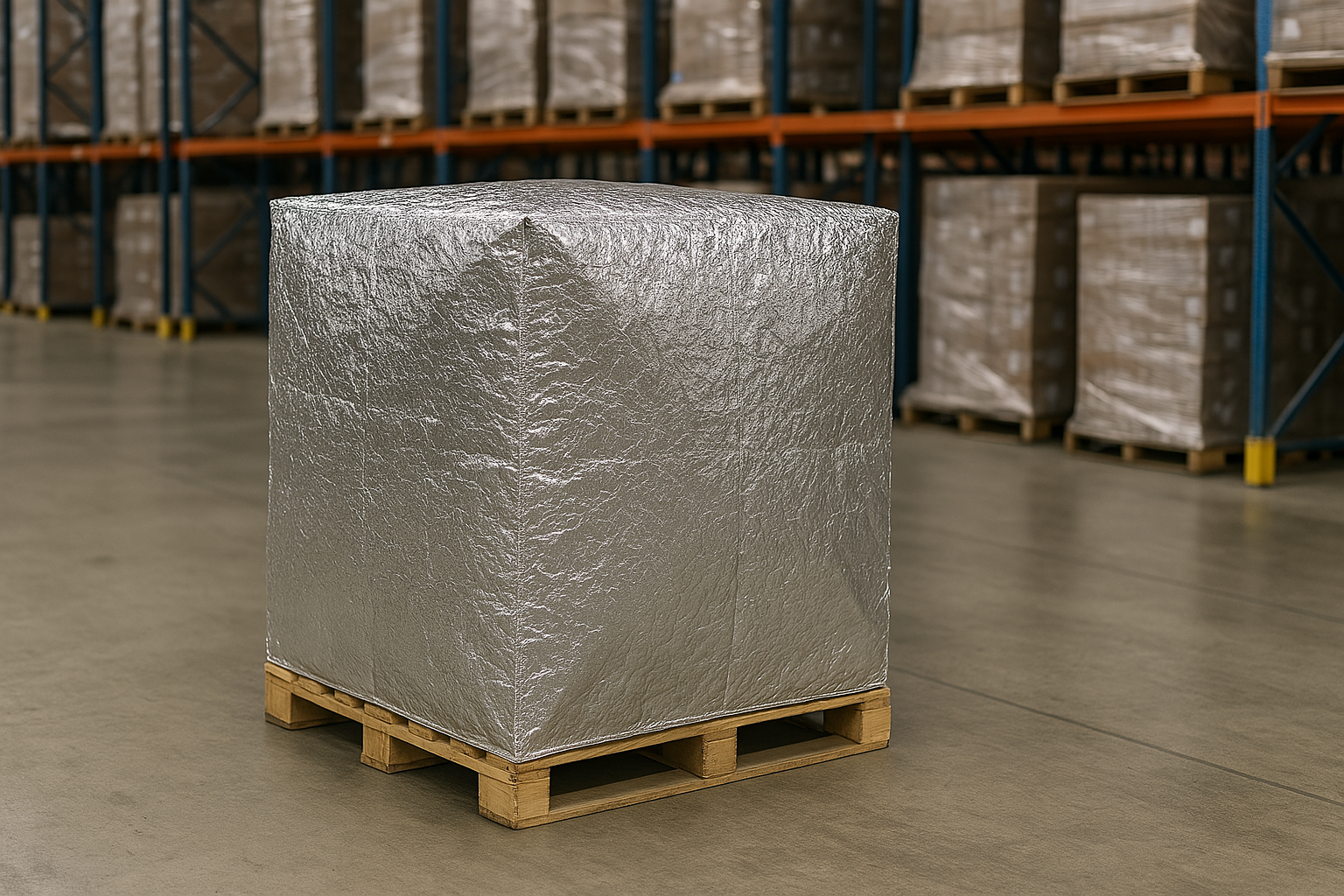
Die äußere Oberfläche, Isolierung, Innenseite, Nähte, Schließungen, und Basis erfüllen jeweils eine andere Aufgabe. Eine reflektierende Außenseite kann den Strahlungsaustausch verringern, wenn sie freiliegt und sich in einem geeigneten Zustand befindet. Der Isolationskern widersteht Leitung und interner Luftbewegung. Abschlüsse begrenzen den unkontrollierten Luftaustausch. Nähte und komprimierte Ecken sind Wärmebrücken. Der Sockel kann Luft zulassen, Wasser sammeln, oder Wärme vom Boden ableiten.
Feuchteverhalten gezielt gestalten. Frischer, gefrorener Fisch kann Schmelzwasser erzeugen. Gefrorene Paletten können kondensieren, wenn sie feuchter Luft ausgesetzt werden. Ein langer Rock kann schmutzige Böden berühren; Eine versiegelte Basis kann Wasser sammeln; Eine poröse Schicht kann Gerüche oder Verunreinigungen zurückhalten. Entwässerung vereinbaren, Entfernung, Reinigung, Trocknen, und Lagerung mit Sanitäranlagen und Betrieb.
Die Abdeckung befindet sich normalerweise außerhalb versiegelter Versandverpackungen. Wenn es mit exponierten Fischen in Kontakt kommen könnte, Eis, das mit Fischen in Berührung kommt, oder eine Oberfläche, die mit Lebensmitteln in Berührung kommt, Überprüfen Sie das Material für den vorgesehenen Verwendungszweck. "Wasserdicht,” „ungiftig,„ oder „Lebensmittellogistik“ ist kein Ersatz für die Bestimmung des Lebensmittelkontakts.
| Schnittstelle | Spezifikationsfrage | Zulassungsnachweis |
|---|---|---|
| Palettenumschlag | Passt die Abdeckung auf jede zugelassene Höhe, ohne zu quetschen oder große Lücken zu bilden?? | Maßstudie und Produktionstoleranzen |
| Gekühlter Luftstrom | Verhindert die Abdeckung die erforderliche Kühlung oder blockiert sie die Fahrzeugzirkulation?? | Belastungsplantest mit installierter Abdeckung |
| Feuchtigkeit und Entwässerung | Wohin fließt Kondens- oder Schmelzwasser?? | Beobachtung des Umgangs mit Nässe und Überprüfung der Hygiene |
| Etiketten und Zugangserhalt | Können sich die Mitarbeiter identifizieren?, überprüfen, und öffnen Sie die Ladung korrekt? | Betriebstest- und SOP-Fotos |
| Oberfläche wiederverwenden | Kann das Gerät gereinigt werden?, getrocknet, inspiziert, und gespeichert? | Genehmigte Verfahren und Ruhestandskriterien |
Die Tabelle zwingt thermische und sanitäre Entscheidungen in die gleiche Entwurfsprüfung. Eine Abdeckung sollte nicht passieren, weil ihre Kammerkrümmung gut aussieht, während die Wasserführung oder der Luftstrom ungelöst bleiben.
Entscheidung 5: Erstellen Sie Beweise, die die Sendung widerspiegeln
Beginnen Sie das Protokoll mit der Verwendungserklärung und den Akzeptanzkriterien. Identifizieren Sie das Produkt oder einen berechtigten Ersatz, Verpackung, Palettentyp, Überarbeitung des Covers, Ausgangsbedingung, primäre Kältequelle, Umgebungsprofil, ggf. Solarlast, Luftstrom, Dauer, Öffnungen, und Verzögerung. Verwenden Sie produktionsrepräsentative Abdeckungen und legen Sie fest, wie viele Durchläufe für das Risiko und die Variabilität erforderlich sind.
Platzieren Sie die Sensoren entsprechend den Wärmepfaden. Ein oberer Sensor kann die Strahlungsbelastung anzeigen; Kanten- und untere Ecksensoren können Luftlecks aufdecken; Ein Bodensensor kann die Bodenleitung aufdecken; Der Kern bietet eine langsam reagierende Referenz. Umgebungs- und Fahrzeugsensoren beschreiben die Herausforderung. Produkt- oder Verpackungssensoren beschreiben die Reaktion. Kein einzelner Punkt repräsentiert die gesamte Palette.
Hilfreiche Entscheidungshilfen
Überprüfen Sie die Details, bevor Sie sich für die Verpackung entscheiden
Mit diesen schnellen Tools können Sie das Routenrisiko vergleichen, Größenanforderungen, Kühlmittelauswahl, und Verpackungsdetails, bevor Sie ein Angebot anfordern.
Verpackungsauswahl
Vergleichen Sie isolierte Verpackungsoptionen nach Produkt, Route, und Temperaturbedarf.
Verpackung findenTrockeneisrechner
Schätzen Sie vor dem Verpacken den Bedarf an Trockeneis für gefrorene oder ultrakalte Sendungen.
Schätzen Sie TrockeneisEisbeutel-Rechner
Schätzen Sie die Menge an Gel-Eisbeuteln für gekühlte Sendungen und nutzen Sie die praktische Routenplanung.
Schätzen Sie EisbeutelSensoridentität aufzeichnen, Kalibrierungs- oder Verifizierungsstatus, Genauigkeit, Protokollierungsintervall, Standort, Befestigungsmethode, und synchronisierte Zeit. Rohdaten aufbewahren und Abweichungen dokumentieren. Geben Sie nur die Präzision an, die die Instrumente unterstützen.
Verwenden Sie ein Steuerelement, wenn es die Frage beantwortet. Eine nicht abgedeckte Palette kann während eines sicheren Entwicklungstests einen inkrementellen Schutz aufweisen. Der aktuell genehmigte Versicherungsschutz kann als Maßstab für eine vorgeschlagene Überarbeitung dienen. Für einen Betriebsversuch, Blocktüröffnungen, Kühlveranstaltungen, Abdeckungsentfernung, und Ort, damit die thermische Spur einen Kontext hat.
Qualifizierung ist die dokumentierte Schlussfolgerung, dass die Gesamtheit der Beweise eine definierte Verwendung unterstützt. Es handelt sich nicht um eine der Isolierung innewohnende Eigenschaft. Der Geltungsbereich sollte die Produktfamilie benennen, Palettensortiment, Route oder Profil, Saison, sofern relevant, Abdeckungskonstruktion, Installation, Primärkühlung, und Akzeptanzkriterien. Änderungen außerhalb dieses Bereichs bedürfen einer Prüfung.
Entscheidung 6: Verbinden Sie die Abdeckung mit HACCP und Qualitätsaufzeichnungen
Entscheiden Sie, ob versicherungsbezogene Daten überwacht werden, Überprüfung, Validierungsunterstützung, oder allgemeine Qualitätsinformationen. Diese Begriffe haben unterschiedliche Rollen. Unter Meeresfrüchten HACCP, Überwachungsaufzeichnungen zeigen, ob ein kritischer Kontrollpunkt unter Kontrolle blieb; Bei der Verifizierung wird überprüft, ob das System wie vorgesehen funktioniert; Durch Validierung oder wissenschaftliche Unterstützung wird nachgewiesen, dass die Gefahren durch die Kontrollmaßnahmen beherrschbar sind. Der verantwortliche Bearbeiter sollte diese Rollen zuweisen.
Ein Palettenlogger kann wertvoll sein, ohne dass ein HACCP-Protokoll vorliegt. Wenn das Unternehmen es zu einem Teil einer kritischen Kontrolle macht, Der Plan erfordert definierte Verfahren, Frequenz, verantwortliche Person, Plattenrezension, Kalibrierung oder Genauigkeitsprüfungen, Abweichungen, und ggf. Korrekturmaßnahmen. Fügen Sie Marketingmaterialien keinen Logger hinzu und gehen Sie nicht davon aus, dass er diese Elemente erfüllt.
Der Empfang muss über einen Eskalationspfad verfügen. Der Empfänger sollte wissen, wie Fahrzeugaufzeichnungen zu interpretieren sind, Palettendaten, Produktabmessungen, und physikalische Beobachtungen. Ein Alarm soll die genehmigte Auswertung auslösen, keine automatische Annahme oder Ablehnung, es sei denn, der Plan sieht dies ausdrücklich vor. Sorgen Sie für die Rückverfolgbarkeit zwischen den Paletten, Abdeckung, Logger, Lieferung, und viel.
Für importierte Meeresfrüchte in den Vereinigten Staaten, Zu den Verpflichtungen des Importeurs im Rahmen des HACCP-Rahmenwerks für Meeresfrüchte können Aufzeichnungen und Überlegungen zu positiven Schritten hinzugefügt werden. Zu den Global Lanes gehören auch Zielvorgaben und Kundenvorgaben. Halten Sie den Cover-Datensatz verbunden mit, aber verschieden von, die umfassendere regulatorische Akte.
Entscheidung 7: Machen Sie Wiederholungen sicher, Kaufbar, und rechenschaftspflichtig
Konvertieren Sie die genehmigte Konfiguration in eine kurze, visuell, kontrollierte SOP. Zeigen Sie die korrekte Teilenummer und Revision der Abdeckung an, Orientierung, Palettensortiment, Anwendungsreihenfolge, Schließungen, Etikettenzone, Sensorstandort, Inspektion, Entfernung, und Speicherung. Schließen Sie Stoppbedingungen für die Warmfreigabe ein, falsche Größe, Tränen, offene Nähte, zerdrückte Isolierung, nasser oder verschmutzter Innenraum, Geruch, Schimmel, fehlende Identität, und nicht genehmigte Reparaturen.
Schulen Sie die Leute, die tatsächlich am Dock arbeiten, und beobachten Sie sie während der ersten Verladungen. Prüfen Sie, ob Kühlraumhandschuhe den Verschluss betätigen können, Die Abdeckung bleibt an den Ecken hängen, Mitarbeiter betreten Gabelstaplerspuren, und die fertige Einheit passt in Fahrzeug und Endgerät. Passen Sie das Design oder die Arbeitsmethode vor der Skalierung an.
Bei Erhalt, vier getrennte Entscheidungen: Zustand der Meeresfrüchte, Paketbedingung, Zustand der Abdeckung, und Datenvollständigkeit. Ein Produkt kann akzeptabel sein, während eine wiederverwendbare Hülle ausgemustert werden muss. Eine solide Abdeckung rettet beschädigte Meeresfrüchte nicht. Dokumentieren Sie jedes Ergebnis.
Die Änderungskontrolle sollte eine Außenfolie umfassen, Isolierung, Innenfutter, Klebstoff, Nähen, Nahtband, Schließung, Dimension, Produktionsstandort, Reparaturmaterial, Palettenhöhe, Produktpaket, Fahrzeug, Route, und primäre Kältequelle. Die Beschaffung sollte vor einem Lieferantenwechsel eine Benachrichtigung verlangen. Qualität und Lebensmittelsicherheit entscheiden über die Überprüfung, gezieltes Testen, oder eine Umqualifizierung ist notwendig.
Kauffragen, die schwache Angebote aufdecken
Bitten Sie den Lieferanten, die vollständigen Bedingungen für jeden thermischen Anspruch anzugeben. Welche Palette, Nutzlast, Starttemperatur, Umgebungsprofil, Sensoren, Dauer, Öffnungen, und Akzeptanzkriterien wurden verwendet? War Direktstrahlung enthalten?? War die Abdeckung trocken?? War ein Unterlagepolster vorhanden? Wurden Ergebnisse wiederholt??
Fragen Sie, wie Produktionseinheiten im Vergleich zur getesteten Einheit kontrolliert werden. Abmessungen, Schichtaufbau, Nahtabstand, Schließungsort, und materielle Substitutionen können alle von Bedeutung sein. Fordern Sie einen Muster-zu-Produktions-Vergleich und einen Eingangsprüfplan an.
Fragen Sie, wie sich Feuchtigkeit und Reinigung auf den Bezug auswirken. Welche Chemie und Methode sind zugelassen?? Wie trocknet es?? Welcher Schaden löst eine Reparatur oder Stilllegung aus?? Was passiert nach Kontakt mit ausgelaufenen Meeresfrüchten oder Schmelzwasser?? Vermeiden Sie eine nicht unterstützte feste Wiederverwendungsanzahl.
Endlich, Fragen Sie, wie der Vorschlag mit dem Kühlgut funktioniert, Lebensmittelsicherheitsplan, Empfangsmethode, und End-of-Life-Netzwerk. Ein niedriger Stückpreis kann durch eine langsame Anwendung ausgeglichen werden, blockierter Luftstrom, Reinigungsarbeiten, Rückfracht, oder verlorene Cover.
Nachhaltigkeit ist eine Designanforderung, Kein Etikett
Definieren Sie die zu vergleichende Funktion: eine Fischpalette, die im zugelassenen Zustand über eine festgelegte Route geliefert wird. Vergleichen Sie Einweg- und Mehrwegoptionen mit derselben Funktion. Berücksichtigen Sie Material und Herstellung, Frachtgewicht und -volumen, Reinigung, Trocknen, kehrt zurück, Reparaturen, Verluste, tatsächliche Lebensdauer, und Entsorgung bzw. Recycling.
Geschlossene Fahrspuren können die Wiederverwendung unterstützen, da die Rückgabe geplant ist und die Inspektion zentralisiert werden kann. Einseitige Exportrouten können ein leichteres Design bevorzugen, wenn eine Wiederherstellung unrealistisch ist. Mehrschichtige Abdeckungen können eine gute Leistung erbringen, sind jedoch schwierig zu recyceln; Einfachere Strukturen können die End-of-Life-Optionen verbessern, können jedoch die Haltbarkeit oder Isolierung verändern. Testen Sie den Kompromiss, anstatt davon auszugehen, dass die umweltfreundlicher klingende Funktion gewinnt.
Produktabfälle gehören in die Bewertung, aber verwenden Sie gemessene Daten. Wenn eine Abdeckung Temperaturschwankungen oder aussortierte Meeresfrüchte auf einer Route reduziert, Dokumentieren Sie die Ausgangslage und das Ergebnis. Weisen Sie keinen Abfalleinsparungsprozentsatz ohne Belege zu.
Abschluss: Die Spezifikation in einem Satz
Auf diese Weise lässt sich ein vertretbares Programm zusammenfassen: Verwenden Sie eine kontrollierte Abdeckungsrevision für ein definiertes Fischprodukt und eine definierte Palette, nach zugelassener Abkühlung, bei identifizierten exponierten Ereignissen, mit geeigneter Kühlung, hygienische Handhabung, Kartierte Überwachung, Akzeptanzkriterien, eine Betreiber-SOP, und dokumentierte Änderungskontrolle.
Isolierte Palettenabdeckungen für Fische sind gerade deshalb wertvoll, weil ihre Rolle begrenzt und überprüfbar ist. Sie verlangsamen den Wärmefluss. Das HACCP-System des Lebensmittelunternehmens, Kühlung, zugelassene Kühlmethode, Hygiene, Aufzeichnungen, und qualifizierte Mitarbeiter schützen die gesamte Lieferkette für Meeresfrüchte.
Über Tempk
Tempk ist Shanghai Tempk Industrial Co., Ltd.'s Kühlkettenverpackung Marke. Produktseiten umfassen Thermopalettenabdeckungen, Isolierte Verpackung und Kisten, Kühlmittel, und PCMs; Auf den Lösungsseiten wird die Verpackungsüberprüfung beschrieben, Planung von Holzfällerpositionen, und Validierungsplanunterstützung. Wir können diese Funktionen rund um eine kundenspezifische Fischpalette platzieren, primäre Kühlmethode, und Routenherausforderung zur Unterstützung einer strukturierten Verpackungsdiskussion. Der Verarbeiter oder ein anderes verantwortliches Lebensmittelunternehmen ist weiterhin für die Gefahrenanalyse verantwortlich, HACCP-Kontrollen, Hygiene, Produktkriterien, und Freigabeentscheidungen, und eine Abdeckung darf nicht als Kühlung präsentiert werden.
Teilen Sie die Ankunftsvoraussetzung mit, Palettengeometrie, Kühlquelle, Hygieneregeln, und schlimmste glaubwürdige Enthüllung. Tempk kann vor einem umfassenderen Einsatz besprechen, was ein kontrollierter Vergleich beinhalten sollte.