Pharmazeutische Kühlkettenverpackung ensures that temperature sensitive medicines—such as vaccines, biologics and advanced therapies—arrive at their destination without losing potency. In 2025 this discipline has moved from a logistical afterthought to a strategic advantage. Global market value is projected to grow from US$28.9 billion in 2025 to US$75.0 billion by 2032 (CAGR 14.6%), reflecting the surge in biologics and mRNA therapies that must be shipped at specific temperatures. Proper cold chain packaging matters because without consistent refrigeration, biologic drugs can lose potency and vaccines become ineffective. The cold chain must maintain defined temperature ranges: 2–8 °C for most vaccines and insulin, –20 °C for frozen biologics, –70 to –80 °C for mRNA vaccines Und kontrollierte Raumtemperatur (15–25 °C) for other medicines. Failure to meet these ranges results in spoilage and wasted investment. This guide uses the latest research and industry trends to help you select, implement and optimize pharmaceutical cold chain packaging in 2025.
What is pharmaceutical cold chain packaging and why does it matter? Learn how temperature controlled logistics protect drug efficacy and comply with strict regulatory guidelines.
How do you select the right cold chain packaging solution? Discover essential components, temperature ranges and decision criteria to choose insulated boxes, gel packs or refrigerants.
What technologies and trends are reshaping cold chain packaging in 2025? Understand how IoT monitoring, intelligente Verpackungen, blockchain and digitalisation drive proactive risk management.
How can sustainable cold chain packaging reduce your environmental footprint? Entdecken Sie umweltfreundliche Materialien, reusable containers and strategies to align with global sustainability goals.
How do regulations and market dynamics influence cold chain packaging? Stay ahead of GDP, FDA and EMA requirements and learn how regional factors and tariffs impact costs.
What Is Pharmaceutical Cold Chain Packaging and Why Does It Matter?
Direkte Antwort
Pharmaceutical cold chain packaging refers to the materials and systems that protect temperature sensitive drugs during transport and storage. Maintaining the correct temperature range ensures medicines retain their therapeutic potency and safety. Without consistent refrigeration, biologic drugs degrade and vaccines become ineffective. A typical cold chain uses insulated materials, refrigerants and monitoring devices to keep cargo between 2–8 ° C, –20 °C or even –70 °C, abhängig vom Produkt. In 2025, cold chain packaging is essential because the growth of biologics, mRNA vaccines and cell therapies makes more products temperature sensitive; regulatory scrutiny is intensifying; and patients and providers demand higher quality.
Erweiterte Erklärung
Imagine delivering ice cream in summer without a cooler: it melts and loses value. The same principle applies to biopharmaceuticals. Proteine, enzymes and nucleic acids degrade when exposed to heat. Cold chain packaging employs insulated shippers, Kältemittel (wie Gelpackungen oder Trockeneis) and temperature monitors to maintain narrow temperature ranges. Regulatory bodies like the FDA and European Medicines Agency require documentation of storage conditions; Bei Nichtbeachtung kann es zu Produktrückrufen kommen, fines or patient harm. Cold chain packaging also instils confidence in healthcare providers and patients by ensuring that medicines arrive potent and safe. As more therapies—including gene therapies and complex biologics—enter the market, the cold chain industry is expanding rapidly. The global pharmaceutical cold chain packaging market will reach US$75 billion by 2032, making expertise in this area crucial for supply chain managers and quality professionals.
Components and Temperature Ranges
Cold chain packaging comprises multiple elements that work together to maintain temperature stability:
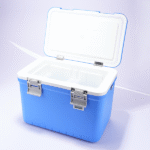
Insulated materials: Boxen, wraps and pallet shippers made of expanded polystyrene (EPS), expandiertes Polypropylen (EVP) or vacuum insulated panels trap cold air and prevent heat transfer.
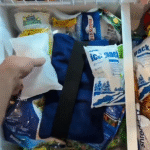
Kältemittel: Gelpackungen, Phasenwechselmaterialien (PCMs) and dry ice provide thermal energy to keep temperatures within range. Trockeneis (Solid Co₂) sublimates at –78.5 °C and is used for ultra cold shipping, while PCMs maintain narrow ranges around 2–8 °C or –20 °C.
Temperaturüberwachungsgeräte: Digital data loggers record temperature throughout shipping. The CDC recommends using a digital data logger (DDL) with a buffered probe and an accuracy of ±0.5 °C. Real time monitoring via IoT sensors sends alerts if temperatures deviate from set limits.
Containers and shippers: Cryogenic containers, Kühlbehälter, insulated boxes and pallet shippers provide secure enclosures for pharmaceuticals.
The table below summarises typical packaging options and their temperature ranges:
| Verpackungsfaktor | Temperaturbereich | Am besten für | Wie es Ihnen nützt |
| Isolierte Kisten | 2–8 ° C | Impfungen, insulin and monoclonal antibodies | Maintain refrigerated conditions for short term transport |
| Gelpackungen | –20 °C bis –70 °C | Biologika und Gentherapien | Provide cold energy for long haul shipments |
| Trockeneis | –78,5 °C | Frozen goods and mRNA vaccines | Enables ultra cold transport for products requiring deep freezing |
| Kühlcontainer | 2–8 ° C | All temperature sensitive products | Offer extended duration and controlled environments for large shipments |
Praktische Tipps und Ratschläge
Bewerten Sie die Produktanforderungen: Start by identifying the required temperature range. Zum Beispiel, mRNA vaccines need –70 °C or below, while weight loss drugs and many biologics require 2–8 °C.
Match duration to refrigerant: Short journeys may only need gel packs; long haul or international shipments often require dry ice or active refrigeration. Passive cooling solutions can be replenished during transit to mitigate the risk of deviations.
Sensoren integrieren: Real time IoT sensors send alerts when temperatures drift, allowing interventions before spoilage.
Bereiten Sie sich auf Störungen vor: Always plan for delays or power failures by adding extra refrigerant and carrying backup monitoring devices.
Verpackung validieren: Conduct thermal testing and calibrate sensors regularly to ensure compliance. The CDC recommends setting refrigerator thermostats at the midpoint (Z.B., 5 °C) and using digital data loggers.
Fallstudie: In 2024 a pharmaceutical company integrated advanced IoT sensors into vaccine shipments, Reduzierung des Produktverlusts um 30% and improving compliance.
How Do You Select the Right Cold Chain Packaging Solution?
Direkte Antwort
Selecting the right pharmaceutical cold chain packaging depends on the product’s thermal sensitivity, shipment duration and regulatory requirements. Evaluate temperature ranges, shipment length, Produktwert und Risikotoleranz. Choose passive packaging (Isolierboxen mit Gelpackungen) for short transport or low risk products; select active packaging (battery powered refrigeration units) for multi day shipments, ultra cold requirements or high value biologics. Einhaltung der Guten Vertriebspraxis (BIP) and FDA/EMA guidelines is essential. Temperature loggers and DDLs are mandatory for most products.
Erweiterte Erklärung
Begin by classifying your product: vaccines and insulin typically require 2–8 °C, whereas frozen biologics may need –20 °C, and mRNA vaccines demand –70 °C or lower. Determine the length of time the product will remain in transit; longer journeys necessitate more robust insulation or active cooling. Consider packaging size and payload: small boxes or insulated shippers make up about 38% of the market and are standard for clinical trials and vials, while pallet shippers serve large volumes. Evaluate cost sensitivity; cryogenic packaging can cost 40–50% more than standard refrigerated packaging, yet may be justified for high value therapies. Endlich, confirm that packaging materials and data loggers meet regulatory standards, including calibration certifications and digital record keeping.
Decision Criteria and Self Assessment Tool
To help you choose the optimal solution, consider these questions:
Welchen Temperaturbereich benötigt Ihr Produkt?? Determine if it is refrigerated (2–8 ° C), gefroren (–20 °C) oder extrem kalt (–70 °C oder darunter).
What is the shipment duration? Für <24 Std., Isolierboxen mit Gelpacks können ausreichen; for multi day shipments, use PCMs or dry ice.
What is the value of the product? High value gene therapies justify active cooling and redundant monitoring.
Do regulations apply? Follow GDP and country specific guidelines; ensure packaging is qualified and validated.
Is sustainability important? Choose reusable shippers and biodegradable refrigerants when possible.
Create a simple self assessment matrix to rank your priorities. Zum Beispiel, assign scores for thermal sensitivity, Dauer, value and sustainability, then select packaging solutions that meet or exceed your threshold in each category.
Detailed Insights on Packaging Types
The pharmaceutical cold chain packaging market is segmented into active and passive solutions. Aktive Verpackung uses electric coolers, phase change materials and battery powered refrigeration. These solutions maintain precise temperatures and often include built in sensors. They are ideal for ultra cold shipments of cell and gene therapies but cost more and require charging or power access. Passive Verpackung uses foam insulation, Gelpackungen, PCMs und Trockeneis. It is simpler, lighter and often reusable. Passive systems dominate small volume shipments, klinische Studien und Lieferung auf der letzten Meile. Hybrid solutions combine passive insulation with real time monitoring, providing both protection and visibility. When selecting packaging, also consider materials: plastics account for 74% of the market due to their superior insulation; Jedoch, sustainable alternatives like recycled paper and starch based materials are emerging.
| Verpackungstyp | Schlüsselmerkmale | Suitable Products | Praktischer Nutzen |
| Aktive Verpackung (electric coolers, PCMs) | Battery or power driven cooling; präzise Temperaturregelung | mRNA-Impfstoffe, Gentherapien, ultra cold biologics | Enables continuous cooling during long journeys but higher cost |
| Passive Verpackung (Schaumisolierung, Gelpackungen) | Uses EPS or EPP insulation with gel packs; limited temperature duration | Insulin, monoklonale Antikörper, GLP-1-Medikamente | Leicht und kostengünstig; easy to dispose or reuse |
| Hybrid smart packaging | Combines passive insulation with IoT sensors and data loggers | Impfungen, biologics requiring traceability | Provides real time visibility; allows proactive intervention during excursions |
| Nachhaltige Verpackung (Papier, auf Stärkebasis, Mehrwegbehälter) | Recycelbare Materialien; minimal carbon footprint | Non ultra cold products; allgemeine Arzneimittel | Reduziert die Umweltbelastung; meets ESG targets |
Praktische Tipps und Anregungen
For clinical trials: Use small insulated shippers with gel packs and digital data loggers. Validate packaging for each trial to avoid deviations.
For long haul international shipments: Choose phase change materials or dry ice; integrate IoT sensors for continuous monitoring and emergency alerts.
Für die Zustellung auf der letzten Meile: Combine passive packaging with eco friendly materials to reduce waste and align with sustainability initiatives.
For returns and recalls: Establish quarantine procedures and inspect returned products; never reship without stability data.
For high value cell and gene therapies: Invest in active or hybrid systems with battery backup and blockchain traceability to eliminate counterfeiting and ensure chain of custody.
Beispiel aus der Praxis: Die Weltgesundheitsorganisation schätzt, dass bis zu 50% of vaccines were wasted annually before COVID 19 due to poor temperature control and logistics. Implementing qualified containers with IoT sensors drastically reduces wastage and improves vaccine availability in underserved regions.
What Technologies Are Reshaping Cold Chain Packaging in 2025?
Direkte Antwort
Technological innovations—particularly IoT sensors, intelligente Verpackungen, data analytics and blockchain—are transforming pharmaceutical cold chain packaging from reactive to proactive management. These tools provide real time visibility into temperature, Luftfeuchtigkeit und Standort, enabling operators to intervene before deviations occur. Digitalisation integrates packaging data with enterprise resource planning systems, automating compliance reporting and predictive maintenance.
Erweiterte Erklärung
The shift from manual temperature recording to sensor driven monitoring marks a fundamental change in cold chain management. IoT -Überwachungssysteme utilise low power networks such as cellular, LoRaWAN or LTE M to transmit continuous environmental data to cloud platforms. When temperatures deviate from safe limits, automated alerts enable logistical teams to reroute shipments, add refrigerant or repair equipment. Intelligente Verpackungen can self regulate temperature and deliver feedback on the product’s condition; integrated sensors monitor shock, tilt and humidity, and some containers can adjust insulation or cooling through phase change materials. Blockchain-Technologie ensures traceability and transparency, creating immutable records of temperature data and custody transfers. Datenanalyse und KI detect patterns and predict risk factors, informing route optimization and preventive maintenance. Gesamt, technology is shifting the cold chain from reactive containment to a proactive, data driven ecosystem.
Specific Innovations and Their Benefits
Temperaturüberwachung in Echtzeit: IoT sensors continuously capture temperature data and transmit it to central dashboards. Operators receive alerts when temperatures drift, allowing timely intervention.
Smart packaging with self regulating insulation: Packaging embedded with PCMs and microcontrollers can adjust its own thermal environment, extending cold life and reducing refrigerant use.
Blockchain and serialization: Recording temperature data and chain of custody events on a blockchain prevents tampering and counterfeiting, boosting patient safety and regulatory compliance.
Prädiktive Analysen: Machine learning algorithms analyse temperature histories, route data and environmental conditions to predict equipment failures and optimize packaging selection.
Erweiterte Realität (AR) training tools: Logistics operators use AR headsets to receive step by step packaging instructions, reducing human error and ensuring consistency.
Praktische Tipps und Anregungen
Investieren Sie in die IoT-Infrastruktur: Equip containers with sensors that support cellular or LoRaWAN connectivity; select devices with battery life that matches shipment duration.
Integrate data with ERP systems: Use software platforms that gather sensor data, track shipments, and automate GDP documentation and reporting.
Adopt blockchain for high value cargo: Work with logistics providers to implement blockchain-based track and trace; ensure all stakeholders—manufacturers, carriers and pharmacies—can record and verify custody.
Train staff on new tools: Implement training programs using AR to familiarise employees with packaging protocols and troubleshooting.
Überwachen Sie Nachhaltigkeitskennzahlen: Use sensors to measure energy consumption and refrigerant use; adjust packaging to minimize carbon footprint.
Praxisbeispiel: World Courier’s smart packaging program provides real time monitoring on all multi use shipments, enabling proactive risk management and offering customers detailed visibility.
How Can Sustainable Cold Chain Packaging Reduce Your Environmental Footprint?
Direkte Antwort
Sustainability in pharmaceutical cold chain packaging focuses on reducing carbon emissions, packaging waste and energy consumption while maintaining product integrity. Companies are adopting reusable containers, biodegradable refrigerants and renewable energy sources such as solar powered refrigeration. Sustainable packaging aligns with corporate social responsibility goals, regulatory pressure and consumer expectations for eco friendly practices.
Erweiterte Erklärung
Traditional cold chain operations rely on single use EPS containers and diesel powered refrigeration units, which contribute to landfill waste and greenhouse gas emissions. Um dies anzugehen, industry leaders are developing reusable vacuum insulated shippers, phase change materials that extend thermal life, and packaging made from recycled paper or starch based materials. Solar panels on warehouse roofs and electric refrigerated vehicles reduce carbon footprints. Monitoring energy use and emissions helps companies meet ESG targets and regulatory requirements. Zusätzlich, supply chain optimization—such as route planning and localised manufacturing—reduces transportation distances and associated emissions. Sustainability efforts also deliver economic benefits: reusable packaging reduces total cost of ownership over time, and eco friendly practices enhance brand reputation among environmentally conscious customers.
Sustainable Strategies and Best Practices
Wechseln Sie zu Mehrwegbehältern: Vacuum insulated shippers and phase change materials can be reused multiple times, Reduzierung von Abfall und Kosten.
Use biodegradable refrigerants: Explore gel packs filled with plant based gels or PCMs made from organic materials; avoid hazardous refrigerants.
Implementieren Sie die Rückwärtslogistik: Establish a system to retrieve and clean reusable containers; invest in tracking to ensure returns.
Nutzen Sie erneuerbare Energien: Install solar panels at warehouses, adopt electric refrigerated trucks, and utilise alternative fuels like hydrotreated vegetable oil or biomethane.
Measure and report emissions: Track energy use and carbon emissions across the cold chain; set reduction targets and publicly report progress.
Beispiel: A logistics company using gas fuelled vehicles saved over 1,400 Tonnen CO₂ emissions by switching from diesel to alternative fuels.
Praktische Tipps und Anregungen
Evaluate life cycle cost: Compare the total cost of reusable packaging—including cleaning and reverse logistics—with single use options; savings often accrue over multiple cycles.
Informieren Sie die Beteiligten: Train staff and partners on proper handling of reusable containers and recycling protocols.
Arbeiten Sie mit Lieferanten zusammen: Work with packaging providers to develop recyclable or biodegradable materials; participate in pilot programs.
Align with ESG frameworks: Ensure sustainability initiatives align with global frameworks such as the UN Sustainable Development Goals and local regulations.
Communicate benefits: Share sustainability achievements with customers and regulators to build trust and demonstrate corporate responsibility.
How Do Regulations and Market Dynamics Influence Cold Chain Packaging?
Direkte Antwort
Regulatory requirements and market dynamics are driving changes in pharmaceutical cold chain packaging. Authorities such as the FDA, EMA and WHO mandate documentation of temperature control, packaging qualification and serialization. The European Union’s Good Distribution Practice (BIP) guidelines require real time monitoring and risk based quality systems. In der Zwischenzeit, market growth is spurred by biologics and vaccines, but constrained by high capital costs and new tariffs. Companies must navigate regional differences, supply chain complexity and geopolitical factors.
Erweiterte Erklärung
Regulation ensures that pharmaceuticals remain safe and effective throughout distribution. The FDA’s current Good Manufacturing Practice (cGMP) rules require companies to validate all cold chain processes—including packaging qualification and temperature monitoring—creating baseline compliance requirements. The EU GDP guidelines emphasise traceability, digital records and quality management; non compliance results in product recalls and sanctions. In 2025, regulators are tightening requirements by mandating electronic Product Code Information Services (EPCIS) and risk assessments. Gleichzeitig, regional market dynamics vary: the Americas and Europe have stringent regulations and advanced logistics, while Asia Pacific regions face infrastructural challenges requiring modular packaging. US tariffs introduced in 2025 have increased costs of components for temperature controlled packaging, prompting companies to explore near shoring and diversified sourcing. Costs and labour shortages further squeeze margins, pushing companies to optimise routes, adopt AI driven planning and lease equipment instead of owning.
Market Dynamics and Regional Insights
The pharmaceutical cold chain packaging market is valued at US$28.9 billion in 2025 und wird erwartet, dass es zu wachsen wird US$75 billion by 2032, mit a 14.6% CAGR. Plastics dominate material composition with a 74% Marktanteil, while small boxes and insulated shippers account for 38% von Produkttypen. Biopharmaceutical companies represent 54% of end users, reflecting the concentration of demand. Nordamerika führt mit a 31% Aktie, Europe with 27%, and East Asia with 19%. Temperature controlled logistics accounted for 18% der Biopharma-Logistikausgaben in 2020, and the growth of cell and gene therapies—projected to surpass US$81 billion by 2029—necessitates ultra cold chain solutions. Weight loss drugs (GLP-1-Agonisten) must be kept at 2–8 °C; concerns about counterfeit products make stringent cold chain management essential.
Praktische Tipps und Anregungen
Bleib konform: Regularly review GDP and cGMP guidelines; maintain digital records of temperature excursions and corrective actions.
Standardise processes: Develop SOPs for packaging qualification, Kalibrierung, Überwachung und Schulung des Personals.
Diversifizieren Sie die Beschaffung: To mitigate tariff impacts and supply disruptions, Lieferanten diversifizieren, consider near shoring and evaluate alternative materials.
Nutzen Sie KI und Analysen: Use predictive analytics to optimize routes and reduce fuel consumption, addressing both cost pressures and environmental goals.
Monitor regional regulations: Adapt packaging strategies to different regions; Zum Beispiel, Asia Pacific may require modular, easily deployable packaging due to infrastructure variability.
Wussten Sie? In einer Umfrage von 200 logistics decision makers, 44% rated maintaining the integrity of temperature sensitive materials as their top priority, followed by 38% for security and 27% for reliability.
2025 Latest Pharmaceutical Cold Chain Packaging Developments and Trends
Trendübersicht
The pharmaceutical cold chain is entering a transformative phase in 2025. Driven by technological advancements, regulatory tightening and sustainability pressures, the industry is shifting toward proactive, data driven and environmentally responsible practices. Recent research highlights that 59% of industry leaders expect steady growth in infectious disease manufacturing and research in the next one to two years, steigt zu 70% in the next three to five years. The convergence of biologics, mRNA vaccines and cell therapies requires new infrastructure and packaging solutions.
Aktueller Fortschritts-Snapshot
Integration of IoT and AI: Real time monitoring and predictive analytics allow logistics teams to anticipate excursions and adjust routes or cooling systems.
Smart and self regulating packaging: Phase change materials with integrated sensors adjust thermal properties, extending cold life and reducing waste.
Blockchain-Einführung: Ensures traceability and reduces counterfeiting by recording every custody transfer on an immutable ledger.
Wiederverwendbarkeit und Nachhaltigkeit: Companies adopt vacuum insulated shippers and biodegradable refrigerants to minimize environmental impact; 60% of pharmaceutical companies invest in sustainable solutions.
Regional customisation: Packaging strategies are tailored to local regulations and infrastructure—e.g., modular packaging for Asia Pacific, IoT integration for North America and Europe.
Auswirkungen von Zöllen: New US tariffs raise component costs, prompting near shoring and diversification.
Surge in cell and gene therapies: Ultra cold logistics (–80 °C und darunter) are expanding as CGT market surpasses US$81 billion.
Market Insights and Forecasts
The market expansion is underpinned by regulatory requirements, technological innovation and regional investments. Biopharmaceutical manufacturing growth in East Asia beschleunigt sich, with China, South Korea and Japan increasing vaccine distribution and exports. In der Zwischenzeit, Europe maintains stringent GDP regulations, driving demand for premium packaging and real time monitoring. North America remains the largest market due to advanced logistics and adoption of IoT packaging. Emerging markets in Latin America and Africa are investing in infectious disease research, creating opportunities for specialised logistics providers. Jedoch, lack of cold chain infrastructure remains a barrier: prior to COVID 19, bis zu 50% of vaccines were wasted globally due to insufficient temperature control.
Häufig gestellte Fragen
Q1: What temperature range does pharmaceutical cold chain packaging maintain?
Most pharmaceuticals require storage between 2–8 ° C, while some biologics need –20 °C and mRNA vaccines or cell therapies require –70 °C or lower. Refrigerators should maintain 2–8 °C, freezers –50 °C to –15 °C, and ultra cold freezers –90 °C to –60 °C.
Q2: How do I ensure my packaging is compliant?
Follow Good Distribution Practice guidelines and validate all packaging components. Use digital data loggers with certificates of calibration, conduct thermal qualification studies and maintain records of temperature excursions. Ensure packaging is qualified for the product’s temperature range and duration.
Q3: What is the difference between active and passive packaging?
Active packaging uses powered refrigeration systems and precise temperature control—ideal for ultra cold or high value products. Passive packaging relies on insulation and refrigerants like gel packs or dry ice; it is lighter and cost effective.
Q4: How can I reduce the environmental impact of cold chain packaging?
Nehmen Sie wiederverwendbare Behälter an, biodegradable refrigerants and renewable energy sources. Optimise transportation routes to reduce emissions and invest in sustainable materials such as paper or starch based insulation.
Q5: What role does technology play in modern cold chain logistics?
Technology enables real time temperature and location monitoring, predictive analytics and blockchain based traceability. These tools shift cold chain management from reactive to proactive, reducing waste and improving regulatory compliance.
Anregung
Key Takeaways
This guide emphasises that pharmaceutical cold chain packaging is essential for protecting drug efficacy and has become a strategic priority. Zu den wichtigsten Punkten gehören::
Importance of temperature control: Maintaining the correct temperature range prevents potency loss and compliance violations.
Schnelles Marktwachstum: The market will grow from US$28.9 billion in 2025 auf 75 Milliarden US-Dollar 2032, angetrieben durch Biologika, mRNA-Impfstoffe und Zelltherapien.
Auswahlkriterien: Choose packaging based on temperature requirements, Versanddauer, Produktwert und Nachhaltigkeitsziele; validate against GDP guidelines.
Technologische Transformation: IoT -Sensoren, smart packaging and blockchain enable proactive risk management and traceability.
Sustainability and regional dynamics: Mehrwegbehälter, biodegradable refrigerants and renewable energy reduce environmental impact; regional strategies must consider regulations and infrastructure.
Umsetzbare Empfehlungen
Bewerten Sie Ihre Lieferkette: Conduct a comprehensive audit of product temperature requirements, shipment durations and regulatory obligations. Use a decision matrix to select appropriate packaging.
Investieren Sie in Technologie: Equip shipments with IoT sensors and integrate data into ERP systems for real time monitoring and analytics. Explore blockchain for high value products.
Übernehmen Sie nachhaltige Praktiken: Übergang zu wiederverwendbaren oder biologisch abbaubaren Verpackungen, implement reverse logistics and leverage renewable energy sources. Measure and report emissions.
Train and certify staff: Ensure employees understand GDP guidelines, packaging protocols and emergency procedures. Use AR tools for interactive training.
Arbeiten Sie mit Experten zusammen: Partner with experienced cold chain packaging providers who offer validated solutions and regulatory support. Stay informed about emerging trends and regulatory changes.
Stay vigilant: Überwachen Sie regulatorische Aktualisierungen, market dynamics and technological innovations to adapt your cold chain strategy and maintain competitive advantage.
Über Tempk
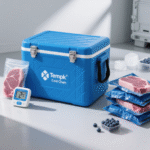
We are dedicated to designing and manufacturing high quality pharmaceutical cold chain packaging solutions. Our products are engineered to maintain precise temperature control, comply with GDP and FDA guidelines, and support sustainability goals. Wir bieten Isolierboxen an, vakuumisolierte Transportbehälter, gel packs and IoT enabled monitoring solutions that protect high value biologics, Impfstoffe und fortschrittliche Therapien. Our research and development center continuously innovates to reduce waste and improve efficiency. By choosing us, you benefit from industry expertise, Vorschriftenregulierung Und umweltfreundliche Verpackungsoptionen that support your mission to deliver life saving medicines safely.
Aufruf zum Handeln
Ready to optimise your pharmaceutical cold chain packaging? Connect with our experts today to discuss tailored solutions, schedule a packaging audit or request a product sample. Together we can protect patient health, meet regulatory demands and create a more sustainable future.