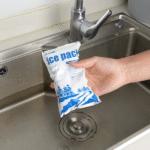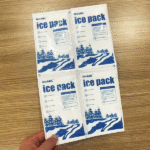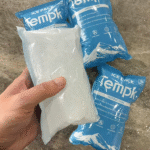
If you ship chilled foods, Biologika, Diagnostik, or temperature-sensitive consumer goods, picking the right phase change gel pack perishable goods manufacturer is not a “supplier choice.” It is a reliability decision. In 2026, buyers are shifting from generic ice packs to PCM (Phasenwechselmaterial) systems because PCM can hold a steadier temperature plateau and reduce “arrived warm” oder “arrived frozen” Misserfolge. Ihr Ziel ist einfach: protect quality on your worst route, not your easiest one.
Dieser Artikel wird für Sie antworten:
How a phase change gel pack perishable goods manufacturer differs from a basic ice pack vendor
How to choose the right PCM setpoint for 0–4°C, 2–8 ° C, and 15–25°C lanes
What validation and testing prove a packout will work in real delivery conditions
What QA signals predict fewer leaks, less sweating, und weniger Kundenbeschwerden
What Does a Phase Change Gel Pack Perishable Goods Manufacturer Actually Do?
A true phase change gel pack perishable goods manufacturer controls PCM formulation, setpoint accuracy, and batch consistency—so your packout behaves the same every time. That is different from sellers who only offer “Kaltpackungen” and hope you over-pack your box. When your product is sensitive, consistency matters more than a slightly lower unit price.
| Quick check | Strong answer | Weak answer | Was es für Sie bedeutet |
|---|---|---|---|
| Setpoint control | Multiple PCM setpoints with specs | “Kalt” oder “gefroren” nur | Higher freeze/heat risk |
| Qualitätskontrolle | Incoming + in-process QC | “We inspect sometimes” | More variability |
| Validation approach | Packout testing plan | Only datasheets | False confidence |
How Do You Choose a Phase Change Gel Pack Perishable Goods Manufacturer in 2026?
You choose a phase change gel pack perishable goods manufacturer by matching route risk, product limits, and packout design—then proving it with validation. The most common failure is choosing PCM based on price before you understand your worst lane. Your real cost is the cost of failure, not the cost per pack.
2026 Neueste Entwicklungen und Trends
In 2026, buyer expectations are rising in three areas: lighter systems, smarter validation, and more sustainable programs. Many teams are moving away from “one packout for everything” and toward lane-specific designs.
Häufig gestellte Fragen
Frage 1: How do I choose a phase change gel pack perishable goods manufacturer fast?
Start with lane duration and temperature limits. Then require system validation and batch traceability before you commit.
Frage 2: What is the best PCM setpoint for 2–8°C pharmaceutical shipping?
Many shippers use ~5°C PCM as a stabilizing buffer. Your payload and insulation still decide the final configuration.
Frage 3: Do I need different packouts for summer and winter?
Oft ja. Seasonal packouts reduce warm excursions and also reduce freeze risk in winter.
Zusammenfassung und Empfehlungen
A phase change gel pack perishable goods manufacturer should help you engineer outcomes, not just sell refrigerants. In 2026, the strongest results come from lane mapping, correct PCM setpoint selection, and system-level validation. A clean conditioning SOP and stronger integrity controls reduce leaks and customer complaints.
Über Tempk
We design and manufacture cold chain solutions for food, Arzneimittel, and other temperature-sensitive shipments. We support multiple PCM setpoints and help you build packout-oriented solutions that stay stable in real distribution conditions. We focus on repeatability, practical packing workflows, and integrity controls that reduce leaks and complaints.
Aufruf zum Handeln: Define your target temperature band, worst-case transit time, und Boxgröße. Then build a lane-based packout brief you can send to any phase change gel pack perishable goods manufacturer for accurate proposals.