Dieser Artikel wird Ihnen helfen:
Pick refrigerant gel for cold chain veterinary manufacturer programs that reduce freezing risk
Pick phase change gel packs for veterinary vaccines without guessing in your refrigerant gel for cold chain veterinary manufacturer lanes
Build a daily gel pack conditioning protocol your team can follow
Validate a passive shipper and create audit-ready documentation
Write a QA spec that keeps refrigerant gel lots consistent
Make smart 2026 trade-offs on weight, kosten, und Nachhaltigkeit
Kältemittelgel für Kühlketten-Veterinärhersteller: What is it and why does it work?
Direkte Antwort: Refrigerant gel for cold chain veterinary manufacturer shipping is a controlled cooling medium designed to absorb heat steadily so your payload stays in range. It works because it creates a predictable thermal buffer, not a sudden cold blast.
A good refrigerant gel for cold chain veterinary manufacturer design focuses on repeatability. Ice can create sharp gradients near 0°C. Dry ice is far colder and usually belongs in frozen systems. Refrigerant gel for cold chain veterinary manufacturer workflows are built for controlled refrigeration, Wo “sicher” matters more than “cold.”
How phase change gel packs protect veterinary biologics
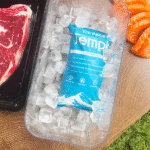
Phase change gel packs melt around a set temperature and absorb heat while doing it, which supports refrigerant gel for cold chain veterinary manufacturer consistency. Think of it like a sponge soaking up heat at the same “height.” Water ice dumps cold at the surface, but a phase change system holds closer to a target such as +5°C.
| Kühloption | Typical behavior | Hauptrisiko | Ihr praktisches Ergebnis |
|---|---|---|---|
| Eisbeutel | Strong cold near 0°C | Lokales Einfrieren | Higher rejection risk |
| Wassergelpackungen | Slower ice-like cooling | Cold spots remain | Needs strong buffering |
| PCM -Gelpackungen | Holds near target temp | Under-sizing | Best 2–8°C control |
| Eutektische Platten | Reusable rigid PCM | Packing limits | Great for closed loops |
Praktische Tipps und Empfehlungen
Match gel type to your target range, not to “whatever is in stock.”
Run a quick pilot before committing to large orders.
Ask suppliers for latent heat data, not just marketing claims.
Kältemittelgel für Kühlketten-Veterinärhersteller: How do you size gel packs correctly?
Direkte Antwort: Sizing depends on transit time, ambient exposure, and payload sensitivity. Under-sizing leads to warm arrivals. Over-sizing adds weight and cost. The right size keeps your payload in range without waste.
For refrigerant gel for cold chain veterinary manufacturer lanes, sizing is a balance. You want enough thermal mass to handle the worst expected conditions, but not so much that you pay for capacity you never use.
Sizing factors to consider
| Faktor | Was es beeinflusst | So messen Sie | Deine Aktion |
|---|---|---|---|
| Transitzeit | Duration of protection | Carrier data + Puffer | Add margin for delays |
| Umgebungstemperatur | Heat load | Seasonal profiles | Design for worst case |
| Nutzlastmasse | Thermische Trägheit | Weigh typical shipments | Adjust gel ratio |
| Insulation R-value | Heat ingress rate | Supplier specs | Match to transit time |
Praktische Tipps und Empfehlungen
Start with supplier sizing tools, then validate with real shipments.
Track actual transit times, not just quoted times.
Revalidate when you change carriers or seasons.
Kältemittelgel für Kühlketten-Veterinärhersteller: How do you build a standard packout?
Direkte Antwort: A standard packout is a documented, repeatable process that anyone on your team can follow. It reduces variation and makes every shipment consistent.
For refrigerant gel for cold chain veterinary manufacturer operations, standard work is the foundation. If everyone packs differently, you cannot predict performance. If everyone follows the same steps, you can troubleshoot and improve.
Packout control checklist
| Packout control | Was zu sperren ist | How to lock it | Ihr echter Vorteil |
|---|---|---|---|
| Konditionierung | Start-state rule | Labeled racks + dwell window | Less variance |
| Platzierung | Exact locations | Diagram + Foto | Wiederholbarkeit |
| Trennung | Buffer thickness | Pre-cut spacers | Less freezing |
Praktische Tipps und Empfehlungen
Create one “packout sheet” per carton size, not one for everything.
Use a short checklist before sealing the carton.
Audit one shipment per shift until results stabilize.
Kältemittelgel für Kühlketten-Veterinärhersteller: How do you control conditioning every day?
Direkte Antwort: Conditioning is the most common hidden variable. A conditioning protocol defines storage temperature, Verweilzeit, und die “ready-to-pack” state so every packout starts the same way.
For refrigerant gel for cold chain veterinary manufacturer operations, conditioning should feel like production control. If you change nothing else, tightening conditioning often upgrades the whole refrigerant gel for cold chain veterinary manufacturer result.
A practical conditioning protocol
Define the ready state: “refrigerated and firm,” nicht “frozen solid.”
Set a conditioning zone: controlled refrigerator space with a posted setpoint.
Set a dwell window: minimum and maximum hours before use.
Separate racks: READY vs NOT READY with big labels.
Überprüfen Sie die Integrität: quick leak and seal checks.
Record lots: link gel lot and conditioning window to shipment lots.
Praktische Tipps und Empfehlungen
Treat conditioning racks like FIFO inventory.
Use the same thermometer placement at every site.
Retrain after any seasonal change or staffing change.
Kältemittelgel für Kühlketten-Veterinärhersteller: What should your supplier QA spec include?
Direkte Antwort: Your QA spec should lock phase change behavior, Integrität, and traceability. If gel lots vary, your validation becomes fragile. If seals fail, you lose trust at receiving.
Supplier spec checklist
| Spec area | What to specify | Simple verification | Warum ist es wichtig |
|---|---|---|---|
| Phase change window | Ziel + Toleranz | COA + Stichproben | Predictable cooling |
| Net fill weight | Min and max | Incoming weigh | Stable duration |
| Film + Siegel | Dicke + strength | Visuell + pull sample | Weniger Lecks |
| Rückverfolgbarkeit von Chargen | Batch ID | Label audit | Faster investigations |
| Reuse limits | Max cycles | Return inspection | Controlled lifecycle |
Praktische Tipps und Empfehlungen
Hinzufügen “no substitution without approval” to every purchase order.
Run simple incoming QC: Gewicht, visual, and seal checks.
Keep gel lots linked to shipment records for traceability.
Kältemittelgel für Kühlketten-Veterinärhersteller: How do you validate a passive shipper?
Direkte Antwort: Validation proves your shipper design works under defined conditions. It creates evidence you can show auditors and gives you confidence in your lanes.
Validation steps
Define your acceptance criteria: Temperaturbereich, Dauer, und Umgebungsprofil.
Build a test protocol: chamber profile, logger placement, and pass/fail rules.
Run qualification tests: OQ and PQ with documented results.
Create a validation summary: one-page report with key data and conclusions.
Praktische Tipps und Empfehlungen
Use calibrated loggers and document calibration status.
Test worst-case scenarios, not just average conditions.
Revalidate when you change gel, Isolierung, or transit lanes.
Kältemittelgel für Kühlketten-Veterinärhersteller: Was sind die 2026 trade-offs?
Direkte Antwort: The main trade-offs are weight vs. cost vs. Nachhaltigkeit. Lighter gel reduces shipping cost but may reduce duration. Sustainable options may cost more but improve your environmental profile.
Trade-off comparison
| Abtausch | Option A | Option B | Your decision factor |
|---|---|---|---|
| Gewicht | Heavier gel = longer duration | Lighter gel = lower shipping cost | Transit time needs |
| Kosten | Premium PCM = better control | Standard gel = lower unit cost | Payload value |
| Nachhaltigkeit | Bio-based gel = better profile | Standard gel = proven supply | Customer expectations |
Praktische Tipps und Empfehlungen
Run a total cost analysis, not just unit cost.
Ask suppliers about sustainability certifications.
Pilot new options before full rollout.