Temperature-Controlled Frozen Dessert Eco Delivery?
You can absolutely run temperature-controlled frozen dessert eco delivery—even in warm weather—if you treat it like a system, keine Kiste. Ihr Ziel ist einfach: keep frozen desserts stable (oft ≤ -18°C / 0° F) und gleichzeitig Abfall reduzieren, Gewicht, und reships. If you focus on Temperaturstabilität + fast handoffs + right-sized packaging, you get fewer melts, weniger Rückerstattungen, and a greener footprint without “panic packing.”
Dieser Artikel wird Ihnen helfen:
-
Wähle a frozen dessert delivery temperature target that protects texture (not just food safety)
-
Bauen eco-friendly packaging for ice cream shipping with less waste and fewer failures
-
Entscheiden dry ice vs gel packs vs PCM using lane-based rules (keine Vermutung)
-
Fix last-mile risks like porch dwell time and multi-stop warm spikes
-
Prove performance with monitoring (einschließlich EN 12830-aligned recorder expectations where relevant)
What does temperature-controlled frozen dessert eco delivery mean in practice?
Temperature-controlled frozen dessert eco delivery means your product stays inside a frozen “temperature lane” from pack-out to doorstep, while your packaging and operations minimize waste. It’s not “as cold as possible.” It’s stabil, predictable cold that prevents thaw–refreeze damage and protects texture, Form, und Kundenvertrauen.
You can think of it like carrying a snowball across a sunny parking lot. You don’t win by starting colder. You win by reducing heat exposure all the way.
The 3-Barrier model that makes temperature-controlled frozen dessert eco delivery work
In temperature-controlled frozen dessert eco delivery, three barriers must work together:
-
Wärmebarriere: insulation slows heat coming in
-
Kalte Quelle: Gelpackungen, PCM, Trockeneis, oder ein Hybrid
-
Process barrier: schnelles Auspacken, short dwell, smart routing, trained handoffs
| Barriere | Was Sie kontrollieren | What usually breaks | Was es für Sie bedeutet |
|---|---|---|---|
| Thermal | Isolierung, fit, Schließung | Luftlücken, zerquetschte Ecken | More stability with less coolant |
| Kalte Quelle | Typ, Platzierung, Konditionierung | Wrong amount, wrong prep | Fewer soft lids and leaks |
| Verfahren | Bühnenzeit, Routenführung, weiterleiten | Porch time, multi-stop spikes | Weniger Rückerstattungen und Rücksendungen |
Praktische Tipps, die Sie heute verwenden können
-
Write a one-page lane spec: time in transit, max ambient, Verweilzeit, Pack-out-Layout.
-
Set a staging timer: if orders sit out too long, your packaging can’t “save” it.
-
Train on early melt signs: Deckellücken, spongy cartons, sticky labels, surface frost patterns.
Wirklicher Fall: One gelato shipper reduced complaints by shrinking box size, tightening staging, and standardizing a PCM layout—using weniger material than before.
Which temperature targets protect texture in temperature-controlled frozen dessert eco delivery?
In temperature-controlled frozen dessert eco delivery, the biggest enemy is not “warm.” It’s Temperaturschwankungen. A brief warm spike can soften edges, then refreeze into crystals that customers feel immediately.
A practical baseline for many frozen programs is ≤ -18°C / 0° F. You can set colder internal targets for premium texture, but don’t skip testing.
A simple temperature map for frozen desserts (kopiere das)
| Produkttyp | Practical target band | Was zu sehen ist | Was es für Sie bedeutet |
|---|---|---|---|
| Premium-Eis | Aim near ≤ -18°C | Peak spikes during stops | Smooth mouthfeel stays smooth |
| Eiscreme | Stable frozen band matters most | Long porch dwell | Fewer collapses and leaks |
| Sorbet | Needs stronger protection | Fast surface warming | Less refreeze grit |
| Frozen yogurt | Hates swings | Separation at edges | Better appearance and texture |
Was zu messen ist (most teams measure the wrong thing)
Für temperature-controlled frozen dessert eco delivery, Schiene:
-
Spitzentemperatur (spikes drive texture damage)
-
Time above your limit (minutes matter more than averages)
-
Where the spike happened (dock, van staging, Haustür)
Praktische Tipps und Vorschläge
-
Use two numbers: a target (Ziel) and a maximum allowed at delivery (Limit).
-
Validate summer and shoulder-season separately: “average weather” hides failures.
-
Design for porch reality: the customer’s meeting is part of your cold chain.
Wirklicher Fall: A brand met average temperature goals but still got “grainy” reviews. Their logger showed spikes during multi-stop routes, not during transit.
How do you design packaging for temperature-controlled frozen dessert eco delivery?
Packaging for temperature-controlled frozen dessert eco delivery starts with your worst day, not your best day. Before you choose materials, lock five facts: Gesamtzeit, max ambient, Verweilzeit, Produktmasse, and customer unboxing delay.
If you can’t define these, you’ll overpack—and still fail on heat spikes.
Your packaging stack options (eco-friendly without fragile performance)
| Verpackungsansatz | Eco upside | Achtung | Am besten für |
|---|---|---|---|
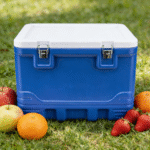
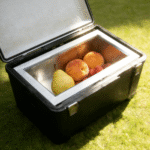
| Reusable insulated box for frozen desserts | Lowest waste per successful delivery | Needs returns and recovery | Local/subscription routes |
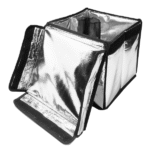
| Right-sized recycle-ready insulation | Easier customer disposal | Must re-test hold time | National lanes with stable SLAs |
| Hybrid: reusable outer + minimal inner | Strong balance | More SOP discipline | Mixed lanes and mixed customers |
| “Overpack everything” | Fewer melts short-term | Hohe Verschwendung + kosten | Only extreme lanes (and temporary) |
Why right-sizing wins (more than “green materials”)
In temperature-controlled frozen dessert eco delivery, oversized boxes create three problems:
-
You ship more air (higher freight impact).
-
You need more coolant (higher cost and waste).
-
Air gaps become warm pockets (higher melt risk).
Faustregel: Minimieren Sie den Leerraum, protect product shape, and seal the lid like a gasket.
Praktische Tipps und Vorschläge
-
Place coolant with intention: top and sides often matter more than corners.
-
Design closure as a seal: lid gaps are silent failures.
-
Print disposal instructions: “what to do with this box” reduces confusion and complaints.
Wirklicher Fall: A shipper reduced packaging weight but saw more melts. The fix wasn’t “add more material.” It was better fit, tighter closure, and shorter staging time.
Dry ice vs gel packs vs PCM for temperature-controlled frozen dessert eco delivery?
The best coolant for temperature-controlled frozen dessert eco delivery is the one that meets your lane with the least material and the fewest failures. That means the “best” answer changes by route, Jahreszeit, und Serviceniveau.
Dry ice is powerful for long or hot lanes, but it adds compliance and handling steps. Gel packs are simpler and can be reusable, but may struggle in long heat exposure. PCM can stabilize a chosen temperature band, but requires consistent conditioning and placement.
Decision table: dry ice vs gel packs vs PCM
| Kühlmittel | Best at | Eco angle | Operational catch |
|---|---|---|---|
| Trockeneis | Langer Transit + heiße Umgebung | Efficient hold power per hour | Entlüftungsverpackung + UN1845 -Markierung + Ausbildung |
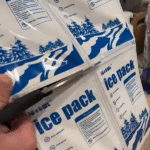
| Gelpackungen | Short to medium lanes | Reusable potential | Heavier shipments; needs correct pre-chill |
| PCM | Stable temperature band | Wiederverwendbar, tuned control | Conditioning process must be repeatable |
Trockeneis-Grundlagen (Halte es einfach, do it correctly)
If you use dry ice in temperature-controlled frozen dessert eco delivery, planen für:
-
Entlüftungsverpackung: CO₂-Gas muss entweichen (sealed packs can bulge or rupture).
-
Correct marking: commonly includes UN1845 Und Nettogewicht in Kilogramm.
-
Mitarbeiterschulung: prevent skin contact and handle with clear SOPs.
Melt-Risk Calculator (2 Minuten)
For your temperature-controlled frozen dessert eco delivery, pick one option per line:
-
Transitzeit: <12H / 12- 24 Stunden / 24H+
-
Umgebungseinflüsse: Cool / warm / heiß
-
Stoppt: 0–2 / 3–8 / 9+
-
Weiterleiten: in-person / porch / Schließfach
-
Rückgaben: Ja / NEIN
Quick read:
-
If you hit 24H+, heiß, oder porch + 9+ stoppt, you usually need stronger insulation and may need dry ice or a hybrid.
-
Wenn ja <24H with returns, gel/PCM often becomes the greener option after validation.
Praktische Tipps und Vorschläge
-
Don’t mix coolants randomly: uneven zones create soft edges and lid leaks.
-
Condition PCM like an ingredient: wrong prep equals wrong performance.
-
Test two configs per lane: “light” and “robust,” then choose by data.
Wirklicher Fall: A shipper paired dry ice with a sealed inner wrap. Boxes bulged and failed. Switching to vented design solved it.
How do routing and handoffs improve temperature-controlled frozen dessert eco delivery?
Routing is invisible insulation in temperature-controlled frozen dessert eco delivery. A perfect shipper can still fail if it sits on a dock or porch in sun.
The three handoffs that break frozen desserts:
-
Pack-out → pickup (dock dwell)
-
Driver staging (warm van time)
-
Doorstep dwell (customer delay)
A simple SLA you can enforce internally (and with partners)
Für temperature-controlled frozen dessert eco delivery, definieren:
-
Max dock time before pickup (Beispiel: 20–30 Minuten)
-
Max staging time without cold control
-
Delivery window messaging (kurz, klar, action-focused)
Route checklist (ja/nein)
-
Do you pre-sort orders so drivers don’t search with doors open?
-
Do you deliver frozen first on mixed routes?
-
Do you cap stop count or add buffer for multi-stop lanes?
-
Do customers get a 10-minute arrival alert?
If you answered “no” to two or more, fix operations before adding packaging.
| Risiko der letzten Meile | Was geht schief | Fix | Was es für Sie bedeutet |
|---|---|---|---|
| Multi-stop | repeated warm spikes | pre-sort + stop cap | fewer melts |
| Porch time | unattended warming | Fenster + Warnungen | weniger Rückerstattungen |
| Verkehrsbehinderungen | late delivery | Puffer + lane rules | steadier outcomes |
Praktische Tipps und Vorschläge
-
Fügen Sie a hinzu handoff script: “Bring it inside immediately.”
-
Offer delivery windows for frozen: fewer porch failures beats “eco liner swaps.”
-
Treat high-risk ZIP codes as a separate lane: validate separately.
Wirklicher Fall: A brand reduced melt claims by delivering frozen orders earlier and limiting stops—without changing packaging.
What monitoring and proof should you keep for temperature-controlled frozen dessert eco delivery?
Wenn Sie es nicht beweisen können, you can’t improve it. Temperature-controlled frozen dessert eco delivery needs proof that is simple, konsistent, and fast to retrieve.
Sie brauchen kein Labor. You need repeatable records:
-
Pack-out time and pickup time
-
Lane ID and packaging configuration ID
-
Temperature indicator or data logger (risk-based)
The “proof pack” checklist you can standardize
| Beweisstück | Was es beinhaltet | Warum ist es wichtig | Was es für Sie bedeutet |
|---|---|---|---|
| Route temperature trace | time-stamped data | settles disputes | weniger Rückerstattungen |
| Excursion report | cause + Korrekturmaßnahme | prevents repeats | stronger SOPs |
| Pack-out spec | Foto + Layout + Materialien | standardizes results | weniger Fehler |
| Staging timer log | dwell time evidence | Ziele #1 hidden risk | weniger Spitzen |
| Recorder documentation | IN 12830 references where relevant | audit readiness | partner accountability |
Praktische Tipps und Vorschläge
-
Verwenden two sensors during pilots: one near product core, one near the lid zone.
-
Rezension exceptions only: don’t stare at every graph, flag spikes and causes.
-
Give customer support a short script: “Delivered within spec” + what to do if not.
Wirklicher Fall: A team found repeated spikes at one cross-dock handoff. Fixing that one point reduced complaints across multiple lanes.
How do costs and waste really break down in temperature-controlled frozen dessert eco delivery?
Cost control in temperature-controlled frozen dessert eco delivery comes from reducing failures, Gewicht, and box volume—not from squeezing material prices alone.
The biggest drivers:
-
Dimensionsgewicht (box size often costs more than materials)
-
Kühlmittelgewicht (more weight = more shipping cost)
-
Arbeitszeit (complex pack-outs slow throughput)
-
Ausfallrate (Erstattung + reship is the real budget killer)
The monthly scorecard (use this every month)
Track three numbers for your temperature-controlled frozen dessert eco delivery Programm:
-
Cost per successful delivery (include refunds and reships)
-
Packaging grams per order (and per successful order)
-
Failure rate by lane (and by season)
| Metrisch | Wie „gut“ aussieht | What to fix if it’s bad |
|---|---|---|
| Cost per successful delivery | stable or falling | Misserfolge + Boxvolumen |
| Packaging per order | trending down safely | right-size + Layout |
| Failure rate by lane | predictable and low | Verweilzeit + Routenführung |
Praktische Tipps und Vorschläge
-
Reduce failures first, then reduce materials. That’s how “eco” stays real.
-
Don’t optimize packaging in winter and assume it works in summer.
-
Use lane codes on labels so you know what worked where.
Wirklicher Fall: One brand’s biggest footprint drop came from fewer reships, not “greener liners.”
2025 latest trends shaping temperature-controlled frozen dessert eco delivery
In 2025, the direction is clear: performance plus sustainability, not sustainability instead of performance. Packaging lifecycle pressure, proof expectations, and energy efficiency efforts are all pushing the market toward measured, validierte Systeme.
Aktueller Fortschritts-Snapshot (what to do now)
-
Packaging lifecycle rules are tightening: Design für Recyclingfähigkeit, richtige Größe, and reuse loops.
-
Proof expectations are rising: temperature logs and retention practices are becoming baseline in many supply chains.
-
Energy optimization is accelerating: some operators test freezer setpoints and monitoring upgrades to reduce energy use (but you must validate dessert quality).
-
Dry ice planning needs resilience: build backup lane designs that can run on gel/PCM when supply or cost shifts.
Practical next moves (low drama, hohe Wirkung)
-
Re-test whenever you change a liner, Kasten, or coolant.
-
Pilot one reusable lane locally before scaling nationally.
-
Make “first-delivery success” your top KPI. It improves eco and margin together.
Häufig gestellte Fragen
Q1: Can temperature-controlled frozen dessert eco delivery work without dry ice?
Ja. Viele <24-hour lanes succeed with gel or PCM plus strong insulation and fast handoffs. Validate by season.
Q2: What’s the biggest reason frozen desserts arrive damaged even when “cold”?
Temperaturschwankungen. Partial melting and refreezing create crystals, Trennung, and soft edges customers notice fast.
Q3: What temperature should I target for temperature-controlled frozen dessert eco delivery?
A common baseline is around ≤ -18°C / 0° F, then tighter internal targets for premium texture as needed.
Q4: Is a reusable insulated box for frozen desserts always greener?
Only if you actually recover and reuse it enough. Your return rate and reuse cycles decide the real impact.
Q5: What does “UN1845” matter for in temperature-controlled frozen dessert eco delivery?
UN1845 is commonly used to identify dry ice shipments. Dry ice also needs venting and correct net-weight marking.
Q6: Do I really need data loggers for temperature-controlled frozen dessert eco delivery?
If you ship high-value product, handle disputes, or operate in regulated chains, logs pay for themselves quickly.
Q7: What’s the fastest way to cut waste without risking melts?
Reduce reships and shrink box volume through right-sizing. Those two moves beat most material swaps.
F8: What should I do when a customer reports a melt?
Ask for photos, confirm delivery time, review the lane trace, and apply your excursion playbook consistently.
Zusammenfassung und Empfehlungen
Temperature-controlled frozen dessert eco delivery works when you build a complete system: Isolierung in der richtigen Größe, the right cold source, and disciplined operations that reduce heat exposure. Konzentrieren Sie sich auf Stabilität, nicht extrem kalt. Reduce failures first, then reduce materials. Prove performance with simple records so you can improve lanes faster and resolve customer claims with confidence.
Aktionsplan (einfach, wiederholbar)
-
Pick your top 2–3 lanes and document worst-case time + Ambient + verweilen.
-
Prüfen two pack-outs per lane (light vs robust) and log peak temperatures.
-
Lock the winner into a one-page SOP with photos and a staging timer.
-
Add customer alerts and delivery windows to reduce porch dwell time.
-
Revalidate seasonally and keep a backup coolant plan for high-risk days.
Vorschläge zur internen Verlinkung (Keine externen Links)
Über Tempk
Und Tempk, we focus on practical cold-chain packaging and delivery design that helps frozen desserts arrive in-spec without unnecessary waste. We support teams with lane-based packaging selection, pack-out SOP design, and performance validation—so your temperature-controlled frozen dessert eco delivery can be repeatable, überprüfbar, and cost-aware through every season.
Nächster Schritt (CTA): Share your lane details (Transitzeit, hottest-day ambient, Stoppen Sie die Zählung, dessert type, Bestellgröße). We’ll outline two pilot pack-outs you can test immediately.