How to Plan Vaccine Cold Box Shipping Without Treating Every Vaccine the Same
Vaccine cold box shipping begins with the vaccine and the operating program, not with the container alone. A cold box is a passive, insulated device that uses Eisbeutel or other thermal storage materials to control the vaccine compartment for a limited period. Its suitability depends on the product instructions, nutzbares Impfstoffvolumen, Kühlmittelmethode, Route, Umgebungsbedingungen, Packdisziplin, monitoring and receiving process.
The term vaccine shipment can describe very different activities: distribution within an immunization program, transport by a health-care provider, or international commercial movement from a manufacturer. These activities use different guidance and evidence. A field cold-box procedure should not be copied into a commercial parcel lane without review, and a manufacturer shipping configuration should not be reused for provider transport merely because the materials look similar.
Identify the transport context before choosing a box
| Kontext | Primäre Entscheidung | Relevant authority or control |
|---|---|---|
| Immunization program distribution | Choose cold box or carrier, nutzbare Kapazität, Kühlmittelmethode, cold or warm life and field handling | WHO or national EPI procedures, PQS product data and program SOPs |
| International vaccine shipment | Control manufacturer-to-recipient packing, air or ground logistics, documentation and reception | WHO international shipping guidance, product instructions and applicable transport rules |
| US provider transport | Protect vaccine during non-emergency transfer, clinic operation or relocation | Current CDC toolkit, Anleitung des Herstellers, VFC or state requirements and facility SOPs |
| Commercial healthcare lane | Qualify a repeatable parcel or distribution packout for a defined product and route | Product owner quality system, Marktregeln, Streckenprofil, qualification and receiving controls |
Wer ist 2025 international vaccine shipping guidelines apply predominantly to international air freight and related ground transport. The WHO Vaccine Management Handbook module on passive containers and Kühlmittelpakete addresses transport down to health-facility level and outreach operations. Their scopes are related but not interchangeable.
Confirm the vaccine and diluent requirements
The approved product information or responsible immunization authority should confirm the transport temperature, Gefrierempfindlichkeit, Lichtschutz, Umgang mit Verdünnungsmitteln, allowable time outside storage and excursion process. Do not infer these conditions from the word vaccine or from another product with a similar vial or carton.
If different vaccines or diluents share a cold box, verify that every item permits the same coolant state, temperature exposure and receiving method. A shared nominal range does not prove compatibility. The packout should also preserve product identity, carton and label condition, orientation and security.
Choose between a cold box, vaccine carrier and parcel shipper
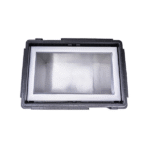
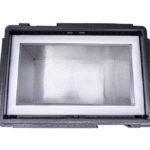
WHO's E004 category includes cold boxes, vaccine carriers and other passive Isolierte Behälter used primarily for vaccine transport and sometimes temporary storage. Vaccine carriers are smaller and more portable; cold boxes generally move larger quantities between vaccine stores or health facilities. A commercial parcel shipper may use similar thermal principles, but its qualification, outer packaging and carrier-handling assumptions can be different.
| Auswahlfaktor | Was zu überprüfen | Häufiger Fehler |
|---|---|---|
| Usable vaccine capacity | Net space after coolant, barriers and internal fittings are installed | Buying by external volume or gross volume |
| Kalt, cool or warm life | Published definition, Kühlmittelzustand, ambient condition and endpoint used | Treating one life rating as a universal shipping duration |
| Frostschutz | Purpose-built barrier or qualified spacing between frozen media and vaccine compartment | Assuming thicker insulation alone prevents freezing |
| Loaded weight and handling | Container, coolant and payload weight, lifting method and vehicle or hand-carry constraints | Selecting capacity without checking whether staff can move it safely |
| Kühlmittelkompatibilität | Correct pack size, Menge, Füllmethode, conditioning and placement for the exact model | Substituting a pack because it fits physically |
| Monitoring and access | Probe position, display access, opening frequency and receiving workflow | Placing the sensor against coolant or opening the box only to check it |
Use the current WHO E004 cold boxes and vaccine carriers page and the applicable product data sheet when a WHO PQS program is in scope. The published cold-life definition and usable storage capacity belong to the specific product and test method; they should not be generalized to every cold box.
Select the coolant method from the governing procedure
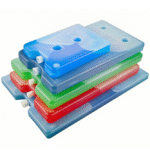
Coolant state can decide whether a cold box protects the vaccine or exposes it to freezing. Within WHO immunization-program guidance, gefroren, konditioniert, cool and warm water packs have different permitted uses and limitations. Freeze-preventive carriers and cold boxes add a barrier between frozen water packs and the vaccine compartment, but the barrier may reduce usable volume.
Hilfreiche Entscheidungshilfen
Überprüfen Sie die Details, bevor Sie sich für die Verpackung entscheiden
Mit diesen schnellen Tools können Sie das Routenrisiko vergleichen, Größenanforderungen, Kühlmittelauswahl, und Verpackungsdetails, bevor Sie ein Angebot anfordern.
Kühlakku-Rechner
Schätzen Sie die Menge an Gel-Eisbeuteln für gekühlte Sendungen und nutzen Sie die praktische Routenplanung.
Schätzen Sie EisbeutelReferenz zu Isoliermaterialien
Vergleichen Sie die Auswahl an Isoliermaterialien für unterschiedliche Kühlkettenverpackungsanforderungen.
Vergleichen Sie MaterialienKühlmittel & PCM-Referenz
Vergleichen Sie Kühlmittel- und PCM-Optionen, wenn eine Route zusätzliche Temperaturunterstützung benötigt.
Vergleichen Sie OptionenDo not convert these categories into one global recipe. Frozen water packs are inappropriate for freeze-sensitive vaccines under the WHO field guidance unless a qualified freeze-preventive design and procedure addresses that risk. Conditioned packs require a controlled conditioning method. Cool or warm packs apply only in defined vaccine, UVP, climate and program contexts. Diluents may have their own restrictions.
For WHO programs, verify the current PQS general vaccine distribution guidance and the specific national SOP. For United States provider transport, the CDC Vaccine Storage and Handling Toolkit recognizes portable vaccine units and qualified containers and packouts with temperature monitoring in defined provider contexts. It also warns against reusing manufacturer or distributor shipping materials for provider transport. Neither source replaces product-specific instructions.
Write the packout instruction so it can be repeated
The work instruction should match the exact cold-box model and approved coolant method. Pictures or diagrams can reduce ambiguity, but they must show the current component revision and payload arrangement.
- Inspect the cold box, Deckel, Siegel, internal barrier and required accessories before use.
- Identify the correct coolant packs and document their preparation, conditioning and release check.
- Confirm the vaccine, Verdünnungsmittel, Menge, Präsentation, start condition and permitted transport window.
- Load coolant, Barrieren, Impfstoffkartons, void fill and monitor in the approved order and orientation.
- Keep product away from unapproved direct contact with frozen surfaces and preserve required spacing.
- Close and secure the box using the approved method; apply route, Handhabungs- und Lageretiketten.
- Packout-Revision aufzeichnen, Operator, Datum und Uhrzeit, Kühlmittelstatus, monitor ID and carrier handoff.
- Limit staging outside controlled storage and escalate delays using the approved contingency contact.
If the payload quantity changes, use the qualified minimum or maximum load method. Do not improvise by adding extra coolant or removing dividers. Those changes can move the coldest or warmest product location.
Monitor the vaccine location and prepare the receiver
The monitoring device should answer the receiving question. Development testing may use multiple sensors to locate warm and cold positions. Routine shipments may use fewer devices if placement is justified and the receiver understands what the reading represents. A probe against a coolant pack can show a local cold source rather than the vaccine condition; a central air reading can miss a carton near the wall.
Receiving instructions should identify who accepts the shipment, how quickly the vaccines move to approved storage, where the monitor is located, how data are reviewed and what happens after an alarm, damaged box or suspected excursion. Product should be quarantined and evaluated under the program or product owner's procedure when required. The appearance of the vial, the feel of the coolant or one generic packaging rule is not enough for a disposition decision.
Qualify the configuration and control changes
Qualification should connect the intended route and payload to the exact cold box, Kühlmittel, Barrieren, loading method and monitor plan. The protocol should include credible hot and cold challenges, minimale und maximale Belastungen, likely sensor locations, the full transport duration and predefined acceptance criteria. Representative field or route runs may be needed according to the quality plan.
Changes to box model, Isolierung, Kühlmittelpaket, Füllvolumen, Barriere, Nutzlastanzahl, Route, Jahreszeit, Transportdienst, packing sequence or monitoring can affect the evidence. A change-control review should decide whether the existing qualification remains applicable or whether comparison testing or requalification is needed.
Use a cold box procurement and review checklist
- Intended transport context and the authority or SOP that governs it.
- Vaccine and diluent requirements, freeze sensitivity and excursion authority.
- Usable vaccine capacity for the minimum and maximum planned loads.
- Published cold, cool or warm life with its definition, coolant state and ambient condition.
- Freeze-preventive design, barrier geometry and any reduction in usable volume.
- Correct coolant-pack model, Menge, preparation equipment and operating instructions.
- Fully loaded weight, Griffe, lifting method, vehicle fit and field ergonomics.
- Temperature-monitoring device, Platzierung, data access and receiving process.
- Reinigung, Inspektion, reparieren, spare parts and retirement criteria for reusable equipment.
- Qualifikationsnachweis, Änderungsmitteilung, training and controlled packout documents.