Beim Transport von Impfstoffen ist die Einhaltung der Kühlkette von entscheidender Bedeutung. A Impfstoff-Eisbox OEM bietet maßgeschneiderte Isolierte Behälter die Impfstoffe dazwischen halten +2 °C und +8 °C beim Transport. Durch die Auswahl des richtigen Herstellers wird sichergestellt, dass Ihre Lieferkette Fernimpfkampagnen bewältigen kann, halten extremen Umgebungstemperaturen stand und bewahren die Wirksamkeit des Impfstoffs bis zur letzten Meile. In diesem Ratgeber werden die wesentlichen Funktionen erläutert, Designüberlegungen und Markttrends also Du können fundierte Entscheidungen über OEM-Partner für Impfstoff-Eisboxen treffen.
Dieser Leitfaden deckt ab
Was ist eine Impfstoff-Eisbox OEM?? – Verstehen Sie die Rolle der Hersteller und wie Isolierte Kisten arbeiten.
Hauptmerkmale und Materialien – Erfahren Sie mehr über Isolationsarten, Frostschutzbarrieren und Zubehör.
Kalte Lebens- und Leistungsstandards – Vergleichen Sie Shortrange- und Longrange-Boxen sowie die Anforderungen an die Haltezeit.
So wählen Sie einen OEM-Partner aus – Fragen zur Zertifizierung, Anpassungs- und Herstellungsmethoden.
Letzte 2026 Trends – Entdecken Sie Innovationen wie Vakuumisolationspaneele, Phasenwechselmaterialien und IoT-Überwachung.
FAQs und praktische Tipps – Beantworten Sie häufige Fragen zur Speicherung, Handhabung und Einhaltung gesetzlicher Vorschriften.
Was ist eine OEM-Kühlbox für Impfstoffe und warum benötigen Sie eine??
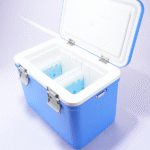
Eine Impfstoff-Eisbox– auch Impfstoffträger oder Kühlbox genannt –ist ein isolierter Behälter, der mit ausgekleidet ist Kühlmittelpakete um Impfstoffe und Verdünnungsmittel während des Transports kalt zu halten. Impfstoffbehälter sind kleiner und leichter zu transportieren als Kühlboxen und werden typischerweise von Gesundheitspersonal verwendet, das zu Fuß oder mit dem Fahrrad unterwegs ist. Kühlboxen fassen größere Volumina (5–25 Liter) und werden für Massentransfers zwischen Lagerzentren verwendet.
Eine OEM-Kühlbox für Impfstoffe („Originalgerätehersteller“) entwirft und produziert diese Isolierbehälter im Auftrag von Marken oder Händlern. Mit OEM-Partnern können Sie die Kapazität individuell anpassen, Materialien, Branding und optionale Funktionen, ohne eine eigene Fabrik aufzubauen. Die Wahl eines kompetenten OEM stellt sicher, dass Ihre Ausrüstung den Anforderungen entspricht WHO-Leistung, Qualität und Sicherheit (PQS) Standards, die Haltezeiten von 15–30 Stunden für Impfstoffträger und 48–96 Stunden für Kühlboxen erfordern +43 °C Umgebungstemperatur.
So funktioniert eine Impf-Eisbox
Passive Kühlung: Impfstoffträger verwenden in der Box platzierte Eis- oder Kühlmittelpackungen, um Wärme zu absorbieren. Weil es sich um passive Geräte handelt, es gibt keinen Stromverbrauch.
Isolierte Struktur: Starre Polymerschalen (Z.B., Polypropylen oder Polyethylen hoher Dichte) umgeben eine Schicht aus Polyurethan (Pu) Schaum- oder Vakuumisolationspaneele zur Minimierung der Wärmeleitfähigkeit.
Luftdichter Verschluss: Klappdeckel mit Dichtungen und Kompressionsverschlüssen sorgen für eine luftdichte Abdichtung, um die konvektive Wärmeübertragung zu blockieren.
Barriere und Gestelle: Eine Trennwand oder Barriere trennt die Impfstofffläschchen voneinander Eisbeutel, Vermeiden Sie direkten Kontakt und vermeiden Sie versehentliches Einfrieren.
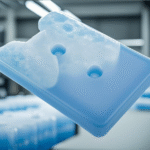
Kühlmittelpackungen: Für frostempfindliche Impfstoffe werden Eisbeutel auf 2–8 °C konditioniert. Frostschutzträger können gefrorene Packungen ohne Konditionierung verwenden, da die Barriere verhindert, dass der Impfstoff mit dem Eis in Berührung kommt.
Diese Designelemente stellen sicher, dass die Impfstoffe von der Beladung bis zur Lieferung innerhalb des sicheren Temperaturbereichs von 2–8 °C bleiben.
Impfstoffträger vs. Kühlboxen – was sollten Sie wählen??
| Parameter | Impfstoffträger | Kühlbox | Was bedeutet dies für Sie |
| Speicherkapazität | 0.8 - - 3.4 L | 5 - - 25 L | Träger eignen sich für kleine Outreach-Sitzungen; Kühlboxen wickeln Massensendungen ab. |
| Kaltes Leben bei +43 °C | Kurze Reichweite: ≥ 15 H; Große Reichweite: ≥ 30 H | Kurze Reichweite: ≥ 48 H; Große Reichweite: ≥ 96 H | Eine längere Lebensdauer im kalten Zustand verringert die Notwendigkeit einer erneuten Vereisung bei mehrtägigen Reisen. |
| Gewicht | Typischerweise < 8 kg voll beladen (für einfaches Tragen) | Kann bis zu wiegen 50 kg bei voller Beladung (erfordert Fahrzeugtransport) | Wählen Sie basierend auf dem Transportmodus (zu Fuß vs. Fahrzeug). |
| Typische Benutzer | Einzelne Gesundheitshelfer, Outreach-Kliniken | Regionale Impfstoffläden, mobile Impfteams | Wählen Sie die Ausrüstung nach Route und Volumen aus. |
Der richtige OEM sollte beide Typen anbieten und Ihnen bei der Auswahl basierend auf der Streckenlänge helfen, Umgebungstemperatur und Nutzlast.
Materialien und Designmerkmale, auf die es ankommt
Isoliermaterialien
Polyurethan (Pu) Schaum: Herkömmliche Träger verwenden PU-Schaum zur Isolierung, da dieser leicht ist und eine geringe Wärmeleitfähigkeit aufweist. Rotationsgeformte Körper mit FCKW- und HFC-freiem Schaum sind korrosionsbeständig und für den Betrieb bei heißen Umgebungstemperaturen ausgelegt (+5 ° C bis +43 °C). PU-Schaum ist umweltfreundlich, wenn er ohne ozonschädigende Chemikalien hergestellt wird.
Vakuumisolationsgremien (VIP): Premium-OEM-Boxen enthalten Vakuumpaneele, die die Wärmeübertragung erheblich reduzieren. Ein Hochleistungsträger mit VIP- und Phasenwechselmaterial kann Impfstoffe im Temperaturbereich von 2–8 °C für bis zu 10 °C halten 72 Std.. VIP-basierte Träger sind leichter, haben aber eine längere Kühllebensdauer, kosten aber möglicherweise mehr.
Erweiterter Polypropylen (EVP) und Polyethylen hoher Dichte (HDPE): Schlagfeste Schalen, wie EPP-Rüstung, Schützen Sie die Isolierung und überstehen Sie Stürze aus einem Meter Höhe. Die Schalen aus lebensmittelechtem PP oder HDPE sind ungiftig, UV-beständig und leicht zu reinigen.
Barrieresysteme und Frostschutz
Standardträger erfordern eine Konditionierung der Eisbeutel, um ein Einfrieren empfindlicher Impfstoffe zu vermeiden. Frostschutzmittel enthalten eine isolierte Barriere, die das Impfstofffach von den Eisbeuteln trennt. Durch dieses Design können gefrorene Packungen ohne Konditionierung direkt in den Träger gelegt werden, Vereinfacht die Vorbereitung und spart Zeit. Frostschutzmodelle haben jedoch ein höheres Gewicht und Volumen Eliminieren Sie das Risiko des Einfrierens des Impfstoffs.
Deckel- und Verschlusssystem
Geschwächt, abgedichtete Deckel: Eine luftdichte Versiegelung reduziert das Eindringen von Wärme.
Kompressionsverschlüsse oder Schlüsselschlösser: Sorgen Sie für manipulationssicheren Verschluss und Sicherheit.
Austauschbare Dichtungen: Verlängern Sie die Lebensdauer; Suchen Sie nach zweischichtigen Designs, die leicht ausgetauscht werden können.
Dokumentenhalter und LED-Leuchten: Einige Premium-Boxen verfügen über eine integrierte LED-Beleuchtung und Dokumentenhalter für Sichtbarkeit und Aufbewahrung von Unterlagen.
Tragen und handhaben
OEM-Impfstoffträger sind so konzipiert, dass sie von Gesundheitspersonal in traditioneller Kleidung mehrere Stunden lang getragen werden können. Suchen Sie nach Tragetaschen mit bequemen Griffen oder Schultergurten. Die besten Designs sind so ausbalanciert, dass sie an einem Fahrrad oder Motorrad befestigt werden können. Kühlboxen verfügen möglicherweise über Räder für eine einfache Bewegung oder müssen bei voller Beladung von zwei Personen getragen werden.
Zubehör und Überwachung
Datenlogger und Taschen: Die PQS-Standards der WHO fördern Taschen für Datenlogger, um eine Temperaturkartierung zu ermöglichen.
Farbcodierte Indikatoren: Visual indicators warn when the Kühlkette is broken.
IoT -Sensoren: Premium-OEMs integrieren drahtlose Sensoren für die Echtzeitüberwachung.
Temperaturanzeigen: Einige OEM-Boxen enthalten digitale Thermometer, sodass Sie die Innentemperatur überprüfen können, ohne den Deckel öffnen zu müssen.
Batteriebetriebene EMS-Systeme: Fortschrittliche solarbetriebene Kühlschränke und Boxen können elektronische Geräte enthalten, Alarme und Datenanzeigebildschirme mit austauschbaren Batterien, die lange halten 10 Tage.
Nachhaltigkeitsüberlegungen
FCKW-freier Schaum und umweltfreundliche Kältemittel: Suchen Sie nach Kartons aus umweltfreundlichen Materialien wie z Kältemittel R600a und FCKW-/HFKW-freie Isolierung.
Recycelbare Schalen und minimale chemische Zusätze: PP und HDPE in Lebensmittelqualität sind recycelbar; Vermeiden Sie chlorhaltige Kunststoffe.
Haltbarkeit: Körper aus rotationsgeformtem Polyethylen und robuste Scharniere (>10 Jahre) halten rauen Feldbedingungen stand.
Kalte Lebens- und Leistungsstandards
Kaltes Leben verstehen, kühles Leben und warmes Leben
Der kaltes Leben Die Lebensdauer eines Impfstoffträgers beträgt die Zeit, die das Gerät Impfstoffe unterhält +10 °C bei Beladung mit gefrorenen Eisbeuteln und Lagerung in einem +43 °C Umgebung. Cooles Leben misst, wie lange Impfstoffe unten bleiben +20 °C bei Verwendung von Kühlwasserakkus. Warmes Leben misst, wie lange gefrorene Impfstoffe oben bleiben 0 °C in einer Umgebung von –20 °C.
Die Beschaffungsrichtlinien von UNICEF unterscheiden zwischen Kurzstrecken Und Langstrecken Geräte:
Impfstoffträger: Die kurze Reichweite muss eine minimale Kältelebensdauer von bieten 15 Stunden bei +43 ° C Umgebung; große Reichweite muss mindestens erreicht werden 30 Std..
Kühlboxen: Kurze Reichweiten erfordern eine Mindestkühllebensdauer von 48 Std.; große Reichweite muss erreicht werden 96 Std..
Bestätigen Sie die Nennlebensdauer im kalten Zustand immer anhand der Testergebnisse Ihres OEM. Zum Beispiel, A 3 L-Impfstoffträger mit PU-Isolierung und sechs Wasser-/Gelpackungen Sie können die Impfungen unten beibehalten +10 °C für mehr als 24 Std. bei +43 ° C Umgebung. Erstklassige gefrierfreie Kühlboxen können wir anbieten 72 Stunden des kalten Lebens Verwendung einer dickeren Isolierung und eines optimierten Designs.
Tipps zur Maximierung der Kältelebensdauer
Kühlmittelpakete vorkonditionieren: Frieren Sie sie bei –20 °C ein und lassen Sie sie bei Raumtemperatur äquilibrieren 4 Vor dem Laden auf °C temperieren, um einen Gefrierschock zu vermeiden.
Schnell laden: Ordnen Sie PCM-Steine oder Wasserbeutel in einer „Kaltluft oben“-Konfiguration um das Impfstofffach an.
Öffnungen minimieren: Jedes Mal, wenn Sie den Deckel öffnen, Sie verkürzen die Haltezeit. Planen Sie Sitzungen, um das Öffnen der Lider zu minimieren.
Vermeiden Sie direkte Sonneneinstrahlung: Stellen Sie den Träger im Schatten auf oder verwenden Sie reflektierende Abdeckungen, um das Eindringen von Wärme zu reduzieren.
Verwenden Sie Datenlogger: Überwachen Sie die Innentemperatur mit kalibrierten Geräten, um sicherzustellen, dass die Impfstoffe innerhalb des zulässigen Bereichs bleiben.
So wählen Sie einen OEM-Partner für Impfstoff-Eisboxen aus
Zertifizierung und Compliance
WHO-PQS-Qualifikation: Stellen Sie sicher, dass die Designs des OEMs auf der Präqualifizierungsliste der WHO erscheinen; Diese Modelle werden strengen Kältetests unterzogen, Haltbarkeit und Sicherheit.
Regulatorische Zertifikate: Suchen Sie nach ISO 9001 Qualitätsmanagement, CE-Kennzeichnung, Sicherheitsdatenblätter und andere relevante Zertifikate.
Nachhaltigkeit: Überprüfen Sie die Verwendung von FCKW-freiem PU-Schaum, recycelbare Kunststoffe und grüne Kältemittel.
Hilfreiche Entscheidungshilfen
Überprüfen Sie die Details, bevor Sie sich für die Verpackung entscheiden
Mit diesen schnellen Tools können Sie das Routenrisiko vergleichen, Größenanforderungen, Kühlmittelauswahl, und Verpackungsdetails, bevor Sie ein Angebot anfordern.
Boxliner & Dimensionierung der Palettenabdeckung
Überprüfen Sie die Größenlogik für Kartoneinlagen und Palettenabdeckungen für isolierte Verpackungsprojekte.
Schätzen Sie die GrößeVerpackungsauswahl
Vergleichen Sie isolierte Verpackungsoptionen nach Produkt, Route, und Temperaturbedarf.
Verpackung findenFallfestigkeit des Isolationsmaterials
Überprüfen Sie die Fallfestigkeit und die Handhabungsfaktoren, bevor Sie Isoliermaterialien auswählen.
Widerstand prüfenFrostschutzmodelle: Fragen Sie, ob der OEM zur einfacheren Vorbereitung FPVCs oder FPCBs anbietet.
Herstellungsprozesse und Materialien
Rotationsformen vs. Spritzgießen: Durch Rotationsformen entsteht eine nahtlose Herstellung, Rostfreie Karosserien mit gleichmäßiger Wandstärke; Spritzguss bietet Präzision für kleinere Träger. Fragen Sie nach der verwendeten Methode und ihren Auswirkungen auf die Haltbarkeit.
Isolierungsmöglichkeiten: Stellen Sie fest, ob der OEM Standard-PU-Schaum anbietet, VIP-Verbundplatten oder Vakuumisolierung, und vergleichen Sie die Lebensdauer und das Gewicht bei Kälte.
Materialsicherheit: Stellen Sie sicher, dass die Außenhüllen aus lebensmittelechtem PP oder HDPE bestehen und dass die Innenhüllen ungiftig und UV-beständig sind.
Dichtungen und Verschlüsse: Überprüfen Sie die Konstruktion von Dichtungen und Riegeln. Austauschbare Dichtungen und robuste Scharniere (>10 Jahre) sind Qualitätsindikatoren.
Individualisierung und Branding
Einer der Hauptgründe für die Zusammenarbeit mit einem OEM ist die kundenspezifische Anpassung. Betrachten Sie Folgendes:
Logo- und Farbanpassung: Viele OEMs bieten Siebdruck- oder Aufkleberoptionen zur Darstellung Ihres Logos an.
Kapazität und Formfaktor: Wählen Sie aus kleinen Anbietern (0.8 L), mittlere Träger (1–3 L) und Kühlboxen bis zu 25 L. Einige OEMs können maßgeschneiderte Kapazitäten erstellen, die zu Ihrer Lieferkette passen.
Zubehörintegration: Fragen Sie nach dem Hinzufügen von Temperaturanzeigen, digitale Logger oder PCM-Trays.
Verpackung und Dokumentation: OEMs sollten manuelle Anweisungen und Datenblätter bereitstellen; einige verfügen über integrierte Dokumentenhalter.
Zuverlässigkeit der Lieferanten
Produktionskapazität: Bestätigen Sie die Jahresproduktion des OEM und die Verfügbarkeit einer langfristigen Versorgung.
Qualitätskontrolle: Suchen Sie nach Fabriken mit strengen QC-Prozessen und Testberichten. Artikel sollten einem Kaltlebenstest unterzogen werden, Falltests und Dichtheitsprüfungen.
Kundendienst: Zuverlässige OEMs liefern Ersatzteile (Z.B., Dichtungen) und bieten Garantien an (Typisch ist eine zweijährige Ersatzgarantie).
Fragen, die man stellen sollte
Was ist das bewertetes kaltes Leben bei +43 °C für Ihre Standard- und Frostschutzmodelle?
Welche Materialien Verwenden Sie es für die Hülle und die Isolierung?, und sind sie FCKWfrei?
Kannst du anpassen Kapazität, Farbe, Logos und fügen Sie Zubehör wie Temperaturanzeigen hinzu?
Haben Ihre Modelle WHO-PQS-Zertifizierung, und können Sie Testberichte zur Verfügung stellen?
Was ist dein Mindestbestellmenge (MOQ) und Vorlaufzeit?
Was Garantie Und Kundendienst bieten Sie an?
Praktische Tipps und Empfehlungen
Für kleine Outreach-Sitzungen: Wählen Sie einen 1–2-l-Impfstoffträger mit einer Mindestkühldauer von 15–30 Stunden. Stellen Sie sicher, dass es problemlos auf ein Fahrrad passt oder von einem einzelnen Gesundheitspersonal getragen werden kann.
Für mehrtägige Kampagnen: Entscheiden Sie sich für Langstreckentransporter oder Kühlboxen mit einer Kühllebensdauer ≥ 48 Std.. Frostschutzmodelle mit Barrieren ermöglichen die direkte Platzierung gefrorener Packungen, Vorbereitungszeit sparen.
Für Ferntransporte: Erwägen Sie VIP/PCM-Träger wie z TempArmour VCT4, die Impfstoffe bis zu aufrechterhalten 72 Std. ohne Strom. Allerdings teurer, Sie verringern das Risiko des Verderbens.
Überwachen Sie die Temperatur: Verwenden Sie immer einen Datenlogger oder ein digitales Thermometer; Einige Gepäckträger verfügen über Taschen für Holzfäller.
Personal schulen: Stellen Sie sicher, dass das Gesundheitspersonal den Unterschied zwischen Standard- und Frostschutzmodellen versteht und die richtigen Kühlmittelpakete verwendet.
Fallstudie: Während eines COVID19-Einsatzes in 2024, Ein regionales Gesundheitszentrum ist auf Frostschutzmittel umgestiegen. Die Mitarbeiter berichteten, dass sie gefrorene Eisbeutel direkt in die Träger laden könnten, was gerettet hat 30 Minuten Konditionierungszeit pro Sitzung und reduzierte Vorfälle durch das Einfrieren von Impfstoffen auf Null.
Letzte 2026 Entwicklungen und Trends
Marktwachstum und Dynamik
Der globale Markt für Impfstoffträger und Kühlboxen wächst rasant. **Marktanalysten gehen davon aus, dass es etwa $1.5 Milliarden in 2025 mit a durchschnittliche jährliche Wachstumsrate (CAGR) von 5% aus 2019 Zu 2033. Das Wachstum wird durch umfassende Impfprogramme vorangetrieben, zunehmende Prävalenz von durch Impfung vermeidbaren Krankheiten, and stricter regulations on Kühlkette integrity. Auch Fortschritte in der Isolationstechnik und Temperaturüberwachung tragen zur Marktexpansion bei.
Zwischen 2025 Und 2030, Der Umsatz wird voraussichtlich steigen $1.575 Milliarden in 2025 zu Ende $2 Milliarden von 2030. Schwellenländer, insbesondere in Asien und Afrika, will account for much of this growth as vaccination coverage expands and Kühlkette infrastructure improves.
Technologische Innovationen
Vakuumisolationspaneele und Phasenwechselmaterialien: Hochleistungs-Carrier kombinieren jetzt VIP- und PCM-Technologien. Der TempArmour VCT4 verwendet PCM-Panels und eine vakuumisolierte Box, um Impfstoffe bis zu 3 Monate lang aufzubewahren 72 Std. ohne Strom. VIP-Panels erreichen eine Wärmeleitfähigkeit nach unten 0.3 W/m · k und das Gesamtgewicht reduzieren.
Integrierte IoT-Sensoren: OEMs integrieren Echtzeit-Temperaturüberwachung und -verfolgung. Datenlogger mit drahtloser Konnektivität alarmieren Logistikteams, wenn die Temperaturen vom sicheren Bereich abweichen.
Intelligentes Zubehör: Colorcoded indicators and tamperevident closures help field workers quickly identify whether a Kühlkette breach has occurred.
Umweltfreundliche Materialien: Hersteller verwenden recycelbare EPP-Schalen, FCKW-freier Schaum und natürliche Kältemittel wie R600a zur Erfüllung der Nachhaltigkeitsziele.
Verbesserte Ergonomie: Moderne Gepäckträger verfügen über ergonomische Griffe, Schultergurte und ausgewogene Designs für bequemes Tragen über weite Strecken.
Modulare Systeme: Einige OEMs bieten modulare Träger mit austauschbaren Platten für Kühlschränke an (2–8 ° C) und gefroren (< –15 °C) Impfungen.
Markttrends und Herausforderungen
Diversifizierung nach Kapazität: Die Produktpalette reicht von kleinen Einzeldosisbehältern bis hin zu großen Kühlboxen mit mehreren Fächern. Auch hybride Passiv-Aktiv-Lösungen, die passive Isolierung mit batteriebetriebener Kühlung für längere Einsätze kombinieren, werden zunehmend eingesetzt.
Regulatorischer Druck: Strengere Einhaltung der PQS der WHO, Gute Vertriebspraxis (BIP) und nationale Richtlinien fördern die Einführung hochwertiger Mobilfunkanbieter.
Barrieren bei der Zugänglichkeit: Hohe Anschaffungskosten und der Bedarf an Schulungen können die Einführung in Regionen mit begrenzten Ressourcen einschränken. Zusammenarbeit zwischen Regierungen, NGOs und OEMs sind entscheidend für die Überwindung dieser Hindernisse.
Nachhaltigkeitsfokus: Kunden verlangen zunehmend umweltfreundliche Materialien und wiederverwendbare Designs. Unternehmen, die chemische Emissionen reduzieren und recycelbare Verpackungen anbieten, verschaffen sich einen Wettbewerbsvorteil.
Häufig gestellte Fragen
Q1: Welche Temperatur sollte eine Impfstoff-Kühlbox aufrechterhalten??
A Impfstoff-Eisbox sollten Impfstoffe dazwischen halten +2 °C und +8 °C. Bei Beladung mit konditionierten Eisbeuteln, Impfstoffe dürfen nicht darüber hinausgehen +10 °C beim Transport. Frostempfindliche Impfstoffe sollten gefrorene Packungen niemals direkt berühren, Daher werden frostsichere Träger empfohlen.
Q2: Wie lange kann ein Impfstoffträger Impfstoffe sicher aufbewahren??
Kurzstrecken-Impfstoffträger müssen eine lange Lebensdauer haben mindestens 15 Stunden bei +43 °C, während Langstreckentransportunternehmen dies benötigen 30 Std. oder mehr. Einige Premium-Carrier mit VIP- und PCM-Panels, wie TempArmour VCT4, kann Impfstoffe für halten bis zu 72 Std..
Q3: Was ist der Unterschied zwischen einem Standard- und einem Frostschutzimpfstoffträger??
Standard-Carrier erfordern konditionierte Eisbeutel (auf 2–8 °C abgekühlt) um das Einfrieren von Impfstoffen zu vermeiden, wohingegen Frostschutzträger verfügen über eine isolierte Barriere, die Impfstoffe von Eisbeuteln trennt. Dies ermöglicht die Verwendung von Tiefkühlpackungen ohne Konditionierung und verringert das Risiko eines versehentlichen Einfrierens.
Q4: Welche Materialien werden üblicherweise in Impfstoff-Eisboxen verwendet??
Außenhüllen bestehen typischerweise aus Polypropylen in Lebensmittelqualität oder Polyethylen hoher Dichte, sowohl ungiftig als auch UV-beständig. Isolierung verwendet FCKW-freier PU-Schaum oder Vakuumisolationsgremien (VIP). Es können auch Frostschutzmittel enthalten sein Phasenwechselmaterial (PCM) um die Temperatur zu regulieren.
Q5: Kann ich das Design anpassen, wenn ich bei einem OEM bestelle??
Ja. OEMs erlauben in der Regel die Anpassung von Kapazität, Farbe, Logo-Platzierung, Anzahl der Kühlakkus, Temperaturanzeigen und Isolationsart. Sie können auch Zubehör wie Datenlogger oder Griffe hinzufügen. Erkundigen Sie sich nach Mindestbestellmengen und vergewissern Sie sich, dass kundenspezifische Designs diese weiterhin erfüllen Wer PQS Standards.
Zusammenfassung und Empfehlungen
Die Impfstoff-Eisbox ist ein zentrales Glied in der Kühlkette für Impfstoffe. Durch die Partnerschaft mit dem richtigen OEM, Sie sichern sich zuverlässige Ausrüstung, die den strengen Anforderungen entspricht Wer PQS Anforderungen, schützt die Wirksamkeit des Impfstoffs und vereinfacht die Lieferung auf der letzten Meile. Bei der Bewertung von OEMs, Fokus auf Isolationsqualität, Barrieredesign, Zertifiziertes Kaltleben, ergonomisches Handling und Nachhaltigkeit. Frostschutzmodelle und VIP/PCM-Technologie werden für die Aufrechterhaltung sicherer Temperaturen bei mehrtägigen Transporten immer wichtiger.
Für 2026 und darüber hinaus, Der Markt soll stetig wachsen, angetrieben durch Impfkampagnen und technologische Innovationen. Um wettbewerbsfähig zu bleiben, investieren umweltfreundliche Materialien, IoT-Überwachungs- und Phasenwechseltechnologien. Überprüfen Sie immer die Zertifizierungen, Fordern Sie Testberichte an und fordern Sie Anpassungsoptionen an, um die Ausrüstung an die Anforderungen Ihres Programms anzupassen. Mit sorgfältiger Auswahl, Ihr Impfstoff-Eisbox-OEM wird zu einem vertrauenswürdigen Partner bei der Aufrechterhaltung der Impfstoffwirksamkeit und dem Schutz der öffentlichen Gesundheit.
Über Tempk
Tempk ist ein führender Anbieter von Isolierverpackungen und Kühlkettenlösungen. Wir entwerfen und fertigen hohe Leistung Kühlboxen für Impfstoffe die sich vereinen mehrschichtige VIP-Isolierung, Dichtungen aus lebensmittelechtem Silikon und robuste EPP-Schalen. Unsere Spediteure übertreffen Wer PQS Maßstäbe, Wir bieten Haltezeiten darüber hinaus an 96 Stunden bei +43 ° C Umgebung. Mit Optionen für IoT-Temperaturüberwachung, individuelles Branding und umweltfreundliche Materialien, we help organizations maintain Kühlkette integrity from production to vaccination. Kontaktieren Sie uns, um zu erfahren, wie unsere Lösungen Ihre Impfprogramme unterstützen können.
Aufruf zum Handeln: Bereit, Ihre Impfstofflogistik zu verbessern? Wenden Sie sich an Tempk, um fachkundige Beratung zu erhalten, custom OEM solutions and reliable Kühlkette equipment tailored to your needs.