VIP-Verpackung für die Kühlkette für den Express-Kaltversand: Design the Package Around the Handover
VIP-Verpackung für die Kühlkette for express cold shipping should be chosen for the complete journey from controlled storage to an appropriate receiving environment, not just the carrier's advertised transit. Define the product limits and load range, assess useful chamber space, verify a reproducible coolant starting state and review evidence for the finished parcel. Then establish what happens when collection, routing or receipt changes. Cost and reuse decisions should follow the actual service model. This produces a package that supports a controlled delivery process rather than an impressive insulation claim that leaves the most vulnerable handovers unresolved.
Specify the exposure that the service promise does not describe
The first design input is the product requirement. Obtain permitted temperature conditions, sensitivity to freezing or local cold surfaces, relevant containment needs and the receiving procedure. A food order, medicine and laboratory material may all use express delivery while requiring different packouts and acceptance decisions.
Build the timeline from the actual operating process. Include removal from storage, Montage, waiting for collection, network movement, delivery attempts and the final receiving step. State when the package's evaluated exposure begins and ends. A carrier scan is useful movement information, but it should not define the thermal boundary by default.
Identify the handover that is most likely to create uncertainty. It may be a late collection, a transfer with limited information or a destination available only during particular hours. Describe the plausible delay and the responsible role. Asking the supplier to design around an unexplained number of transit hours is less useful than explaining where those hours can accumulate.
Consider a hypothetical late-afternoon order. The product is ready, but completion of packing after the last planned collection would leave the parcel waiting. The operation needs an approved staging or alternative-dispatch decision before it commits the product to the packout. Printing an express label does not reset the starting condition of the coolant or the product.
The same principle applies at receipt. A parcel delivered to an unavailable department or unattended location may not have reached an acceptable endpoint for that product. Confirm receiving capability and any permitted fallback before dispatch. Thermal protection can support a defined exposure, but it cannot supply an authorized recipient.
Check the order-acceptance process against this timeline. A sales system may allow a delivery choice that the current packing configuration, preparation stock or receiving arrangement cannot support. Define how such an order is identified before product leaves storage and who can offer an approved alternative. The operator should not discover the mismatch only after the thermal components have been assembled.
Keep the service assumptions with the package selection rule. A changed collection window or receiving schedule should prompt a review of the actual exposure rather than an automatic increase in the advertised packaging duration. This connects customer commitments to the conditions the physical system has been assessed to manage.
Use the resulting exposure requirement to compare packages and services together. A different departure time, receiving appointment or route may solve the problem more effectively than adding thermal capacity. Where a package must change, the new configuration should be assessed against the revised conditions rather than extended by assumption.
Pay for useful product capacity, not nominal empty volume
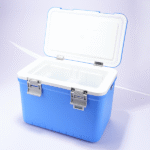
A VIP system can provide a space-efficient insulating structure when protected vacuum panels are integrated appropriately. The practical benefit should be measured after the payload chamber includes every required component. Kühlmittel, unterstützt, Eindämmung, monitoring and clearances all consume space that an empty-box volume omits.
Review a loaded drawing and a representative sample. Confirm that the actual product cartons or units fit without forced closure, displaced panels or removal of protective parts. Check how the smallest and largest permitted orders are arranged. A compact exterior is not a benefit when it encourages an operator to create a different packout for an unusual load.
Compare complete alternatives on equivalent requirements. A conventional Isolierter Versender may remain appropriate where it already provides the required performance with simpler preparation or handling. VIP deserves evaluation where its thermal and space characteristics improve the complete operating case. It does not need to replace every approved package in the network.
| Kauffrage | Evidence to compare | Misleading shortcut to avoid |
|---|---|---|
| How much product fits? | Loaded chamber layout with all required components | Treating empty internal liters as saleable capacity |
| How does it perform? | Full configuration and relevant temperature evidence | Comparing headline duration alone |
| Can staff prepare it? | Executable conditioning and assembly process | Assuming any cold pack is ready or interchangeable |
| Will it survive handling? | Relevant physical assessment and inspection criteria | Relying only on an upright label |
| What does each accepted delivery cost? | Actual packed freight, labor and component use | Comparing only empty-box purchase price |
| Is reuse practical? | Real return, inspection and replacement process | Using theoretical rotations as achieved performance |
The comparison should lead to a bounded decision about a product and route, not a universal material ranking. A package can be thermally promising but operationally unsuitable, or compact but expensive to prepare. Identify those trade-offs before committing to volume.
Carrier charging conditions should be checked against current quotations for the finished parcel. Do not assume one dimensional-weight formula applies to every service or agreement. Use actual order patterns rather than an ideal fully loaded example when estimating commercial value.
Match thermal capacity to a starting state the warehouse can reproduce
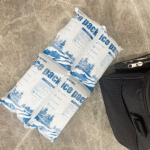
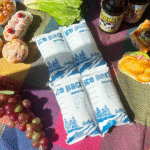
The insulating enclosure slows heat transfer; the selected thermal components manage the energy exchanged during the exposure. A PCM's transition behavior can be useful near a chosen temperature, but its nominal phase point does not establish the temperature of every product location. The complete arrangement needs evaluation.
Preparation is part of the configuration. Identify the thermal material, Menge, conditioning method and any prescribed tempering step. Confirm the equipment and workflow available at the dispatch site. An instruction that depends on unavailable facilities is not ready for routine use, even if the package has performed well in a supplier's development environment.
Make readiness observable through the approved process. Separate prepared components from unprepared or returned stock and preserve the records required for release. Do not rely on appearance, touch or a casual waiting period to establish the intended state. Those informal checks can vary with equipment loading and ambient conditions.
Keep the product's starting condition controlled as well. Ein Passiv Transportbox should not be expected to perform an unapproved chilling or freezing step. A warm load changes the thermal demand, while a product sensitive to freezing may be harmed by an unsuitable local cold surface. Follow the product requirement and assessed packout rather than a broad instruction to make everything colder.
Treat added refrigerant as a design change. More packs can alter clearances, local exposure, mass and assembly. They do not automatically produce a proportional extension in approved duration. Select a separately assessed alternative when the route requires different protection rather than modifying the current system under dispatch pressure.
Identify actual Trockeneis korrekt. Solid carbon dioxide differs from water-based gel or hydrated Kaltpackungen, even when a commercial product name sounds similar. Where it is used, Kompatibilität, gas release and applicable transport controls must be addressed. An airtight seal is not an acceptable shortcut for preserving dry ice longer.
Hilfreiche Entscheidungshilfen
Überprüfen Sie die Details, bevor Sie sich für die Verpackung entscheiden
Mit diesen schnellen Tools können Sie das Routenrisiko vergleichen, Größenanforderungen, Kühlmittelauswahl, und Verpackungsdetails, bevor Sie ein Angebot anfordern.
Kühlmittel & PCM-Referenz
Vergleichen Sie Kühlmittel- und PCM-Optionen, wenn eine Route zusätzliche Temperaturunterstützung benötigt.
Vergleichen Sie OptionenBoxliner & Dimensionierung der Palettenabdeckung
Überprüfen Sie die Größenlogik für Kartoneinlagen und Palettenabdeckungen für isolierte Verpackungsprojekte.
Schätzen Sie die GrößeTrockeneisrechner
Schätzen Sie vor dem Verpacken den Bedarf an Trockeneis für gefrorene oder ultrakalte Sendungen.
Schätzen Sie TrockeneisThe practical capacity plan should count ready systems, not only empty boxes. Include prepared thermal components, accepted insulation, required supports and available packing labor. This exposes shortages before a collection cutoff forces staff to choose between a missed dispatch and an unassessed shortcut.
Use qualification to define the permitted parcel, not advertise a duration
Request evidence that identifies the system you intend to send. It should describe the component versions, load or appropriate surrogate, Vorbereitung, Montage, Sensorpositionen, external challenge and acceptance criteria. The conclusion is useful when it can be connected directly to the production parts and routine instructions.
A central panel conductivity does not establish loaded-system behavior. Edges, Gelenke, Deckel passt, payload arrangement and thermal storage all contribute. Review the assembled design and relevant aging or handling assumptions. A favorable material value should guide engineering, not replace the report needed to approve the shipment configuration.
Check load variation deliberately. The minimum order can have a different response and restraint from the maximum order. A changed product carton or support can alter local conditions even when total mass remains similar. Keep the permitted load arrangements within the evidence rather than treating every order that fits as automatically covered.
Review the full temperature history. Early excessive cooling, a local event and later loss of capacity are different behaviors. Establish the product-specific acceptance rule before interpreting the trace. An average should not be used to conceal a relevant event, and a convenient sensor location should not be assumed representative without a rationale.
ISTA thermal profiles and insulated-shipping qualification processes can help structure the work. Their names do not guarantee every express route or establish regulatory approval of the contents. Determine what was actually tested and how it relates to the intended service. Route-specific and physical distribution concerns need their own appropriate consideration.
Handling deserves particular attention in parcel networks. FedEx's perishable guidance advises preparing shipments for different orientations. An upright label is not a substitute for suitable internal restraint and protective construction. Evaluate the enclosure and load for the relevant service, and establish inspection criteria for components that may be damaged.
Protect sealed VIPs from improvised modifications. Cables, supports and unusual product shapes need designed accommodation. Do not cut a panel, force a lid or remove a frame to complete a shipment. Those actions can create a different package from the one whose performance was demonstrated.
Make exceptions and recovery part of the purchasing agreement
Define the response to missed collection, an unavailable receiver, a routing change, damaged packaging and missing temperature evidence. These are different situations and should not share one vague instruction to contact support. Identify who can investigate, who can authorize an operational alternative and who decides product disposition.
A logger supports this process through evidence, not through additional cooling. Its location, configuration and shipment association should be controlled. For a connected device, distinguish an interruption in transmission from a missing measurement record and verify the selected system's behavior. A stale display is not a current product-temperature observation.
Receiving instructions should match the customer. A consumer food delivery, a staffed laboratory and a controlled healthcare receipt can require different actions. Preserve the necessary product-specific limits while keeping the procedure usable. The service should not depend on a recipient inferring responsibilities that were never communicated.
Für Rücksendungen, specify the component pathway. Decide what comes back, how it is protected, where inspection occurs and which parts are replaced. A returnable VIP assembly does not give a corrugated case, PCM pack and electronic device identical service lives. Keep readiness and identity clear before components are released for another trip.
Assess environmental claims using actual recovery. Include empty transport, Vorbereitung, cleaning where appropriate, damage and replacement. Use the same accepted payload as the comparison basis. A recyclable outer carton does not make every internal component universally recyclable, and a potential reuse count is not evidence of achieved rotations.
Supplier change control supports both routine performance and future improvement. Agree notification of relevant panel, Kühlmittel, frame, support or closure changes. The review should determine whether the existing evidence remains applicable and what additional work is needed. A lower-cost substitute should not silently alter an approved package.
Scale after testing the ordinary operating model. Include representative staff, order sizes and receiving sites in a pilot, and record any special project support. Separate preparation problems, Verzögerungen beim Spediteur, packaging damage and temperature events so that improvements target the actual cause. A package family with clear selection rules can be more manageable than a single box requiring repeated exceptions.
The final specification should state the product and load covered, den Vorbereitungsprozess, supported route conditions, receiving expectations and change triggers. When those are clear, VIP packaging becomes a practical tool for express cold shipping. Its value comes from fitting a controlled handover process, not from promising that speed and insulation can eliminate every uncertainty.
Questions to resolve before launch
What is the first sign that the package is being used outside its scope?
Operators may begin adding coolant, removing supports, forcing the closure or accepting new routes without a documented assessment. These actions indicate that the actual requirement no longer matches the approved configuration or instructions. Review the underlying order or service change and select an assessed alternative rather than allowing repeated improvisation to become the routine process.
Does a successful first shipment prove the program is ready?
It provides useful operational information but does not establish every product, load or route condition. Determine whether special attention affected the result and whether the relevant thermal and physical evidence is complete. A pilot should test a defined scope and ordinary workflow, including preparation, receipt and exceptions, before the organization expands the program.
Can a returnable model work without tracking every component individually?
The required identification depends on the construction, quality process and risks being controlled. Avoid unnecessary complexity, but preserve enough information to recognize the approved configuration and accepted condition. The operation must know whether the right components are ready for reuse. A simple controlled method is preferable to either untraceable mixing or an elaborate system staff cannot maintain.
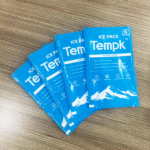
Über Tempk
Und Tempk, we combine protected VIP parcel structures with configurable PCM arrangements and payload layouts. Spezifikationen, samples and practical packout information can help buyers evaluate useful capacity and repeatable preparation together. Those are relevant advantages for an express program where the package must fit both the order and the packing station. Final performance remains configuration-specific. Share your product limits, order range and handover constraints with Tempk to develop VIP packaging for cold chain for express cold shipping around a process your teams can execute consistently.