VIP shipping case for returnable packaging is most useful when you treat it as a complete control system rather than a premium carton. Im April 2026, the best-performing cold-chain teams use VIP insulation because it can create meaningful thermal margin in a compact format, but they only approve a design after it proves itself against product stability, route variability, operator behavior, and receiving reality. That is the standard you should use as well.
This guide fuses buyer logic, engineering detail, and current market direction so you can decide when this packaging approach is worth it, how to qualify it, what evidence to request, and where reuse, returnability, Recyclabalität, and digital visibility change the economics. Das Ziel ist einfach: help you reduce product risk without paying for complexity that your lane does not need.
Was Ihnen dieser Leitfaden bei der Beantwortung helfen wird
- How to decide whether VIP shipping case for returnable packaging is the right packaging strategy for your lane
- How to engineer a qualified packout using real stability limits and route data
- Which records, Standards, and logger evidence you should require before approval
- How to lower total landed cost while preserving product protection
- What current trends in traceability, Wiederverwendung, and recyclability mean for your next packaging decision
What makes VIP shipping case for returnable packaging the right fit for your lane?
The right reason to choose VIP shipping case for returnable packaging is not that it sounds advanced. The right reason is that your shipment needs more controllable thermal margin than ordinary insulation can provide, and you want that margin in a format your operators can actually pack, Schiff, erhalten, and review consistently. When those conditions are true, a VIP-based design can protect recurring pharma, life-science, and premium food shipments moving between known nodes with better resilience and less wasted space than many generic alternatives.
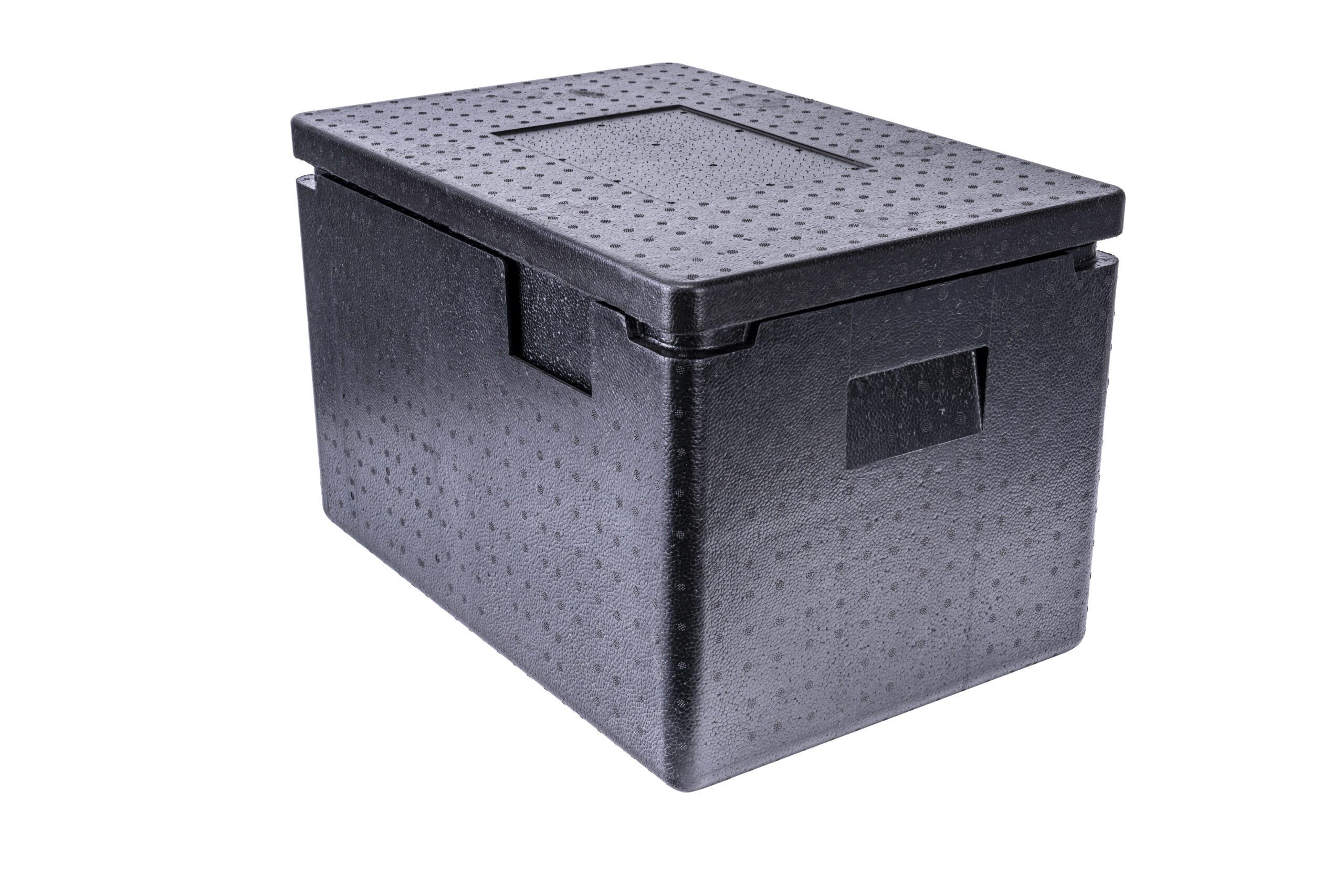
The wrong reason is simple branding logic. Premium insulation does not rescue a weak route map, vague work instructions, or poor receiving discipline. The shipper has to fit the product, die Spur, the packaging form factor, and the quality process at the same time. This format is a durable hard-sided case suited to repeated trips, asset tracking, and tighter operational control. It usually wins when you need excellent reusability potential, better cosmetic durability, and clear fit for return loops. The main trade-off is that asset loss and slow returns can erase the economic benefit quickly. In der Praxis, it fits best for returnable programs with known senders and receivers. Your first task is therefore to judge fit, not to assume superiority.
Product category changes the decision logic. Fresh produce cares about appearance and shelf life. Regulated healthcare cares about labeled temperature control and documented review. Reagents and biotech materials care about activity retention, Sorgerechtskette, and rapid receiving decisions. Reusable and returnable programs care about inspection, Erholung, and total trips per asset. The best packaging choice reflects those priorities clearly.
Quick fit scorecard
Use the scorecard below to decide whether you truly need premium passive protection, what level of evidence you should require, and whether lifecycle features such as reuse or recyclability are likely to help your operation.
Scorecard for deciding whether the packaging strategy fits
| <stark>Entscheidungslinse</stark> | <stark>What strong fit looks like</stark> | <stark>What good teams do next</stark> | <stark>Warum es dir wichtig ist</stark> |
| Product risk | The shipment contains high-value or quality-sensitive product | Use premium passive protection only where failure consequences justify it | You spend more where it matters and less where it does not |
| Lane severity | The route includes hand-offs, Verzögerungsrisiko, or seasonal extremes | Qualify by real route family, not by average transit time | You buy performance that matches reality |
| Einsatztauglich | Operators can assemble and receivers can interpret the shipment consistently | Simplify packout, Etiketten, and logger review rules | You reduce avoidable human error |
| Beweisqualität | The supplier can show thermal, Verfahren, and change-control records | Approve the system, not just the materials | You protect audits, Abweichungen, and scaling |
| Lifecycle logic | Wiederverwendung, zurückkehren, or recycling can be executed in normal operations | Model cost per trip and end-of-use before launch | You improve economics and sustainability together |
Practical actions before you request a quote
- Measure cost per completed trip, not cost per shipped unit. Recovery and refurbishment decide the real economics.
- Write inspection rules for shell damage, latch condition, panel edge protection, and coolant reset before you scale.
- Make return or disposal instructions obvious. Sustainability fails quickly when the receiver does not know the next step.
A medical supply network adopted a VIP shipping case with asset IDs and a return dashboard. Once loss visibility improved, the case delivered lower cost per completed lane and a clearer carbon story than the old disposable setup.
How do you engineer temperature protection that survives the real lane?
Engineering a shipment that survives the lane starts with a disciplined thermal model. Define the allowed product range, the realistic delay profile, die Nutzlastmasse, the weak points inside the pack, and the exact condition of the coolant at assembly. Then design the cavity so the product sits in a controlled thermal zone rather than in direct contact with the hottest or coldest surfaces. That is where real performance comes from.
The insulation layer is only one part of the answer. Recent literature still places healthy VIP conductivity in the super-insulation range, roughly around 0.003 Zu 0.006 W/m · k, but panel performance can drift if barrier films are damaged or if edges are not protected. In field conditions, your result is governed by the combination of panel health, Kühlmittelanordnung, leerer Raum, operator consistency, und Empfangsgeschwindigkeit.
For most non-food cold chains, the design objective is repeatable control. That means the packout should work in ordinary hands under ordinary time pressure. A slightly less aggressive design that is easier to execute can outperform a laboratory-optimized design that operators assemble inconsistently.
How should coolant, payload spacing, and hold time be sized?
Size them against the true worst-case route, not a convenient average. Keep the payload in the most stable internal zone, control direct contact with cold sources, and use seasonal logic when the route changes materially across the year. If your lane is highly variable, add margin through design rather than through last-minute improvisation.
What compliance evidence should you require before approving VIP shipping case for returnable packaging?
Before approving VIP shipping case for returnable packaging, require evidence in three layers. Erste, require thermal evidence: test results or qualification summaries that resemble your lane and payload. Zweite, require process evidence: Verpackungszeichnungen, work instructions, coolant conditioning rules, and logger placement logic. Dritte, require governance evidence: Änderungskontrolle, component traceability, and a clear rule for how live results are reviewed and dispositioned.
For broader cold-chain categories, the same principle holds. Evidence must link product needs, Routenannahmen, and operator steps into one defensible file. If the supplier cannot explain how the design was challenged, assembled, überwacht, and revised when components change, the package is not ready for serious deployment.
Standards help give that evidence structure. ISTA now points buyers toward Standard 7E as the newer thermal transport framework for insulated shippers. WHO continues to emphasize temperature monitoring devices for international health-product shipping. GS1 sensor-event standards now make it easier to connect package condition with shipment history. None of these references replaces your product-specific logic, but together they raise the quality of the conversation.
Which records separate qualified suppliers from hopeful ones?
Qualified suppliers can show what was tested, how it was packed, which components were used, what happens when those components change, and how receiving teams should review results. Hopeful suppliers usually return to generic hold-time language and vague marketing claims once you ask about change control or live-lane assumptions.
How do you reduce total cost without increasing deviation risk?
The fastest way to lower cost without raising risk is to remove wasteful mismatch. Oversized packs waste freight cube. Excess coolant adds weight and can increase freezing risk. Too many custom variants create training burden. Too few variants can push weak packouts onto difficult lanes. The commercial sweet spot is a small family of qualified solutions sized to real route families.
Use total landed cost rather than purchase price. Count product loss, deviation labor, Kundenbeschwerden, Reverse-Logistik, and operator time. Wenn du das tust, a better shipper often pays for itself not by being cheaper to buy, but by being cheaper to operate and easier to defend. That logic matters especially when shipment failures trigger regulatory review or service breakdown.
For reusable, returnable, or recyclable programs, choose the lifecycle model your network can actually run. Reuse wins when inspection and recovery are disciplined. Returnable assets win when cycle count and return speed are visible. Recyclable designs win when recipients are diverse and unlikely to send assets back. Sustainability becomes credible only when the operating model is credible.
When do reusable, returnable, or recyclable models win?
They win when the operating model supports them. Reuse needs predictable turns and inspections. Returnable assets need visibility and strong recovery. Recyclable designs need easy separation and clear instructions. Pick the lifecycle strategy that reduces waste without creating new quality or logistics problems.
Was 2026 trends should shape your next VIP shipping case for returnable packaging decision?
Mehrere 2026 trends should shape your next decision. Digital traceability is expanding, which means packaging needs to work with event data and not just with temperature chambers. Sensor support in GS1 EPCIS makes it easier to align location, Verzögerung, and temperature information. FDA’s recent DSCSA guidance reinforces the value of package-level electronic information in eligible drug distribution. Gleichzeitig, WHO and IATA continue to keep temperature monitoring and disciplined air-cargo handling in focus.
Standards and policy are also pulling cold-chain packaging toward more transparent lifecycle choices. The EU Packaging and Packaging Waste Regulation entered into force in 2025 und gilt grundsätzlich ab August 2026, which raises the pressure for transport packaging that is more recyclable, mehr wiederverwendbare, or at least easier to explain. Buyers increasingly ask not only whether the shipper works, but also how it will be returned, repaired, or separated at end of use.
The main market insight is that packaging is becoming more accountable. Buyers want fewer claims and more evidence, fewer variants and better training, stronger protection and less waste. The cold-chain solutions that will stand out are the ones that make those trade-offs easier, nicht schwerer.
Neueste Entwicklungen auf einen Blick
- Route-specific qualification is replacing generic performance claims.
- Digital visibility is moving from simple logging toward connected event interpretation.
- Policy pressure is raising the value of recyclable, wiederverwendbar, and easier-to-explain packaging systems.
- Training simplicity is becoming a major competitive advantage in cold-chain execution.
Häufig gestellte Fragen
How do I know whether VIP shipping case for returnable packaging is the right fit for my shipment?
Check product consequence, Schweregrad der Route, operator capability, and the evidence your quality team will require. If failure is expensive and the route is variable, premium passive protection often makes sense. If the route is easy, simpler packaging may be sufficient.
What should I ask a supplier before approving a packout?
Ask for the qualification summary, packout drawing, coolant conditioning instructions, Logger-Plan, component specification, and change-control policy. If the design is reusable, also ask for inspection and retirement criteria.
How many packaging variants should a network usually keep?
As few as practical, but enough to match clearly different lane families. Too many variants create training problems. Too few force poor route fit. A small controlled family of approved packouts is usually the strongest model.
Is the newest standard or sensor technology enough to guarantee performance?
NEIN. Standards and sensors improve structure and visibility, but they do not replace route-specific design, disciplined assembly, or clear receiving rules. Strong execution still decides field success.
What is the biggest hidden reason cold-chain packages fail?
In vielen Programmen, the hidden reason is operator variation rather than raw insulation weakness. The packout may look strong in the lab but fail in the field because assembly, Inszenierung, or receipt behavior changes the thermal reality.
How should I think about reuse or recyclability for this packaging approach?
Treat lifecycle choice as an operating-model decision. Reuse needs recovery and inspection discipline. Recyclability needs simple material separation and clear instructions. Choose the model your network can actually support.
Zusammenfassung und Empfehlungen
The best way to evaluate VIP shipping case for returnable packaging is to ask one question: does it make your real shipment easier to protect, einfacher zu bedienen, and easier to defend? When the answer is yes, VIP packaging can deliver strong value by adding thermal margin, improving evidence, and supporting smarter lifecycle choices. When the answer is no, premium insulation may only add cost.
Start with a lane-specific qualification plan, request evidence that matches your product and route, and build a small family of controlled packouts that your operators can execute consistently. Then choose reuse, returnability, or recyclability based on what your network can genuinely support. That is how you get the strongest result from cold-chain packaging in 2026.
Über Tempk
Und Tempk, we build cold-chain packaging around real operating conditions rather than generic catalog claims. Our focus is to combine strong thermal engineering with clear packout discipline, practical qualification support, and packaging options that are easier to deploy in daily operations. We work with teams that need dependable control for regulated, zerbrechlich, or high-value shipments without unnecessary complexity.
Talk with our team if you want help comparing routes, packout concepts, or reusable versus single-use options for your next cold-chain program.