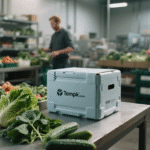
VIP-Transportbox für den Transport von Biologika (2025 Führung)
Zuletzt aktualisiert: Dezember 22, 2025
A VIP transport box for biologics transport helps you keep high-value therapies inside their labeled temperature range when real lanes bring delays, Übergaben, and weather swings. Many biologics target 2–8 ° C, while others require frozen conditions. In 2025, the winning approach is simple: define lane risk, lock a pack-out recipe, qualify performance, and monitor only where it changes decisions.
Dieser Artikel wird Ihnen helfen:
-
Wählen Sie a VIP transport box for biologics transport using a lane risk score (keine Vermutung)
-
Build a repeatable 2–8°C VIP shipper with PCM pack-out that avoids accidental freezing
-
Laufen biologics cold chain packaging qualification with DQ/OQ/PQ that auditors can follow
-
Place loggers for temperature logger placement in VIP shipper data you can trust
-
Use a self-audit checklist and ROI tool to reduce excursions and cost without lowering control
Do you really need a VIP transport box for biologics transport?
You need a VIP transport box for biologics transport when your lane is longer, harsher, or more expensive to fail than your current packaging can reliably handle. VIP adds thermal “time,” but it also demands stricter packing discipline.
90-zweites Entscheidungsinstrument: “VIP or not?”
Antwort Ja/Nein:
-
Are excursions expensive (high-value lots, clinical urgency, limited supply)?
-
Is your lane duration longer than your current hold time by 20%+?
-
Haben Sie 2+ Übergaben (Flughafen, Cross-Dock, carrier transfer, clinic receiving)?
-
Do you ship through summer heat, Winterkälte, or mixed climates?
-
Have you had QA holds, disputes about evidence, or repeat deviations?
-
Do you need smaller outer dimensions to reduce dimensional-weight costs?
Punktzahl
-
0–2 Ja: Fix workflow first; standard passive shipper may be enough
-
3–4 Ja: Pilot VIP on high-risk lanes or premium SKUs
-
5–6 Ja: A VIP transport box for biologics transport is strongly justified
Praktisches Essen zum Mitnehmen: VIP is most valuable when it reduces both Temperaturrisiko und die evidence gap (your ability to prove control).
What makes a VIP transport box for biologics transport work in real lanes?
A VIP transport box for biologics transport ist ein System, kein Material. Think in four layers:
-
Isolierung (VIP -Panels): slows heat flow like “super-thermos walls”
-
Wärmepuffer (PCM, Gel, Trockeneis): stores “cold energy”
-
Payload configuration: Platzierung, Separatoren, tightness, Leerekontrolle
-
Process controls: Konditionierung, pack time, Abschlussdisziplin, handoff rules
The most common failure: “VIP walls, foam habits”
A VIP shipper can still fail if you:
-
leave large air gaps
-
place coolant inconsistently
-
start with product at the wrong temperature
-
keep the lid open too long
Warm air inside the box becomes a hidden heater. VIP slows heat transfer, but it cannot undo sloppy pack-out.
| System element | Was geht schief | Was stattdessen zu tun ist | Was es für Sie bedeutet |
|---|---|---|---|
| VIP-Isolierung | Strong walls, weak closure | Dichter Deckel + sealing SOP | Längere Haltezeit |
| Coolant/PCM | Wrong mass or starting temp | Lane-specific recipe | Weniger Ausflüge |
| Nutzlast | Shifting + Luftspalte | Einlagen + enge Packung | More stable range |
| Verfahren | Lange offene Zeit | Schnell packen, schnell schließen | Less warm-air exchange |
Which temperature band should your VIP transport box for biologics transport target?
Your VIP transport box for biologics transport must match your product requirement, not a generic “cold chain.” Trying to build “one shipper for everything” increases errors and deviations.
Temperature bands you should plan for
| Band | Typische Verwendung | Gemeinsames Risiko | Practical packaging approach |
|---|---|---|---|
| 2–8 ° C | Viele Biologika | Freeze risk below 2°C + warme Spitzen | PCM near +5°C, buffer layers |
| 15–25°C (CRT) | Some injectables | Overheat during summer staging | Isolierung + thermal buffering |
| Gefroren | Some drug substance, Enzyme | Teilweises Tauwetter + refreeze cycles | Frozen strategy + strict handling |
| Ultra-kalte | Specialized therapies | Dry ice management + Sicherheit | Dedicated SOPs and labeling |
The hidden trap in 2–8°C shipping
2–8°C sounds easy, but it fails at the edges. If cooling is too aggressive, you can freeze sensitive products near cold surfaces. A VIP transport box for biologics transport must keep you cold enough without going zu kalt.
Praktische Tipps
-
Verwenden Sie a Pufferschicht Jedes Mal (no direct coolant contact).
-
Create separate SOPs for 2–8°C vs. gefroren.
-
Do not mix profiles unless you validated that exact mixed configuration.
How to choose PCM, Gelpackungen, or dry ice in a VIP transport box for biologics transport
A VIP transport box for biologics transport needs a coolant strategy that matches both the Temperaturband Und Spurrisiko.
Quick guide: gel packs vs PCM vs dry ice
| Kühlmittel | Stärke | Typischer Fehlermodus | Beste Verwendung |
|---|---|---|---|
| Gelpackungen | Easy and familiar | Overcooling early | Short/medium 2–8°C lanes |
| PCM | Stable near target point | Wrong phase point choice | Long 2–8°C lanes needing stability |
| Trockeneis | Strong freezing power | Sicherheit + Entlüftungsbedarf | Frozen/ultra-cold programs |
Mini “pack-out calculator” (fast planning tool)
Use this to size your first pilot recipe:
-
Spurdauer: ___ Std
-
Worst-case season: Sommer / Winter
-
Übergaben: niedrig / Medium / hoch
-
Payload heat load: niedrig / Medium / hoch
Faustregel: Longer lanes and high handoffs need more thermal mass consistency, not only thicker insulation.
Realitätscheck: You do not “win” by adding more cold. You win by controlling drift ohne einzufrieren.
How to pack a VIP transport box for biologics transport (repeatable HowTo)
A repeatable pack-out is the fastest way to reduce excursions with a VIP transport box for biologics transport. Make it trainable, überprüfbar, and hard to improvise.
Howto: Pack a VIP transport box for biologics transport (2–8 ° C)
-
Pre-condition materials: stage shipper, Einsätze, and PCM in the packing area
-
Confirm product state: product is already at the correct controlled condition
-
Build bottom buffer: place PCM in the validated layout
-
Add separator layer: prevent direct cold contact to reduce freeze risk
-
Load payload tight: Luftspalte minimieren; use inserts to stop shifting
-
Add top/side buffer: protect lid and corner “warm entry” zones
-
Schnell schließen: keep open time short and consistent
-
Record pack-out: Zeitstempel + configuration/version ID
-
Apply monitoring (wenn verwendet): log device ID and start time
-
Dispatch quickly: avoid warm staging
The “open time” rule (simple and measurable)
Every minute the lid is open, you trade stable internal air for warm external air.
Set a target: Pack + close in ___ minutes, then train and audit it.
Practical tips you can deploy this week
-
Two-person verification for high-risk lanes (PCM count + Platzierung).
-
Eins pack-out photo standard pro Spur (removes “creative packing”).
-
Ein Kurzfilm receiving card: open fast, move to storage, then document.
Real-world style example: Teams cut repeat deviations when they enforce one pack-out version per lane and block improvisation during peak days.
How to qualify a VIP transport box for biologics transport under GDP expectations
A VIP transport box for biologics transport becomes “audit-ready” when you can show: requirement → test → result → controlled use.
DQ / OQ / PQ in plain English
-
DQ (Designqualifikation): Does the shipper design match your requirement and risk?
-
OQ (Betriebsqualifikation): Does it perform under defined hot/cold profiles?
-
PQ (Leistungsqualifizierung): Does it work in real lanes, Jahreszeiten, und Übergaben?
What your qualification package should contain
| Dokumentieren | Was es beweist | Minimum contents | Warum es dir hilft |
|---|---|---|---|
| User Requirement Spec | What you need | Band, Dauer, Nutzlast, Fahrbahn | Prevents scope creep |
| Pack-out Work Instruction | How you pack | Fotos, zählt, version ID | Reduziert menschliche Fehler |
| OQ report | Lab performance | hot/cold profiles + Annahme | Audit-friendly proof |
| PQ report | Real lane performance | lane studies + Loggerdaten | Reality validation |
| Kontrolle ändern | Control after changes | was hat sich geändert? + Begründung | Verhindert stilles Abdriften |
Praktische Regel: If you change PCM brand, Masse, Platzierung, Einsätze, or payload format, treat it as a controlled change. Small “equivalents” can break performance.
Temperature logger placement in a VIP transport box for biologics transport
Monitoring should answer two questions:
-
Did we stay in range? 2) Where did failure begin?
Bad placement creates false confidence. Place sensors where risk starts, not where it is easiest to tape.
Logger placement options (and what they really tell you)
| Platzierung | What it captures | What it can miss | Beste Verwendung |
|---|---|---|---|
| Payload core | Most representative average | Edge warming | Baseline monitoring |
| Near cold source | Einfriergefahr | True payload risk | 2–8°C safety insight |
| Near wall (gepuffert) | Worst-case drift trend | Very little if standardized | Best for decisions |
| Under lid area | Warm intrusion + Öffnungen | Center stability | High-handoff lanes |
Monitoring tiers (risk-based, skalierbar)
-
Tier A: lane qualification + periodic verification shipments
-
Tier B: loggers on high-risk lanes or premium SKUs
-
Tier C: Logger + Warnungen + documented lane reviews
Calibration discipline (the detail auditors notice): keep certificates, assignment logs, and a clear review SOP.
What to do when a VIP transport box for biologics transport has an excursion
Excursions happen. The quality failure is not “an excursion happened.”
The failure is: no consistent, documented response.
Excursion playbook (in Ihre SOP kopieren)
-
Quarantäne (do not release)
-
Collect evidence: Loggerdaten, Zeitstempel, handoff records
-
Check product rules: allowed excursions vary by product
-
Quality review: release vs reject using approved criteria
-
Grundursache + CAPA: fix recipe, Ausbildung, or handoff control
-
Update lane risk: re-qualify if assumptions were wrong
Simple “Green / Gelb / Red” action lines
-
Grün: within range → release
-
Gelb: short drift, within approved limits → QA review + dokumentieren
-
Rot: outside approved limits → hold + investigation + disposition
Your goal is not “never an excursion.” Your goal is “excursions never become surprises.”
VIP transport box for biologics transport vs foam: when does the upgrade pay back?
A VIP transport box for biologics transport often pays back where the cost of failure is high: Ausschuss, reships, QA holds, and disputes.
| Entscheidungsfaktor | Schaumversand | VIP -Versender | Praktische Bedeutung |
|---|---|---|---|
| Hold time at same size | Mäßig | Höher | Supports longer lanes |
| Size at same hold time | Größer | Kleiner | Helps parcel constraints |
| Coolant needed | Often more | Often less | Potential weight savings |
| Sensitivity to packing errors | Medium | Höher | Needs strict SOP |
| Vorabkosten | Untere | Höher | Deploy on high-risk lanes |
ROI-Minirechner (fast and honest)
Tragen Sie Ihre Zahlen ein:
-
Weekly shipments: ___
-
Current excursion/hold rate: ___%
-
Avg cost per event: $___
-
Expected reduction with VIP: ___%
-
Added cost per VIP shipment: $___
Estimated weekly savings = shipments × excursion rate × cost per event × reduction
Estimated weekly added cost = shipments × added cost per shipment
Wenn Einsparungen > added cost, dein VIP transport box for biologics transport is justified for that lane.
2025 trends for VIP transport box for biologics transport programs
In 2025, the biggest shift is standardization that reduces human error:
-
Lane-based pack recipes by season and service level
-
Fewer shipper types, more validated configurations
-
Risk-based monitoring instead of “logger on every shipment”
-
Stronger emphasis on Dokumentation, Kalibrierung, and review discipline
-
More attention to handoff behavior (open time, Inszenierung, receiving steps)
Marktrealität: Two validated configurations often beat ten “flexible” options.
Häufig gestellte Fragen
Q1: When is a VIP transport box for biologics transport worth it?
When lanes are long or unpredictable, handoffs are frequent, or failures are expensive. VIP adds thermal time and reduces evidence disputes.
Q2: Can a VIP transport box for biologics transport reduce coolant usage?
Oft ja, because stronger insulation can reduce required coolant mass for the same lane—after you validate performance.
Q3: Do I need a logger in every VIP transport box for biologics transport shipment?
Nicht immer. A risk-based plan works well: qualify the lane, then monitor representative shipments and all exceptions.
Q4: Was ist das #1 packing mistake with a VIP transport box for biologics transport?
Large air gaps and long open-lid time. Warm air inside the shipper can erase your insulation advantage.
Q5: How do I prevent freezing in a 2–8°C VIP transport box for biologics transport?
Use PCM near the target point, Pufferschichten hinzufügen, and never allow direct coolant contact with product.
Q6: What documents should I keep for audit readiness?
Lane risk assessment, pack-out version control, OQ/PQ reports, monitoring records, and deviation/CAPA files.
Zusammenfassung und Empfehlungen
A VIP transport box for biologics transport is a high-performance option for lanes where delays, Übergaben, and seasonal extremes make standard packaging too risky. The most reliable 2025 approach is lane-based: define temperature targets, lock a pack-out recipe, qualify the system, and monitor where it changes outcomes. When you standardize configuration and tighten handling, VIP becomes predictable instead of “sometimes great.”
Aktionsplan (CTA)
-
Wähle dein Oberteil 3 highest-risk lanes (Wert + Verzögerungen + Übergaben).
-
Create one pack recipe per lane (by season if needed).
-
Run a focused PQ-Pilot (10–20 shipments) and review weekly.
-
Lock the winning version into training, Fotos, und Änderungskontrolle.
-
Scale only after results are repeatable and review is routine.
Über Tempk
Und Tempk, we build practical temperature-controlled packaging workflows for life-science shipments, einschließlich VIP transport box for biologics transport Programme. We focus on lane-based pack recipes, qualification-ready documentation, and monitoring strategies that reduce deviations without adding operational chaos. Unser Ziel ist einfach: help you ship with confidence, prove control, and scale with repeatability.
Nächster Schritt (CTA): Teilen Sie Ihr Temperaturband (2–8°C or frozen), Zielhaltezeit, Spurdauer, payload format, and handoff count. We’ll suggest a lane-based VIP packaging plan you can pilot immediately.